
International
Antony Blinken assures that the Panamanian sovereignty of the Panama Canal “will not change”
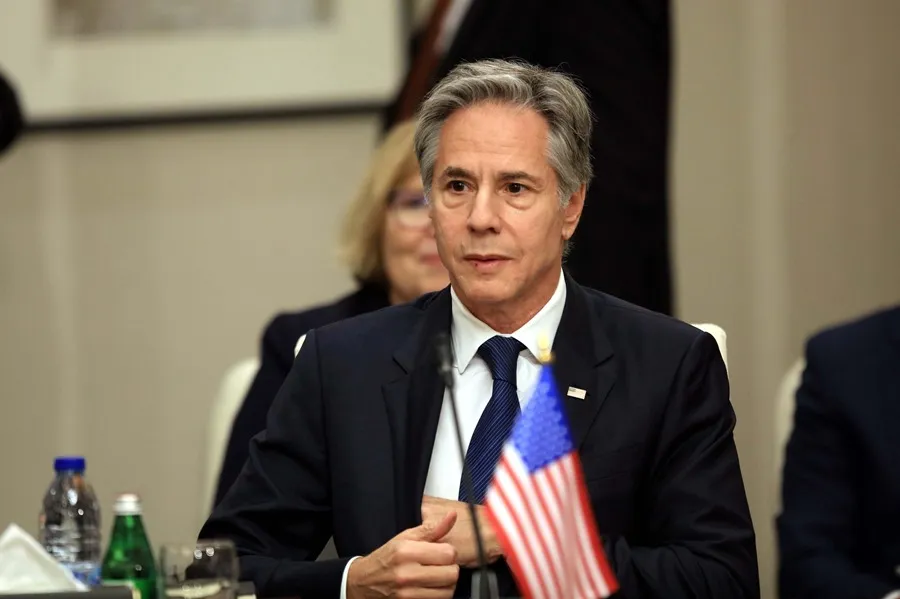
The Secretary of State of the United States, Antony Blinken, assured this Thursday that Panamanian sovereignty over the Panama Canal “will not change,” despite the threat of President-elect Donald Trump to regain US control of the interoceanic route.
“We have a treaty and a policy in force for many years and that is not going to change. As I said before, it’s not worth spending time on this,” he said at his last press conference before leaving office.
His answer was similar to the one he gave last week in Paris when he was questioned by Trump’s plan to annex Greenland to the United States.
“It’s not worth spending time on that issue because that’s not going to happen,” he said at the time.
Blinken’s statements come a day after the nominee to succeed him, Marco Rubio, suggested that China’s influence on the Panama Canal is a violation of the terms of the delivery of the road to the Panamanians.











Rubio, next Secretary of State in the Trump Administration, warned during his confirmation hearing in the Senate that this is “a very legitimate issue” for the United States, although it opened the door to dialogue with the Panamanian authorities.
“Panama is a great partner in many other matters, and I hope we can solve this issue of the channel and its security,” Blinken said.
“Although technically sovereignty over the canal has not been handed over to a foreign power, in reality a foreign power today possesses, through its companies, which are not independent, the ability to turn the channel into a bottleneck at a time of conflict,” he added.
Blinken was convinced that the agreement for a truce in the Gaza Strip and the release of the hostages will take effect on Sunday as planned, despite the fact that Israel and Hamas accuse each other of delaying it.
“I am confident and fully hope that the implementation will begin as we said on Sunday,” the head of US diplomacy said at his last press conference before leaving office.
On Thursday, the Israeli government accused Hamas of introducing new conditions in the ceasefire and hostage release agreement announced last night, while the Islamist group recriminated the Israelis for trying to “create tension at a critical moment.”
The relatives of the hostages who still remain in Gaza attend with anguish to the rifirrafe, less than three days before the agreed date for the departure of the first kidnapped.
The announced ceasefire should come into force next Sunday and would allow the release of Israeli hostages – alive and dead – and access to humanitarian aid to the Palestinian enclave, where more than 46,700 people have died since October 7, 2023.
The team of outgoing President of the United States, Joe Biden, and President-elect Donald Trump, participated in the final stretch of the negotiations, which also had the mediation of Qatar and Egypt.
The Secretary of State urged the next Donald Trump Administration to ensure that the ceasefire agreement that the next president wants to achieve in Ukraine is truly “lasting.”
“One of the most important things here is that if there is a ceasefire, that it is durable and that it is maintained,” said the head of US diplomacy in his last press conference.
For Blinken, this is key, because, as he warned, the president of Russia, Vladimir Putin, “will want to take weight off him” and “attack when he feels it’s time.”
“A ceasefire agreement must be reached with the effective deterrence necessary so that Russia does not attack again,” he warned.
Trump, who will assume power on January 20, has criticized the constant sending of weapons to Ukraine by the Joe Biden Administration and has made it a priority to end the war started by the Russian invasion of February 2022.
Blinken defended that the strategy of the outgoing government, focused on sending weapons to Ukraine and imposing sanctions on Russia, sought to put Ukraine “in a position of power” against the Kremlin.
“That I could continue fighting, if necessary, or sit down to negotiate, if that’s what they wanted, but do it from a strong position,” he added.
He also claimed that this plan has caused “unimaginable” losses for Russia: “We see the impact on its economy, on its future and on its inability to invest in critical infrastructure for the future.”
Marco Rubio, Blinken’s successor, declared on Wednesday that the policy of the new US government will be to end the war and asked for “concessions” to both Ukraine and Russia.
The next Secretary of State said that Russia will not be able to invade all of Ukraine, but he also described it as “unrealistic” to think that Ukraine will be able to recover the pre-invasion borders.










International
Truck bomb attack near police station in Colombia leaves 14 injured ahead of presidential inauguration
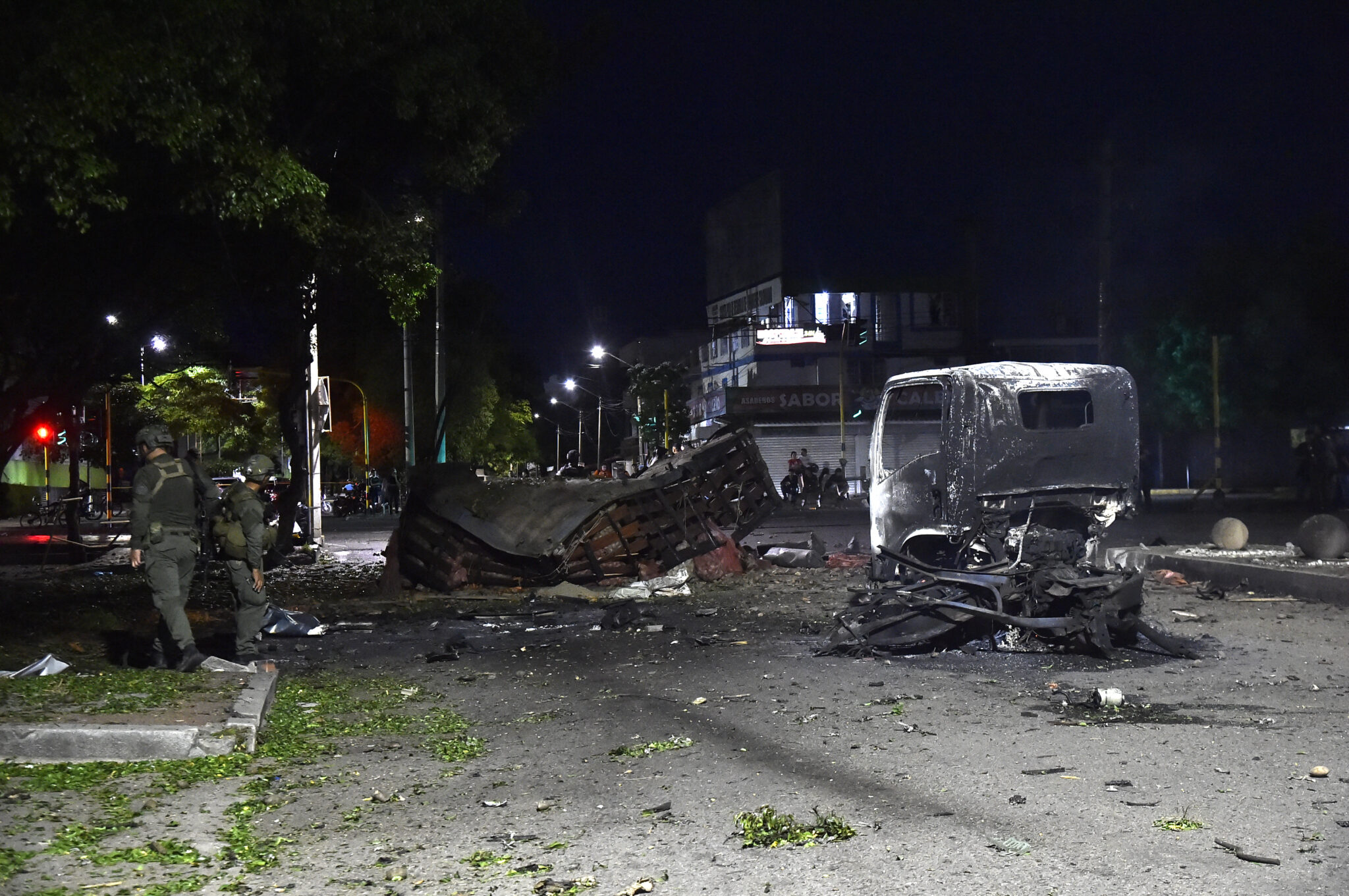
A truck loaded with explosives exploded on Saturday near a police station in the Colombian city of Cúcuta, close to the Venezuelan border, leaving 14 people injured in an attack that occurred six days before president-elect Abelardo de la Espriella’s inauguration.
The blast took place in the early hours of the morning and was allegedly carried out by members of the National Liberation Army (ELN), who detonated a vehicle packed with explosives. According to the latest report from the Colombian Army, the attack injured 11 police officers and three civilians.
The explosion involved around 15 explosive devices, and two of the wounded officers are in critical condition and “fighting for their lives,” said William Villamizar, governor of Norte de Santander, the region where the attack occurred.
The incident comes amid Colombia’s worst wave of violence in the past decade, with armed groups expanding their presence in several areas of the country.
“I strongly condemn the cowardly terrorist attack carried out in Cúcuta against our National Police. Terrorism will not intimidate Colombia or break the determination of Colombians to live in peace and security,” De la Espriella said in a post on X.
The conservative lawyer, who has been described as a far-right figure, will take office on August 7, replacing Gustavo Petro, Colombia’s first left-wing president. The inauguration ceremony will be held in Cali, the country’s third-largest city and a frequent target of attacks by armed groups.
The United Nations condemned what it described as an “indiscriminate attack” that caused not only injuries but also “fear and distress among the population.”
De la Espriella has repeatedly warned about an alleged plot against his life. Meanwhile, President Gustavo Petro, who is currently visiting Cuba, has not commented on the attack. During his visit, Petro met with Cuban President Miguel Díaz-Canel to discuss what Havana describes as the United States’ “policy of suffocation” toward the island.
International
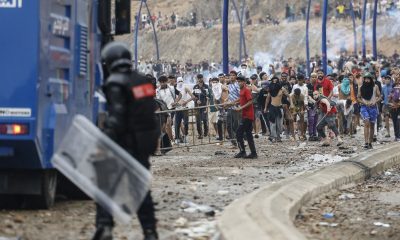
EU Faces Migration Crisis After 60,000 Migrants Arrive in Spain’s Ceuta Enclave
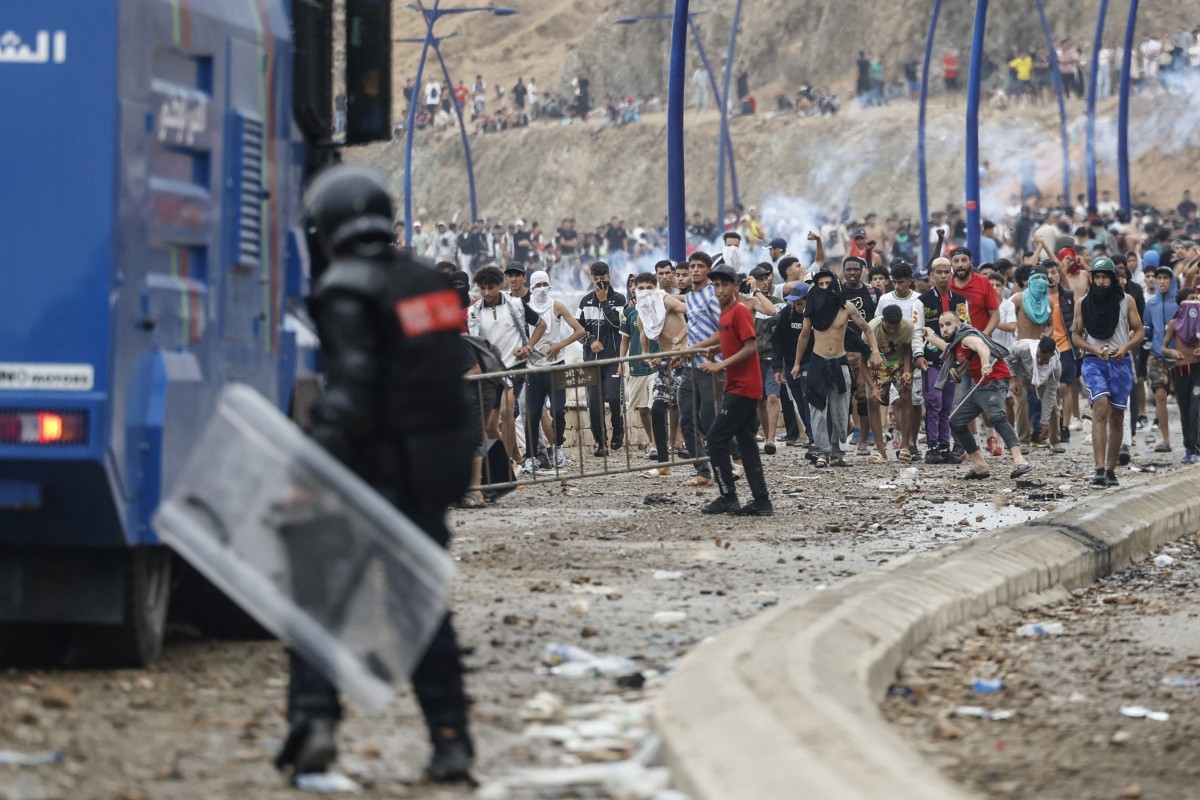
The arrival of around 60,000 migrants from Morocco to Spain’s Ceuta enclave triggered a major European Union crisis on Friday, after Madrid described the situation as an “attack” on its territorial integrity.
At least 34 people died while attempting to reach the Spanish territory, according to local authorities.
Hundreds of migrants had begun arriving in Ceuta earlier in the week, either by swimming across the border or climbing security fences. Most of those who entered were young men and teenagers.
However, the situation escalated dramatically early Thursday morning, when the number of arrivals surged within a few hours, reaching nearly 60,000 people. According to the Spanish government, the vast majority of them — around 48,000 migrants — had returned to Morocco by Friday evening.
The episode represents one of the most serious migration crises faced by the autonomous city of Ceuta, which has a population of around 84,000 residents, in recent years.
Several European countries responded strongly to the crisis, with Italy announcing the temporary suspension of the Schengen free movement agreement with Spain, a measure supported by Finland and Denmark.
“The temporary suspension of Schengen with Spain is a necessary decision to protect the security of our citizens and defend Europe’s borders,” Italian Foreign Minister Antonio Tajani said in a post on X.
Italy’s Interior Ministry confirmed that the country had tightened controls on maritime and air entry points from Spain, but clarified that the measure would not affect Spanish or European citizens traveling to Italy.
The additional checks will specifically target non-European citizens arriving from Spain, according to the ministry.
The measure will remain in effect for one month starting Saturday, authorities said.
Spain’s Foreign Minister José Manuel Albares responded to the Italian announcement through a statement on X, as European governments continued discussions over the consequences of the migration crisis.
International
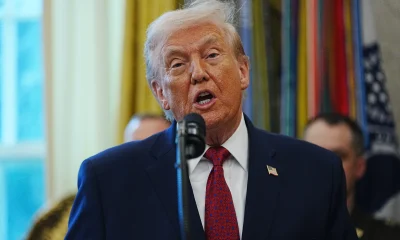
Chuck Schumer Unveils Proposal to Strengthen Oversight of the U.S. Presidency
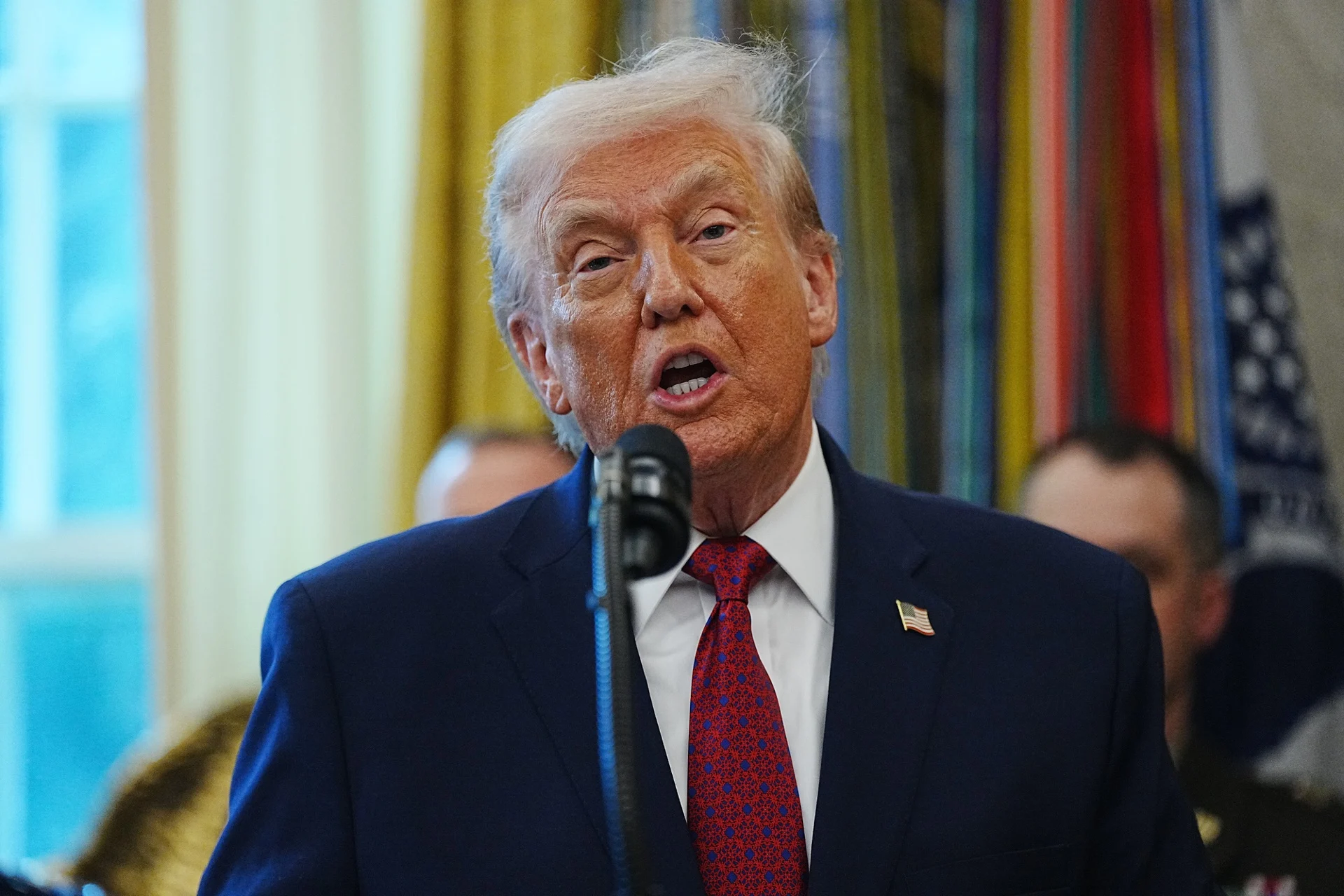
U.S. Senate Democratic Leader Chuck Schumer on Thursday announced legislation to establish a federal anti-corruption office aimed at strengthening oversight of the executive branch and preventing future presidents from using the White House for personal financial gain.
Schumer said the proposal was prompted by what he described as President Donald Trump’s misuse of the presidencyto benefit his family’s business interests.
“In just 18 months, the Trump family has made more than $4 billion by exploiting the influence of the presidency,” Schumer alleged.
The New York senator also argued that the alleged corruption has had direct economic consequences for American households.
“The same corrupt practices Trump is using to pocket billions of dollars are also forcing Americans to pay, on average, $3,100 more each year because of the rising cost of living,” he said.
The legislation was introduced alongside Democratic Senators Alex Padilla, Jeff Merkley, and Andy Kim.
According to Schumer, the bill has two primary objectives: “First, to return money to the American people. Second, to ensure that no one can ever steal from them again.”
He added that the proposal would create legal mechanisms allowing citizens to seek the recovery of funds allegedly obtained through government corruption.
“The fact that Trump stole money from the American people does not make it his. Americans deserve to get that money back,” Schumer said.
Under the proposed legislation, any U.S. citizen—as well as state attorneys general acting on behalf of their residents—would be authorized to file civil lawsuits to recover funds allegedly acquired through corrupt practices by public officials.
“Our bill would empower any individual, including a state attorney general acting on behalf of the people of that state, to bring legal action to recover money stolen from the public through government corruption,” Schumer said.
The measure is expected to face debate in Congress, where Republicans and Democrats remain deeply divided over executive accountability and the scope of presidential powers.

Truck bomb attack near police station in Colombia leaves 14 injured ahead of presidential inauguration

EU Faces Migration Crisis After 60,000 Migrants Arrive in Spain’s Ceuta Enclave

Chuck Schumer Unveils Proposal to Strengthen Oversight of the U.S. Presidency
Tec de Monterrey honors one of its students for his contribution to nanotechnology in medicine

Defense Minister commends salvadoran soldier for Central American Cross Country victory

Extension of the state of emergency approved in southern Chile
-
 International2 days ago
EU Faces Migration Crisis After 60,000 Migrants Arrive in Spain’s Ceuta Enclave
-
 International5 days ago
Five Bodies Found in Ecuador as Police Probe Suspected Gang Turf War
-
 International4 days ago
Chuck Schumer Unveils Proposal to Strengthen Oversight of the U.S. Presidency
-

 International5 days ago
Georgia Teen Sentenced to Life Without Parole for Deadly School Shooting
-
 Central America5 days ago
Prosecutors Accuse Ex-Defense Minister of Undermining Press Freedom in Honduras
-
 International4 days ago
FAO and WFP Seek $42 Million to Prepare Southern Africa for Unprecedented El Niño
-
 International4 days ago
Trump Administration Urges Latin America to Increase Defense Spending Against Organized Crime
-
 International20 hours ago
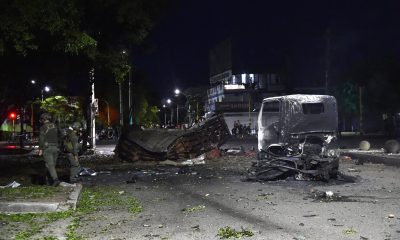
Truck bomb attack near police station in Colombia leaves 14 injured ahead of presidential inauguration