
International
The Sudanese Army takes a Khartum neighborhood in an offensive to recover the capital
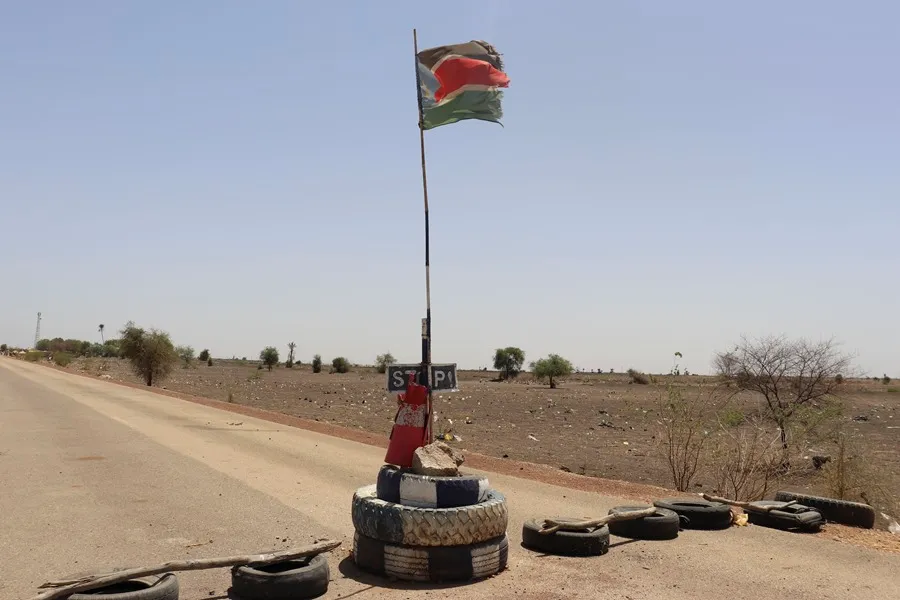
The Sudanese Army announced on Sunday the capture of a residential neighborhood located in northwestern Khartum as part of a large-scale offensive to recover the capital of Sudan, in the hands of the paramilitary group Rapid Support Forces (FAR) since the outbreak of the conflict in April 2023.
“The Sudanese Armed Forces Armored Corps, which operates from the Al Shajara military zone, has successfully taken control of the Al Ruwad residential complex,” the military institution announced in a brief statement published on its official Facebook account.
During the offensive, Army soldiers and fighters of allied armed groups “inflicted great losses” on the FAR, although the Armed Forces indicated that they respected “international law and its rules of intervention to guarantee the security of private and public property.”
The advance of the Army in northern Khartoum comes one day after the military regained control of the strategic city of Wad Madani, the capital of the central state of Al Yazira located south of the capital of Sudan and which had been under the control of the FAR since December 18, 2023.
The recovery of Wad Madani, the second largest city in Sudan in terms of population, was possible after four months of army offensive in the state of Al Yazira and after the withdrawal of the paramilitaries from the city, where hardly any fighting was recorded after the entry of government troops on Saturday.









This is an important development for the Sudan war and for the Army’s plans to “liberate” Khartum, where it is carrying out an offensive from the north and will now be able to advance to the Sudanese capital from the south after the capture of Wad Madani.
The leader of the Sudanese Army, Abdelfatah al Burhan, said on Sunday that his forces will recover “every inch” of Sudan, while the head of the paramilitaries, Mohamed Hamdan Dagalo – alias Hemedti – has promised that his fighters can continue fighting for more than two decades if necessary.
The war in Sudan has caused tens of thousands of deaths and forced more than 14 million to flee their homes, which has made the country the scene of the worst displaced persons crisis on the planet, according to the United Nations.






International
Trump Floats “Friendly Takeover” of Cuba Amid Rising Tensions
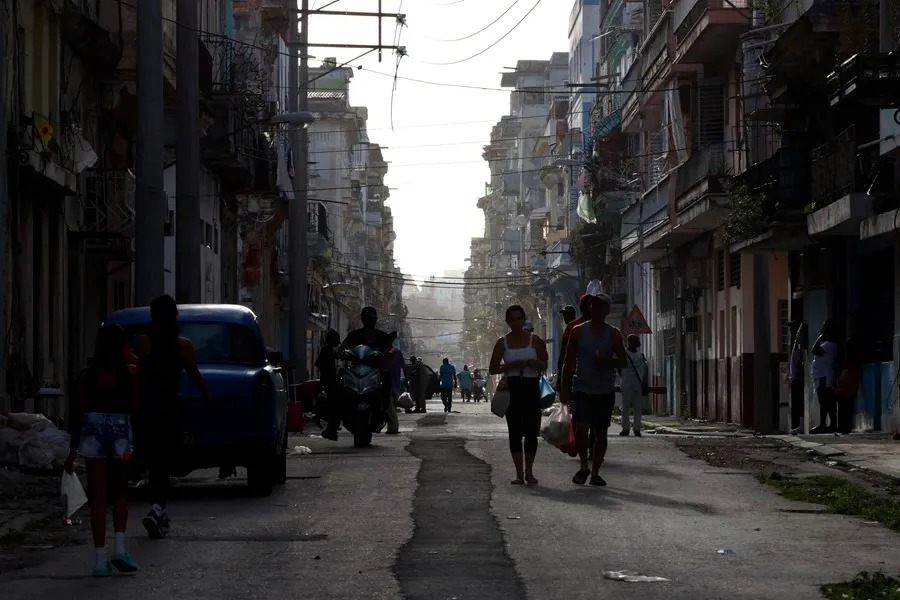
U.S. President Donald Trump said Friday that his administration is considering what he described as a “friendly takeover” of Cuba, as Washington continues to increase pressure on the island’s communist government.
“The Cuban government is talking to us and they have very serious problems, as you know. They have no money, they have nothing at this moment, but they are talking to us and maybe we will see a friendly takeover of Cuba,” Trump told reporters as he departed the White House for a trip to Texas.
Earlier in the week, U.S. Secretary of State Marco Rubio said Cuba needed a “radical change,” shortly after Washington eased restrictions on oil exports to the island for what officials described as “humanitarian reasons,” amid a deep economic crisis.
The United States has imposed an energy blockade on Cuba since January, citing what it calls an “extraordinary threat” posed by the communist-run island, located roughly 150 kilometers (90 miles) off the coast of Florida, to U.S. national security.
International
Argentina’s Senate Reviews Milei-Backed Labor Overhaul

Argentina’s Senate on Friday began reviewing the Labor Modernization Law promoted by the administration of President Javier Milei, a proposal that would significantly reshape labor rules across the country.
The upper chamber opened its final discussion of the contentious initiative, which revises the method used to calculate severance payments — lowering the amounts owed in dismissal cases — and introduces an “hour bank” mechanism that allows overtime to be offset with paid leave rather than extra wages.
The legislation also broadens the classification of essential services, a change that would place new limits on the right to strike in designated sectors.
The bill was initially approved by the Senate on February 11 and then moved to the Chamber of Deputies, where lawmakers passed it with amendments. It has now returned to the Senate for definitive approval.
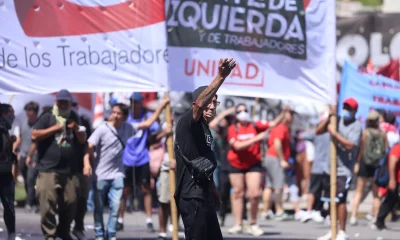
Outside the Congress building in Buenos Aires, workers, trade unions and left-wing organizations staged demonstrations beginning at midday. The gathering later thinned out amid reports of disturbances and a strong police presence. Security forces had secured the area surrounding the legislature since early morning hours.
Union leaders contend that the reform weakens labor protections, while many business representatives back the measure but stress that sustainable formal employment will require economic expansion, improved credit conditions, greater investment and a more dynamic domestic market.
International
Federal Judge Blocks Trump Policy Allowing Deportations to Third Countries
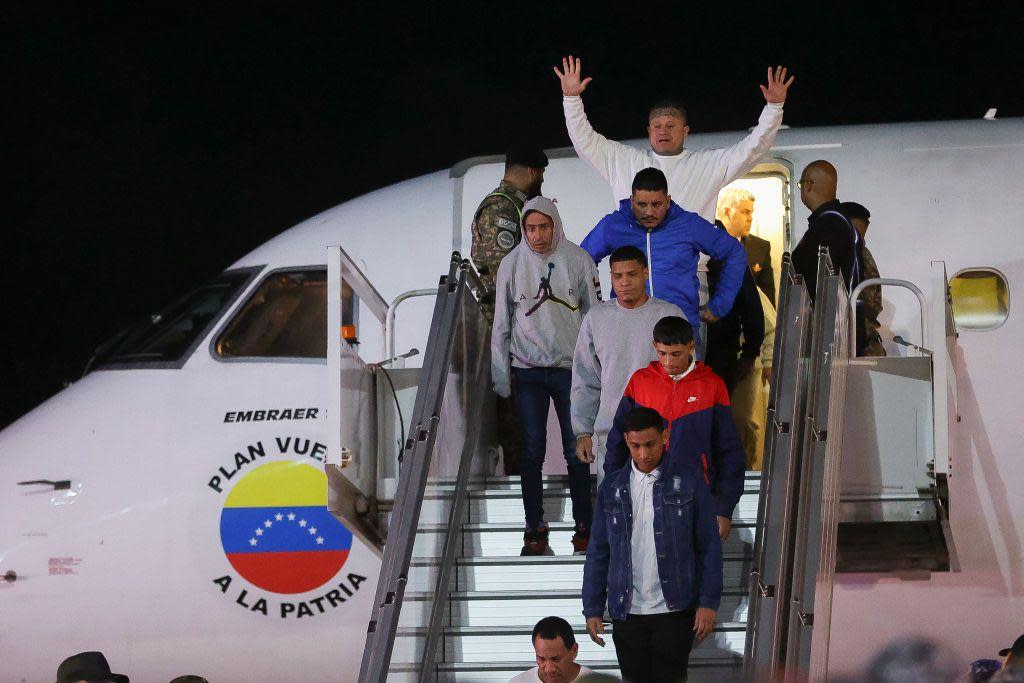
A federal judge ruled on Wednesday that the policy of U.S. President Donald Trump’s administration allowing immigration authorities to deport foreign nationals to third countries without prior notice or the opportunity to object is unlawful. The decision marks another legal setback for the administration on immigration matters.
Judge Brian Murphy of the U.S. District Court for the District of Massachusetts struck down the regulation issued last year, which stated that Immigration and Customs Enforcement (ICE) was not required to notify migrants if they were to be sent to countries other than the one listed in their removal order, provided that receiving nations offered assurances they would not face persecution or torture.
Murphy ordered the measure vacated but granted a 15-day delay before the ruling takes effect, giving the Trump administration time to file an appeal.
In his decision, the judge concluded that the policy violates federal immigration law and migrants’ due process rights. He also questioned the lack of transparency surrounding the alleged assurances provided by receiving countries, stating that “no one really knows anything about these supposed ‘assurances.’” He added, “It is not right, and it is not lawful.”
The ruling follows several legal disputes involving deportations to third countries. Last year, the executive branch deported more than 200 Salvadorans to a maximum-security prison in El Salvador, invoking an old wartime law. The White House also held talks with Costa Rica, Panama, and Rwanda about receiving migrants who are not citizens of those countries.
In May, the same judge determined that the government violated a court order when it attempted to remove a group of immigrants with criminal records to South Sudan without prior notice or an opportunity to raise claims of fear of persecution.
Although President Donald Trump took the case to the U.S. Supreme Court, which temporarily allowed the deportations to resume while a final decision was pending, the White House is expected to again appeal to higher courts to overturn this latest judicial ruling.

Trump Floats “Friendly Takeover” of Cuba Amid Rising Tensions

Argentina’s Senate Reviews Milei-Backed Labor Overhaul

Federal Judge Blocks Trump Policy Allowing Deportations to Third Countries
Tec de Monterrey honors one of its students for his contribution to nanotechnology in medicine

Defense Minister commends salvadoran soldier for Central American Cross Country victory

Extension of the state of emergency approved in southern Chile
-

 International2 days ago
Family of “El Mencho” Seeks Return of Body After Deadly Military Operation
-

 International2 days ago
Larry Summers Steps Down from Harvard Role Amid Epstein Controversy
-

 International2 days ago
Iran’s President Optimistic Ahead of Geneva Nuclear Talks with U.S.
-

 International2 days ago
Bill Gates Admits “Serious Mistake” Over Epstein Ties
-

 International2 days ago
Stephen Hawking Photo Appears in Newly Released Epstein Documents
-

 International4 days ago
Over 40 Million Affected by Major Snowstorm in Northeastern U.S.
-

 International1 day ago
Cocaine Production Surges 34% in 2023 as Market Expands into Africa and Asia
-

 International4 days ago
Nine People Killed in Two Armed Attacks in Manabí, Ecuador
-
 International1 day ago
Federal Judge Blocks Trump Policy Allowing Deportations to Third Countries
-

 International1 day ago
Clinton Accuses Republican Committee of Using Epstein Case to Shield Trump
-
 International7 hours ago
Argentina’s Senate Reviews Milei-Backed Labor Overhaul
-
 International7 hours ago
Trump Floats “Friendly Takeover” of Cuba Amid Rising Tensions