
International
The German far-right approves an electoral program with promises of “remigration” and exit from the euro

The far-right Alternative for Germany (AfD) party approved this Sunday an electoral program that includes promises of border closure and “remigration”, as well as exit from the euro and reintroduction of compulsory military service, at a time when the polls give it its best results in a year and place it as the second force in the elections of February 23.
After long debates, the program was unanimously approved on the second day of the federal congress held this weekend in Riesa (east Germany), where on Saturday the AfD co-leader, Alice Weidel, was officially nominated as a candidate for the chancellor’s office.
“We are getting stronger,” Weidel exclaimed at the end of the congress, before the German national anthem sounded.
Unlike the initial draft, the program approved today includes the controversial term “remigration”, coined by right-wing extremists and neo-Nazis to denote the massive expulsion of migrants and people with foreign roots, after Weidel – who until now had avoided it – used it publicly yesterday.
AfD officially maintains that with “remigration” it alludes only to the expulsion by legal means of migrants in an irregular situation, but in its circles the use of the term in the first sense is frequent, together with racist iconography.
The programme promises, among other things, the closure of borders to migrants and asylum seekers, a large-scale “deportation offensive” of people in an irregular situation, the withdrawal from the European asylum system and the acquisition of German nationality only for children of German parents and extraordinary cases.











In addition, it contains the ban on the construction of minarets in Germany and the use of the Islamic veil in public buildings.
The AfD also maintains its project to abandon the euro, although it does not explicitly demand the exit from the EU, but proposes to transform it or replace it with an “alliance of European nations” with a common market and that in the long term represents an alternative to NATO for the defense of the continent.
The program also promises to lift sanctions on Russia and re-import gas from that country, while delegates rejected a motion to include a condemnation of the Russian invasion of Ukraine.
A motion to include the reintroduction of compulsory military service was also approved at the last minute, against the wishes of co-leader Tino Chrupalla, who strives to profile the AfD as a “peace party.”
Despite the fact that candidate Weidel has another woman as a partner, with whom she is a mother of two children, the delegates voted in favor of including in the program that the family composed of “father, mother and children” is the basic cell of society.
They also spoke out against the mandatory measles vaccination for school-age children in force in Germany.
Finally, the congress approved the foundation of a new youth organization integrated within the party, after tensions grew with the Alternative Youth (JA), which was classified as extremist by the German authorities in 2023.
Between 21 and 22%
According to the most recent polls, AfD enjoys its highest popularity in a year, with an increase of two points in the last month to 21-22% in voting intention.
The formation, which is receiving the explicit support of tycoon Elon Musk, an ally of US president-elect Donald Trump, would thus be the second force behind the Christian Democratic bloc of Friedrich Merz, which is at 30%.
Chancellor Olaf Scholz’s social democrats and his green government partners are currently competing for third place with values between 13 and 16%, while the Liberals and the populist left-wing Sahra Wagenknecht (BSW) Alliance could stay below the 5% threshold for parliamentary representation.










International
Mexico and Guatemala Agree on Five-Point Binational Plan for 2027
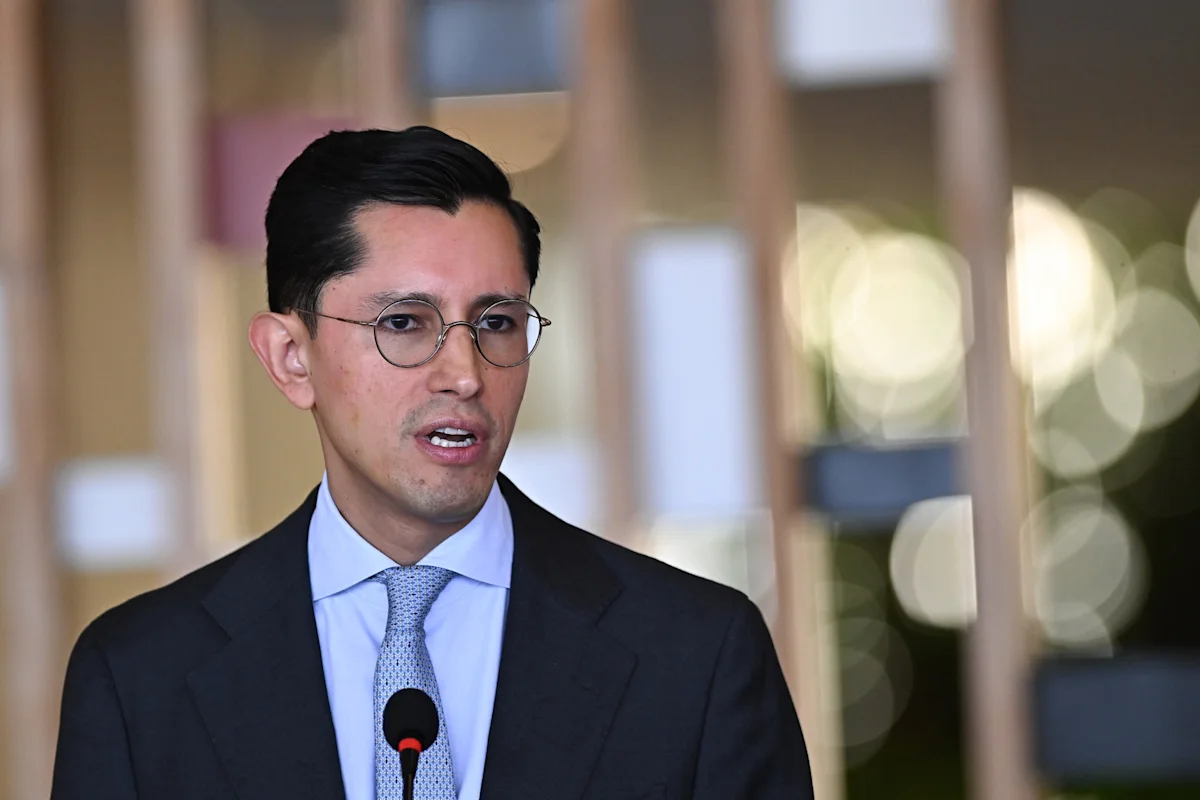
Mexico and Guatemala agreed Tuesday on a 2027 Binational Plan built around five areas of cooperation, along with a schedule of meetings and initiatives aimed at making progress by the end of 2026 on security, border infrastructure, human mobility, development and technical and social cooperation.
The agreement was announced by the foreign ministers of both countries following a meeting in Mexico City.
Mexican Foreign Minister Roberto Velasco said the plan will establish the “direction and priorities” of bilateral relations for next year. His Guatemalan counterpart, Carlos Ramiro Martínez, said the meeting allowed both governments to make decisions, schedule activities and revitalize bilateral cooperation mechanisms.
Security and border infrastructure
In the area of security, the two governments have nearly completed negotiations on a new memorandum of understanding for the Mexico-Guatemala High-Level Security Group (Ganseg), which was reactivated in 2025.
The countries expect to sign the agreement in the coming months to strengthen coordination and their ability to respond to shared security threats.
Regarding their nearly 1,000-kilometer shared border, Mexico and Guatemala agreed to advance infrastructure improvements at border crossings and continue work on a joint cargo clearance program between Ciudad Hidalgo and Tecún Umán, two border areas separated by the Suchiate River.
The measures are intended to facilitate bilateral trade while making cross-border exchanges safer and more efficient.
The two governments will also continue defining a route toward a railway connection between their countries through Line K of Mexico’s Interoceanic Corridor of the Isthmus of Tehuantepec (CIIT), with the aim of strengthening economic and community ties.
Migration and development
On human mobility, Mexico and Guatemala will maintain coordination to ensure safe, orderly and dignified returns, while strengthening protection for people in transit.
The bilateral agenda also includes a second phase of the Sembrando Vida program in Guatemala, which is expected to benefit 10,000 people across 15 departments.
Both countries will also advance initiatives under Juntos para el Bienestar, as well as six technical, scientific and energy cooperation projects approved by the Joint Commission.
The agreements seek to strengthen bilateral ties and establish concrete priorities for cooperation between Mexico and Guatemala during 2027.
International
France to Expel Two Iranian Diplomats Over Alleged Attack on French Officials

French Foreign Minister Jean-Noël Barrot announced Tuesday, August 18, 2026, that France will expel two Iranian diplomats in response to what Paris described as an attack on two French representatives in Iran last month.
“Two French diplomats were scandalously and deliberately assaulted on July 19. I had announced that this intolerable act would have consequences. It has now happened. Two Iranian diplomats in France will be expelled in the coming days,” Barrot said in a message posted on X.
The two Iranian diplomats have been declared persona non grata and will be required to leave France within the coming days, according to the French foreign minister.
About a month ago, Barrot said that two members of the French diplomatic staff had been detained by Iranian security forces for several hours. One of them was also subjected to harassment, he said.
The French government described the incident as an “extremely serious act of intimidation” that violated diplomatic immunity.
The two French embassy staff members were working on programs supporting Iranian civil society, particularly initiatives involving artists and researchers.
Iran has denied France’s allegations regarding the incident. The diplomatic dispute comes amid already strained relations between Paris and Tehran.
International
Heat wave puts more than 70 million Americans under alerts as temperatures near 46°C

More than 70 million people remained under heat alerts Monday as an intense heat wave continued across the southern United States, particularly Florida and states along the Mexican border, where temperatures and heat indexes could reach as high as 46 degrees Celsius, according to the National Weather Service (NWS).
Several cities recorded or tied temperature records over the weekend and into Monday, including Miami and Fort Lauderdale in Florida; Laredo, Borger and Austin’s airport in Texas; Atlanta, Georgia; Raleigh and Charlotte, North Carolina; and Memphis, Tennessee.
The NWS warned that the heat wave will continue affecting the southern and southeastern United States, with maximum temperatures expected to remain near 38°C to 40°C for several days. The heat index, which combines temperature and humidity to estimate how hot conditions feel, could reach 46°C.
The extreme heat is also spreading into the Southwest, where temperatures began rising again between Monday and Tuesday. Forecast highs in the region range from about 38°C to 43°C.
Heat alerts remain in effect across Nevada, Arizona and California, including areas in southern Arizona and California near the Mexican border, as authorities warn of the risks posed by prolonged extreme temperatures.
The NWS urged residents to limit outdoor activity, stay hydrated, ensure access to air conditioning or cooling centers, and check on vulnerable friends, neighbors and family members.
The United States is experiencing a summer marked by above-average temperatures and repeated heat waves. One of the most intense episodes occurred during the July 4 weekend, when extreme heat was blamed for roughly 30 deaths.
July was the hottest month ever recorded in the United States since measurements began, with the average temperature across the contiguous country approaching 25°C, according to the National Oceanic and Atmospheric Administration (NOAA).
The combination of extreme heat and drought conditions has also fueled wildfires. Nearly 3 million hectares have burned across the country so far in 2026, making it the largest area affected by wildfires in a decade.

Mexico and Guatemala Agree on Five-Point Binational Plan for 2027

France to Expel Two Iranian Diplomats Over Alleged Attack on French Officials

Heat wave puts more than 70 million Americans under alerts as temperatures near 46°C

Trump warns Iran over nuclear ambitions as U.S.-Iran ceasefire deadline passes

Brazil’s Lula and Flávio Bolsonaro kick off election campaigns amid focus on crime

Actress Hayden Panettiere Dies at 36, Representative Confirms

Luigi Mangione Pleads Guilty to Killing UnitedHealthcare CEO Brian Thompson

ICE Plan to Equip Agents With Electric Shock Gloves Raises Abuse Concerns
France to Expel Two Iranian Diplomats Over Alleged Attack on French Officials
Actress Hayden Panettiere Dies at 36, Representative Confirms
Trump warns Iran over nuclear ambitions as U.S.-Iran ceasefire deadline passes
Heat wave puts more than 70 million Americans under alerts as temperatures near 46°C
Brazil’s Lula and Flávio Bolsonaro kick off election campaigns amid focus on crime
Mexico and Guatemala Agree on Five-Point Binational Plan for 2027
Luigi Mangione Pleads Guilty to Killing UnitedHealthcare CEO Brian Thompson
ICE Plan to Equip Agents With Electric Shock Gloves Raises Abuse Concerns
-
 International12 hours ago
France to Expel Two Iranian Diplomats Over Alleged Attack on French Officials
-
 International2 days ago
Actress Hayden Panettiere Dies at 36, Representative Confirms
-
 International2 days ago
Trump warns Iran over nuclear ambitions as U.S.-Iran ceasefire deadline passes
-
 International2 days ago
Heat wave puts more than 70 million Americans under alerts as temperatures near 46°C
-
 International2 days ago
Brazil’s Lula and Flávio Bolsonaro kick off election campaigns amid focus on crime
-
 International12 hours ago
Mexico and Guatemala Agree on Five-Point Binational Plan for 2027
-
 International5 days ago
Luigi Mangione Pleads Guilty to Killing UnitedHealthcare CEO Brian Thompson
-
 International5 days ago
ICE Plan to Equip Agents With Electric Shock Gloves Raises Abuse Concerns