
International
Change course or follow the same line: Uruguay elects its new president on Sunday
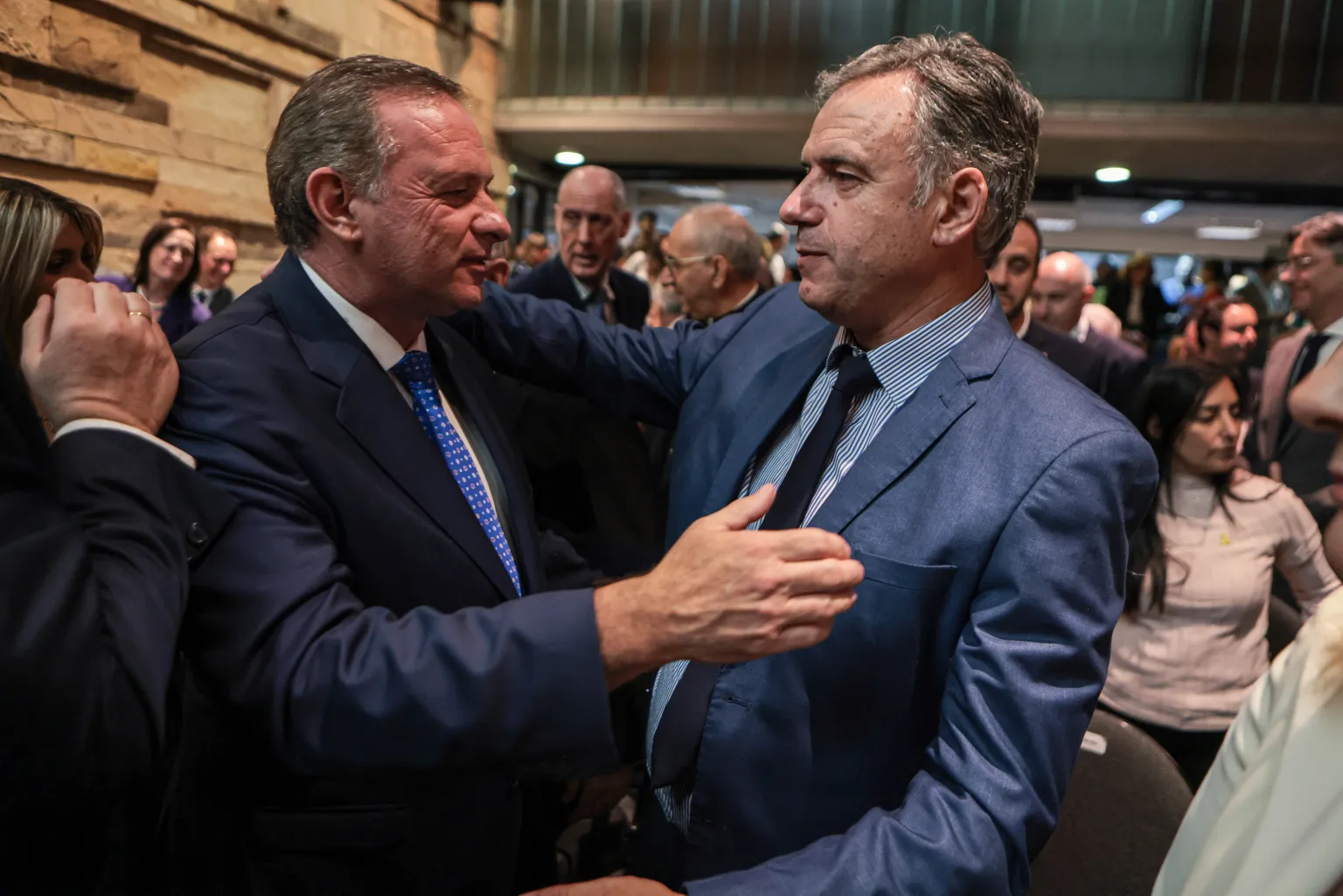
Change course or continue on the same path. That is the decision that Uruguayans will have to make on Sunday in elections marked by the parity that the latest polls showed.
28 days after the presidential and parliamentary elections, about 2.7 million people will go to the polls on November 24 to choose between the ruling party Álvaro Delgado and the opposition Yamandú Orsi.
From the ban to the second round to elect president in Uruguay
After none of the eleven candidates who competed in the previous instance exceeded 50% of the votes, the two most voted advanced to the second round.
This will take place between 8:00 and 19:30 local time (11:00 to 22:30 GMT) and it is expected that around 21:30 (00:30 GMT) the consultants will be able to show their first projections.
However, the latest polls presented showed a lot of parity between the candidate of the opposition Frente Amplio and the one who will represent the government coalition, made up of the ruling National Party, the Colorado Party, Cabildo Abierto, the Independent Party and the Constitutional Environmentalist Party.











Five days after Delgado and Orsi came face to face in a mandatory debate in which they presented their main proposals for the period 2025-2030, the South American country began to live the electoral ban.
In this way, the parties will not be able to carry out acts of proselytist propaganda.
An instance that only Tabaré Vázquez eluded
The second round of the Uruguayan presidential elections was held for the first time in 1999.
A plebiscite held in 1996 reformed the Constitution of the South American country and introduced changes such as the creation of primary elections and the ballot on the last Sunday of November.
This puts the two most voted candidates face to face in the presidential and parliamentary elections that are held on the last Sunday of October every five years and are held provided that neither has exceeded 50% of the votes in that instance.
Through that channel, the Colorado Party maintained the Government in the 1999 elections and did so with a historical surname.
Jorge Batlle became the fourth Batlle to be president of the South American country, after his great-grandfather Lorenzo Batlle, his great-uncle José Batlle y Ordóñez and his father, Luis Batlle Berres.
On October 31, 2004, Tabaré Vázquez went again for the Presidency and managed to get the left to win for the first time in Uruguay by obtaining 51.68% of the votes in the presidential and parliamentary elections.
That triumph of the Frente Amplio is so far the only one that got a game without the need for a second round, since it was implemented.
Five years later, José Mujica defeated Luis Alberto Lacalle Herrera in the second round and in 2014 Tabaré Vázquez joined the select group of presidents who ruled Uruguay on two occasions by beating Luis Lacalle Pou.
The current president acceded to this instance again in 2019 and on that occasion defeated the Frenteamplista Daniel Martínez.
Delgado and Orsi
Now, Delgado and Orsi will be the ones who will go hand in hand in search of access to the Presidency for the period 2025-2030.
Veterinarian by profession, the first of them will try to keep the chair currently occupied by Lacalle Pou, of whom he was his secretary of the Presidency between 2020 and 2023.
Previously, Delgado was a deputy in the period 2005-2015 and senator between that year and 2020.
For his part, the History professor Orsi will go for the Presidency after having been mayor (head of the local government) of the department (province) of Canelones between 2015 and 2020.
He also held the position of secretary general there between 2005 and 2015.










International
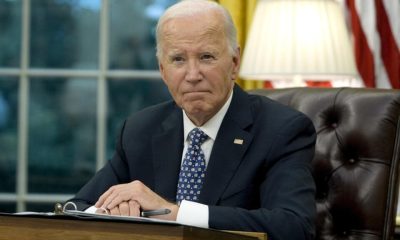
Joe Biden’s Prostate Cancer Has Spread to His Bones, Son Hunter Reveals
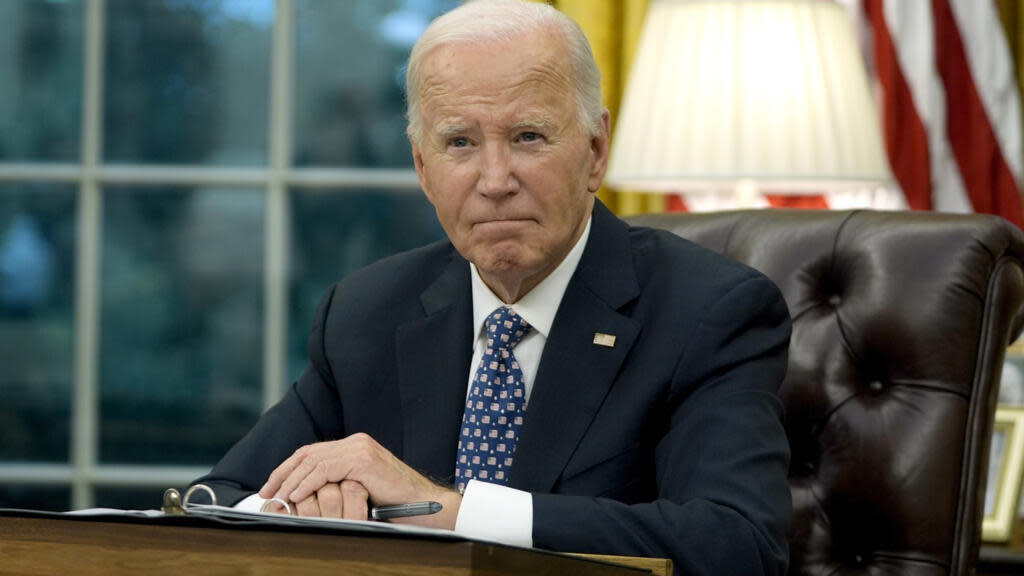
Former U.S. President Joe Biden’s prostate cancer has worsened and spread to his bones and other parts of his body, his son Hunter Biden revealed in a recent interview with the BBC.
Biden disclosed in May 2025, just four months after leaving office as the oldest sitting U.S. president in history, that he had been diagnosed with an aggressive form of prostate cancer that had already spread to his bones.
The former president subsequently began treatment, including radiation and hormone therapy. In July, while announcing the publication of his memoirs, Biden said the treatment was going “really well.”
However, in an extensive interview broadcast Friday night on the BBC’s Newsnight, Hunter Biden said his father’s condition had progressed despite treatment.
“The cancer has spread and metastasized to his bones and other places,” Hunter Biden said.
He added that the illness has been “very painful” and, in many ways, “very debilitating,” but said his father continues to remain active.
“He’s still out there. He’s still doing his thing,” Hunter Biden said, emphasizing that his father remains deeply committed to the United States.
The former president’s diagnosis has remained a subject of public attention since it was first announced, particularly because of his age and his decision to continue a public life after leaving the White House.
International
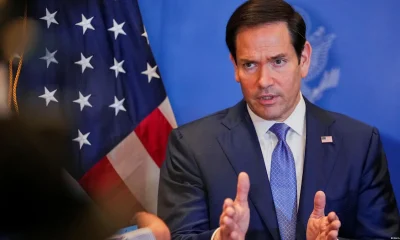
US announces $1 billion security assistance package for Colombia under new government
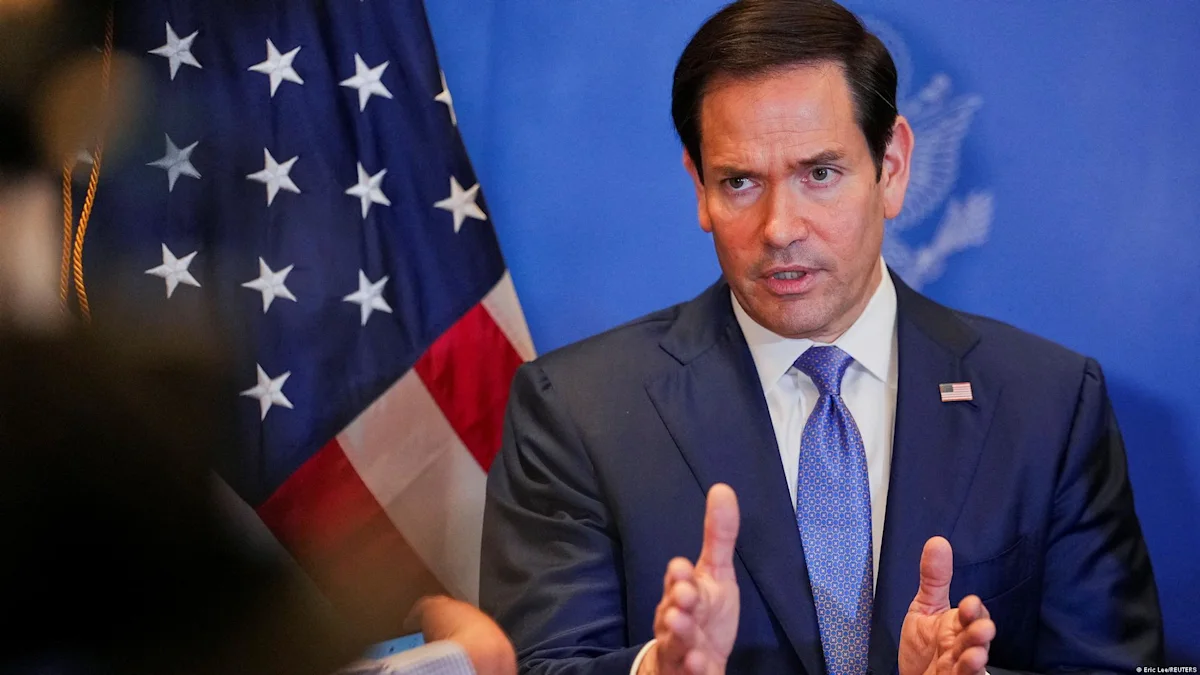
The U.S. Department of State announced Friday that Washington plans to provide Colombia with $1 billion as part of a security assistance package aimed at supporting the new government of far-right President Abelardo de la Espriella.
The administration of U.S. President Donald Trump said it intends to coordinate with Congress to announce the assistance package, which was unveiled on the occasion of De la Espriella’s inauguration. The United States attended the ceremony with a delegation led by acting Attorney General Todd Blanche.
The package is designed to strengthen Colombian security forces in their fight against terrorist organizations and transnational criminal groups through U.S. technology, increased operational capabilities and coordinated operations with American forces.
The assistance would also significantly expand coca crop eradication and cocaine interdiction operations, while strengthening efforts to track and disrupt the finances of criminal organizations.
Washington also offered to support Bogotá’s efforts to restore state control over territories dominated by armed groups, protect children from forced recruitment and curb irregular migration through greater coordination along the border.
The State Department described the measures as part of a new chapter in bilateral relations between the United States and Colombia. The broader framework also includes cooperation in areas such as energy, critical minerals, infrastructure, technology and civilian nuclear energy.
Relations between Washington and Bogotá had been strained during the administration of former President Gustavo Petro, particularly over migration and security policies.
De la Espriella’s arrival in office, accompanied by promises of a hard-line approach to armed groups and drug trafficking, is expected to mark a new stage in relations between Colombia and the United States.
International
Abelardo de la Espriella sworn in as Colombia’s president for 2026-2030
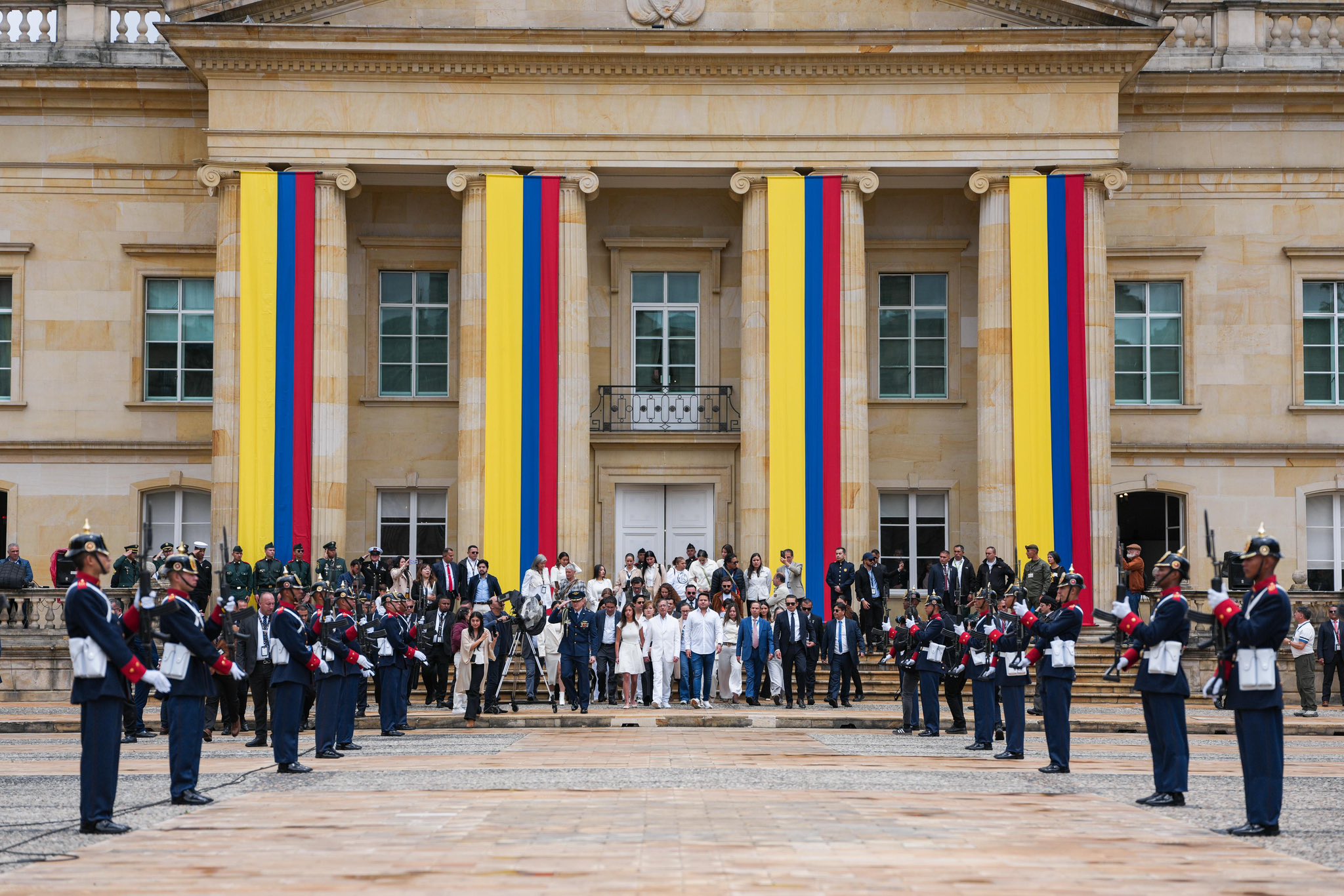
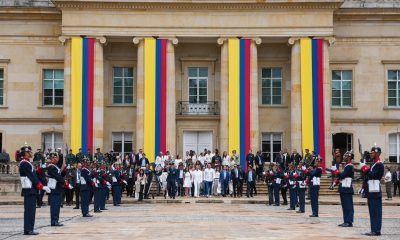
Lawyer Abelardo de la Espriella was sworn in Friday as Colombia’s president for the 2026-2030 term during an inauguration ceremony held at the USC Arena of the Santiago de Cali University in Valle del Cauca.
“I swear to God and promise the Colombian people to faithfully uphold the Constitution and the laws of Colombia,” De la Espriella, 48, said as he took the oath before Senate President Honorio Henríquez, who subsequently placed the presidential sash on him, formally marking the transfer of power from former President Gustavo Petro.
At the same time, members of the Colombian Army performed the traditional 21-gun salute from the José María Córdova Military Cadet School in Bogotá. After receiving the presidential sash, De la Espriella was applauded by those attending the ceremony and greeted by his family.
The new president later swore in Vice President José Manuel Restrepo. The ceremony also included the participation of 74-year-old farmer Luis Felipe Yagüé, whom De la Espriella invited as an honorary guest as a symbol of his support for small business owners and entrepreneurs.
De la Espriella arrived at the venue with his wife, Ana Lucía Pineda, and their four minor children. More than 1,000 national and international guests attended the ceremony, which began more than an hour later than scheduled.
Among the international figures present were King Felipe VI of Spain and presidents Javier Milei of Argentina, Daniel Noboa of Ecuador, Santiago Peña of Paraguay, José Raúl Mulino of Panama, Luis Abinader of the Dominican Republic, José Antonio Kast of Chile and Nasry Asfura of Honduras. FIFA President Gianni Infantino also attended.
Former Colombian presidents César Gaviria, Andrés Pastrana, Álvaro Uribe and Iván Duque were also present. Former President Ernesto Samper and Nobel Peace Prize laureate Juan Manuel Santos, however, were not invited to the ceremony.
After the inauguration ceremony concluded, De la Espriella traveled to the Pichincha Military Canton in Cali, where he was scheduled to deliver his first address as head of state to Colombia’s senior military commanders.

Joe Biden’s Prostate Cancer Has Spread to His Bones, Son Hunter Reveals

US announces $1 billion security assistance package for Colombia under new government

Abelardo de la Espriella sworn in as Colombia’s president for 2026-2030
Tec de Monterrey honors one of its students for his contribution to nanotechnology in medicine

Defense Minister commends salvadoran soldier for Central American Cross Country victory

Extension of the state of emergency approved in southern Chile
-
 International3 days ago
Abelardo de la Espriella sworn in as Colombia’s president for 2026-2030
-
 International3 days ago
Appeals Court blocks Trump’s White House ballroom project without congressional approval
-
 International3 days ago
Rubio warns Cuba U.S. pressure campaign will continue through Trump’s term
-
 International4 days ago
Afghan man sentenced to life in prison for deadly Munich vehicle attack
-
 International2 days ago
US announces $1 billion security assistance package for Colombia under new government
-
 International23 hours ago
Joe Biden’s Prostate Cancer Has Spread to His Bones, Son Hunter Reveals