
International
“The Bukele recipe is not applicable to Santiago,” says its elected mayor, Mario Desbordes
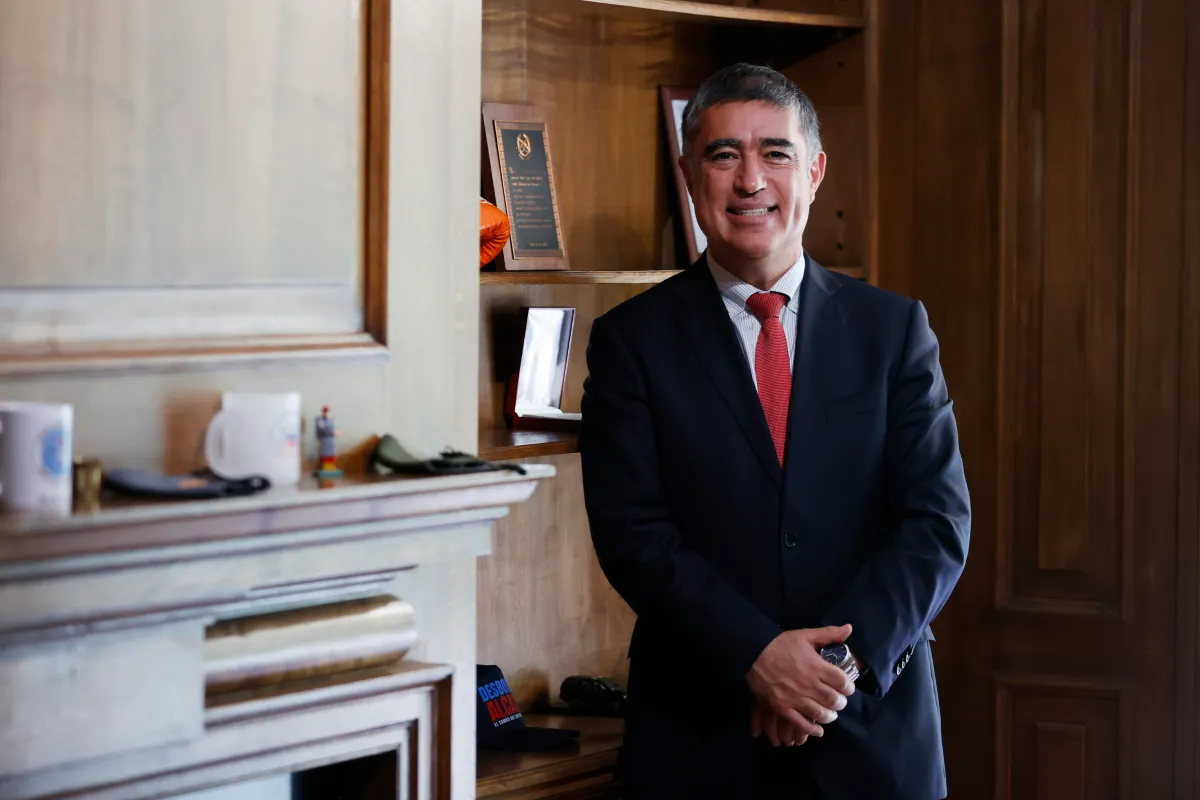
Former minister and conservative deputy Mario Desbordes (Los Andes, 1968), dealt one of the most painful blows to the government of the progressive Gabriel Boric almost a month ago when it was made by more than 20 points of difference with the Mayor’s Office of Santiago de Chile, considered the ‘jewel of the crown’.
A little more than two weeks after taking office, on December 6, Desbordes attributes his resounding triumph against the communist Irací Hassler, who was seeking reelection, to his “moderate” profile, to the “gray hair” and to the “experience”.
“Santiago is not a commune for the tougher right,” he admits in an interview with EFE in an office in the Bellas Artes neighborhood, which has been his campaign bunker in recent months.
Old acquaintance in Chilean politics, he has done almost everything: he was undersecretary of Investigations in the first term of Sebastián Piñera (2010-2014) and minister of Defense in the second (2018-2022), presidential pre-candidate and deputy.
He was also an agent of the Carabineros police force and presided over National Renewal, one of the three parties that make up the Chile Vamos coalition.











Governing the historic center of Santiago, a commune of 600,000 inhabitants, which in recent years has become very multicultural and where no mayor has been re-elected since 1996, is possibly one of the biggest challenges of his career.
The Santiago de Chile that receives Desbordes
Desbordes inherits a city that is going through one of its worst moments, with high crime rates and great deterioration of public spaces, where life on the street ends almost when the sun goes down and countless businesses have closed.
The problems come from afar, but they were aggravated with the protests of 2019 and the pandemic to the point that, regrets Desbordes, “the center of Santiago has moved emotionally to Providencia,” the adjacent neighborhood.
“The dirt, the scratches on the walls, prostitution in the Plaza de Armas in the morning, street commerce… There is a whole set of incivilities… I think Santiago looks a lot like New York in the early 90s,” he admits.
In 2023, Santiago recorded a total of 66 homicides, becoming for the fifth consecutive year the commune with the most victims in the country, and a homicide rate of 12.3 per 100,000 inhabitants, double the national average (6.3), according to the Prosecutor’s Office.
Despite the fact that more and more voices call for a heavy hand and look towards El Salvador, Desbordes assures that “the Bukele recipe is not applicable” because “Chile has another reality.”
Anyway, the elected mayor asks “to be very careful about criticizing Bukele without being in the shoes of Salvadorans who can only now go out on the street quietly.”
“I am not a friend of criminal populism that states that everyone has to go to jail and put a tank in every corner, nor of criminal goodism, which says that crime is a victim of us and in the end the bad guys are us. I think there is a middle ground,” he emphasizes.
“Clean, illuminate and paint”
That intermediate, in his opinion, is the so-called “Theory of Broken Windows”, the same that former New York Mayor Rudy Giuliani and his Chief of Police, William Bratton, applied in New York three decades ago and that says that if there is a broken window and it is not fixed, the rest end up being destroyed.
Desbordes proposes, in that sense, “to clean, illuminate, paint, put cameras, work with the community and recover the presence of the State,” in such a way that the city “is an uncomfortable place for those who infringe.”
In a conciliatory tone that contrasts with the political tension that Chile is experiencing, the elected mayor has already met with the Boric Government and is convinced that the solution also involves working in a coordinated manner with the different administrations, even if they are in “the ideological antipodes.”
“One of the complaints of the citizens is that politicians are dedicated to fighting like cat and dog and there are never agreements. When citizens lose confidence in politics and politicians, they are more likely to vote for populist and authoritarian people,” he says.
Representative of the so-called “social right”, the most moderate soul within Chile Vamos, Desbordes says that his reference is the former German Chancellor Angela Merkel or the Popular Party in Spain and that he is not in favor of radicalizing the coalition to avoid the flight of votes towards the thriving ultra-right.
“We cannot lose the center. Our main adversaries are the Broad Front (of Boric) and the Communist Party. That’s where the cultural and political struggle is.”










International
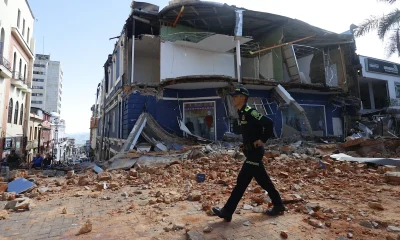
Colombia Earthquake Leaves at Least 22 Dead as Rescue Efforts Continue
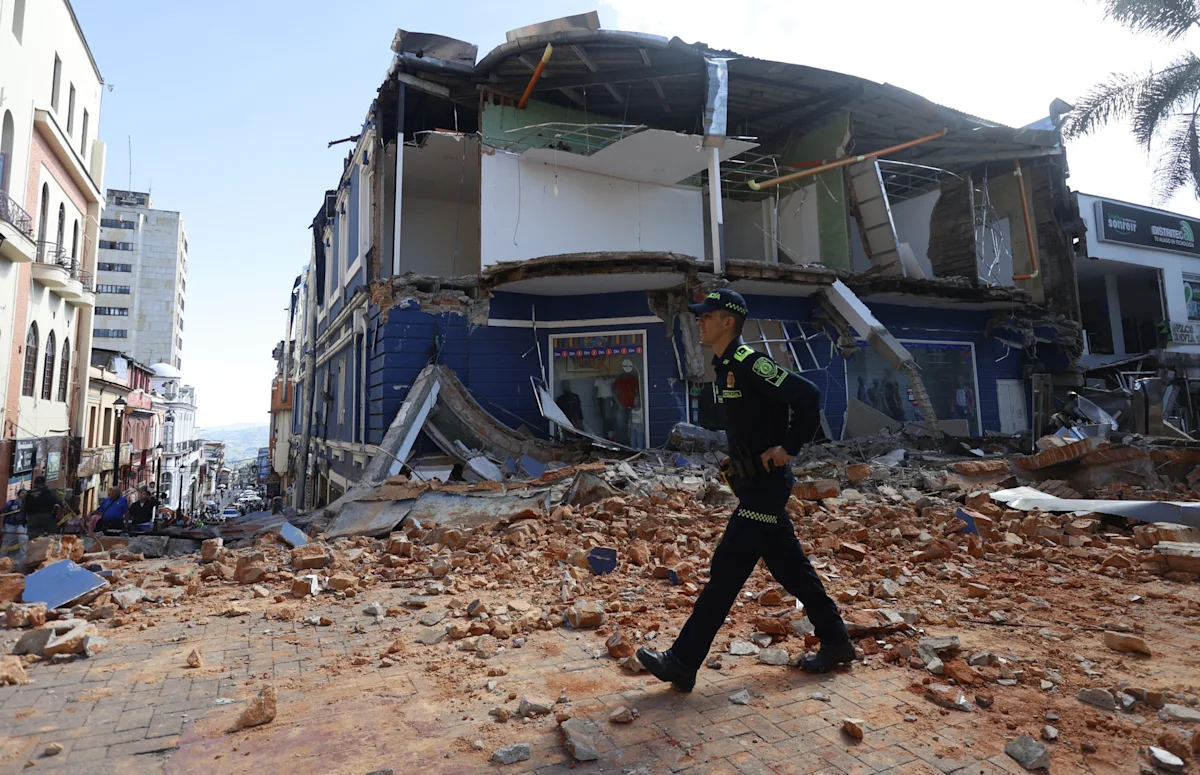
At least 22 people were killed and dozens more were affected by a magnitude 7.4 earthquake that struck Colombia on Monday, with the epicenter located near the municipality of San José del Palmar in the northwestern department of Chocó, authorities reported in a preliminary assessment.
The city of Pereira has so far recorded the highest number of fatalities. Mayor Mauricio Salazar told local media that 18 people had died in the city and warned that a large number of buildings had been damaged.
“The situation is critical, and we are moving forward with assessments while assisting people who remain trapped,” Salazar said.
Authorities in Manizales reported two additional deaths, while two more fatalities were confirmed in the department of Valle del Cauca. Several people were also injured, and structural damage was reported in different communities.
“We are just beginning to establish radio communication with the hospitals. We know that we have three injured people in El Cairo, two deaths in Zarzal, the collapse of an academic structure in Calima Darién, and minor structural damage in Cali,” said María Cristina Lesmes, Valle del Cauca’s health secretary.
Emergency teams were continuing rescue and assessment operations as authorities worked to determine the full extent of the damage and update the number of casualties.
International
Record 230 Migrants Cross English Channel to UK in Single Boat
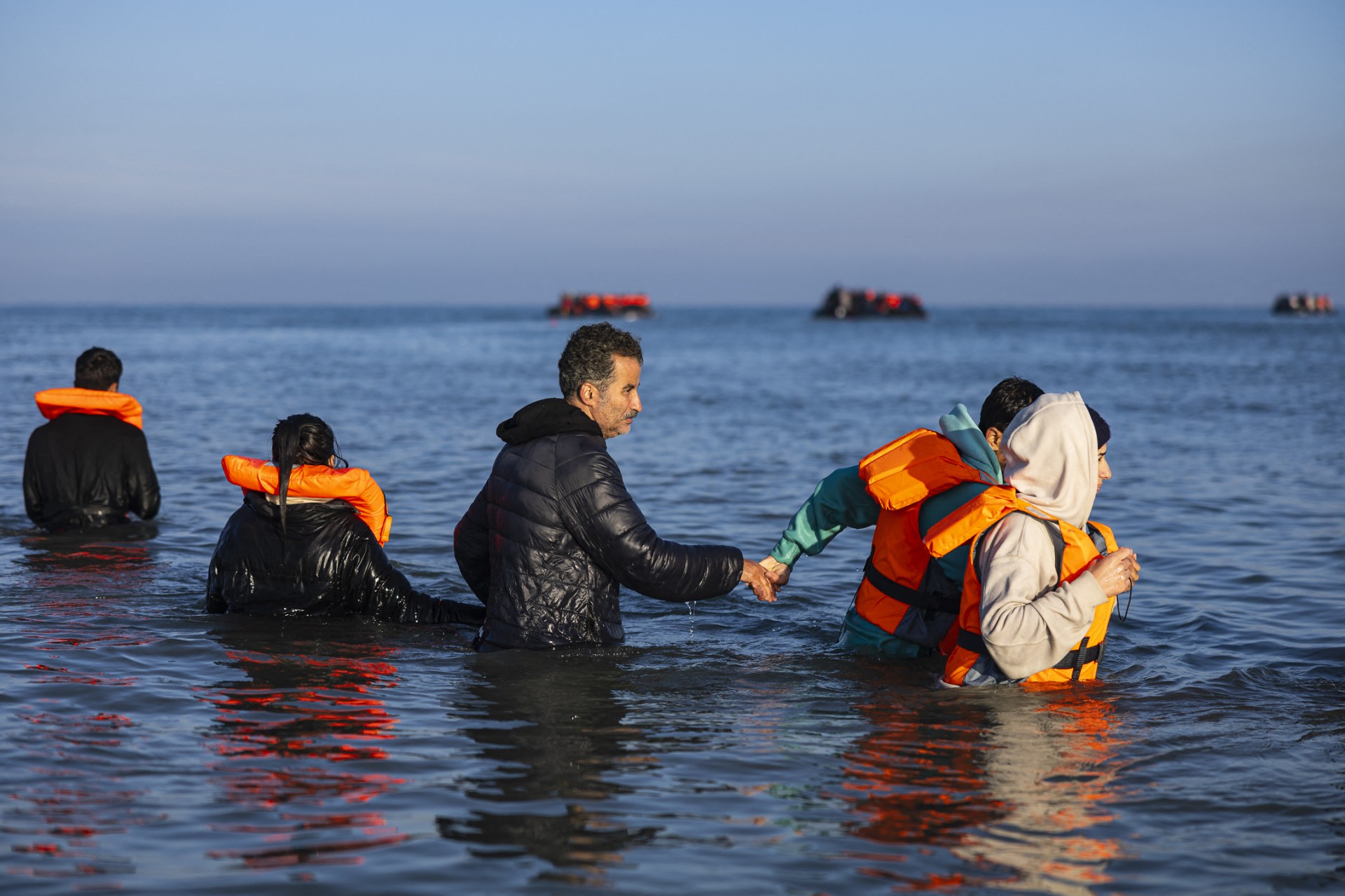
A record 230 migrants crossed the English Channel overnight Sunday aboard a small inflatable boat bound for the United Kingdom, according to French maritime rescue services and British media, highlighting the growing number of people being packed onto vessels attempting the dangerous crossing.
More than 20 children were among those aboard the inflatable boat when it departed from the northeastern French coast on Sunday night amid chaotic scenes, France’s maritime rescue service SNSM said in an online statement.
The figure surpasses the previous record for the number of people aboard a single boat, set last month when 165 migrants successfully crossed the busy maritime route.
The latest incident comes just days after an inflatable boat carrying more than 150 people capsized in the Channel after its engine caught fire, triggering a major search-and-rescue operation.
Britain’s Home Office did not confirm the exact number of people aboard Sunday’s vessel but condemned what it described as the “reckless and dangerous tactics” used by criminal gangs facilitating the crossings.
A spokesperson for Prime Minister Andy Burnham described images of the operation as “shocking,” particularly those showing very young children being placed aboard boats that were not suitable for the journey.
The United Kingdom has spent years attempting to curb these dangerous and politically sensitive Channel crossings. Tens of thousands of migrants have reached the southeastern English coast annually in recent years, keeping the issue at the center of the country’s immigration debate.
International
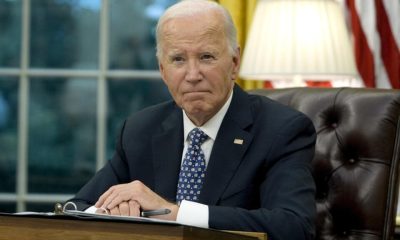
Joe Biden’s Prostate Cancer Has Spread to His Bones, Son Hunter Reveals
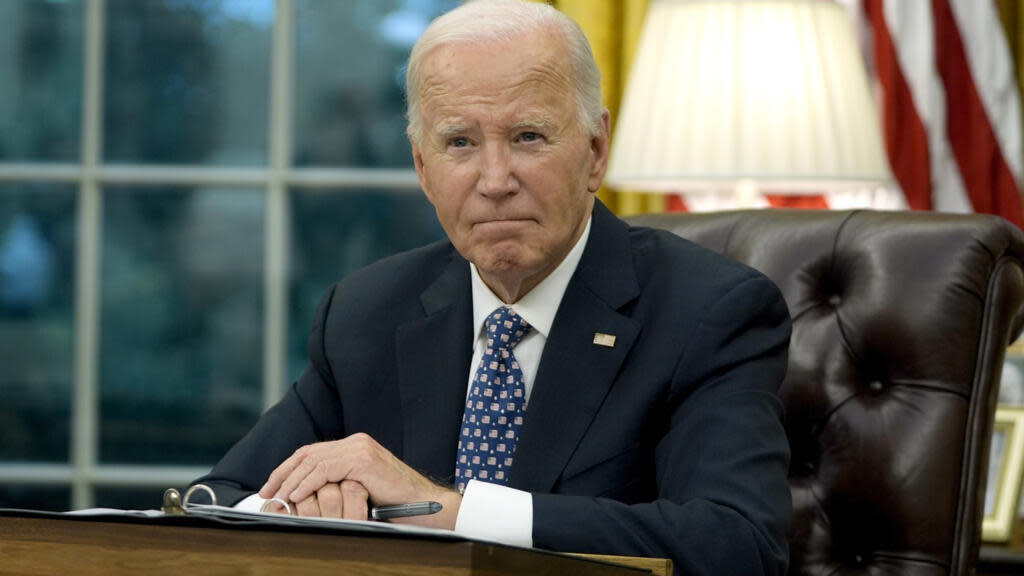
Former U.S. President Joe Biden’s prostate cancer has worsened and spread to his bones and other parts of his body, his son Hunter Biden revealed in a recent interview with the BBC.
Biden disclosed in May 2025, just four months after leaving office as the oldest sitting U.S. president in history, that he had been diagnosed with an aggressive form of prostate cancer that had already spread to his bones.
The former president subsequently began treatment, including radiation and hormone therapy. In July, while announcing the publication of his memoirs, Biden said the treatment was going “really well.”
However, in an extensive interview broadcast Friday night on the BBC’s Newsnight, Hunter Biden said his father’s condition had progressed despite treatment.
“The cancer has spread and metastasized to his bones and other places,” Hunter Biden said.
He added that the illness has been “very painful” and, in many ways, “very debilitating,” but said his father continues to remain active.
“He’s still out there. He’s still doing his thing,” Hunter Biden said, emphasizing that his father remains deeply committed to the United States.
The former president’s diagnosis has remained a subject of public attention since it was first announced, particularly because of his age and his decision to continue a public life after leaving the White House.

Colombia Earthquake Leaves at Least 22 Dead as Rescue Efforts Continue

Record 230 Migrants Cross English Channel to UK in Single Boat

Joe Biden’s Prostate Cancer Has Spread to His Bones, Son Hunter Reveals
Tec de Monterrey honors one of its students for his contribution to nanotechnology in medicine

Defense Minister commends salvadoran soldier for Central American Cross Country victory

Extension of the state of emergency approved in southern Chile
-

 International3 days ago
Appeals Court blocks Trump’s White House ballroom project without congressional approval
-

 International3 days ago
Abelardo de la Espriella sworn in as Colombia’s president for 2026-2030
-
 International4 days ago
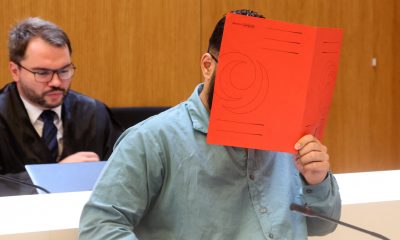
Afghan man sentenced to life in prison for deadly Munich vehicle attack
-
 International3 days ago
Rubio warns Cuba U.S. pressure campaign will continue through Trump’s term
-
 International2 days ago
US announces $1 billion security assistance package for Colombia under new government
-
 International1 day ago
Joe Biden’s Prostate Cancer Has Spread to His Bones, Son Hunter Reveals
-
 International5 hours ago
Colombia Earthquake Leaves at Least 22 Dead as Rescue Efforts Continue
-
 International5 hours ago
Record 230 Migrants Cross English Channel to UK in Single Boat