
Internacionales
The Chinese Communist Party expels the former Minister of Agriculture, accused of corruption

The Chinese Communist Party (CCP) expelled former Minister of Agriculture Tang Renjian “for serious disciplinary violations” and “on suspicion that he accepted bribes,” according to a statement published this Friday by the authorities.
Tang had been “under disciplinary investigation” since May, and in September a substitute for the portfolio, Han Jun, was appointed.
The two most important and powerful anti-corruption bodies of the Party, the Central Commission for the Inspection of Discipline and the state National Supervisory Commission, said today that Tang was expelled for “ineffective in the implementation of decisions” and for “making decisions blindly.”
Likewise, the statement accuses Tang of being “morally corrupt” and of showing “unbridled greed.”
Suspected of receiving commissions for contracts with companies
The investigation concluded that Tang used the position to “seek benefits for others in business operations, project contracting and job adjustments, receiving in return an extremely large amount of money and valuables.”











“Her actions constituted a serious offense and it is suspected that he accepted bribes,” the statement adds.
Your “illicit” earnings will be confiscated and your case will be “remitted to the Prosecutor’s Office for prosecution,” the note concludes.
His dismissal this year raised to three the number of ministers of the Chinese Government abruptly dismissed since in July 2023 the then head of Foreign Affairs, Qin Gang, lost office only seven months after his appointment and after not having been seen in public for a month.
Last year, the then head of Defense, Li Shangfu, was also dismissed without explanation and subsequently expelled from the CCP after being accused of a crime of corruption.










Internacionales
Rubén Gallego says U.S. policy may push for Cuba regime change under Trump administration
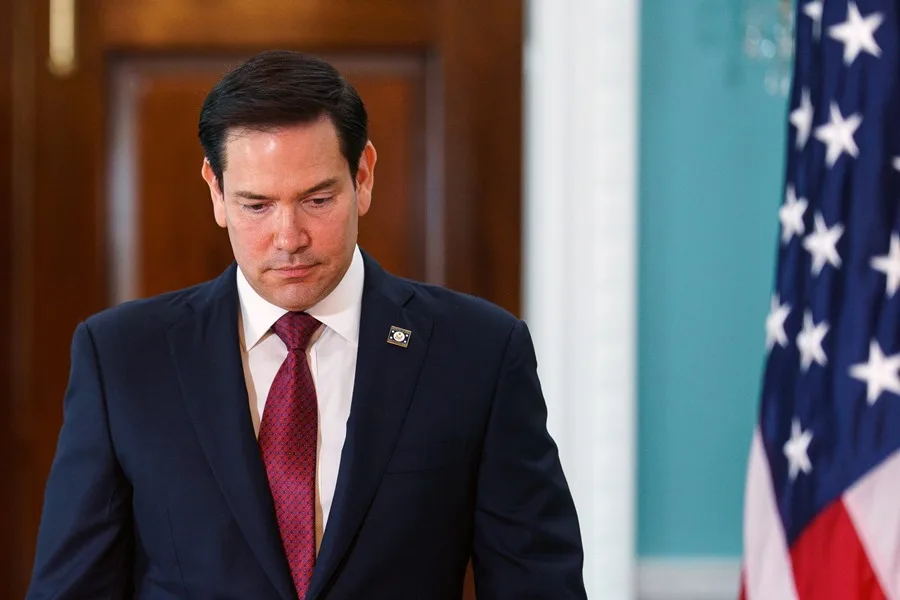
Democratic Senator Rubén Gallego said on Friday in Madrid that U.S. Secretary of State Marco Rubio has an “obsession” with Cuba and suggested that the administration of President Donald Trump is determined to change the Cuban government by any means necessary.
Speaking in Spanish during a meeting with journalists at the Elcano Royal Institute for International and Strategic Studies, Gallego said he believes there could be an attempt to alter the Cuban government, potentially through military or other non-democratic means.
“I think there will be an attempt to change the government of Cuba, it could be through the military or in another way,” said Gallego, who is of Mexican-Colombian origin.
The Arizona senator argued that Cuba does not represent a threat to the United States, describing it as “a very poor island of nine million people.” However, he acknowledged the significant political influence of Cuban-Americans and of Secretary of State Marco Rubio within the current Trump administration.
Gallego also expressed opposition to U.S. military interventions aimed at overthrowing foreign governments, stating that such actions are unacceptable, particularly when their objective is regime change.
He noted that “almost 99% of Democrats” oppose any military intervention in Cuba.
The senator also referred to the U.S. operation to capture Venezuelan President Nicolás Maduro on January 3, stating that although Maduro is “a horrible and very corrupt man,” this does not justify overthrowing governments through force.
“If we start arguing that a president is a criminal, what prevents China from saying the same about Taiwan or other nations?” he warned.
Gallego further described the political transition process in Venezuela as a “failure,” arguing that little has changed in terms of governance outcomes.
“We went from one dictator to another, so from a geopolitical and strategic point of view it has been a failure, until we see whether Venezuela achieves a real democratic transition,” he said, referring to Maduro’s replacement by Delcy Rodríguez.
Internacionales
Ecuador extends state of emergency amid escalating violence and crime crackdown
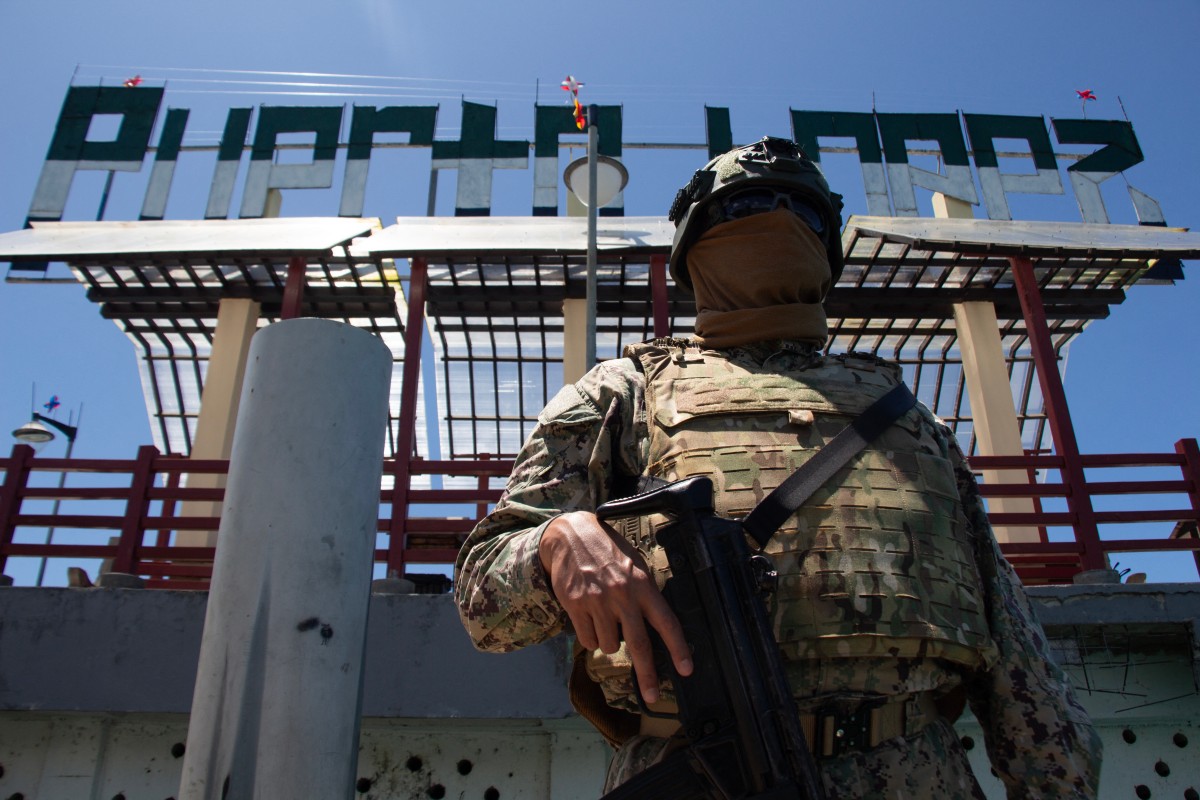
Since taking office in November 2023, Ecuador’s president Daniel Noboa has repeatedly declared states of emergency as part of his campaign against organized crime groups, which have turned Ecuador into one of the most violent nations in Latin America, with a homicide rate of 54 per 100,000 inhabitants in 2025, according to official data.
In response to rising insecurity, Noboa declared an “internal armed conflict” in 2024, allowing the military to be deployed on the streets. The move has drawn criticism from human rights organizations, which have raised concerns over alleged abuses by security forces.
Through a decree issued on Thursday, the president extended the state of emergency in several coastal provinces — Guayas, Manabí, Esmeraldas, Santa Elena, and El Oro — key transit routes along the Pacific where around 70% of cocaine shipments from Colombia and Peru pass through.
The measure also applies to nine provinces in total, including Pichincha, home to the capital Quito, as well as four additional areas where violence remains concentrated.
Under the decree, the government has suspended certain constitutional rights, including the inviolability of the home and private correspondence.
Earlier this week, a nighttime curfew imposed in Guayas, Los Ríos, Santo Domingo de los Tsáchilas, and El Oro came to an end. The curfew had been part of a broader offensive against organized crime, supported by United States.
Internacionales
Major winter storm threatens “catastrophic” ice and snow across much of the U.S.
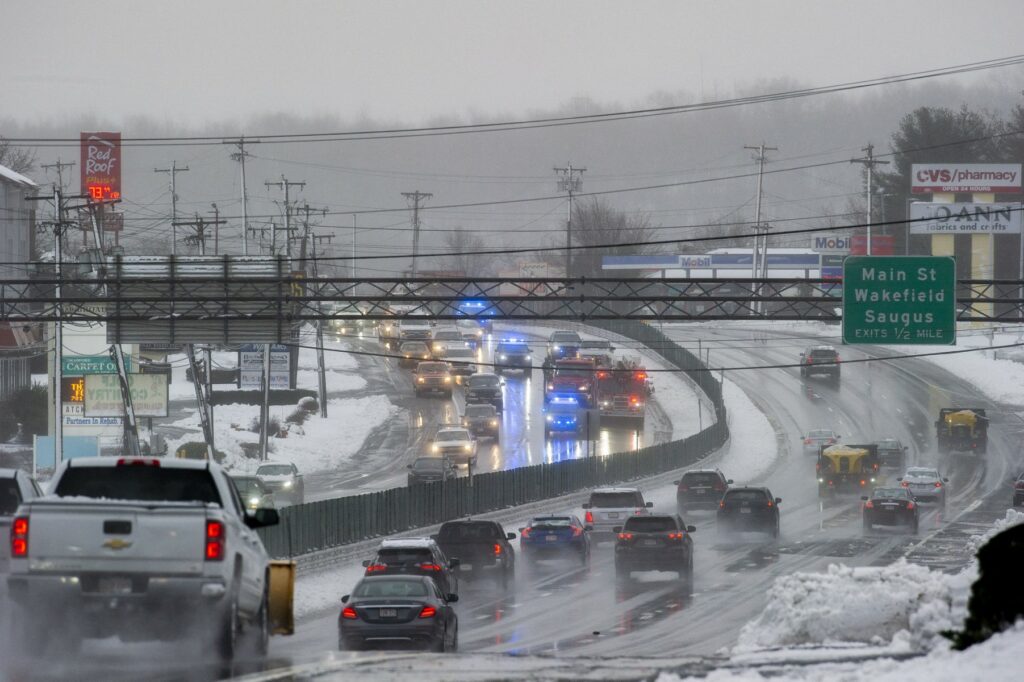
A major winter storm is threatening to blanket large portions of the United States with a dangerous mix of freezing rain and heavy snowfall, potentially creating “catastrophic” conditions across areas home to nearly 160 million people.
Several U.S. states have declared a state of emergency as the Arctic blast advances from the California coast across much of the continental United States, affecting central regions, including the Rocky Mountains and the Great Plains, according to forecasts.
The National Weather Service warned the storm could cause a “catastrophic accumulation of ice,” leading to prolonged power outages, widespread tree damage, and extremely dangerous or impassable travel conditions.
Meteorologist Ryan Maue cautioned that “the next 10 days of winter will be the worst in 40 years in the United States.”
“Think about where you can go, what you can do, and who may need even more help to survive the coming week. This is not an exaggeration or a joke,” Maue said.
He urged residents to prepare for temperatures dropping below -18°C (0°F).
More than 1,500 weekend flights had already been canceled, according to flight tracker FlightAware, including numerous flights in Texas.
In the southern state, many residents still recall the devastation caused by a similar storm in February 2021, which resulted in more than 200 deaths linked to hypothermia, carbon monoxide poisoning, and traffic accidents.
Texas authorities have assured the public that the power grid, which suffered widespread failures during that storm and left millions without electricity, is better prepared to withstand the extreme weather this time.

Chuck Schumer Unveils Proposal to Strengthen Oversight of the U.S. Presidency

Trump Administration Urges Latin America to Increase Defense Spending Against Organized Crime

FAO and WFP Seek $42 Million to Prepare Southern Africa for Unprecedented El Niño
Tec de Monterrey honors one of its students for his contribution to nanotechnology in medicine

Defense Minister commends salvadoran soldier for Central American Cross Country victory

Extension of the state of emergency approved in southern Chile
-
 International3 days ago
U.S. and Iran Maintain Ceasefire as Trump Expresses Optimism Over New Talks
-

 International3 days ago
Police Investigate After Remains of Five Newborns Found in French Apartment
-

 International3 days ago
Portuguese Authorities Seize 2.6 Tons of Cocaine Worth More Than $550 Million in Drug Bust
-

 International1 day ago
Five Bodies Found in Ecuador as Police Probe Suspected Gang Turf War
-

 Central America4 days ago
EU Urges Nicaragua to Hold Free and Transparent Elections Amid Proposed Electoral Reforms
-

 International1 day ago
Georgia Teen Sentenced to Life Without Parole for Deadly School Shooting
-

 International3 days ago
Costa Rica Seeks to Expand Extradition Law to Target Organized Crime
-

 International3 days ago
China Accuses U.S. AI Firms of Using Chinese Models to Train Artificial Intelligence
-
 Central America1 day ago
Prosecutors Accuse Ex-Defense Minister of Undermining Press Freedom in Honduras
-
International8 hours ago
Chuck Schumer Unveils Proposal to Strengthen Oversight of the U.S. Presidency
-

 International3 days ago
Three Killed, Four Injured in Shooting Near Seattle’s Space Needle
-
 International8 hours ago
Trump Administration Urges Latin America to Increase Defense Spending Against Organized Crime
-
 International8 hours ago
FAO and WFP Seek $42 Million to Prepare Southern Africa for Unprecedented El Niño