
International
Donald Trump, the master of provocation who never admits defeat

Always attack, never apologize and never admit defeat. They are the lessons that Donald Trump learned as a young man and a manual that has guided his life until today, when this businessman turned politician caresses his goal of returning to the White House despite his turbulent first term.
This Tuesday’s elections between former Republican president and Democratic Vice President Kamala Harris are the third to which Trump is presented, but in none of the previous polls had given him as many options to win as now.
This 78-year-old master of provocation has managed to re-elay a political career that seemed over when in 2021 he left the White House defeated with a country divided by a controversial presidency that had an explosive end with the assault on the Capitol.
For Trump, the duel with Harris is not only an opportunity to rewrite his legacy, but also a matter of almost personal survival since returning to power would allow him to avoid the pending accounts he has with Justice.
A tycoon turned president
Born on June 14, 1946 in Queens (New York) to a family of German descent, Donald John Trump graduated in Finance, at the age of 28 took over from his father’s real estate and built a millionaire empire not exempt from controversies over debts and tax evasion.











But his political career could not be explained without the fame he acquired thanks to the world of entertainment and television. He even presented his own program, “The Apprentice”, in which he dismissed contestants who intended to work in his company.
When in 2015 he went down the golden escalators of the Trump Tower to announce his first presidential race, the Republican Party took it as a joke, but his ‘outsider’ image catapulted him to the nomination.
He promised to build a border wall and, against all odds, won the 2016 election to Hillary Clinton. The tycoon had managed to connect with the white working class who felt like a victim of globalization and wanted to make the United States “big again.”
Thus was born Trumpism, one of the most important political movements in the history of the United States and that has influenced the populist right around the world.
Donald Trump and an incendiary mandate
Since he came to power, Trump embraced insult and confrontation as a political style and ruled on Twitter. Although he popularized the concept of ‘fake news’ to attack the media, he himself was a great diffuser of lies.
The questionable management of the COVID-19 pandemic and racial riots dynamited his re-election, which months earlier seemed assured by the good performance of the economy.
He lost in 2020 against Joe Biden although, true to his style, he never admitted defeat and spread the biggest of his lies: that of electoral fraud.
The courts rejected all their demands, but a mob of Trumpist fanatics assaulted the Capitol on January 6, 2021 in a last frustrated attempt to stop the transition of powers.
“We will return somehow,” Trump said as he left Washington repudiated by his allies and when he seemed ostracized.
The resurgence
But the tycoon never disappeared from the front line; he capitalized on the discontent over the high inflation and used his various judicial messes to his advantage, including his accusation for the assault on the Capitol and the conviction for irregular payments to the porn actress Stormy Daniels, the first conviction of a former president and who is still pending sentence.
He campaigned with a photo of his police file as if he were a politically persecuted and swept this year without rumsing his hair in the Republican Party primaries, which has been molded to his image and likeness.
A cult of the leader that reached its maximum splendor on July 13 when Trump dodged a bullet by the hair in an assassination attempt at an electoral rally, a scene that was immortalized in his iconic photo with his fist raised and his ear bloody.
Donald Trump, doesn’t change his rhetoric
The Republican has not moderated his rhetoric: he has insinuated that he would be “dictator for a day,” he has accused migrants of eating their neighbors’ pets and has refused to apologize after a comedian at one of his rallies called Puerto Rico a “garbage island.”
Although they live apart, her return to the presidency would also be the return as first lady of Slovenian model Melania Trump, her third marriage after Ivana Trump and Marla Maples.
With an unmistakable blond hairstyle and orange tan, Trump does not drink, loves hamburgers and is very superstitious: campaigning at a McDonald’s he spilled the salt and threw himself a little over his shoulder as a spell against bad luck. There is a lot at stake.










International
Three U.S. Executions Set for Same Day as Trump Pushes to Expand Death Penalty

The death penalty has been abolished in 23 of the 50 U.S. states, while three others —California, Oregon and Pennsylvania— currently have moratoriums in place.
The United States is set to carry out three executions on the same day, a rare occurrence that has not happened since 2010, according to the nonprofit Death Penalty Information Center.
President Donald Trump has sought to expand the use of capital punishment for what he describes as “the most heinous crimes.” In April, the Department of Justice proposed expanding execution methods to include firing squads, lethal gas and electrocution.
Tennessee is scheduled to execute Anthony Darrell Dugard Hines, 66, on Thursday. He was sentenced to death for the 1985 murder of a woman, according to local media.
In Oklahoma, Carlos Cuesta-Rodríguez, 70, is scheduled to be executed for a 2003 murder.
Meanwhile, Alabama plans to execute Jeremy Williams, 42, who was sentenced to death for the rape and murder of a five-year-old girl.
The United States carried out 47 executions in 2025, the highest number since 2009, when 52 executions were recorded.
Florida conducted the largest number of executions last year, with 19, followed by Alabama, South Carolina and Texas, with five each.
Of the executions carried out in 2025, 39 were conducted by lethal injection. Three were carried out by firing squad and five through nitrogen hypoxia, a method that involves forcing nitrogen gas into a face mask, depriving the prisoner of oxygen.
The United Nations has condemned nitrogen gas as a cruel and inhumane method of capital punishment.
International
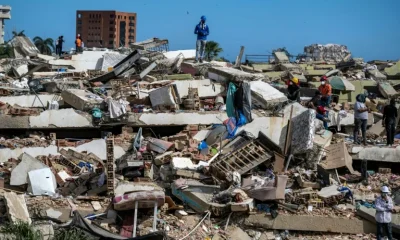
Colombia Earthquake Death Toll Reaches 265 as Rescue Teams Race Against Time
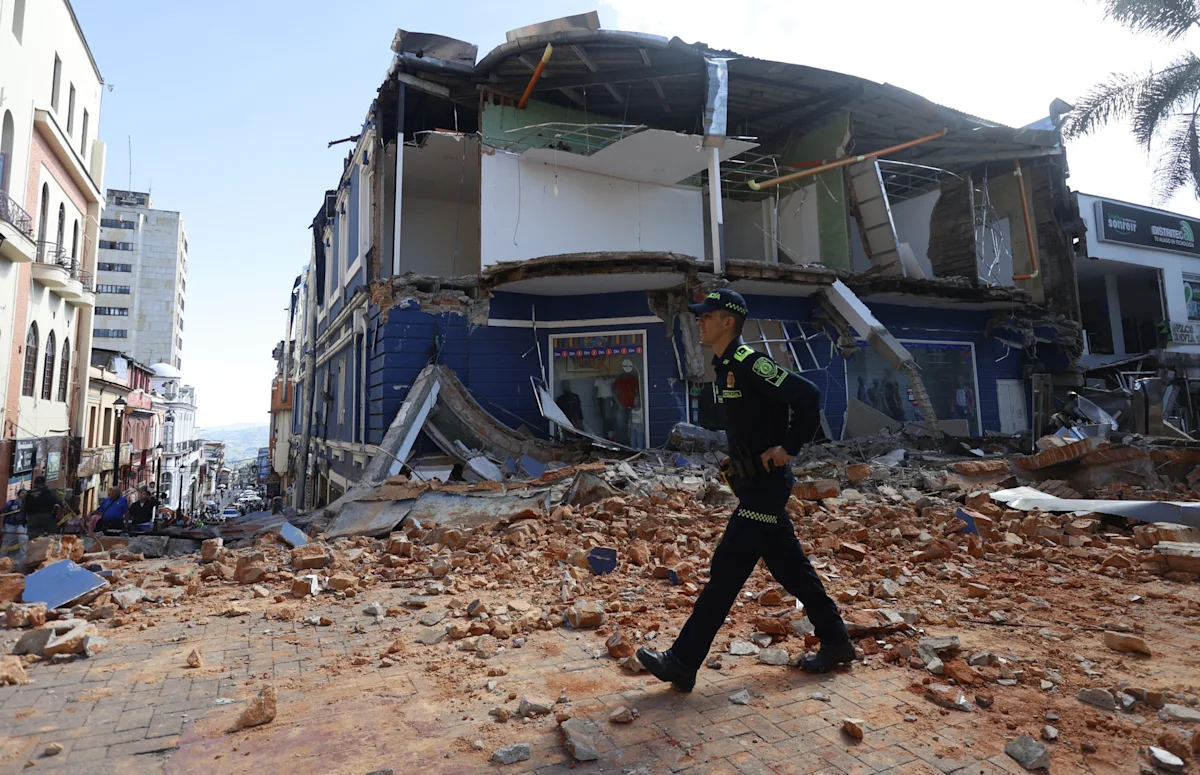
The 7.4-magnitude earthquake that struck Colombia on Monday, the strongest to hit the country this century, has so far left 265 people dead and around 3,500 injured.
In Cali, Pereira and other cities in western Colombia, rescue teams are working around the clock as they search for survivors. The first 72 hours following the earthquake will be reached at 7:34 a.m. local time (12:34 GMT), a critical window for rescue efforts as the chances of finding survivors generally decline significantly after that point.
Among those anxiously awaiting news is Valeria Cardona, a 26-year-old student searching for two of her cousins in Cali.
“We have some suspicions about their location, but there are no signs of life,” she said. “Hope is the last thing you lose, but we are anxious about receiving news we don’t want to hear.”
A team of members from the Topos Aztecas, the renowned Mexican volunteer rescue group, has also arrived in Cali to join the search. The rescuers had been working in neighboring Venezuela, where a double earthquake on June 24 left more than 6,000 people dead.
“We all came from Venezuela, from La Guaira. The 41 days we spent working there made us stronger because we overcame hunger, pain and sleepless nights,” said Héctor Méndez, 80, president of Topos Aztecas.
Méndez encouraged those affected by the disaster not to lose hope and emphasized the commitment required from rescue teams during an emergency.
“Do not feel like victims. This is not an office or workshop schedule. This is real life, where the best part of the human spirit emerges. These are things of nature that happen,” he said.
International
German Authorities Investigate More Than 100 New Cases Against Convicted Nurse
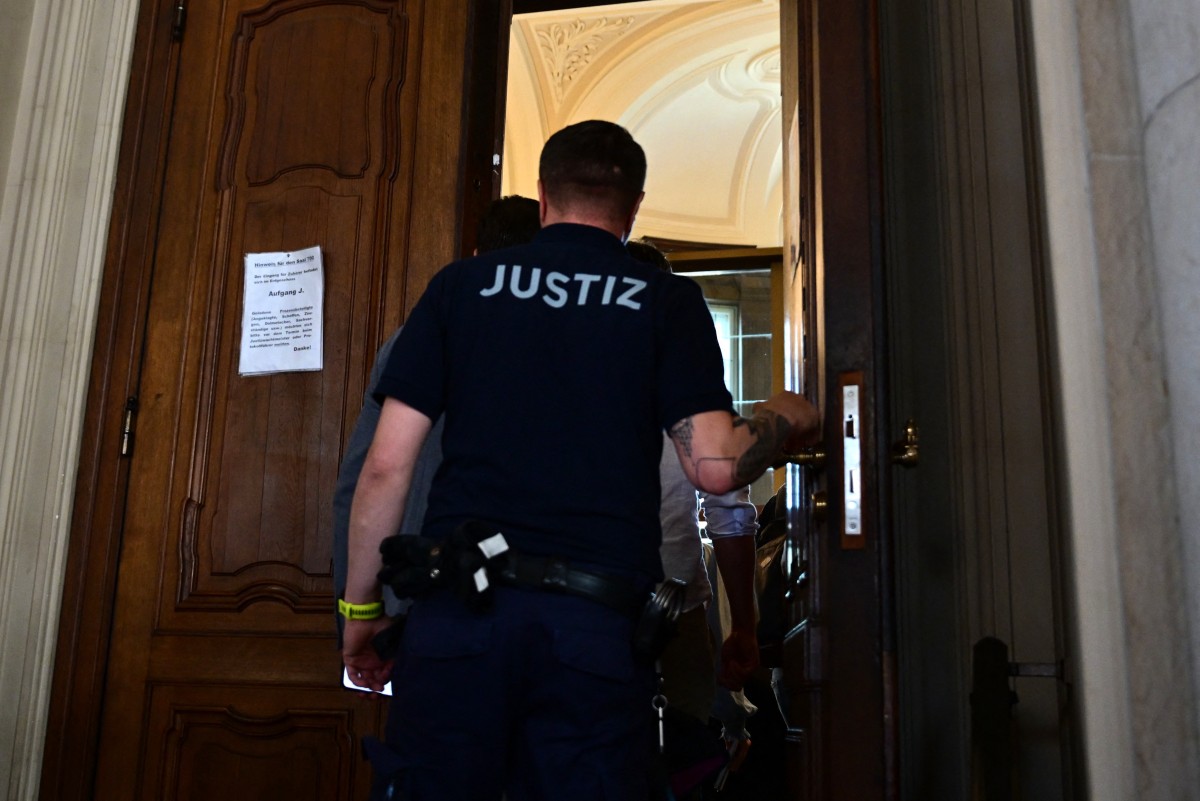
German authorities announced Monday that they are investigating more than 100 additional cases involving a nurse who was sentenced to life in prison in November for the murder of 10 patients.
The man, who was 44 at the time of his conviction, worked in palliative care at a hospital in Würselen, near Aachen. He was also found guilty of 27 attempted murders.
Aachen prosecutors are now examining 121 new cases, a spokesperson for the office said.
Prosecutors leading the investigation are preparing a new indictment that could be filed next year. Nearly 40 bodies have so far been exhumed as part of the investigation, which covers alleged incidents dating back to September 2022.
Meanwhile, prosecutors in the city of Cologne are investigating 18 additional cases. According to a spokesperson, the oldest case dates back to 2010.
Before working at the Würselen hospital, the nurse is believed to have worked at a clinic in eastern Cologne, according to local media reports.
At the time of his November conviction, the court ruled that the severity of his crimes was particularly serious, a finding that would make it difficult for him to obtain early release after 15 years in prison.
Between December 2023 and May 2024, the nurse administered overdoses of sedatives or painkillers to terminally ill patients, most of them elderly, according to the indictment in the original case.
His alleged motive was to sedate patients who required care so that he could minimize his workload during night shifts, prosecutors said.
According to the indictment, the nurse worked «without enthusiasm» and «without motivation». When faced with patients requiring extensive care, he allegedly became «irritated» and showed a lack of empathy.
The case has revived painful memories in Germany of Niels Högel, a former nurse and serial killer who was sentenced to life imprisonment in June 2019 for the murders of at least 85 patients.

Three U.S. Executions Set for Same Day as Trump Pushes to Expand Death Penalty

Colombia Earthquake Death Toll Reaches 265 as Rescue Teams Race Against Time

German Authorities Investigate More Than 100 New Cases Against Convicted Nurse
Tec de Monterrey honors one of its students for his contribution to nanotechnology in medicine

Defense Minister commends salvadoran soldier for Central American Cross Country victory

Extension of the state of emergency approved in southern Chile
-
 International3 days ago
Colombia Earthquake Leaves at Least 22 Dead as Rescue Efforts Continue
-
 International4 days ago
Joe Biden’s Prostate Cancer Has Spread to His Bones, Son Hunter Reveals
-
 International3 days ago
Venezuela Raises Earthquake Death Toll to 6,301
-

 International3 days ago
Record 230 Migrants Cross English Channel to UK in Single Boat
-

 International3 days ago
CEAPI Backs Colombia’s New Government and Calls for Greater Public-Private Cooperation
-
 International3 days ago
German Authorities Investigate More Than 100 New Cases Against Convicted Nurse
-
 International5 hours ago
Three U.S. Executions Set for Same Day as Trump Pushes to Expand Death Penalty
-
International5 hours ago
Colombia Earthquake Death Toll Reaches 265 as Rescue Teams Race Against Time