
International
Harris vs Trump: the battle for the young male vote and the debate on masculinity
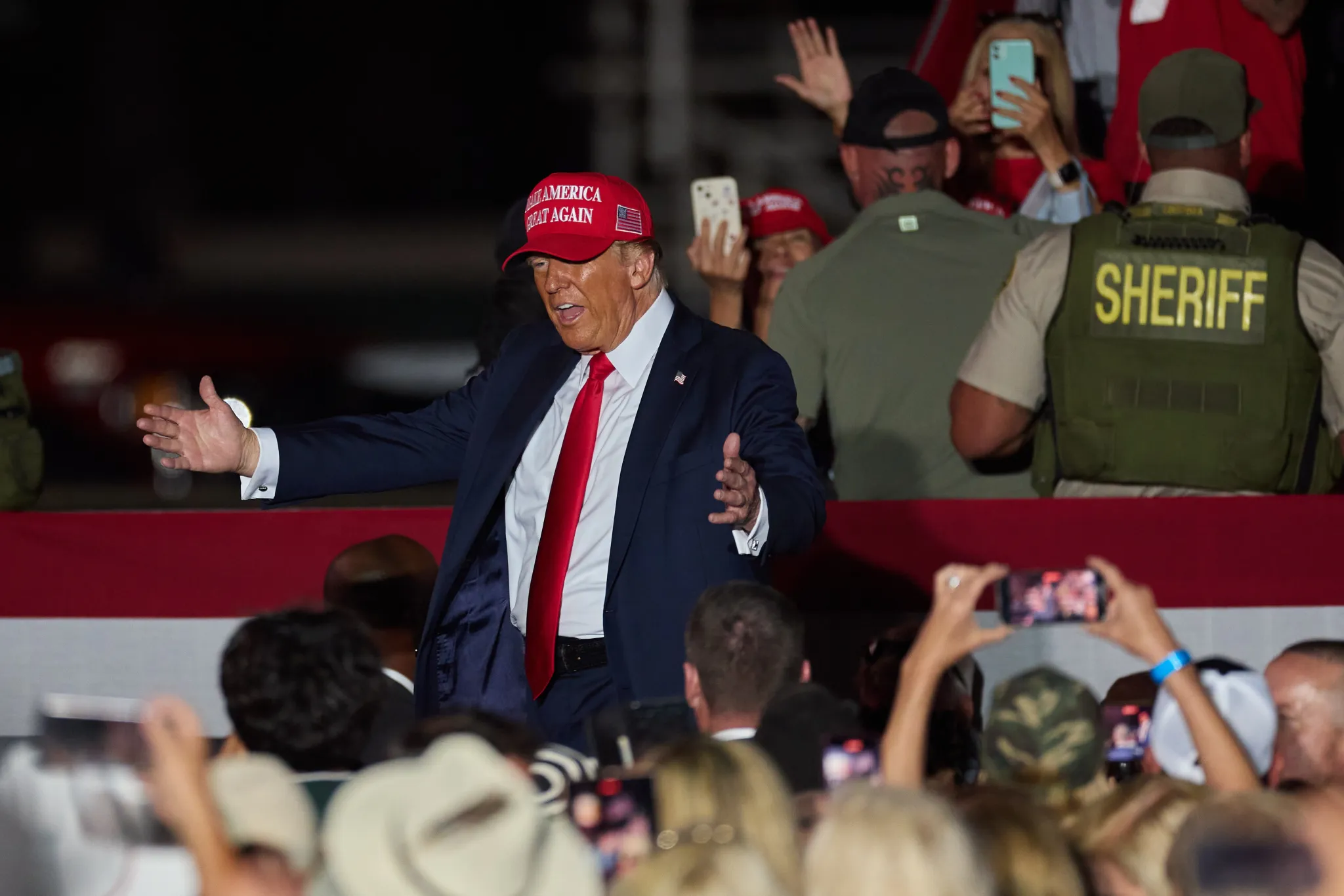
The US elections could be decided in an unexpected struggle to attract the male voter of Generation Z, where Donald Trump has eroded Democratic domination over young people while Kamala Harris offers a new model of masculinity, closer to empathy and equality.
The former Republican president (2017-2021) courts those voters by appearing in popular podcasts among Generation Z (born from 1997), while the Democratic vice president tries to position herself as a strong leader, relying on a new model of masculinity championed by her running mate, the governor of Minnesota, Tim Walz.
This battle reveals a deeper debate between the different conceptions of masculinity that prevail in the Democratic and Republican parties and how they resonate among young people.
Trump’s hypermasculinity
Trump’s campaign embraces a kind of hypermasculinity that reached its maximum expression at the republican convention in Milwaukee, where the former fighter Hulk Hogan tore off his shirt live and the former president himself went on stage to the rhythm of ‘It’s a Man’s Man’s Man’s World’ by James Brown.
At every rally, Trump projects the image of a tough leader. When in July in Pennsylvania a man tried to kill him, he got up after a few minutes crouched and, with a bloody face, raised his fist in front of the American flag, shouting “Fight, fight, fight!”.
Its objective, University of Michigan professor Aaron Kall explains to EFE, is to seduce young voters without university studies and who feel less affinity with democratic ideas than previous generations.











Therefore, Trump has chosen as a running mate the Ohio senator, J.D. Vance, the first member of the ‘millennial’ generation (born between 1981 and 1996) to be part of the commitment of a great party for the White House.
However, in their eagerness to attract the male electorate, both are pushing women away, enthusiastic about the possibility of a woman arriving at the White House for the first time.
For years, Trump has been accused of abuse by dozens of women and this same year a jury found him guilty of abusing columnist E. Jean Carroll in 1996. Nor do some comments that Vance made in 2021, when he referred to women without children as “lady spinsters with cats” help him either.
Harris’ proposal: a new masculinity
Harris is doing everything possible to mobilize the female vote with the promise of protecting the right to abortion, legal for half a century until in June 2022 the Supreme Court annulled the ‘Roe vs Wade’ ruling.
In addition, to counter that narrative of Trump’s “strong man”, Harris’ campaign has presented its own masculinity alternative: men capable of leading with empathy and comfortable in the background next to a powerful woman.
This image is embodied by the second gentleman Doug Emhoff, who left his job as a lawyer when Harris became vice president, and especially Walz, who represents that renewed masculinity, as Georgetown professor Michael Cornfield explains to EFE.
Nicknamed “trainer Walz” for his experience in American football, Walz has 24 years of service in the National Guard and projects the image of a simple man from the crucial Midwest, appearing in rallies with a flannel shirt and mountain boots.
In his election debut with Harris, on August 6, Walz greeted the vice president by putting her palms together at chest height, showing a deference that enhanced Harris’ aura of leadership.
“Walz is the gateway for those men who feel uncomfortable accepting the possibility that a woman could be a commander-in-chief. It shows that real men can take a back seat with strong and capable women,” Cornfield explains.
The biggest gender gap in history
According to Lanae Erickson, former Barack Obama’s advisor (2009-2017), these differences between the candidates anticipate that in the November 5 elections there will be the largest “gender gap” in the recent history of the United States, that is, the largest difference ever recorded between the percentage of women and men who vote for one or another applicant.
“There is unprecedented enthusiasm for Harris among women. On the other hand, men, especially young people who vote for the first time, are turning to Trump,” says Erickson.
A recent survey by ABC and Ipsos reveals that the gender gap could reach 18 points, surpassing 12 points in 2020 and 11 in 2016.
Specifically, Harris is 13-point advantage of Trump among women, while Trump surpasses Harris by 5 points among men, an unprecedented phenomenon in American politics.










International
Ten Bodies Found in Mexico’s Zacatecas State Amid Security Operation
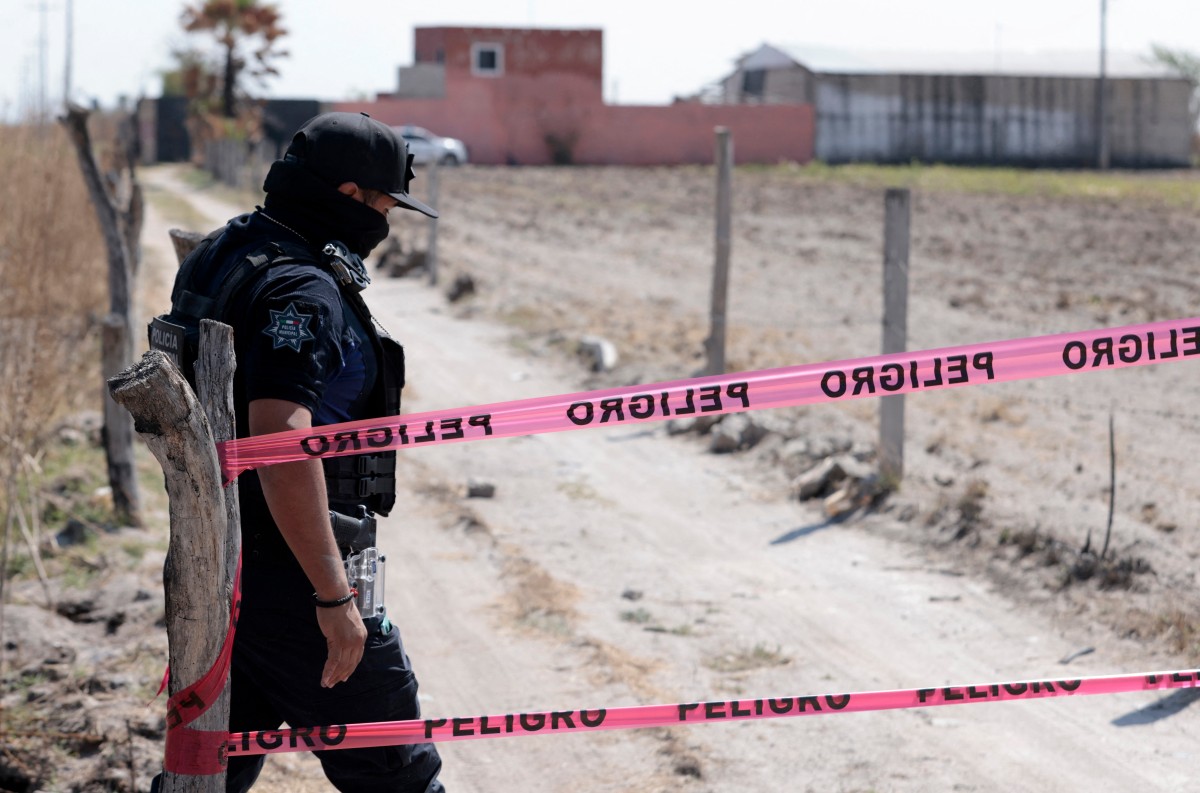
Mexican authorities discovered the bodies of 10 people on Saturday in the central state of Zacatecas, a region that was heavily affected by organized crime violence just a few years ago.
The victims were found in different municipalities across the state, which experienced a surge in violence between 2021 and 2022 as rival criminal groups fought for control of key drug trafficking routes.
Rodrigo Reyes, secretary general of the Zacatecas state government, said on social media that the bodies were located in the municipalities of Morelos, Pánuco, and Sain Alto.
Authorities have not yet disclosed the causes of death or identified those responsible for the killings.
Reyes said security forces have launched a coordinated operation to locate those behind the crimes and strengthen the police presence in the affected areas as the investigation continues.
International
U.S. to Limit Visa Duration for Foreign Students and Journalists
The United States has announced new limits on the legal length of stay for foreign students and journalists, marking the latest tightening of immigration policies under President Donald Trump.
The changes, outlined in an administrative rule published on Thursday, are expected to take effect in September, unless Congress blocks the measure.
Under the new policy, holders of student visas will be allowed to remain in the United States for no more than four years.
Foreign journalists will be limited to 240-day stays—approximately eight months—with the possibility of applying for extensions of the same duration.
The policy imposes even stricter rules on Chinese journalists, whose visas will be capped at 90 days.
More than 100 international news organizations and press freedom groups, including Agence France-Presse (AFP), criticized the measure in an open letter, arguing that it would reduce both the quantity and quality of international coverage of events in the United States.
The Republican Party, led by President Trump, currently holds a majority in Congress and has pledged to curb both illegal immigration and certain forms of legal immigration.
Previously, the United States generally issued student visas for the full duration of an academic program, while foreign journalists could receive visas valid for up to five years.
Central America
Nicaragua Cuts Diplomatic Ties With Italy Over Red Brigades Dispute

The Nicaraguan government announced on Thursday that it is severing diplomatic relations with Italy following criticism from the Italian government over Nicaragua’s long-standing decision to shelter Alessio Casimirri, a former member of the Red Brigades convicted in Italy for the 1978 kidnapping and murder of former Prime Minister Aldo Moro.
Italian Foreign Minister Antonio Tajani criticized the administration of co-presidents Daniel Ortega and Rosario Murillo on Wednesday for continuing to provide refuge to Casimirri, who was sentenced in Italy to six life terms for his role in Moro’s abduction and killing.
In a statement issued Thursday, Nicaragua’s Foreign Ministry said it was ending all diplomatic relations with Italy, describing Tajani’s remarks as “unjustified, aggressive, and irresponsible.”
Tajani made the comments during a gathering of conservative leaders from Europe and Latin America held in Madrid.
“We have absolutely nothing in common with the positions of extremist governments such as Nicaragua, a country that continues to harbor dangerous Red Brigades terrorists like Alessio Casimirri,” Tajani said, according to Italian media.
The diplomatic break marks a new escalation in tensions between the two countries over the decades-old case involving Casimirri, who has lived in Nicaragua for many years despite repeated calls from Italy for his extradition.

Ten Bodies Found in Mexico’s Zacatecas State Amid Security Operation

U.S. to Limit Visa Duration for Foreign Students and Journalists

Nicaragua Cuts Diplomatic Ties With Italy Over Red Brigades Dispute
Tec de Monterrey honors one of its students for his contribution to nanotechnology in medicine

Defense Minister commends salvadoran soldier for Central American Cross Country victory

Extension of the state of emergency approved in southern Chile
-

 International2 days ago
U.S. Strikes Hit Areas Near Strait of Hormuz as Tensions With Iran Escalate
-

 International4 days ago
France Holds Largest Bastille Day Military Parade as Europe Highlights Strategic Defense
-
 International4 days ago
President Noboa Declares New Security Strategy as Ecuador Faces Record Violence Levels
-

 International3 days ago
Latin Music Stars Unite in Miami to Raise Aid for Victims of Venezuela’s Devastating Earthquake
-

 International4 days ago
Foreign Medical Teams Race to Prevent Health Crisis in Venezuela Earthquake Camps
-
 Central America2 days ago
Nicaragua Cuts Diplomatic Ties With Italy Over Red Brigades Dispute
-
 International2 days ago
U.S. to Limit Visa Duration for Foreign Students and Journalists
-
 International2 days ago
El Salvador Sends Eighth Humanitarian Flight to Earthquake-Hit Venezuela
-
 International3 days ago
Trump Administration Seeks Global Action Against “Resurgent” Left-Wing Terrorism
-
 International5 hours ago
Ten Bodies Found in Mexico’s Zacatecas State Amid Security Operation