Connect with us

International

Parliament approves the dismissal of Kenya’s vice president on a historic day

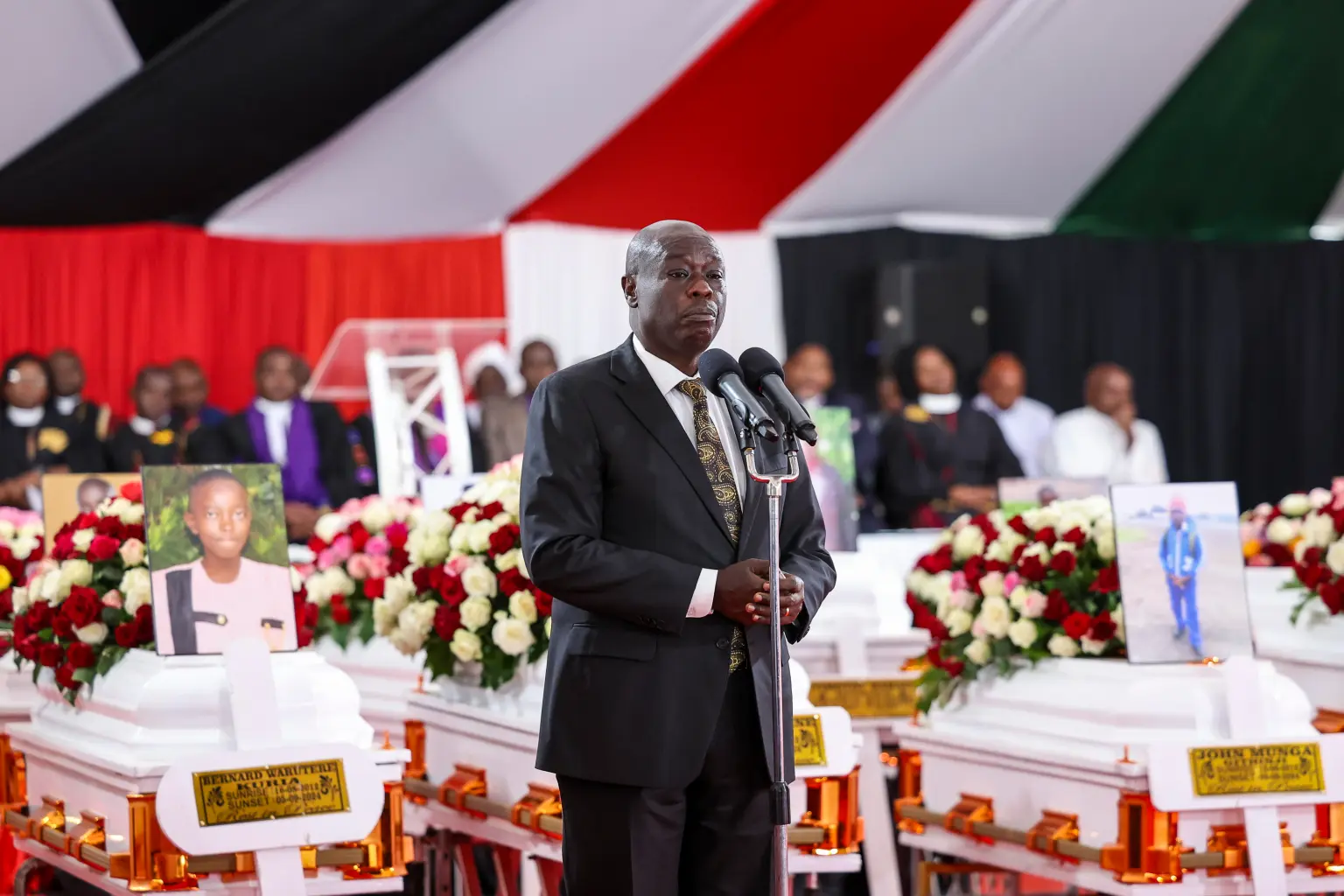
The Senate of Kenya (Upper Chamber of Parliament) approved this Thursday the dismissal of the vice president of the country, Rigathi Gachagua, an unprecedented act in the history of the African country.

After two days of impeachment, the senators voted in favor of the impeachment (as the impeachment process is known in English) against the vice president, who could not defend himself in person before the parliamentarians because he was admitted to a hospital in Nairobi for intense chest pains.

How was the motion for the dismissal of the vice president of Kenya?

The motion had to be supported by at least two-thirds (45) of the 67 members of the Senate who supported at least one of the eleven charges that weighed on Gachagua.

Thus, 45 senators or more voted in favor of five of the eleven charges, which included corruption, promotion of ethnic discrimination, insubordination, intimidation and humiliation towards public officials.

“As a result, his Excellency Rigathi Gachagua ceases to hold office,” said the president of the Upper House, Amason Kingi.


Advertisement
20260330_renta_mh_728x90
previous arrow
next arrow

But the vice president also received the express support of some senators.

“This divorce that the president is looking for, he will get it. But it will be painful, harmful, catastrophic, it will have victims,” said legislator John Methu in reference to Kenyan President William Ruto, whose relationship with Gachagua had been rarefied for months.

On the 8th, the National Assembly (Lower House) already expressed itself in favor of the process of dismissal of Gachagua, 59 years old.

The dismissal ends his political career – he has been vice president since 2022 and, from 2017 to 2022, he was a deputy of the Assembly – since he will not be able to occupy any other public office in the future and, in addition, he will lose all the benefits derived from having held the vice presidency of Kenya.

Sudden hospitalization of Gachagua

The vote culminated in a dramatic day marked by the sudden hospitalization of the dismissed vice president, who is “stable,” according to doctors, adding that he will remain under observation between 48 and 72 hours.

Advertisement
20260330_renta_mh_728x90
previous arrow
next arrow

“It came with chest pains and when you get to the hospital with that, our first concern is if it has something to do with the heart and our job is to make sure that you don’t have the possibility of suffering a heart attack,” Karen Hospital’s chief cardiologist Dancan Gikonyo told reporters.

The setback caused the temporary suspension of the session in the Upper House, which resumed the impeachment shortly after 17:00 local time (14:00 GMT).

The session, the second debate in the Senate after the one held this Wednesday, was resumed after a request from Gachagua’s lawyer, Paul Muite.

Muite asked for a postponement of the impeachment until next Tuesday, so that the vice president could stand in person and defend himself before the Senate, but the president of the Upper House, Amason Kingi, pointed to this Saturday as an alternative date.

However, the senators refused in a vote to postpone the process until Saturday and decided to continue this Thursday, before which Muite and his legal team withdrew in protest.

Advertisement
20260330_renta_mh_728x90
previous arrow
next arrow

The procedure with green light

The procedure already received the green light on October 8 with a large majority in the National Assembly (Lower House), where 281 of the 349 deputies voted to move forward, after a marathon session in which the vice president intervened.

“In the absence of an active investigation by any Kenyan investigative agency, I believe that there can be no serious reason to believe that I have committed any crime,” Gachagua said at the time, denying all the accusations against him.

The debate in the Senate could begin this Wednesday after two courts rejected urgent appeals imposed by the vice president to stop the process.

According to local media, Vice President Gachagua has filed up to 26 lawsuits challenging the legality and the process of his dismissal.

One of the main arguments against impeachment is the lack of significant public participation.

Advertisement
20260330_renta_mh_728x90
previous arrow
next arrow
Continue Reading
Advertisement
20260330_renta_mh_300x250

International

UK braces for potential CO₂ shortage amid Middle East tensions

The government of United Kingdom is preparing contingency measures amid fears of a potential shortage of carbon dioxide (CO₂), which could impact the agri-food industry if the Strait of Hormuz remains blocked due to the ongoing conflict in the Middle East, The Times reported on Thursday.

According to the newspaper, officials assessed this scenario during a recent crisis meeting aimed at evaluating the consequences of a prolonged conflict, triggered on February 28 by joint attacks from United States and Israel against Iran.

Under this scenario, CO₂ supplies—primarily a byproduct of fertilizer production using natural gas—could fall by up to 18%, affecting multiple sectors including agriculture and food production.

The gas is widely used in the slaughter of pigs and poultry, as well as in extending the shelf life of packaged foods. Breweries could also face disruptions due to reduced availability.

“I don’t want to comment on a leak, but now that the information is out there, I hope people feel reassured knowing we are working on it,” said Peter Kyle, Secretary of State for Business and Trade, in remarks to Sky News.

Advertisement
20260330_renta_mh_728x90
previous arrow
next arrow

While a drop in CO₂ supply is not expected to cause major shortages in supermarkets, it could limit product variety, The Times noted, citing access to internal government documents.

To mitigate the impact, authorities are considering prioritizing CO₂ supply for critical sectors such as healthcare and civil nuclear energy, where it is used in cooling systems for blood reserves, organs, vaccines, and electricity generation. The government may also request domestic producers to increase output.

Continue Reading

Central America

El Salvador and Paraguay approve 2026–2028 cooperation program

The governments of El Salvador and Paraguay approved the 2026–2028 Cooperation Program, which includes six joint development projects, according to Salvadoran Vice Minister of Foreign Affairs Adriana Mira.

Mira stated that El Salvador will act as the “main provider of cooperation,” contributing five initiatives focused on road infrastructure, tourism, and local development. She also noted that one of the projects will be led by the Paraguayan side, although no further details were disclosed.

The agreement was reached during the Second Meeting of the Joint Commission on Technical and Scientific Cooperation between both countries.

According to Paraguay’s Ministry of Foreign Affairs, the First Meeting of the Political Consultation and Bilateral Coordination Mechanism was also held, with the participation of Vice Minister Víctor Verdún.

In an official statement, the Paraguayan government reported that both delegations agreed to identify mechanisms to promote competitiveness, economic growth, and market access. They also committed to signing agreements related to air transport cooperation.

Advertisement
20260330_renta_mh_728x90
previous arrow
next arrow
Continue Reading

International

Macron meets Machado, stresses need for democratic transition in Venezuela

Emmanuel Macron met on Monday at the Élysée Palace with Venezuelan opposition leader María Corina Machado, where they discussed the importance of advancing a democratic transition in Venezuela.

In a message shared on social media, Macron highlighted Machado’s commitment to freedom and stressed the need to achieve a transition that is peaceful and respects the will of the Venezuelan people.

“I received María Corina Machado, Nobel Peace Prize laureate. Together, we discussed her commitment to freedom and the importance of achieving a democratic, peaceful transition in Venezuela that respects the will of its people,” he wrote.

For her part, Machado expressed her “deep gratitude” to Macron and to France for their support of democracy and freedom in Venezuela.

“We have gone through a long and painful journey, and we are now very close to freedom. Venezuela will become a nation of free and equal men and women—prosperous, safe, and united,” she said.

Advertisement
20260330_renta_mh_728x90
previous arrow
next arrow
Continue Reading

Trending

Central News