
International
Noboa sends to Parliament reform to re-establish foreign military bases in Ecuador
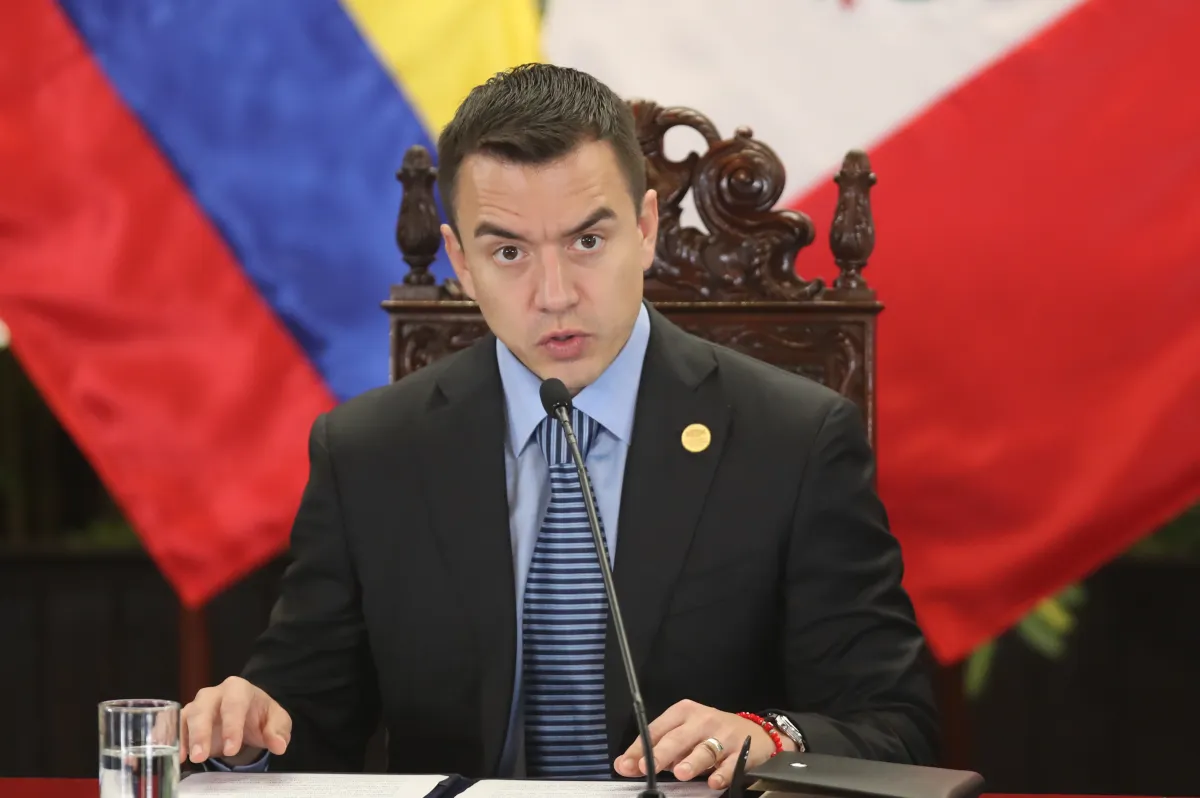
The president of Ecuador, Daniel Noboa, sent this Thursday to the National Assembly (Parliament) the constitutional reform project to open the door to the re-establishment of foreign military bases in Ecuador, prohibited by the Constitution promulgated during the term of former President Rafael Correa (2007-2017), which forced the United States to leave the Manta base in 2009.
Noboa had already announced last September its intention to promote this constitutional reform to allow the installation of foreign permanent military bases in the country again, as part of its actions in the “internal armed conflict” that it declared at the beginning of the year against organized crime.
The National Assembly must process the constitutional reform project, which if approved must be endorsed in a referendum whose celebration could coincide with one of the voting dates of the general elections scheduled for early 2025.
The reason for the re-establishment of foreign bases in Ecuador
The Presidency of Ecuador assured in a statement that it has the favorable resolution of the Constitutional Court so that this change in the magna carta is processed as a partial reform, considering the court that it does not restrict constitutional rights and guarantees, but refers only to security in Ecuador.”
“Now the process will pass into the hands of the Legislature, who must decide which side of history it will be on regarding the proposal that will strengthen international cooperation in the fight against terrorism and crime,” said the Secretariat of Communication of the Presidency.









Following the announcement of this approach made by Noboa, the United States Embassy in Ecuador clarified in September that its Government does not plan to request authorization to establish a permanent military base in the Andean country.
Agreements between Ecuador and the United States
Ecuador and the United States currently maintain maritime cooperation agreements for the capture of vessels that transport large amounts of cocaine from the Ecuadorian coast to North America.
Some of these prohibitions have been made in recent days by the United States Coast Guard in international waters, to later hand over the detainees and narcotics to the Ecuadorian authorities within their jurisdictional waters, as the Ecuadorian Navy pointed out in a recent statement.
Likewise, both countries also recently signed a commitment act for the delivery to Ecuador of two 33.5-meter-long patrol boats of the United States Coast Guard, on the condition that Ecuador takes charge of their reconditioning and transport.
Noboa’s strategy
Since the beginning of the year, Noboa raised the fight against organized crime to the category of “internal armed conflict”, with which he went on to catalog these gangs as terrorist groups and non-state belligerent actors, while decreeing a state of emergency with which, among other actions, he militarized the prisons controlled by these organizations, which he also points out for being related to drug trafficking.
Surrounded by Colombia and Peru, the world’s two largest producers of cocaine, with several ports on its coasts, such as Guayaquil, and a dollarized economy, Ecuador has become in recent years an important step for the trafficking of that drug that is mainly directed to Europe and North America.
Ecuador is listed as the third country in the world that confiscates the most drugs – only behind Colombia and the United States – with about 200 tons of narcotics per year that have been seized in each of the last three years, while in 2024 it has already exceeded that figure.
At the same time, Ecuador was positioned in 2023 as the country with the most homicides per capita in Latin America, with a rate of 47.2 per 100,000 inhabitants, while in 2024 the authorities claim to have reduced homicides by 18%.






International
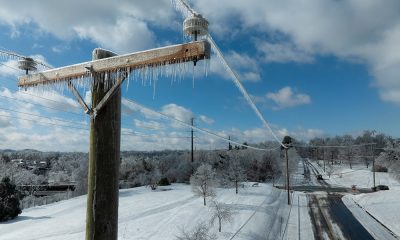
Winter Storm Fern Leaves 30 Dead and Over One Million Without Power Across the U.S.
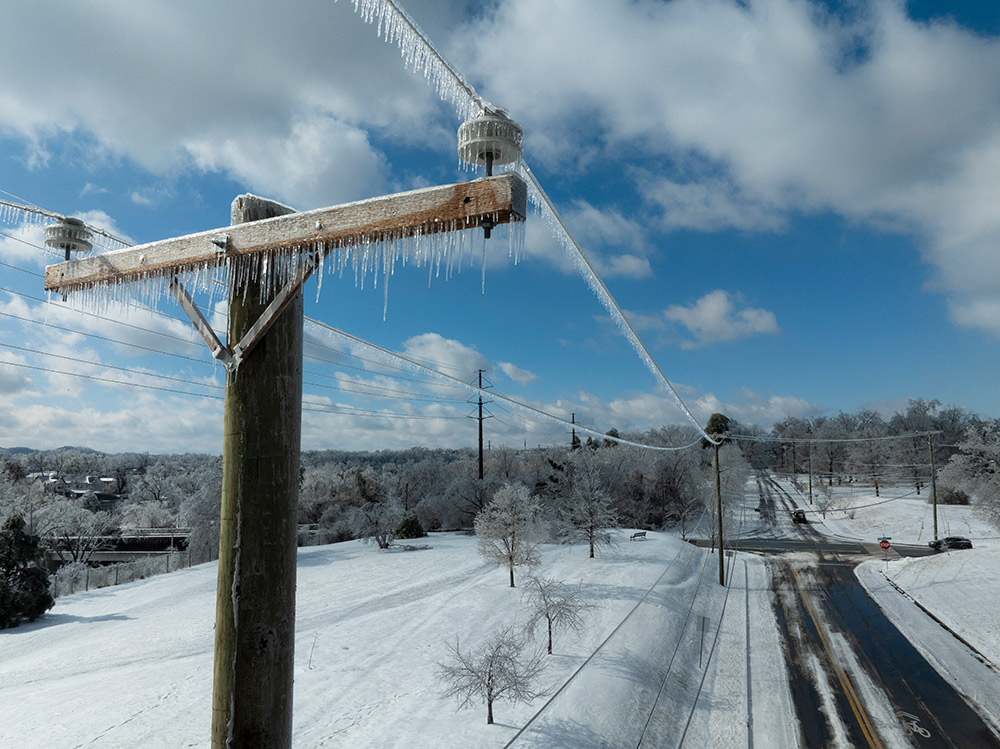
The massive winter storm Fern, bringing polar temperatures, battered large portions of the United States for a third consecutive day on Monday, leaving at least 30 people dead, more than one million households without electricity, and thousands of flights grounded.
In the Great Lakes region, residents awoke to extreme cold, with temperatures dropping below -20°C. Forecasts indicate that conditions are expected to worsen in the coming days as an Arctic air mass moves south, particularly across the northern Great Plains and other central regions, where wind chills could plunge to -45°C, temperatures capable of causing frostbite within minutes.
Across the country, heavy snowfall exceeding 30 centimeters in roughly 20 states triggered widespread power outages. According to PowerOutage.com, nearly 800,000 customers remained without electricity on Monday morning, most of them in the southern United States.
In Tennessee, where ice brought down power lines, approximately 250,000 customers were still without power. Outages also affected more than 150,000 customers in Mississippi and over 100,000 in Louisiana, as utility crews struggled to restore service amid dangerous conditions.
International
Spain approves plan to regularize up to 500,000 migrants in Historic Shift
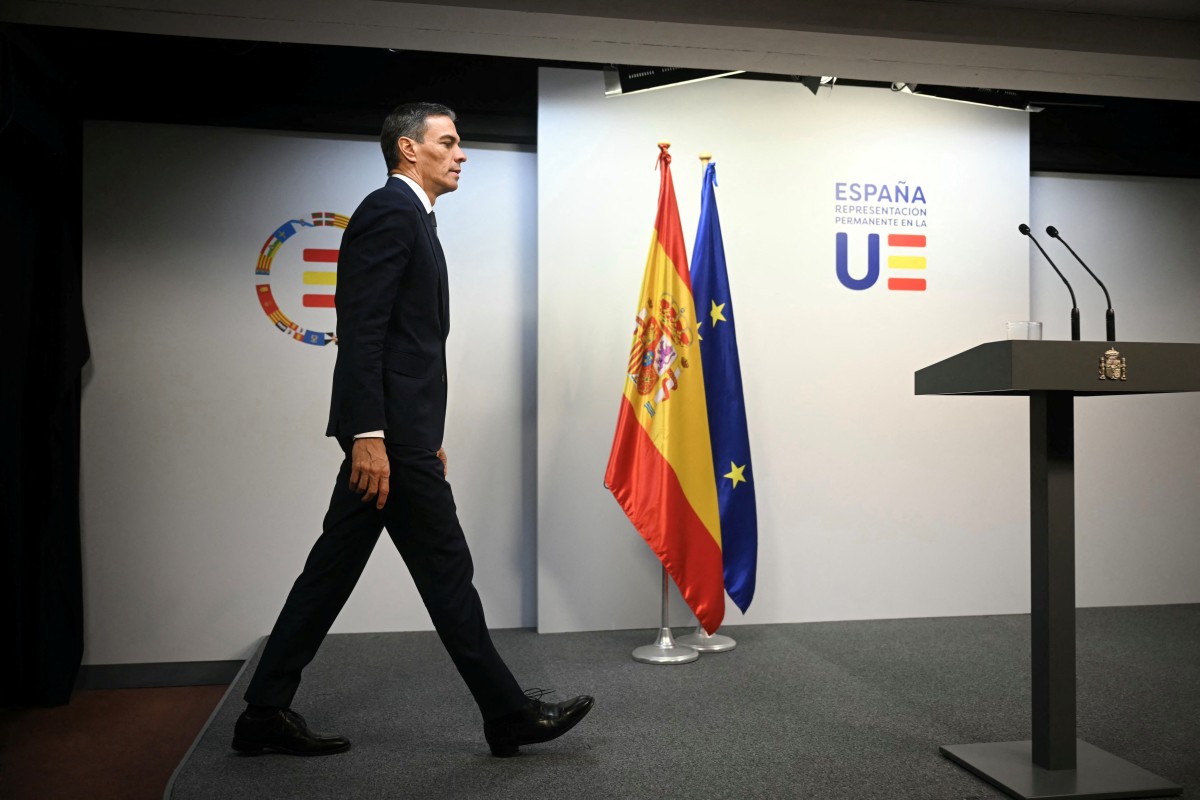
In November 2024, Spanish Prime Minister Pedro Sánchez announced a reform of the country’s immigration regulations aimed at regularizing 300,000 migrants per year over a three-year period, in an effort to counter population aging in a country where births have fallen by 25.6% since 2014, according to official data.
Going against the trend in much of Europe, Spain’s left-wing government has now approved an exceptional migrant regularization plan that could benefit up to 500,000 people, most of them from Latin America.
The measure will allow the regularization of around “half a million people” who have been living in Spain for at least five months, arrived before December 31, 2025, and have no criminal record, Migration Minister Elma Saiz explained on public television.
The plan, approved on Tuesday by the Council of Ministers, establishes that applications will be processed between April and June 30, enabling beneficiaries to work in any sector and anywhere in the country, Saiz said.
“Today is a historic day for our country. We are strengthening a migration model based on human rights, integration, and one that is compatible with economic growth and social cohesion,” the minister later stated at a press conference.
The socialist government of Pedro Sánchez stands out within the European Union for its migration policy, contrasting with the tightening of immigration measures across much of the bloc amid pressure from far-right movements.
Central America
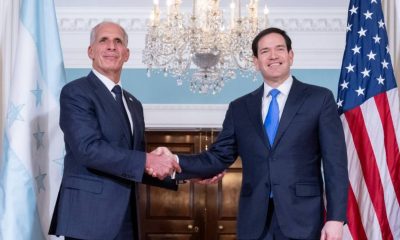
Honduras swears in conservative president Asfura after disputed election
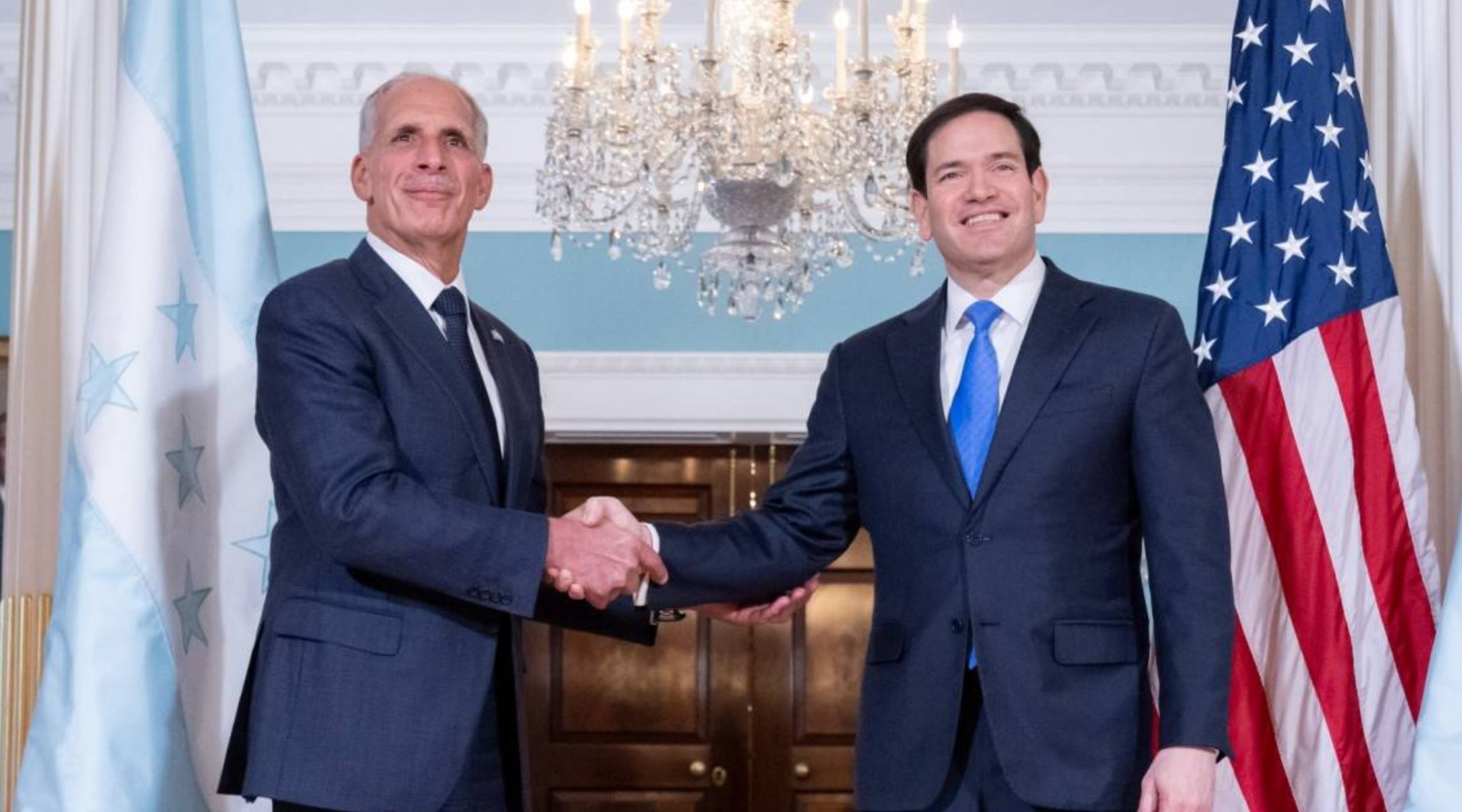
Conservative politician Nasry Asfura assumed the presidency of Honduras on Tuesday with an agenda closely aligned with the United States, a shift that could strain the country’s relationship with China as he seeks to confront the economic and security challenges facing the poorest and most violent nation in Central America.
Asfura’s rise to power, backed by U.S. President Donald Trump, marks the end of four years of left-wing rule and secures Trump another regional ally amid the advance of conservative governments in Chile, Bolivia, Peru, and Argentina.
The 67-year-old former mayor and construction businessman was sworn in during an austere ceremony at the National Congress, following a tightly contested election marred by opposition allegations of fraud and Trump’s threat to cut U.S. aid if his preferred candidate did not prevail.
Grateful for Washington’s support, Asfura—who is of Palestinian descent—traveled to the United States to meet with Secretary of State Marco Rubio, before visiting Israeli Prime Minister Benjamin Netanyahu.
“We need to strengthen relations with our most important trading partner,” Asfura said after being declared the winner of the November 30 election by a narrow margin, following a tense vote count that lasted just over three weeks.

Eight Killed in Series of Armed Attacks in Ecuador’s Manabí Province

Guatemala Police Arrest Prison Guard Caught in the Act of Extortion

Winter Storm Fern Leaves 30 Dead and Over One Million Without Power Across the U.S.
Tec de Monterrey honors one of its students for his contribution to nanotechnology in medicine

Defense Minister commends salvadoran soldier for Central American Cross Country victory

Extension of the state of emergency approved in southern Chile
-
 Central America2 days ago
Guatemala seizes over a ton of cocaine hidden in flour at Pacific port
-
 Central America4 days ago
Guatemala’s president rules out negotiations with inmates after prison riots
-

 International4 days ago
Trump-Era Defense Plan Prioritizes Border Security and Scales Back Global Commitments
-
 Internacionales4 days ago
Major winter storm threatens “catastrophic” ice and snow across much of the U.S.
-

 International4 days ago
Bogotá and Quito Seek Dialogue After Tariffs and Power Cut Escalate Tensions
-
 International3 days ago
Delcy Rodríguez seeks political agreements after Maduro’s ouster
-
 International4 days ago
Guatemala considers sending high-risk gang members to military prisons
-
 International2 days ago
Historic snowstorm paralyzes Toronto after 60 centimeters of snow
-

 International2 days ago
Spain’s irregular migrant population rises to 840,000, study finds
-
 International3 days ago
Federal immigration agents kill man in Minneapolis, sparking protests and outrage
-
 Central America14 hours ago
Guatemala Police Arrest Prison Guard Caught in the Act of Extortion
-

 International15 hours ago
Doomsday clock moves to 85 seconds before midnight amid rising global risks
-
 International4 days ago
Rights group says over 5,000 killed in Iran protests, mostly civilians
-
 International14 hours ago
Winter Storm Fern Leaves 30 Dead and Over One Million Without Power Across the U.S.
-
 International2 days ago
Rights group says nearly 6,000 killed in Iran protest crackdown
-
 Central America15 hours ago
Honduras swears in conservative president Asfura after disputed election
-

 International14 hours ago
Spain approves plan to regularize up to 500,000 migrants in Historic Shift
-
 Sin categoría14 hours ago
Eight Killed in Series of Armed Attacks in Ecuador’s Manabí Province
-
 Central America15 hours ago
Bukele leads public trust rankings as UCA survey highlights gains in security
-
 International2 days ago
Venezuela frees at least 80 political prisoners, NGO says
-

 International2 days ago
EU launches new probe into X over AI-generated fake nude images
-

 Sin categoría14 hours ago
El Salvador Launches Fourth Year of Ocean Mission to Protect Marine Ecosystems
-
 International2 days ago
Severe winter storm grips U.S., leaves multiple dead as extreme cold persists
-

 International2 days ago
France debates ban on social media for children under 15