
Central America
Salvadoran ministry of Foreign Affairs confirms death of migrants in Chiapas incident
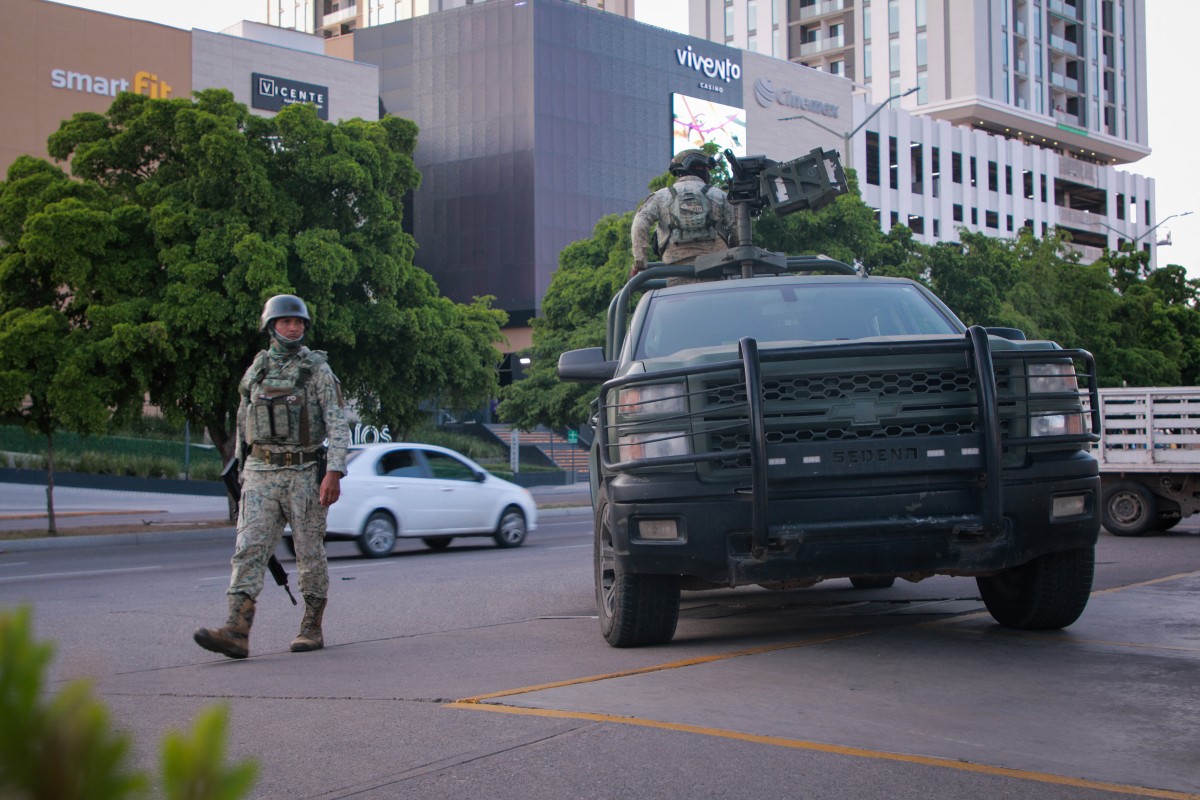
The Ministry of Foreign Affairs confirms the death of two Salvadoran migrants, aged 57 and 17, in Villa Comaltitlán, Chiapas, on October 1st, at the hands of the Mexican Army. Authorities have requested a “thorough investigation of the case and a prompt clarification” from the Mexican government.
According to a statement from the Ministry, the victims were residents of San Vicente and La Libertad, respectively. The incident occurred last Tuesday on the Villa Comaltitlán-Huixtla highway when two members of the Army opened fire on migrants in Chiapas who were aboard a cargo truck, mistaking them for members of criminal groups. As a result, six migrants from El Salvador, Peru, and Egypt lost their lives, and 12 others were injured.
“In light of the events, the Ministry extends its deepest condolences to the families, who are receiving consular assistance, support, and accompaniment, according to our protocols in these cases,” the statement explains.
The Salvadoran government has been following the case closely since the tragedy occurred to identify the victims. The Ministry maintains contact with the Salvadoran consulate in Tapachula.






Central America
Nicaragua Held Responsible for Harassment of Opposition Prosecutor and His Family
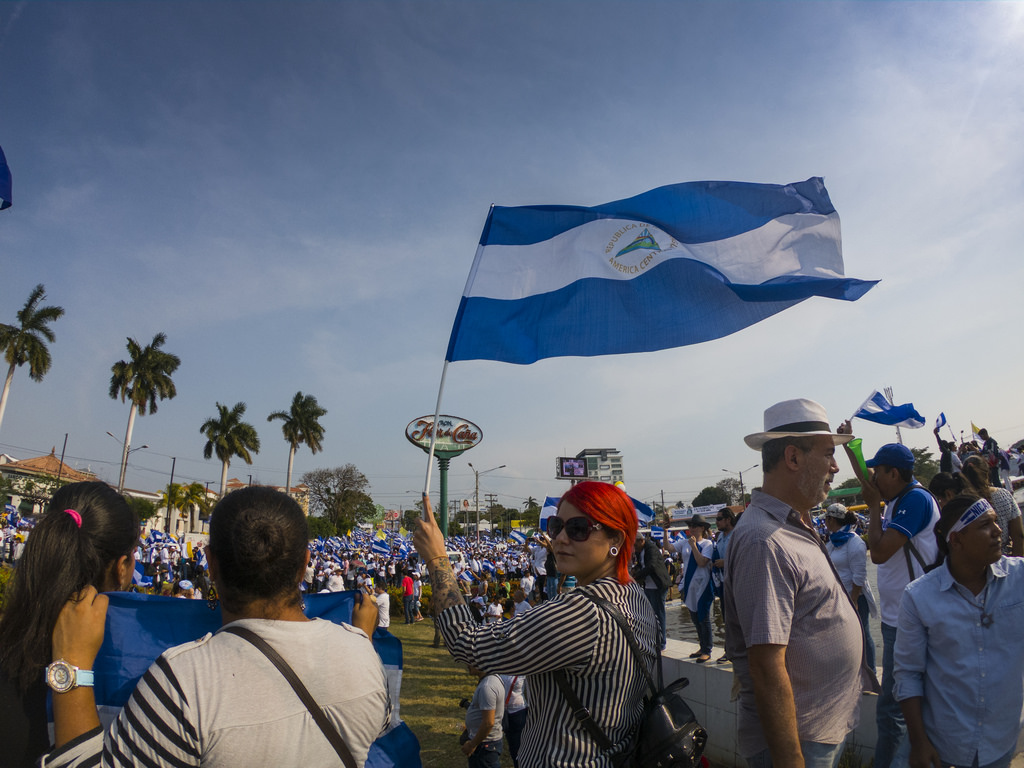
The Inter-American Court of Human Rights on Wednesday found Nicaragua responsible for threats, harassment, and attacks suffered by opposition election monitor Jaime Antonio Chavarría and his family after he reported irregularities during the July 27, 2008 municipal elections.
Chavarría was serving as an electoral verification prosecutor for the opposition Constitutional Liberal Party at a polling station in Managua on election day. He filed a formal objection with local authorities, complaining that the polling center had closed before the scheduled time while voters were still waiting to be verified.
According to the ruling, Chavarría and several relatives present at the site were subjected to insults and threats by a representative of the ruling Sandinista National Liberation Front (FSLN). As they were leaving the area, they were intercepted and attacked by a large group of individuals allegedly incited by local Sandinista leaders.
“The events were witnessed by police officers who refrained from intervening. Mr. Chavarría Morales and his relatives, who suffered various injuries, managed to escape in their vehicle, which the aggressors attempted to set on fire,” the court detailed.
Chavarría reported the incident to the National Police, but the case was ultimately shelved in May 2016. Acts of harassment and intimidation continued over time.









The court concluded that the State bore responsibility for the threats, harassment, and subsequent attacks following July 2008, citing the participation or acquiescence of state agents in some of the incidents, as well as the failure to adopt protection and investigative measures.
In its judgment, the court determined that Nicaragua violated Chavarría’s rights to personal integrity, freedom of thought and expression, political rights, equality before the law, and the right to defend human rights.
The ruling also established state responsibility for violations affecting the personal integrity, judicial guarantees, judicial protection, and family protection rights of Chavarría and for the harm caused to the life plans of his children: Cindy Alicia Chavarría Alonso, Jeffer Joaquín Chavarría Alonso, and Jaime Antonio Chavarría Alonso.
Central America
Guatemala’s Attorney General Fails in Bid for Top Court Seat Amid Corruption Allegations
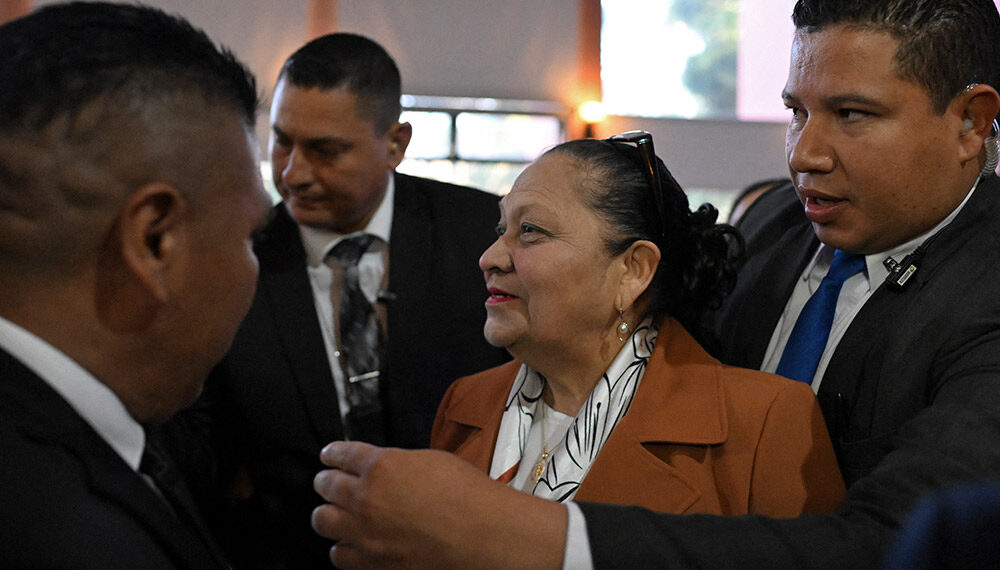
The Attorney General of Guatemala, Consuelo Porras, failed on Tuesday in her bid to join the country’s highest constitutional court, a position that would have granted her immunity from corruption allegations for which she has been sanctioned by the United States and the European Union.
Porras, whose term as attorney general ends in May, did not receive a single vote in the final round of voting to become a magistrate of the Corte de Constitucionalidad, whose rulings are final and cannot be appealed.
The Supreme Court reelected Dina Ochoa and Claudia Paniagua as its representatives to the Constitutional Court.
Ochoa is considered close to former presidents Jimmy Morales (2016–2020) and Alejandro Giammattei (2020–2024), both accused of corruption. Paniagua, like Porras, has been sanctioned by the United States.
Washington and the European Union have labeled Porras as “corrupt” and “undemocratic,” accusing her of attempting to block the inauguration of Social Democratic President Bernardo Arévalo two years ago.
In addition, the 72-year-old attorney general—who is seeking a third term—has been accused of forcing anti-corruption officials, journalists, and social leaders into exile. She denies the allegations and claims they are part of a political persecution campaign.
Porras’ chances of remaining in office, a position she has held since 2018, are considered slim, as President Arévalo is responsible for appointing the next attorney general.
Central America
Panama Canal Monitoring Trade as Middle East Conflict Disrupts Shipping
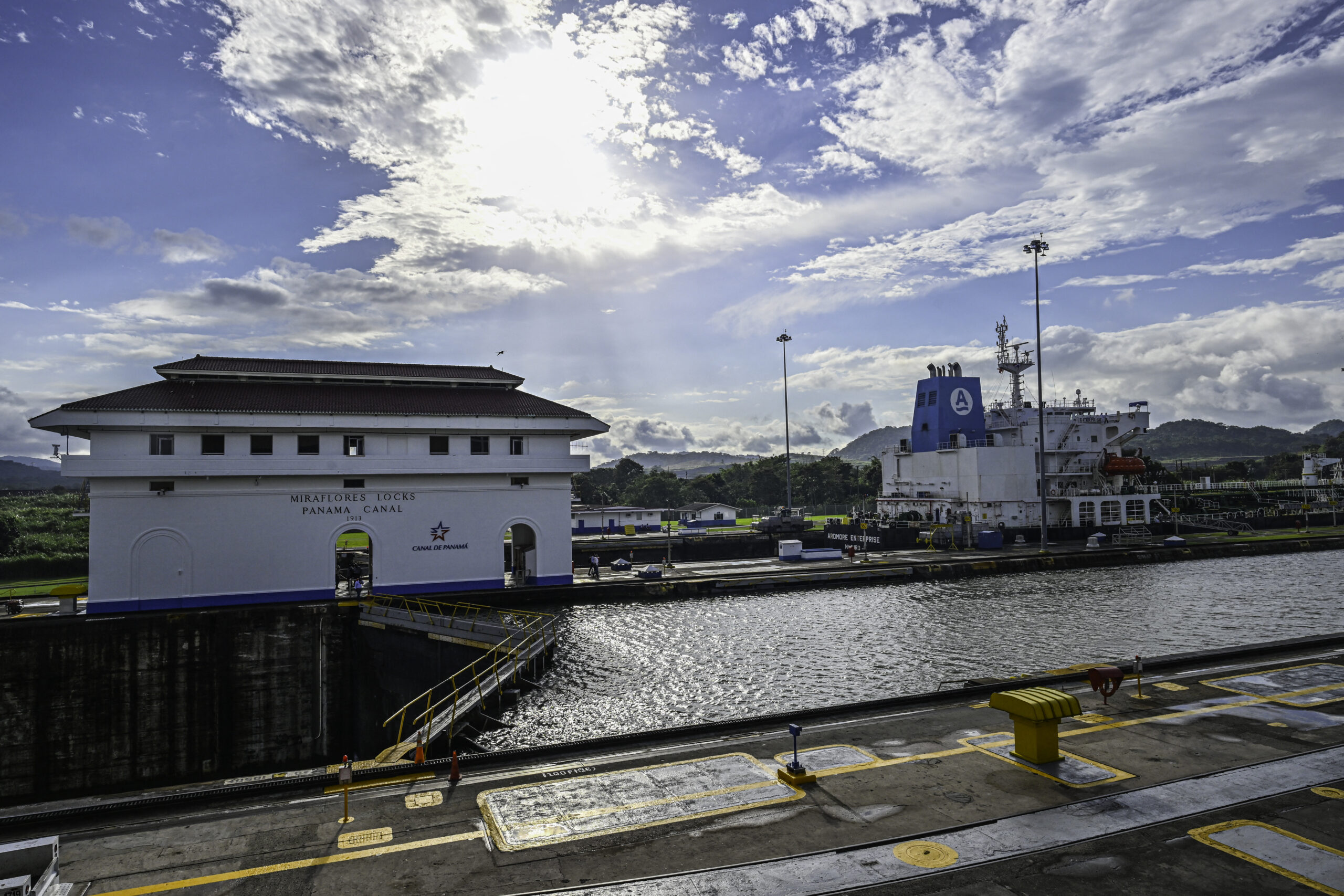
The Panama Canal Authority (ACP) said Monday it is closely monitoring global maritime trade developments following the conflict triggered by joint U.S. and Israeli strikes against Iran.
However, the ACP described it as “premature” to predict potential consequences for vessel traffic through the interoceanic waterway, which handles roughly 5% of global maritime trade.
“The Panama Canal continuously monitors the evolution of international maritime trade and the dynamics that may influence its flows,” the authority said in a statement. The canal’s main users are the United States and China, connecting primarily the U.S. East Coast with Asia, including South Korea and Japan.
The ACP emphasized that the canal “continues to operate safely, efficiently, and reliably,” providing uninterrupted service to the global maritime community.
Global Shipping Disruptions
The U.S.-Israeli military operation against Iran and Tehran’s retaliatory actions have disrupted global maritime traffic, particularly oil tanker routes.
Shipping giants Maersk and CMA CGM have suspended transits through the Strait of Hormuz as well as crossings via the Suez Canal, the key route linking the Mediterranean Sea and the Red Sea.
As a result, cargo vessels are now rerouting around Africa to reach Europe from the Middle East and Asia — a detour that adds several thousand kilometers and several days to voyages.

Mexico, Brazil and Colombia left out of Trump’s “Shield of the Americas” summit
Trump announces 17-nation alliance in the Americas to “destroy” drug cartels

Trump replaces Homeland Security Secretary Kristi Noem with Senator Markwayne Mullin
Tec de Monterrey honors one of its students for his contribution to nanotechnology in medicine

Defense Minister commends salvadoran soldier for Central American Cross Country victory

Extension of the state of emergency approved in southern Chile
-
 International5 days ago
Claudia Sheinbaum: Operation Against ‘El Mencho’ Was Based on Pending Arrest Warrants
-
 International5 days ago
White House Says Spain Agrees to Cooperate with U.S. Military After Trump Threatens Trade Embargo
-
 International5 days ago
Spain Denies Any Agreement to Cooperate with U.S. Military in Iran Operations
-
 Central America5 days ago
Nicaragua Held Responsible for Harassment of Opposition Prosecutor and His Family
-
 International2 days ago
Trump announces 17-nation alliance in the Americas to “destroy” drug cartels
-
 International3 days ago
Young Woman Will Represent Mexico at 2026 World Cup Opener, Says President Sheinbaum
-
International1 day ago
Mexico, Brazil and Colombia left out of Trump’s “Shield of the Americas” summit
-
 International3 days ago
Trump replaces Homeland Security Secretary Kristi Noem with Senator Markwayne Mullin