
International
Who is Iwao Hakamada, the inmate acquitted after 47 years waiting for a death sentence?
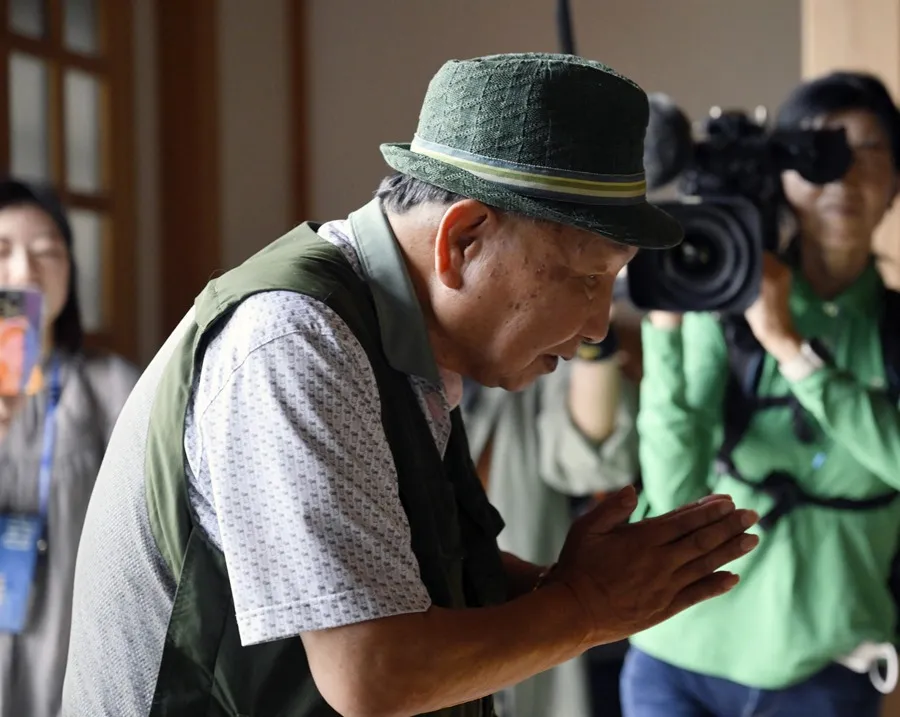
Former professional boxer, converted to Christianity in prison, Iwao Hakamada spent 47 years behing bars waiting for a death sentence that never came and from which the Japanese justice acquitted him this Thursday. It was the end of a tireless struggle to defend his innocence.
Hakamada (Shizuoka, 1936) was sentenced to death in 1968 after being accused of murdering two years earlier the owner of the miso factory (fermented soy) in which he worked, his wife and the couple’s two children and then burning his house.
He tirelessly defended his innocence on the grounds that the evidence that incriminated him was actually manufactured against him, mainly garments found in one of the company’s miso tanks, stained with blood and that matched his DNA. The Japanese justice has finally proved him right.
At 88 years old, with a weakened mental condition due to the almost half century he spent bands (so he holds a Guinness record), the Shizuoka District Court acquitted him this Thursday after the repetition of his trial, a procedure uncommon in Japan, but accepted for Hakamada in 2014.
The former Japanese boxer was released that year from prison, but the magistrates exempted him from appearing in the new trial due to his impaired mental condition. His sister, Hideko Hakamada, and his lawyer, Hideyo Ogawa, two of the pillars of the former convice, took over.











19 days and 228 hours of interrogation
Although he denied the facts when he was arrested in 1966, Hakamada took the charges on September 6 of the same year to “protect his life,” as he said at the time, on the nineteenth day of an interrogation that lasted an average of 12 hours a day.
He again denied having committed the crime in the first hearing of the initial trial and continued to do so in the thousand letters he sent to his family from prison.
The first was written in 1967 and was addressed to his mother, who died the following year although he did not know it until months later.
“It’s been half a year since I last saw you. I’m fine. I’m sorry my family is worried about me. I really have nothing to do with the Kogane Miso incident. I am innocent,” read the manuscript, compiled and published by the Japanese newspaper Asahi, along with the hundreds of letters that happened to the first one.
“They looked a little like my clothes, but there are so many clothes in the world that look like…”, Hakamada wrote before being sentenced in relation to the garments found in the miso tank.
Capital penalty
Hakamada was sentenced to death penalty because the blood with which the clothes found immersed in miso were stained matched his DNA, but the Japanese defended from the beginning that it was a fabricated evidence against him and appealed the sentence.
“I saw them (the blood-stained pants) in court. They seemed too small to me, no matter how I looked at them. If they don’t go well for me, the accusation against me will disappear,” Hakamada wrote in another of the letters to his family.
It was shown that the pants did not correspond to the size of the ex-contain, but the prosecutors and the authorities in charge of the investigation of the case argued that the clothes were small because Hakamada gained weight in prison.
Another of the former boxer’s arguments in the defense of his innocence was that the color of the blood was too dark, a thesis that prosecutors and investigators refuted claiming that the red had acquired a brownish tone by soaking the clothes in miso.
The appeal was rejected, but Hakamada requested in 1981 the repetition of the trial of his case, which was not accepted until 2014, after the prosecution revealed color photographs of the clothing that made the Shizuoka Court doubt the veracity of the evidence due to the color of the blood.
Hakamada’s release was ordered by the Japanese justice 17,388 days after his arrest, when a second trial was accepted, and the Japanese was released from prison at the age of 78.
A life in freedom with his sister
At the current age of 88, Hakamada lives in Hamamatsu, a city located in Shizuoka Prefecture, southwest of Tokyo, with his sister Hideko, three years older than him.
He continues to show symptoms of the “institutional psychosis” that was diagnosed in 2008, a mental illness that some prisoners develop and that manifests itself in the form of dizziness, headaches, nausea and paranoia. He also claims to be God.










International
U.S. to Limit Visa Duration for Foreign Students and Journalists
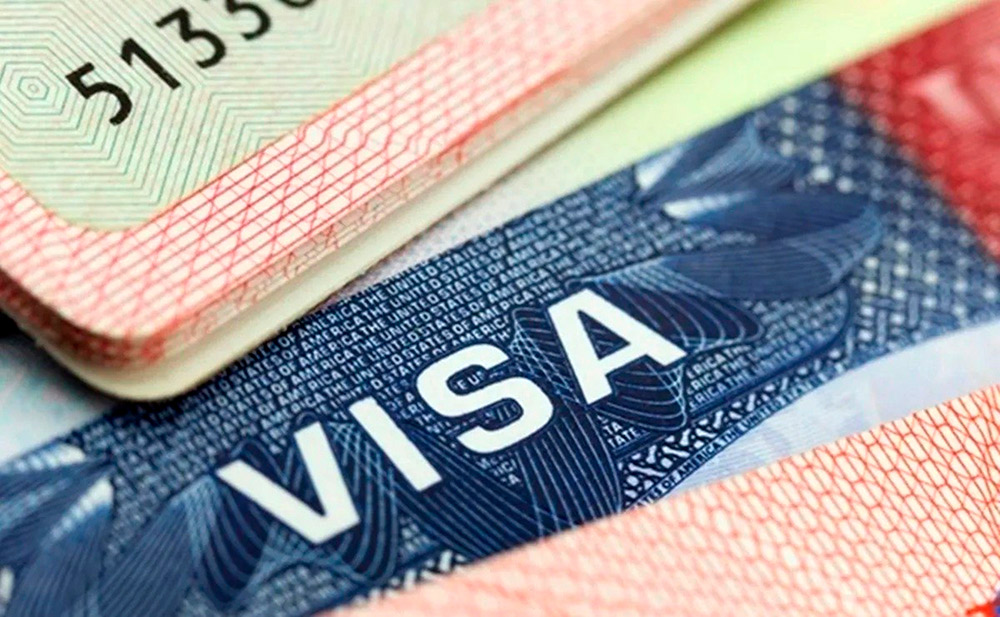
The United States has announced new limits on the legal length of stay for foreign students and journalists, marking the latest tightening of immigration policies under President Donald Trump.
The changes, outlined in an administrative rule published on Thursday, are expected to take effect in September, unless Congress blocks the measure.
Under the new policy, holders of student visas will be allowed to remain in the United States for no more than four years.
Foreign journalists will be limited to 240-day stays—approximately eight months—with the possibility of applying for extensions of the same duration.
The policy imposes even stricter rules on Chinese journalists, whose visas will be capped at 90 days.
More than 100 international news organizations and press freedom groups, including Agence France-Presse (AFP), criticized the measure in an open letter, arguing that it would reduce both the quantity and quality of international coverage of events in the United States.
The Republican Party, led by President Trump, currently holds a majority in Congress and has pledged to curb both illegal immigration and certain forms of legal immigration.
Previously, the United States generally issued student visas for the full duration of an academic program, while foreign journalists could receive visas valid for up to five years.
Central America
Nicaragua Cuts Diplomatic Ties With Italy Over Red Brigades Dispute
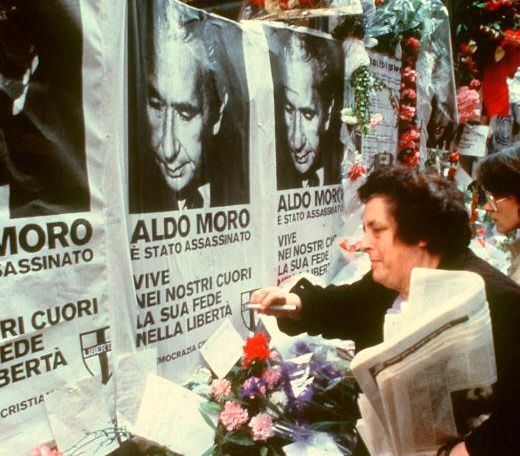
The Nicaraguan government announced on Thursday that it is severing diplomatic relations with Italy following criticism from the Italian government over Nicaragua’s long-standing decision to shelter Alessio Casimirri, a former member of the Red Brigades convicted in Italy for the 1978 kidnapping and murder of former Prime Minister Aldo Moro.
Italian Foreign Minister Antonio Tajani criticized the administration of co-presidents Daniel Ortega and Rosario Murillo on Wednesday for continuing to provide refuge to Casimirri, who was sentenced in Italy to six life terms for his role in Moro’s abduction and killing.
In a statement issued Thursday, Nicaragua’s Foreign Ministry said it was ending all diplomatic relations with Italy, describing Tajani’s remarks as “unjustified, aggressive, and irresponsible.”
Tajani made the comments during a gathering of conservative leaders from Europe and Latin America held in Madrid.
“We have absolutely nothing in common with the positions of extremist governments such as Nicaragua, a country that continues to harbor dangerous Red Brigades terrorists like Alessio Casimirri,” Tajani said, according to Italian media.
The diplomatic break marks a new escalation in tensions between the two countries over the decades-old case involving Casimirri, who has lived in Nicaragua for many years despite repeated calls from Italy for his extradition.
International
U.S. Strikes Hit Areas Near Strait of Hormuz as Tensions With Iran Escalate

Several U.S. strikes targeted areas near the Strait of Hormuz on Thursday, according to Iranian state media citing local authorities, as hostilities between the United States and Iran intensified.
Officials in Iran’s Hormozgan Province said the island of Qeshm was struck multiple times by what they described as U.S. missiles during the evening. The reports were carried by the Iranian news agencies Fars and Tasnim.
Iranian state television also reported that the Bandar Abbas region, located on the Iranian coast overlooking the Strait of Hormuz, was the target of what authorities described as an “enemy U.S. air attack.”
According to local officials quoted by state television, no casualties have been reported following the strikes.
The reported attacks come amid renewed military tensions between Washington and Tehran, although U.S. authorities had not immediately commented on the reported operations.

U.S. to Limit Visa Duration for Foreign Students and Journalists

Nicaragua Cuts Diplomatic Ties With Italy Over Red Brigades Dispute

U.S. Strikes Hit Areas Near Strait of Hormuz as Tensions With Iran Escalate
Tec de Monterrey honors one of its students for his contribution to nanotechnology in medicine

Defense Minister commends salvadoran soldier for Central American Cross Country victory

Extension of the state of emergency approved in southern Chile
-

 International3 days ago
ICE reverses course and moves forward with New Jersey migrant detention facility project
-

 International3 days ago
Judge rules Trump’s IRS lawsuit was a “bad faith” attempt to manipulate the judicial process
-

 International2 days ago
France Holds Largest Bastille Day Military Parade as Europe Highlights Strategic Defense
-

 International2 days ago
President Noboa Declares New Security Strategy as Ecuador Faces Record Violence Levels
-

 International3 days ago
Marco Rubio launches U.S. campaign to “dismantle” the International Criminal Court
-
 International4 days ago
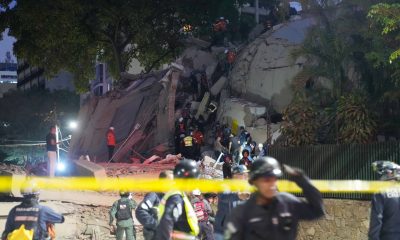
Venezuela Earthquake Death Toll Rises to 4,490 as Rescue Efforts Continue
-
 International2 days ago
Foreign Medical Teams Race to Prevent Health Crisis in Venezuela Earthquake Camps
-

 International1 day ago
Latin Music Stars Unite in Miami to Raise Aid for Victims of Venezuela’s Devastating Earthquake
-

 International1 day ago
Trump Administration Seeks Global Action Against “Resurgent” Left-Wing Terrorism
-
 International2 hours ago
U.S. Strikes Hit Areas Near Strait of Hormuz as Tensions With Iran Escalate
-

 International2 hours ago
El Salvador Sends Eighth Humanitarian Flight to Earthquake-Hit Venezuela
-
 International2 hours ago
U.S. to Limit Visa Duration for Foreign Students and Journalists
-
 Central America2 hours ago
Nicaragua Cuts Diplomatic Ties With Italy Over Red Brigades Dispute