
International
Kenyan President announces sending another 600 soldiers to help Haiti’s security
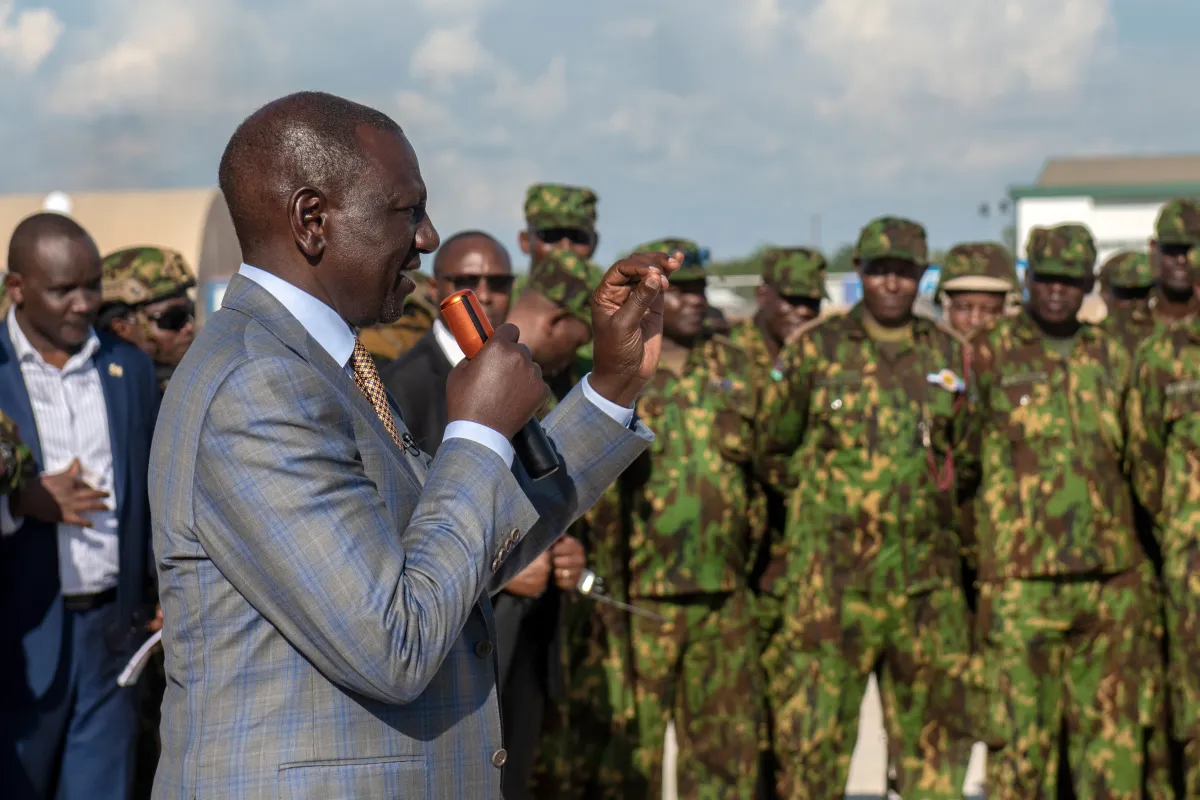
The President of Kenya, William Ruto, announced this Saturday the arrival of another 600 troops from his country to join the Multinational Security Support Mission (MMSS), which, under the leadership of his nation, began deploying three months ago in impoverished Haiti to help the Police face the bloody armed gangs.
Ruto arrived this Saturday at the airport of the Haitian capital, Port-au-Prince, where he was received by the president of the Presidential Transitional Council (CPT), Edgard Leblanc Fils; the director of the National Police, Normil Rameau; and Ketleen Florestal, interim prime minister in the absence of Garry Conille, who traveled to New York to participate in the UN General Assembly, where the Kenyan president will travel after this Saturday’s visit to Haiti.
The Kenyan leader declared that his visit to Haiti had two objectives: the first to meet and share ideas with the Haitian authorities, and the second to visit the base of the security support mission in Haiti, where, as he said in a press conference with Leblanc Fils, he saw “a lot of progress” after the deployment of the mission, which costs the approval of the UN.
Ruto admitted that many people were critical and pessimistic about the mission, approved in October 2023 in response to the request made a year earlier by the Haitian authorities to eradicate the violence of armed gangs.
And that spirit of “dout, criticism and pessimism” still persists because the mission should already have 2,500 agents, but currently there are only 400 Kenyans.











With the arrival of these, he said, there is much more security at the airport, the National Palace, the State University Hospital of Haiti, the Police Academy and also the ports.
“Now we are working to reopen the roads in order to open the country a little more,” said the Kenyan ruler, who said that the spirit of “skepticism, doubts and criticism” is beginning to decrease.
However, he maintained that the force needs the resources and equipment to guarantee security in the country.
“The troops we have in Haiti are not enough. We should have 2,500 men and women in this force. We only have 400. We also have logistical problems. We lack resources. We don’t have enough tools to continue the work,” he said.
But “there is good news. Many more countries are beginning to commit to helping Haiti. There will be a deployment of 20 other countries that have committed to sending people to join the multinational force.”
Kenya will send another 300 people in October, and the same number will arrive in November, he promised.
“The job is difficult, but we are capable of doing it,” he said, pointing out that Kenya is very motivated to help Haiti.
For his part, Leblanc Fils said that the force “has begun to give results,” but that “it is necessary to strengthen the mission by increasing the number of troops and teams, so that it can achieve its objective and allow the State to resume responsibility for the country’s security after this support.”
The deployment of the MMSS began on July 25, with the arrival of 400 Kenyan police, who have subsequently been joined by soldiers from Jamaica and Belize.
The security situation has not recorded significant improvements in Haiti, while by the end of September countries such as the Bahamas, Barbados, Bangladesh, Chad, Benin and Belize are expected to send troops to the country, completing about 2,500 soldiers and police.
Last year, the violence caused, between deaths and injuries, eight thousand victims in Haiti, where criminal groups have come to control 80% of the capital, Port-au-Prince, as well as other areas of the country, according to UN figures.
In the first half of 2024, victims of violence already rose to almost 3,900, according to a report by the United Nations Integrated Office in Haiti (Binuh).










International
U.S. to Limit Visa Duration for Foreign Students and Journalists
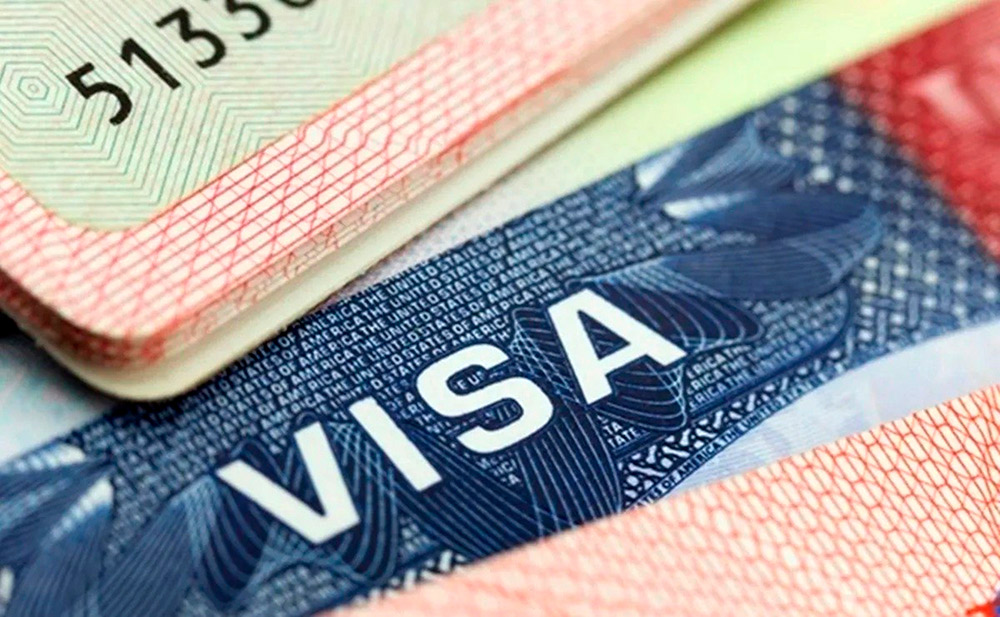
The United States has announced new limits on the legal length of stay for foreign students and journalists, marking the latest tightening of immigration policies under President Donald Trump.
The changes, outlined in an administrative rule published on Thursday, are expected to take effect in September, unless Congress blocks the measure.
Under the new policy, holders of student visas will be allowed to remain in the United States for no more than four years.
Foreign journalists will be limited to 240-day stays—approximately eight months—with the possibility of applying for extensions of the same duration.
The policy imposes even stricter rules on Chinese journalists, whose visas will be capped at 90 days.
More than 100 international news organizations and press freedom groups, including Agence France-Presse (AFP), criticized the measure in an open letter, arguing that it would reduce both the quantity and quality of international coverage of events in the United States.
The Republican Party, led by President Trump, currently holds a majority in Congress and has pledged to curb both illegal immigration and certain forms of legal immigration.
Previously, the United States generally issued student visas for the full duration of an academic program, while foreign journalists could receive visas valid for up to five years.
Central America
Nicaragua Cuts Diplomatic Ties With Italy Over Red Brigades Dispute

The Nicaraguan government announced on Thursday that it is severing diplomatic relations with Italy following criticism from the Italian government over Nicaragua’s long-standing decision to shelter Alessio Casimirri, a former member of the Red Brigades convicted in Italy for the 1978 kidnapping and murder of former Prime Minister Aldo Moro.
Italian Foreign Minister Antonio Tajani criticized the administration of co-presidents Daniel Ortega and Rosario Murillo on Wednesday for continuing to provide refuge to Casimirri, who was sentenced in Italy to six life terms for his role in Moro’s abduction and killing.
In a statement issued Thursday, Nicaragua’s Foreign Ministry said it was ending all diplomatic relations with Italy, describing Tajani’s remarks as “unjustified, aggressive, and irresponsible.”
Tajani made the comments during a gathering of conservative leaders from Europe and Latin America held in Madrid.
“We have absolutely nothing in common with the positions of extremist governments such as Nicaragua, a country that continues to harbor dangerous Red Brigades terrorists like Alessio Casimirri,” Tajani said, according to Italian media.
The diplomatic break marks a new escalation in tensions between the two countries over the decades-old case involving Casimirri, who has lived in Nicaragua for many years despite repeated calls from Italy for his extradition.
International
U.S. Strikes Hit Areas Near Strait of Hormuz as Tensions With Iran Escalate
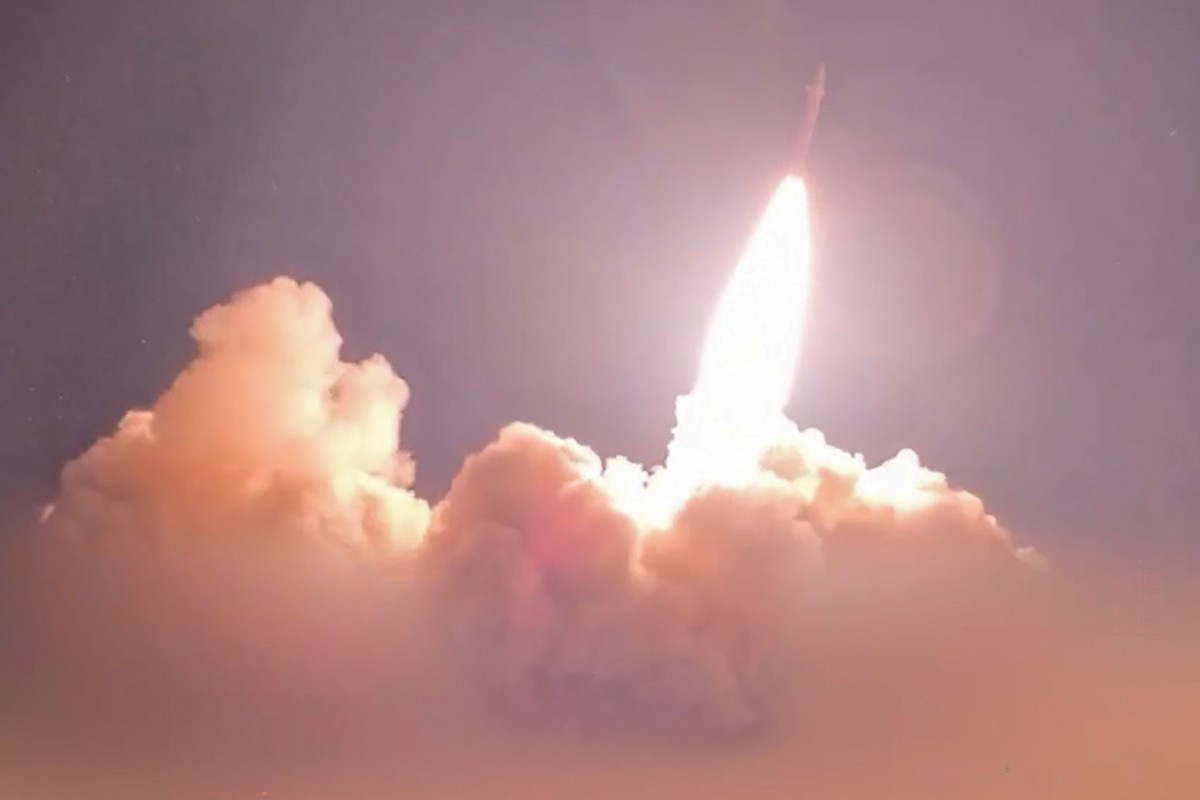
Several U.S. strikes targeted areas near the Strait of Hormuz on Thursday, according to Iranian state media citing local authorities, as hostilities between the United States and Iran intensified.
Officials in Iran’s Hormozgan Province said the island of Qeshm was struck multiple times by what they described as U.S. missiles during the evening. The reports were carried by the Iranian news agencies Fars and Tasnim.
Iranian state television also reported that the Bandar Abbas region, located on the Iranian coast overlooking the Strait of Hormuz, was the target of what authorities described as an “enemy U.S. air attack.”
According to local officials quoted by state television, no casualties have been reported following the strikes.
The reported attacks come amid renewed military tensions between Washington and Tehran, although U.S. authorities had not immediately commented on the reported operations.

U.S. to Limit Visa Duration for Foreign Students and Journalists

Nicaragua Cuts Diplomatic Ties With Italy Over Red Brigades Dispute

U.S. Strikes Hit Areas Near Strait of Hormuz as Tensions With Iran Escalate
Tec de Monterrey honors one of its students for his contribution to nanotechnology in medicine

Defense Minister commends salvadoran soldier for Central American Cross Country victory

Extension of the state of emergency approved in southern Chile
-
 International3 days ago
ICE reverses course and moves forward with New Jersey migrant detention facility project
-

 International3 days ago
Judge rules Trump’s IRS lawsuit was a “bad faith” attempt to manipulate the judicial process
-
 International2 days ago
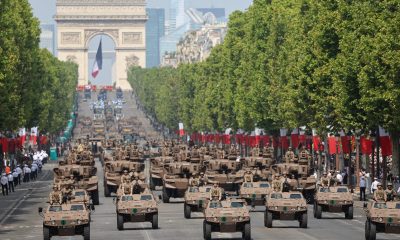
France Holds Largest Bastille Day Military Parade as Europe Highlights Strategic Defense
-

 International2 days ago
President Noboa Declares New Security Strategy as Ecuador Faces Record Violence Levels
-
 International3 days ago
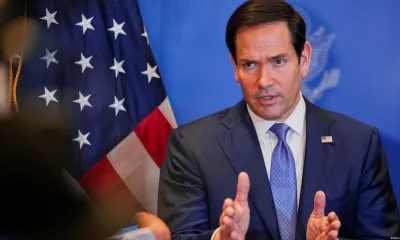
Marco Rubio launches U.S. campaign to “dismantle” the International Criminal Court
-
 International4 days ago
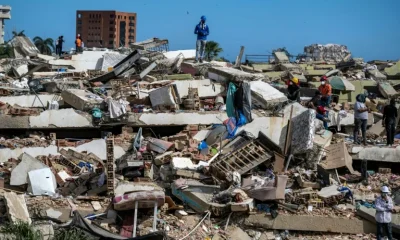
Venezuela Earthquake Death Toll Rises to 4,490 as Rescue Efforts Continue
-
 International2 days ago
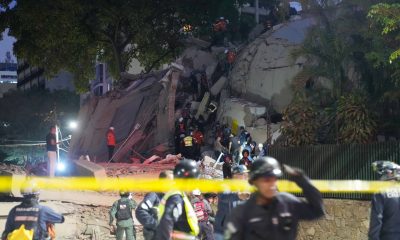
Foreign Medical Teams Race to Prevent Health Crisis in Venezuela Earthquake Camps
-

 International1 day ago
Latin Music Stars Unite in Miami to Raise Aid for Victims of Venezuela’s Devastating Earthquake
-
 International1 day ago
Trump Administration Seeks Global Action Against “Resurgent” Left-Wing Terrorism
-
 International6 hours ago
U.S. Strikes Hit Areas Near Strait of Hormuz as Tensions With Iran Escalate
-
 International6 hours ago
El Salvador Sends Eighth Humanitarian Flight to Earthquake-Hit Venezuela
-
 International6 hours ago
U.S. to Limit Visa Duration for Foreign Students and Journalists
-
 Central America6 hours ago
Nicaragua Cuts Diplomatic Ties With Italy Over Red Brigades Dispute