
International
Pelicot case: turning point for social shame to fall on the aggressors?
The brutality of the sexual violence suffered for a decade by Gisèle Pelicot has generated a resounding social rejection. However, his courageous request that shame change sides, from victims to aggressors, is far from being a reality in a society in which sexual assaults are daily and women are discredited.
There were at least ten years during which Gisèle’s husband drugged her at night and offered his body to other men on the Internet, who arranged visits to the conjugal home to rape the woman. More than fifty aggressors are accused, including the husband, who recorded and stored the aggressions on his computer and whom Gisèle believed was “a cool guy.”
Shame: from victims to abusers?
After learning of the violence suffered, and convinced by his daughter, Pelicot has asked that the hearings of the trial be public, has shown his face and has requested through his lawyer that his case serve to change sides: from the victims to the aggressors.
Shame, silence, questioning and discredit have been elements that have historically deepened the revictimization of those who suffer sexual violence, so that the sentence requested by Pelicot can ignite and extend to all cases?
The director of the Women’s Foundation, Marisa Soleto, explains to EFE that society only reflects when an event of extraordinary gravity occurs.











“Statistics show a figure of violence against women in European society that can reach 40% of the female population. It seems that we need events of extraordinary gravity to be ashamed of what is an everyday event for millions of women in Europe,” she says.
“What should scandalize us is habituality”
“What should scandalize us is the habituality and frequency; as long as we have this habituality and this frequency, we are not safe from the fact that from time to time a fatal event occurs (…) It does not seem that society is about to react in the appropriate way,” he continues.
The spokeswoman of the Federation of Progressive Women Blanca Esther Aranda emphasizes that “we are in a patriarchal culture that continues to treat women as liars and hysterical and in which men have not unlearned their complicity with the culture of rape.”
In addition, this “sexist society considers women as less valid and their word is worth less.”
In this sense, the lawyer expert in defense of victims of sexual crimes Nahxeli Beas points out that society continues to blame the survivors (“that woman will have done something to trigger the violence received”), focusing on the victim and thinking that only certain women can suffer this violence, “when it is more than proven that they cross all social strata.”
This reality is aggravated when the victim does not show the behavior that society considers impeccable. In the event that she is conceived as a perfect victim, “pity”, fragility is poured on her and infantile.
Complicit society
That punishment results in his shame, something that in turn has a direct impact on his silencing. Thus, society is complicit in the aggressors, underlines the lawyer, who recalls that one in four girls suffers sexual abuse in childhood: “It happens in our families and we have to be able to look it in the eye.”
“As a society we have a responsibility: we always think that those responsible are the aggressors, when we don’t think it’s women or alcohol, and we have to think that we all have a relationship with this violence,” says Beas.
“How many times do I not have a user in the Association of Assistance to Sexually Assaulted Women (AADAS) who comes to tell me about some facts and tells me that some friend, neighbor or co-worker does not want to testify because they do not want problems. The lack of social involvement reaches that level,” says the expert.
From the Association of Women Jurists Themis, its vice president Pino de la Nuez affirms that the denial of sexual violence exists in society, as well as the intentionality of hiding and not making these situations visible.
Neither monsters nor sick people
In Soleto’s opinion, treating the case of France as an extraordinary fact makes it difficult to take measures of social and cultural change to eradicate the real problem, which is that “sexual abuse of women is implanted in culture in such a way that there are certain people to whom it may seem normal.”
Aranda indicates that it is not assumed that the aggressors are normal men, not monsters: “They are men who have normalized absolutely desictable behaviors. An explanation is sought for something exceptional when unfortunately the data say that sexual violence is continuous and devastating,” he says.
And therefore, “men must break the silence” and “denounce the violent behavior of other men.”
The AADAS lawyer denounces that the stereotype of monstrosity is still in force, “when it has long been shown that sexual violence is not associated with any pathology.” “We must analyze why we continue to build a masculinity in which sexual violence is necessary,” he reflects.
Extreme cases like that of France, Beas points out, far from pointing out sexual violence as structural, everyday and transversal to women’s lives, from putting the structures of patriarchy in check.
Gisèle’s courage
The experts recognize the courage of the French victim. Aranda believes that her phrase that shame changes sides will be “history of feminism” and Soleto extols her willingness to be in solidarity with all the victims who feel shame and do not dare to denounce.
Now, they insist that the survivors cannot be required to behave heroicly or that it falls on their backs that shame turns sides towards the aggressors. It is something that society must achieve.
“We have to stop putting the weight on women,” Beas concludes.










International
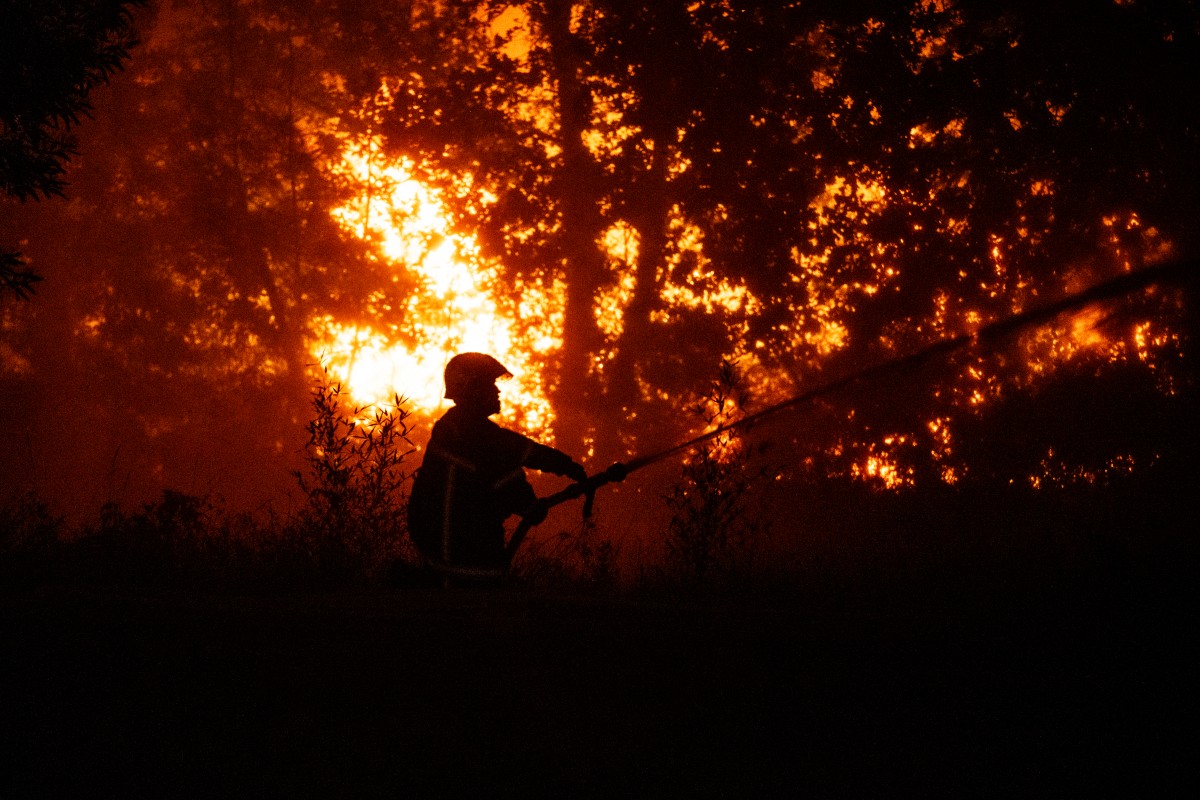
Wildfires in France Burn Nearly Three Times More Land Than in 2025, Interior Minister Says
International
Israel Says Saudi Recognition Would Mark ‘Historic Breakthrough’ for Middle East Peace
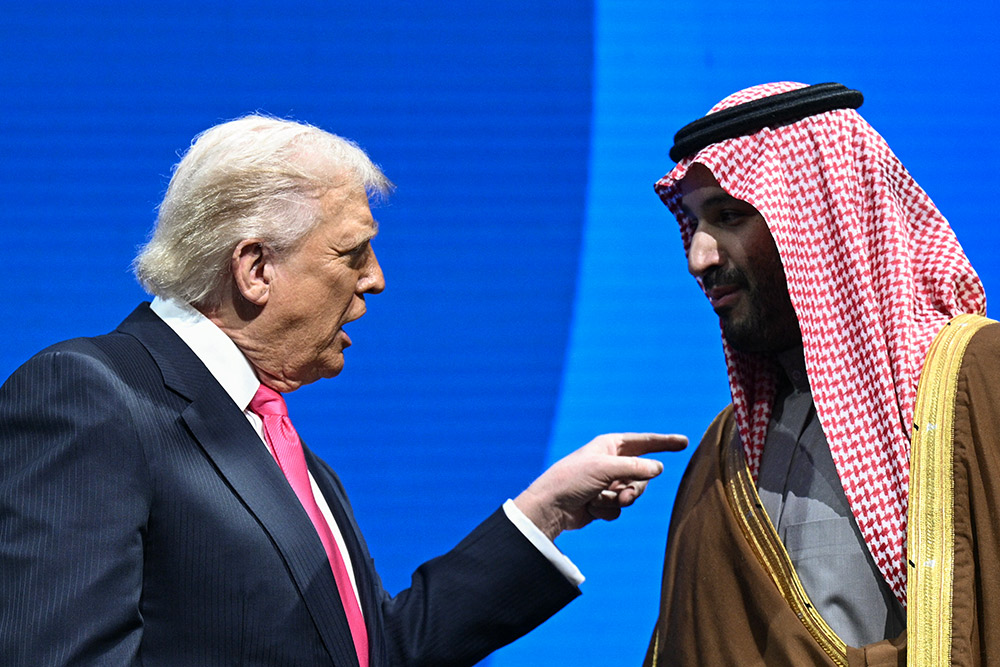
The office of Israeli Prime Minister Benjamin Netanyahu said Thursday that Saudi Arabia’s recognition of Israel would represent a “historic breakthrough” toward achieving peace in the Middle East.
The statement came after the United States and Saudi Arabia announced an agreement on Wednesday to establish a civil nuclear program in the kingdom. U.S. President Donald Trump said the initiative would be linked to Riyadh’s decision to normalize diplomatic relations with Israel.
“Saudi Arabia joining the Abraham Accords would represent a historic breakthrough toward peace in the Middle East,” Netanyahu’s office said following Trump’s announcement.
The statement added that recent developments, including joint military actions by the United States and Israel against Iran, as well as Israel’s efforts against what it described as Iran’s “terror axis,” have created new opportunities to expand regional diplomatic ties.
“The joint U.S.-Israeli military action against the genocidal regime in Tehran and Israel’s defeat of Iran’s terror axis have created the possibility of expanding the circle of peace,” the statement said.
A potential normalization agreement between Israel and Saudi Arabia would represent a major diplomatic shift in the region, as Riyadh has long been viewed as one of the key countries whose formal recognition could significantly reshape Middle Eastern relations.
International
Nicolás Maduro’s Son Calls U.S. Trial Against His Father and Cilia Flores “Unjust”
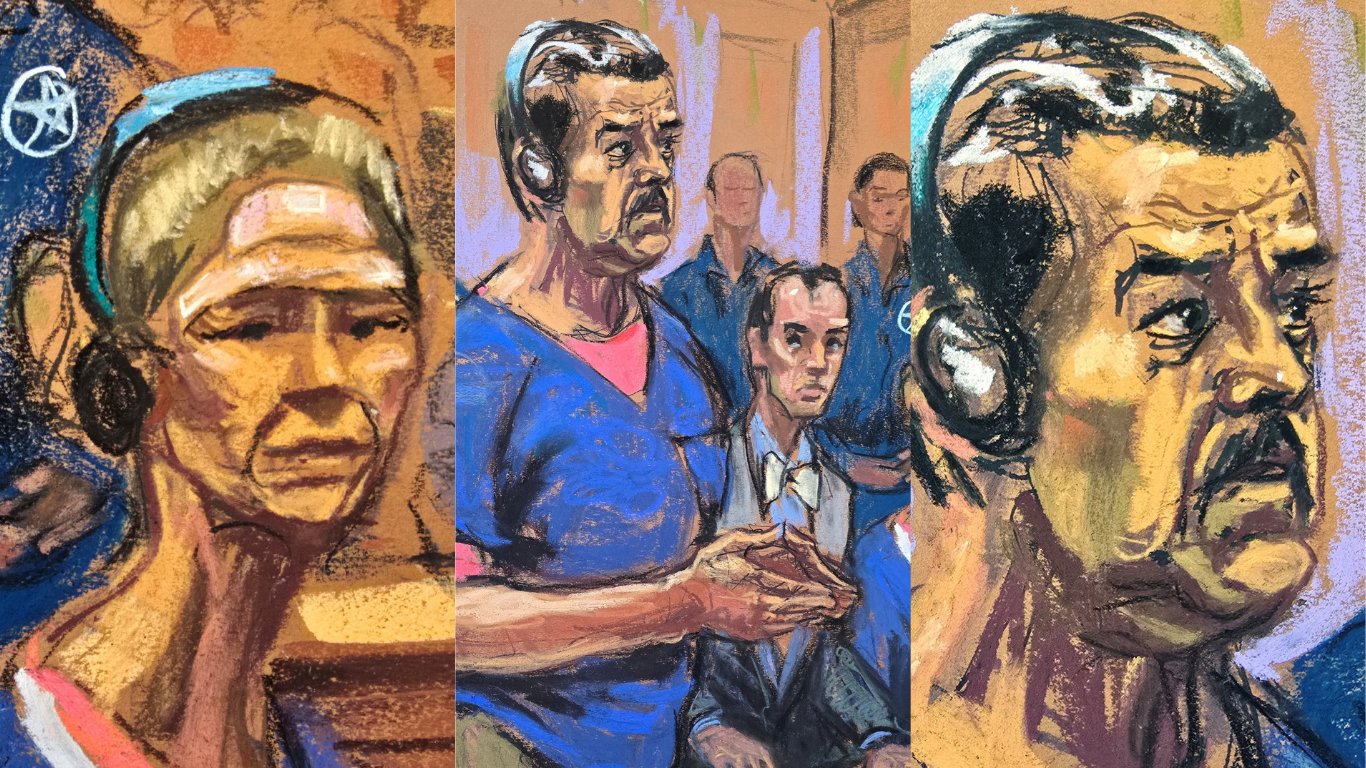
Venezuelan lawmaker Nicolás Maduro Guerra on Wednesday described as “unjust” the legal proceedings in the United States against his father, ousted Venezuelan President Nicolás Maduro, and his wife, Cilia Flores, following their capture in Caracas on January 3 by U.S. forces.
“Faced with the unjust trial taking place today, the people raised their voices with a single demand: We demand the immediate release of President Nicolás Maduro and the First Lady,” Maduro Guerra wrote on his Instagram account.
The lawmaker attended a rally in Caracas where supporters of the ruling United Socialist Party of Venezuela (PSUV)gathered to show support for the former president, who faces charges in the United States including conspiracy to commit narco-terrorism and cocaine importation. Flores is accused of crimes related to drug trafficking and weapons possession.
The event was also attended by PSUV Vice President for Mobilizations and Events Nahum Fernández and Caracas Mayor Carmen Meléndez, according to photos shared by Maduro’s son.
The third hearing in the case against Maduro and Flores concluded Wednesday at a federal court in New York after lasting only about 18 minutes. During the hearing, the judge preliminarily set June 2027 as the expected start date for the trial.
One of the main arguments from the defense will focus on immunity. Maduro’s lead attorney, Barry Pollack, who has also represented WikiLeaks founder Julian Assange, said the defense plans to request immunity for both defendants, arguing that Maduro was serving as head of state and Flores as first lady at the time of their detention.
Both Maduro and Flores pleaded not guilty during their first court appearance in New York on January 5.
Meanwhile, Venezuela’s interim president Delcy Rodríguez, who assumed power after Maduro’s capture, has not yet commented on Wednesday’s hearing in the United States.

Wildfires in France Burn Nearly Three Times More Land Than in 2025, Interior Minister Says

Israel Says Saudi Recognition Would Mark ‘Historic Breakthrough’ for Middle East Peace

Honduras Warns of Possible New Dengue Epidemic as Cases Continue to Rise
Tec de Monterrey honors one of its students for his contribution to nanotechnology in medicine

Defense Minister commends salvadoran soldier for Central American Cross Country victory

Extension of the state of emergency approved in southern Chile
-

 International5 days ago
Controversial Pesticide Law Passes in France, Sparking Ecological Concerns and Ministerial Fallout
-
 Central America3 days ago
CDC Issues Level 2 Travel Alert for Costa Rica Amid Chikungunya Outbreak
-
 Sports5 days ago
MLS Awaits Blockbuster Debuts as Griezmann and Lewandowski Join the Spotlight
-
 International5 days ago
U.S. Sends First Humanitarian Aid Flight to Cuba Amid Ongoing Tensions Between Both Governments
-
 International2 days ago
Wildfires in France Burn Nearly Three Times More Land Than in 2025, Interior Minister Says
-

 International4 days ago
Mexico Files 20 Complaints in U.S. Over Deaths of 17 Citizens During ICE Operations
-

 International4 days ago
Nicolás Maduro’s Son Calls U.S. Trial Against His Father and Cilia Flores “Unjust”
-
 International5 days ago
India Approves New Dengue Vaccine as Global Cases Continue to Rise
-
 Central America3 days ago
Honduras Warns of Possible New Dengue Epidemic as Cases Continue to Rise
-
 International2 days ago
Israel Says Saudi Recognition Would Mark ‘Historic Breakthrough’ for Middle East Peace