
International
Cuba describes the OAS resolution on the elections in Venezuela as an “inference”
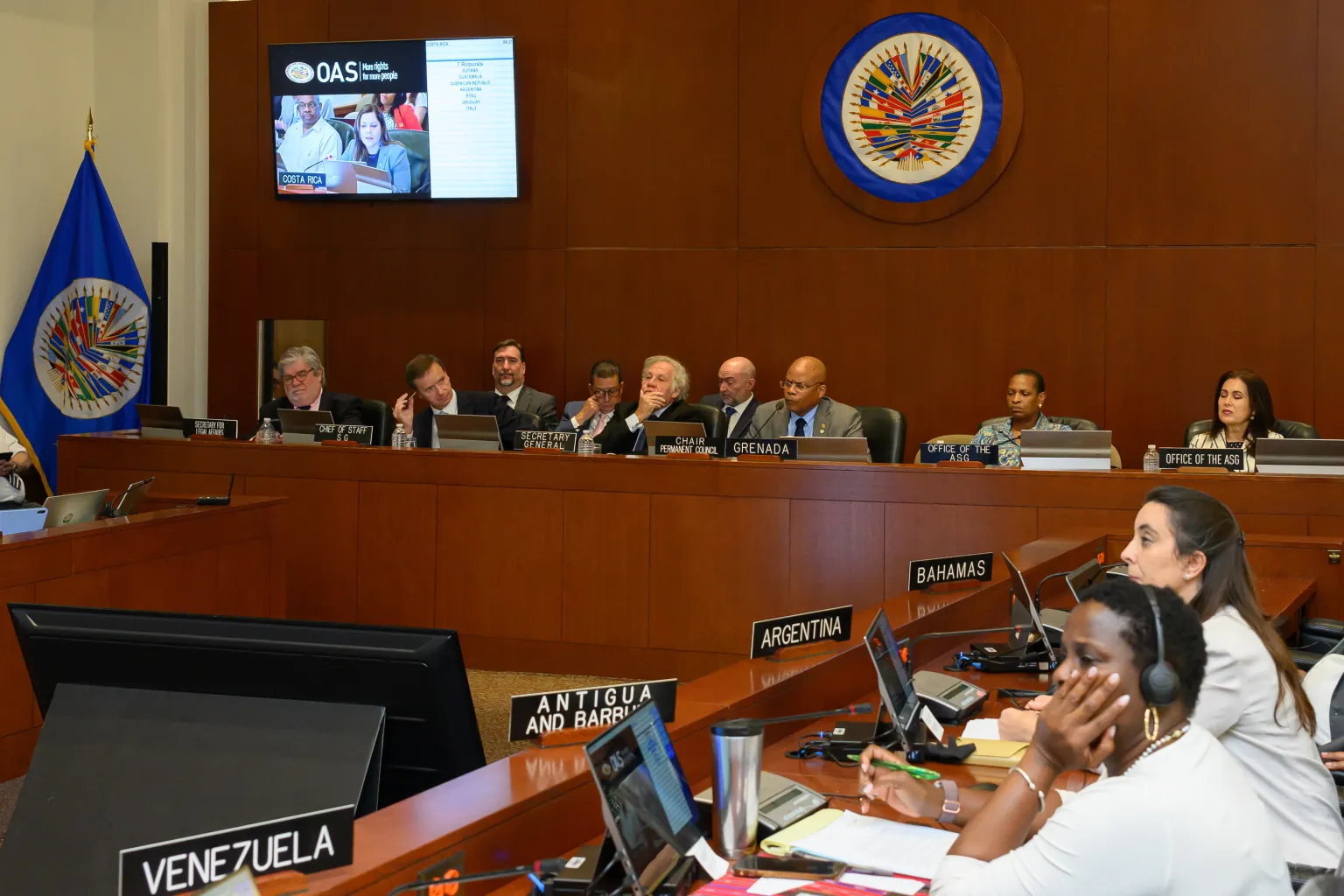
Cuba described as an “inference” the resolution approved by the Permanent Council of the Organization of American States (OAS) that requires the authorities of Venezuela to publish “expitely” the electoral minutes of last July 28 in that country.
“As we warned, the inter-interference resolution on Venezuela was imposed in the OAS,” the Cuban Foreign Minister, Bruno Rodríguez, wrote in X.
He also stated that the OAS, “which supported coups d’état, dictatorships and did not condemn US invasions in the region, lacks the authority to urge our countries to submit to spurious mandates. Cease interference.”
The organization’s resolution urges the National Electoral Council (CNE) of Venezuela to “expitly publish the minutes with the results of the vote of the presidential elections at the level of each polling station.”
It also calls for “respect for the fundamental principle of popular sovereignty through an impartial verification of the results that guarantees the transparency, credibility and legitimacy of the electoral process.”









The non-binding text was presented on behalf of the United States and Antigua and Barbuda, Argentina, Canada, Chile, Ecuador, Guatemala, Paraguay, the Dominican Republic, Suriname and Uruguay as co-sponsors.
His appeal joins the one also made this Friday by the European Union and 22 countries, including Spain, in favor of the “immediate publication of all the original minutes” of the elections and the “impartial” and “independent” verification of the results of those elections, in which according to the CNE Nicolás Maduro prevailed on Edmundo González Urrutia.
On July 31, 17 governments voted in favor of another OAS resolution that asked the Venezuelan authorities to publish “immediately” the minutes of the elections, but this initiative finally did not prosper.
That first text had 17 votes in favor, none against, 11 abstentions – like those of Colombia and Brazil, and five absences, so it did not achieve the absolute majority necessary to get ahead.
The CNE of Venezuela proclaimed the victory of the president, Nicolás Maduro, for a third consecutive term, in results rejected by the opposition and questioned by several foreign governments and international watch groups.
The main opposition coalition – the Democratic Unitary Platform (PUD) – led by Edmundo González Urrutia, assures that it obtained a “monumental victory” with 7.3 million votes, according to the electoral records obtained by that majority bloc.
Cuba, Venezuela’s political ally, was one of the first countries to recognize Maduro’s triumph decreed by the CNE, despite protests against this result.






International
Bolivia Orders Three Investigations Into Deadly Military Plane Crash
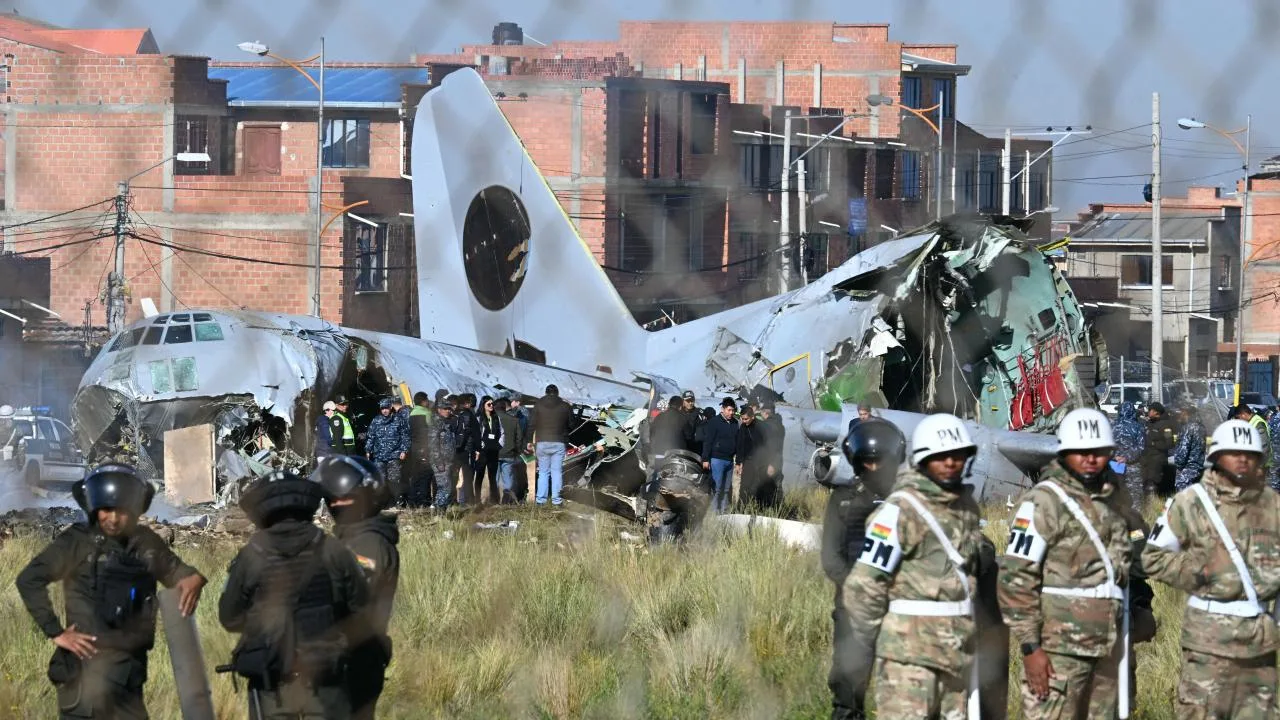
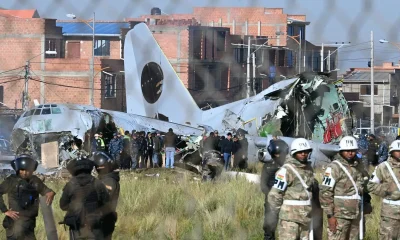
Bolivia’s Defense Minister Marcelo Salinas announced Monday that three separate investigations will be conducted into Friday’s crash of a military cargo aircraft at El Alto International Airport, near La Paz, which left at least 22 people dead.
The Hercules aircraft, operated by the Fuerza Aérea Boliviana (FAB), was transporting cash intended for the Central Bank of Bolivia when it overshot the runway after landing from the city of Santa Cruz. The plane reportedly traveled nearly one kilometer beyond the airport perimeter.
The incident sparked chaotic scenes, with individuals attempting to collect scattered banknotes. Authorities detained 51 people in the aftermath, and the government declared three days of national mourning.
Multiple Investigations Underway
The first inquiry is being led by a military board from the Bolivian Air Force, which has already taken custody of the aircraft’s black box for analysis.
Minister Salinas said two additional investigations will follow — one conducted by the insurance company and another by the aircraft’s manufacturer.
“At least two more investigations will come, that of the insurance company and that of the aircraft manufacturer,” Salinas said during a press conference in Santa Cruz.
He cautioned that the investigative process could take between three and six months, noting that the black box cannot be opened in Bolivia due to the lack of specialized laboratories for analysis.
Awaiting Official Findings
Salinas stressed that the FAB investigative board is the highest authority in the case and urged the public to wait for its conclusions to avoid speculation about the causes of the crash.
He also confirmed that the government has contacted the families of the 22 victims and the 37 injured, as well as the owners of 15 damaged vehicles, to coordinate procedures with the insurer and cover the corresponding expenses.
International
Mexico Calls for Immediate Probe After National Dies in ICE Custody

Mexico’s Secretaría de Relaciones Exteriores (SRE) on Monday called on U.S. authorities to conduct an “immediate and thorough” investigation into the death of a Mexican national while in custody of U.S. Immigration and Customs Enforcement (ICE) at a processing facility in California.
In a statement, the Mexican government described the death as “regrettable” and urged U.S. officials to clarify the circumstances surrounding the case in order to “determine responsibilities and ensure that such events do not happen again.”
Death at Adelanto Processing Center
According to available information, the Mexican citizen died at the Adelanto Processing Center in California while under ICE custody. Authorities have not yet released the individual’s identity or the cause of death.
Following the incident, Mexico’s Foreign Ministry formally requested “detailed information” from U.S. authorities, including the detainee’s medical records and custody reports.
Consular Assistance Activated
The Mexican Consulate in San Bernardino, California, has activated consular assistance protocols to provide ongoing support to the deceased’s family. Officials have contacted relatives to express condolences and offer legal guidance, as well as assistance with the necessary procedures to repatriate the remains.
“The handling of situations like this and the establishment of mechanisms to resolve them are priorities for the Government of Mexico,” the Foreign Ministry said, adding that it will formally request an investigation into any systemic conditions that may have contributed to such incidents.
Local Mexican media reported that seven Mexican nationals died while in ICE detention last year — the highest number recorded since the agency was created.
International
Anti-ICE Billboard Campaign Targets Immigration Spending in 31 U.S. Cities
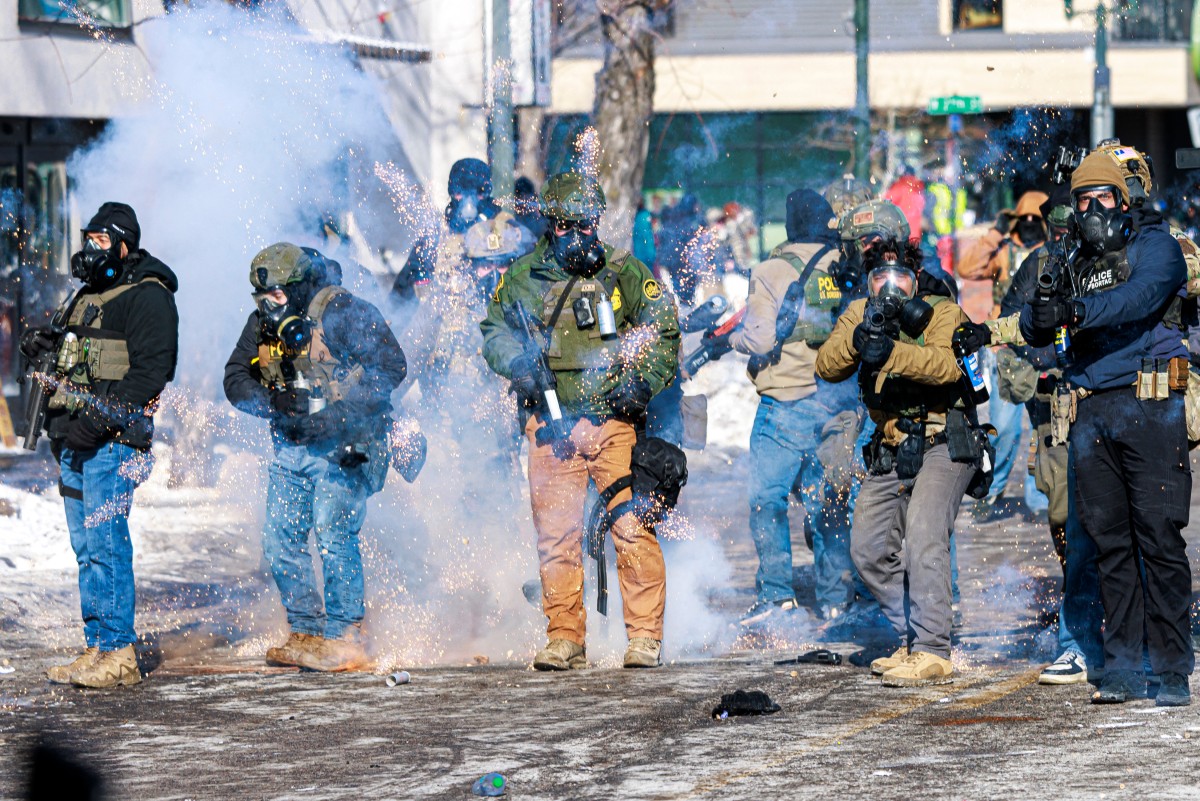
More than 200 billboards criticizing U.S. Immigration and Customs Enforcement (ICE) began appearing Monday in 31 cities across the United States, including Miami, as part of a campaign highlighting the high cost of immigration enforcement operations for taxpayers.
The initiative, titled “ICE Costs Us,” was launched by the civil rights organization Mijente and will run for four weeks.
Criticism of Spending and Enforcement Tactics
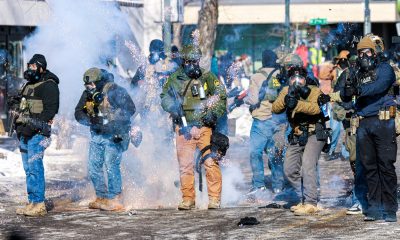
The billboards feature images of ICE agents during arrests or carrying military-style weapons. According to the organization, spending on military-grade equipment for the agency has increased by 600 percent in recent years.
Several signs display messages such as:
“Your taxes are being wasted” and “ICE’s cruelty costs you $28 billion,” referring to the agency’s annual budget.
In a statement, Marisa Franco, co-founder of the Mijente Support Committee, said:
“For too long, our government has prioritized building cages and investing billions in an immigration enforcement apparatus that has left families torn apart and communities terrified.”
She added that “Millions of Americans are living paycheck to paycheck, yet this violent agency continues operating with a blank check. These decisions do not make us safer nor improve our economic security. Our billboards highlight these choices and demand a different path.”
Budget Debate and Medicaid Comparison
The campaign also draws a comparison between ICE’s funding and the estimated 17 million people who could lose health coverage under Medicaid due to federal budget cuts under President Donald Trump.
Other billboard messages seen in various cities include:
“They get billions to beat us; we get layoffs and rising rents” and “Funding ICE is a fast track to fascism.”
Organizers say the goal is to spark public debate about the allocation of federal funds for immigration enforcement and the broader economic and social impact of such policies on communities nationwide.

Bolivia Orders Three Investigations Into Deadly Military Plane Crash

Panama Canal Monitoring Trade as Middle East Conflict Disrupts Shipping

Mexico Calls for Immediate Probe After National Dies in ICE Custody
Tec de Monterrey honors one of its students for his contribution to nanotechnology in medicine

Defense Minister commends salvadoran soldier for Central American Cross Country victory

Extension of the state of emergency approved in southern Chile
-

 International4 days ago
Cocaine Production Surges 34% in 2023 as Market Expands into Africa and Asia
-

 International3 days ago
Trump Floats “Friendly Takeover” of Cuba Amid Rising Tensions
-

 Sin categoría2 days ago
Trump: ‘We Think It’s True’ Amid Claims Iran’s Supreme Leader Was Killed
-
 International2 days ago
Security Council to Hold Emergency Meeting on Middle East Crisis
-
 International1 day ago
Iran Reports 201 Dead, 747 Injured After U.S. and Israeli Strikes
-

 International4 days ago
Federal Judge Blocks Trump Policy Allowing Deportations to Third Countries
-
 International3 days ago
Argentina’s Senate Reviews Milei-Backed Labor Overhaul
-

 International1 day ago
Pope Leo XIV Urges End to ‘Spiral of Violence’ in Middle East
-

 International4 days ago
Clinton Accuses Republican Committee of Using Epstein Case to Shield Trump
-
 International2 hours ago
Anti-ICE Billboard Campaign Targets Immigration Spending in 31 U.S. Cities
-

 International2 hours ago
Brazil’s Supreme Court Rejects Bolsonaro’s Bid for House Arrest
-

 International2 hours ago
Trump Warns of ‘Major Wave’ of Attacks as Iran Conflict Escalates
-
 International2 hours ago
Mexico Calls for Immediate Probe After National Dies in ICE Custody
-
 Central America2 hours ago
Panama Canal Monitoring Trade as Middle East Conflict Disrupts Shipping
-
 International2 hours ago
Bolivia Orders Three Investigations Into Deadly Military Plane Crash