
International
At least 66 people died or disappeared between January and July in the capital of Haiti
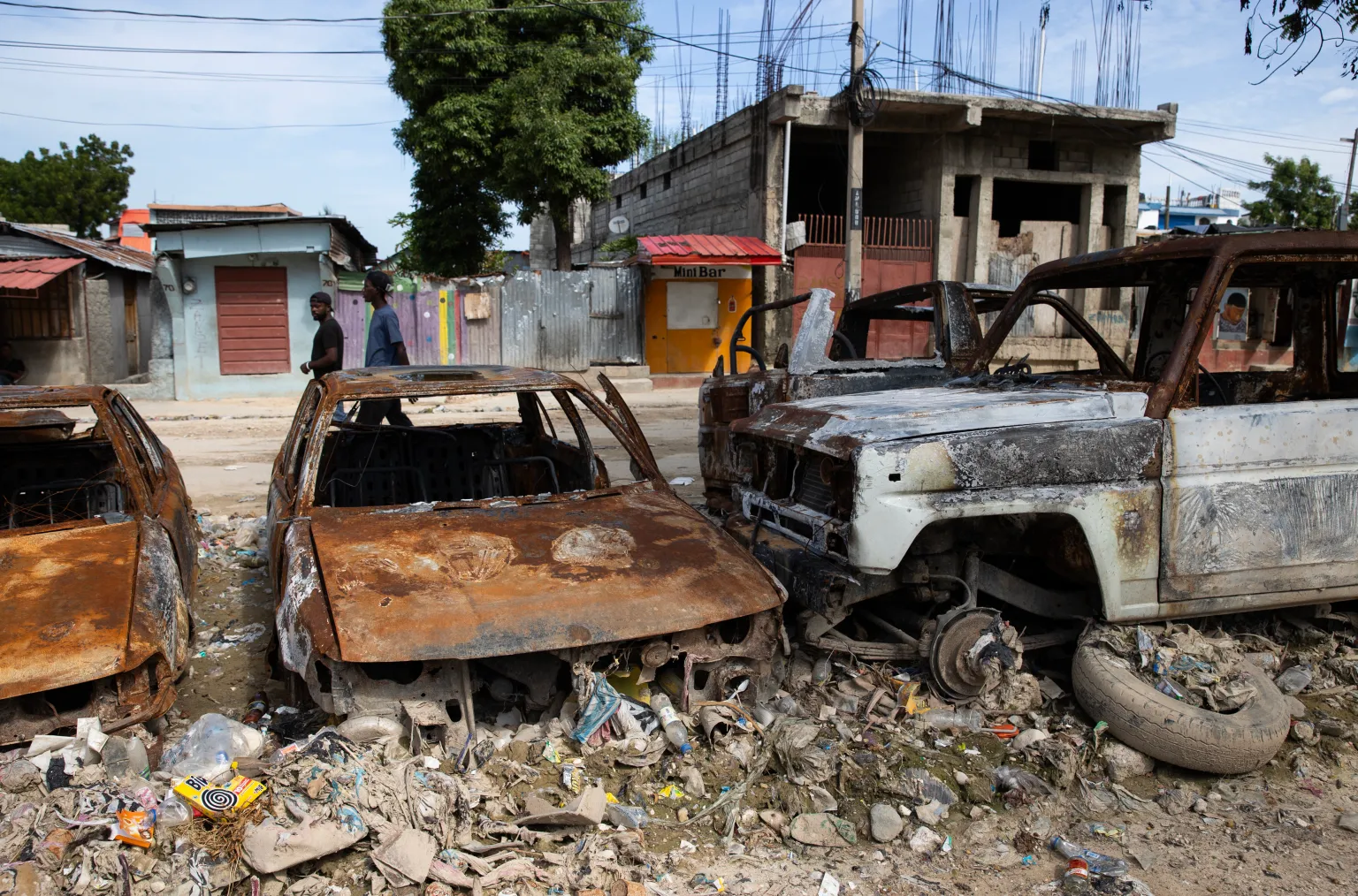
At least 66 people died or disappeared in the towns of Gressier and Carrefour, south of the capital of Haiti, between January and July of this year, in attacks perpetrated by armed gangs, according to a report by the National Network for the Defense of Human Rights (Rnddh) published this Friday.
Among the victims are four agents of the Haitian National Police (PNH), fifteen women and a minor, according to the report, which also reveals that twelve of the victims were between 60 and 80 years old.
The document emphasizes that armed bandits wear police uniforms, move with their firearms in vehicles and motorcycles equipped with police sirens, and demand that local residents pay them a periodic sum based on the number of people who live in the houses or who perform an income-generating activity.
“Police interventions to regain control of these two towns are very few and so far have not yielded any results,” denounced Rnddh, who maintains that the relatives of these victims and witnesses have described the horror they have experienced in a context marked by a marked deterioration of the situation in this depressed Caribbean country.
Hundreds of homes were looted, set on fire or illegally occupied, while vehicles have been stolen or burned and goods have been destroyed, according to the report on the situation.











At least 12 tolls have been installed at the southern entrance of Port-au-Prince, from Portail de Léogane to Gressier, and armed bandits have established a daily collection system in at least six markets.
Dozens of women and girls raped them in a group. The NGO was able to locate 46 survivors of rape, including three minors.
Some of these victims were raped in their homes and then had to flee after witnessing the murder of a relative.
Others kidnapped them in their homes and taken them to places where they were received naked men, who waited for them to rape them in a group for several hours or days.
“During these rapes, women and girls were also interrogated, severely beaten and insulted” by members of armed gangs, Rnddh’s investigation adds.
Since the end of October 2023, Carrefour and Gressier have been experiencing unprecedented armed violence, characterized by massacres and armed attacks perpetrated by the bandits.
It is also characterized by rapes and collective violations, robberies, looting, house fires, decapitalization of merchants and massive displacement of the population, a situation that has worsened this year.
The Transitional Presidential Council and the Superior Council of Police, chaired by the Prime Minister, Gary Conille, have promised to restore order and security in the area and affirm that security is a priority, however, they absorb a very important part of the agents for their personal safety and that of their families, to the detriment of the community, the report criticizes.
He also affirms that the agents of the Multinational Security Support Mission (MMAS), headed by Kenya and deployed since June, do nothing to help the population suffering from the acts of armed bandits, despite the fact that their mission is to help restore security and peace in the country in general and in the departments of Ouest and Artibonite, especially affected by the phenomenon of armed gangs.
Faced with the inaction of the Government and the MMAS, the armed bandits “gain in confidence and arrogance” and “enlag their territory,” he said.
The Haitian people “continue to be victims of systematic violations of their fundamental rights to life, freedom and security, physical integrity, psychological integrity, private property and freedom of movement,” the NGO denounces.
“And it is not surprising that the hopes placed by this population in the new authorities and in the arrival of the MMAS agents are already beginning to crumble,” he concluded.










International
U.S. to Limit Visa Duration for Foreign Students and Journalists
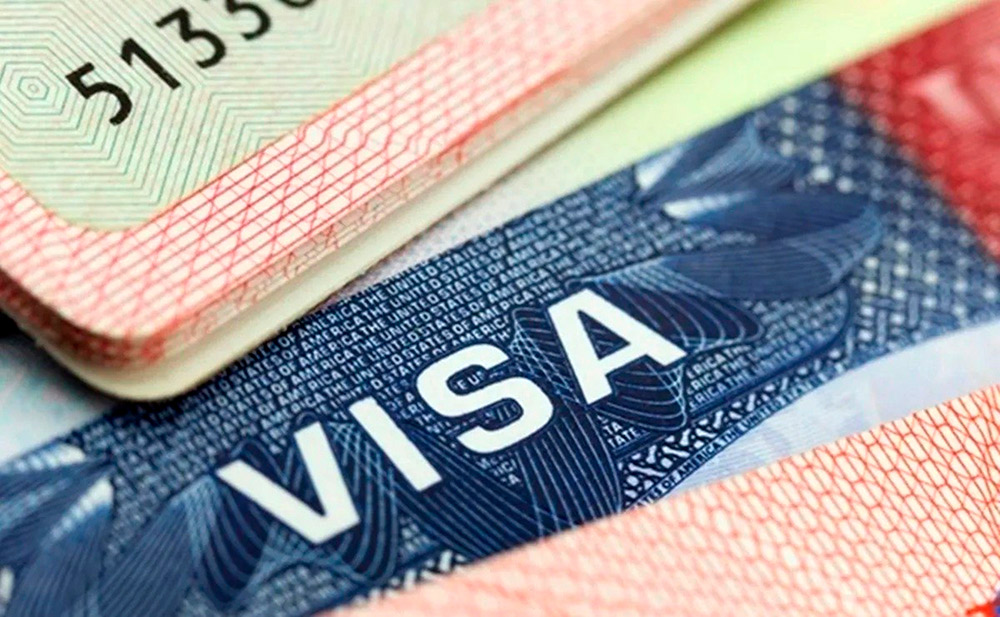
The United States has announced new limits on the legal length of stay for foreign students and journalists, marking the latest tightening of immigration policies under President Donald Trump.
The changes, outlined in an administrative rule published on Thursday, are expected to take effect in September, unless Congress blocks the measure.
Under the new policy, holders of student visas will be allowed to remain in the United States for no more than four years.
Foreign journalists will be limited to 240-day stays—approximately eight months—with the possibility of applying for extensions of the same duration.
The policy imposes even stricter rules on Chinese journalists, whose visas will be capped at 90 days.
More than 100 international news organizations and press freedom groups, including Agence France-Presse (AFP), criticized the measure in an open letter, arguing that it would reduce both the quantity and quality of international coverage of events in the United States.
The Republican Party, led by President Trump, currently holds a majority in Congress and has pledged to curb both illegal immigration and certain forms of legal immigration.
Previously, the United States generally issued student visas for the full duration of an academic program, while foreign journalists could receive visas valid for up to five years.
Central America
Nicaragua Cuts Diplomatic Ties With Italy Over Red Brigades Dispute

The Nicaraguan government announced on Thursday that it is severing diplomatic relations with Italy following criticism from the Italian government over Nicaragua’s long-standing decision to shelter Alessio Casimirri, a former member of the Red Brigades convicted in Italy for the 1978 kidnapping and murder of former Prime Minister Aldo Moro.
Italian Foreign Minister Antonio Tajani criticized the administration of co-presidents Daniel Ortega and Rosario Murillo on Wednesday for continuing to provide refuge to Casimirri, who was sentenced in Italy to six life terms for his role in Moro’s abduction and killing.
In a statement issued Thursday, Nicaragua’s Foreign Ministry said it was ending all diplomatic relations with Italy, describing Tajani’s remarks as “unjustified, aggressive, and irresponsible.”
Tajani made the comments during a gathering of conservative leaders from Europe and Latin America held in Madrid.
“We have absolutely nothing in common with the positions of extremist governments such as Nicaragua, a country that continues to harbor dangerous Red Brigades terrorists like Alessio Casimirri,” Tajani said, according to Italian media.
The diplomatic break marks a new escalation in tensions between the two countries over the decades-old case involving Casimirri, who has lived in Nicaragua for many years despite repeated calls from Italy for his extradition.
International
U.S. Strikes Hit Areas Near Strait of Hormuz as Tensions With Iran Escalate

Several U.S. strikes targeted areas near the Strait of Hormuz on Thursday, according to Iranian state media citing local authorities, as hostilities between the United States and Iran intensified.
Officials in Iran’s Hormozgan Province said the island of Qeshm was struck multiple times by what they described as U.S. missiles during the evening. The reports were carried by the Iranian news agencies Fars and Tasnim.
Iranian state television also reported that the Bandar Abbas region, located on the Iranian coast overlooking the Strait of Hormuz, was the target of what authorities described as an “enemy U.S. air attack.”
According to local officials quoted by state television, no casualties have been reported following the strikes.
The reported attacks come amid renewed military tensions between Washington and Tehran, although U.S. authorities had not immediately commented on the reported operations.

U.S. to Limit Visa Duration for Foreign Students and Journalists

Nicaragua Cuts Diplomatic Ties With Italy Over Red Brigades Dispute

U.S. Strikes Hit Areas Near Strait of Hormuz as Tensions With Iran Escalate
Tec de Monterrey honors one of its students for his contribution to nanotechnology in medicine

Defense Minister commends salvadoran soldier for Central American Cross Country victory

Extension of the state of emergency approved in southern Chile
-
 International4 days ago
ICE reverses course and moves forward with New Jersey migrant detention facility project
-
 International18 hours ago
U.S. Strikes Hit Areas Near Strait of Hormuz as Tensions With Iran Escalate
-

 International4 days ago
Judge rules Trump’s IRS lawsuit was a “bad faith” attempt to manipulate the judicial process
-

 International4 days ago
Marco Rubio launches U.S. campaign to “dismantle” the International Criminal Court
-

 International3 days ago
France Holds Largest Bastille Day Military Parade as Europe Highlights Strategic Defense
-

 International3 days ago
President Noboa Declares New Security Strategy as Ecuador Faces Record Violence Levels
-
 International3 days ago
Foreign Medical Teams Race to Prevent Health Crisis in Venezuela Earthquake Camps
-
 International5 days ago
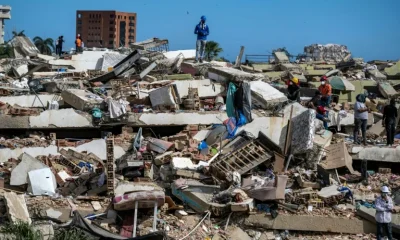
Venezuela Earthquake Death Toll Rises to 4,490 as Rescue Efforts Continue
-

 International2 days ago
Latin Music Stars Unite in Miami to Raise Aid for Victims of Venezuela’s Devastating Earthquake
-
 International2 days ago
Trump Administration Seeks Global Action Against “Resurgent” Left-Wing Terrorism
-
 International18 hours ago
U.S. to Limit Visa Duration for Foreign Students and Journalists
-
 International18 hours ago
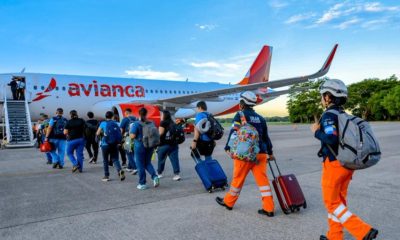
El Salvador Sends Eighth Humanitarian Flight to Earthquake-Hit Venezuela
-
 Central America18 hours ago
Nicaragua Cuts Diplomatic Ties With Italy Over Red Brigades Dispute