
International
Cristina Fernández says that she suffered violence for being a woman and refers to aggressions to Fabiola Yáñez
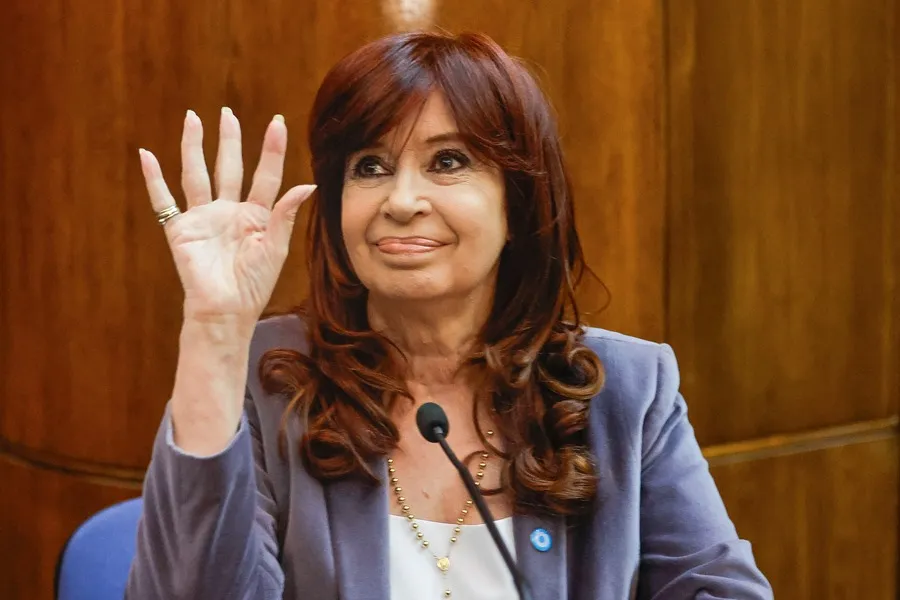
Former President of Argentina Cristina Fernández, between 2007 and 2015, pointed out on Wednesday, during the trial for the attempted murder against her, that she suffered violence for being a woman and compared images of her published in the press with the photos of Fabiola Yáñez after being possibly beaten by former President Alberto Fernández.
“When a woman exercises power and does not do so in the orientation that the power sectors in Argentina want, it generates much more resistance and much more violence than men,” the former president considered during her statement before the Oral Federal Criminal Court No. 6 of Argentina, of the Comodoro Py Building in Buenos Aires, in the trial for the attack perpetrated when she was vice president of Fernández.
During his testimony, Fernández showed a series of covers of the magazine Noticias and a cartoon of him published in the newspaper Clarín, which, he said, exhibited the violence exercised against her during her years in the Presidency.
The first of them read ‘El goce de Cristina’ and an explicitly sexual allusion, something that she highlighted attacked not her “status as president or politician, but directly as a woman.”
A second cover showed it on a cross, in a pose similar to the crucifixion of Jesus and accompanied by the message ‘Vía Crisis’, while in a third she was seen with a black eye and titled ‘The business of hitting Cristina’.












“Even with a black eye, look at what current context, right?” Fernández said, comparing that publication with the photos of former first lady Fabiola Yánez recently disseminated by the local press as part of the complaint of sexist violence against Alberto Fernández.
In one of those photographs you can see Yáñez with a black eye.
“As you will see, everything is always repeated,” added the former president, who also showed a caricature of hers published in the newspaper Clarín in which an image of her with a black eye is repeated.
“None of the feminists believed that they were assaulting me because of my condition as a woman. Never, never, never, never said anything about this. She was the first female president elected, I am still the only woman elected president. I suffered from these aggressions in my capacity as a woman,” Fernández denounced.
In addition, he stressed that “no man president, who there were, was caricatured in that way,” he commented that “the destruction of machismo and misogyny in Argentina is not a minor issue” and emphasized: “I never heard a president being treated as sexist and misogynist, when many have been and are.”
These statements coincide with the progress of the trial against the former president after the complaint by his ex-partner, who on Tuesday reiterated before the Justice that he hit her several times and suffered serious injuries.
Fernández referred to the case on social networks, where he published that the images of Yáñez “allow us to verify, once again and dramatically, the situation of the woman in any relationship, whether it develops in a palace or in a hut.”
“Personally and as a woman who has been the object (and continues to be) of the worst verbal and political violence, up to the maximum experience of physical violence, as was the assassination attempt of September 1, 2022, I express my solidarity with all women victims of any type of violence, without forgetting the words that (Pope) Francis told me the day after that event: ‘all physical violence is always preceded by verbal violence,’” concluded the former president’s message about the case.











International
Abelardo de la Espriella sworn in as Colombia’s president for 2026-2030
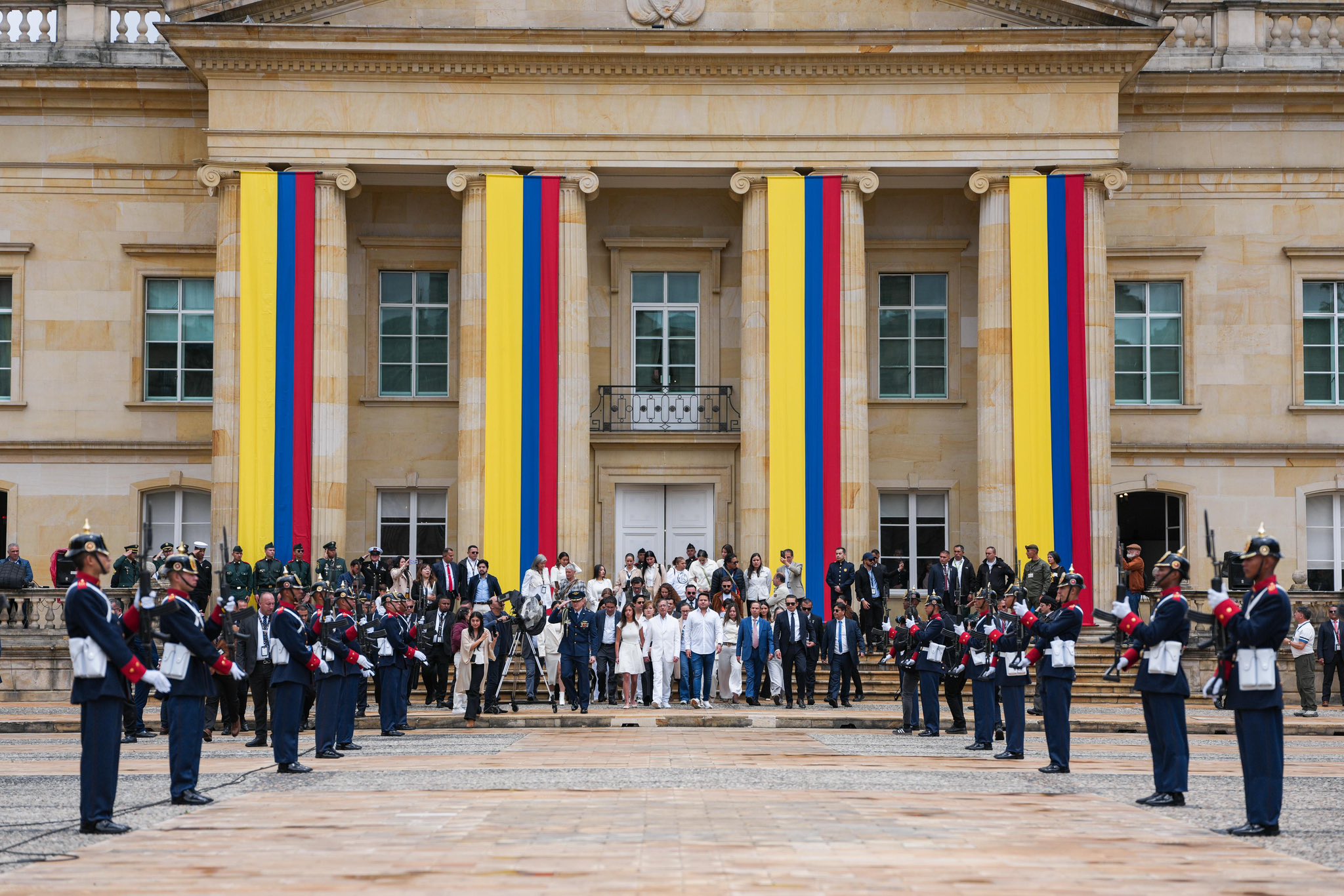
Lawyer Abelardo de la Espriella was sworn in Friday as Colombia’s president for the 2026-2030 term during an inauguration ceremony held at the USC Arena of the Santiago de Cali University in Valle del Cauca.
“I swear to God and promise the Colombian people to faithfully uphold the Constitution and the laws of Colombia,” De la Espriella, 48, said as he took the oath before Senate President Honorio Henríquez, who subsequently placed the presidential sash on him, formally marking the transfer of power from former President Gustavo Petro.
At the same time, members of the Colombian Army performed the traditional 21-gun salute from the José María Córdova Military Cadet School in Bogotá. After receiving the presidential sash, De la Espriella was applauded by those attending the ceremony and greeted by his family.
The new president later swore in Vice President José Manuel Restrepo. The ceremony also included the participation of 74-year-old farmer Luis Felipe Yagüé, whom De la Espriella invited as an honorary guest as a symbol of his support for small business owners and entrepreneurs.
De la Espriella arrived at the venue with his wife, Ana Lucía Pineda, and their four minor children. More than 1,000 national and international guests attended the ceremony, which began more than an hour later than scheduled.
Among the international figures present were King Felipe VI of Spain and presidents Javier Milei of Argentina, Daniel Noboa of Ecuador, Santiago Peña of Paraguay, José Raúl Mulino of Panama, Luis Abinader of the Dominican Republic, José Antonio Kast of Chile and Nasry Asfura of Honduras. FIFA President Gianni Infantino also attended.
Former Colombian presidents César Gaviria, Andrés Pastrana, Álvaro Uribe and Iván Duque were also present. Former President Ernesto Samper and Nobel Peace Prize laureate Juan Manuel Santos, however, were not invited to the ceremony.
After the inauguration ceremony concluded, De la Espriella traveled to the Pichincha Military Canton in Cali, where he was scheduled to deliver his first address as head of state to Colombia’s senior military commanders.
International
Appeals Court blocks Trump’s White House ballroom project without congressional approval

A U.S. appeals court ruled Friday that President Donald Trump must obtain approval from Congress before moving forward with his plan to build a large ballroom on the White House grounds, at the site where the East Wing of the presidential residence previously stood.
The decision was issued in a 2-1 ruling, with the judges determining that a project of such magnitude falls under Congress’ authority and cannot be carried out solely through executive action.
In its ruling, the court sided with the National Trust for Historic Preservation, the organization that filed the lawsuit seeking to halt the construction. The judges found that the plaintiffs had convincingly demonstrated that Congress had never granted the executive branch the authority to “redesign or rebuild the White House, the People’s House, to satisfy the wishes of any particular president.”
Following the decision, Trump announced that he would appeal the ruling to the U.S. Supreme Court, calling the decision incorrect.
“We will immediately appeal it to the Supreme Court,” the president wrote in a message posted on his social media platforms.
Trump also argued that the ruling could pose a security risk to the presidential complex, claiming that it threatens the safety of White House employees, future workers, visitors, heads of state, and other dignitaries.
The president has repeatedly said that the project would not require taxpayer funding and that its financing would come from private donations by business leaders close to his administration, including Amazon founder Jeff Bezos.
However, a previous estimate published by The Washington Post placed the project’s cost at approximately $600 million and suggested that nearly half of the funding could come from public resources, contradicting Trump’s claims.
International
Rubio warns Cuba U.S. pressure campaign will continue through Trump’s term
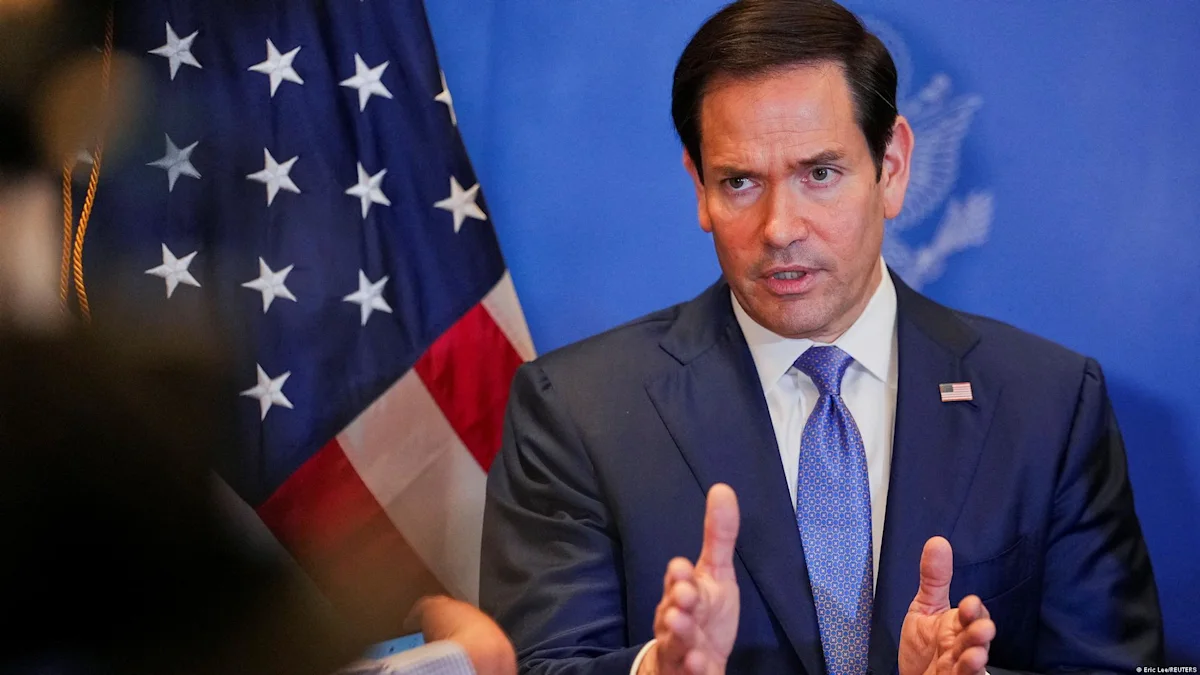
U.S. Secretary of State Marco Rubio said Friday that the Cuban government will not find a way out of the pressure campaign imposed by Washington and warned that waiting for the end of President Donald Trump’s second term will not change the situation for the island.
In an interview with U.S. outlet Axios, Rubio said the American administration will continue blocking any mechanisms Cuba uses to ease the impact of sanctions and other measures implemented by Washington.
Rubio argued that Havana can no longer rely on the possibility that time will bring a change in U.S. policy.
“Without a doubt, this situation is not going to disappear in the next two and a half years,” Rubio said, referring to the remaining period of Trump’s current term.
The U.S. official also said Cuba is facing an increasingly difficult scenario following the capture of former Venezuelan President Nicolás Maduro by U.S. forces in January. According to Rubio, the event led to new restrictions on oil supplies to the island, worsening Cuba’s economic and energy crisis.
Rubio’s comments come amid continued tensions between Washington and Havana, with the U.S. government maintaining its policy of sanctions and diplomatic pressure on the Cuban authorities.

Abelardo de la Espriella sworn in as Colombia’s president for 2026-2030

Appeals Court blocks Trump’s White House ballroom project without congressional approval

Rubio warns Cuba U.S. pressure campaign will continue through Trump’s term
Tec de Monterrey honors one of its students for his contribution to nanotechnology in medicine

Defense Minister commends salvadoran soldier for Central American Cross Country victory

Extension of the state of emergency approved in southern Chile
-

 International4 days ago
Iran Rejects Negotiations With U.S. as Strait of Hormuz Remains Blocked Amid New Attack
-
 International5 days ago
Lula Launches Re-Election Campaign Amid Rising Tensions With Trump
-

 International3 days ago
Mexican TikTok Influencer Shot Dead While Livestreaming in Sinaloa
-
 Central America3 days ago
Guatemala Declares Highest Alert in Areas Affected by Fuego Volcano Eruption
-
 International16 hours ago
Appeals Court blocks Trump’s White House ballroom project without congressional approval
-
 International2 days ago
Afghan man sentenced to life in prison for deadly Munich vehicle attack
-
 International16 hours ago
Rubio warns Cuba U.S. pressure campaign will continue through Trump’s term
-
 International13 hours ago
Abelardo de la Espriella sworn in as Colombia’s president for 2026-2030
-
 Central America4 days ago
U.S. Defense Secretary to Close Multinational Military Exercises in Panama to Protect Canal