
International
Nicolás Maduro asks for “respect for the popular will” after being proclaimed re-elected president of Venezuela
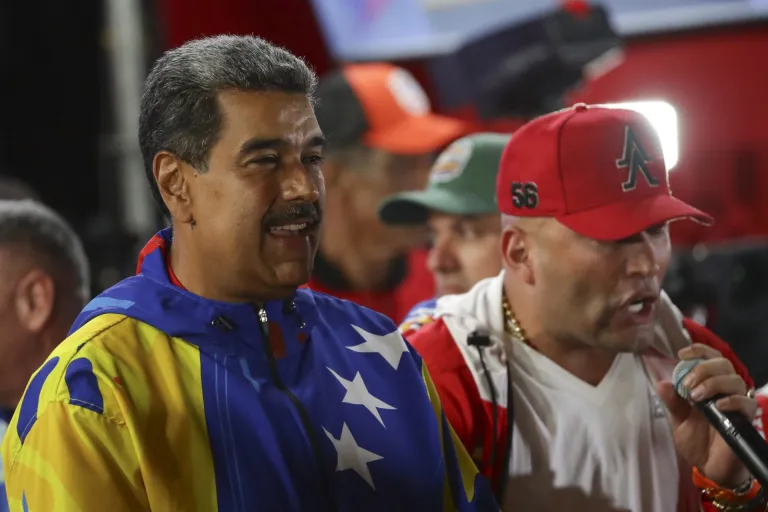
The president of Venezuela, Nicolás Maduro, in power since 2013, asked for “respect for the popular will” after being proclaimed as re-elected president, after elections in which he competed against nine contenders, including the standard-bearer of the majority opposition, Edmundo González Urrutia.
“That’s what I paint as president, I respect the Constitution, the public powers and the sovereign life of Venezuela, I respect the popular will (…) I will defend our law and our longing,” the president remarked before dozens of sympathizers who gathered near the presidential palace to listen to his victory speech.
He promised that, with this triumph, he will give “his entire life to carry out all the changes that this homeland needs,” which experienced an intense economic crisis between 2014 and 2021, from which it has begun to recover slightly.
Maduro assured that he will work in his third term “to rescue all the rights violated by the economic war,” alluding to the economic sanctions imposed by numerous countries in recent years, especially by the United States.
He considered that his re-election “is the triumph of peace, stability, the republican ideal, the ideas of equality.”
Around midnight on Sunday, the National Electoral Council (CNE), announced that Maduro was re-elected for a third consecutive term, in elections in which he obtained 51.20% of the votes (5,150,092 supporters).









The president of the electoral body, Elvis Amoroso, who announced the data more than six hours after the closure of the centers, said that the result provided corresponds to the scrutiny of 80% of the votes cast in this Sunday’s elections, which had a massive influx of voters throughout the day.
According to the first report, the standard-bearer of the majority opposition, Edmundo González Urrutia, obtained 4,445,978 votes, which represents 44.2% of the votes.
He assured that “in the next few hours” the CNE will publish on its website the details of the results, table by table, and will deliver to the 38 political parties that competed a digital report on the outcome of the contest.
Before providing the results, the president of the CNE assured that the data transmission system suffered an attack, to be investigated, which is why, he explained, the winner’s announcement took longer than expected, although he did not give more details about it.
During the campaign, Maduro already confirmed that he would win the elections, considering that he is the “only” capable of maintaining peace and prosperity in the country, on which numerous economic sanctions weigh, especially imposed by the United States, which are, according to the president, the culprits of the crisis in the Caribbean nation.
From January 10, the date on which the new term begins, the president will face a third six-year term at the head of the country, governed by Chavismo for 25 years.






International
Peruvian presidential candidate proposes death penalty amid crime surge
Peru is facing an unprecedented surge in crime ahead of its presidential election scheduled for April 12, with violence fueled by extortion networks and a wave of contract killings linked to organized crime.
Police data show that 2,200 homicides tied to organized crime were recorded in 2025, while extortion complaints increased by 19%, underscoring the growing security crisis in the South American nation.
Amid this backdrop, presidential candidate Álvarez has proposed reinstating the death penalty if elected, arguing that extreme measures are needed to curb the violence.
To implement the proposal, Álvarez said Peru would withdraw from the American Convention on Human Rights—also known as the Pact of San José—which the country signed in 1978. The agreement prevents member states that have abolished capital punishment from reinstating it.
Currently, Peruvian law only allows the death penalty in cases of treason during wartime.
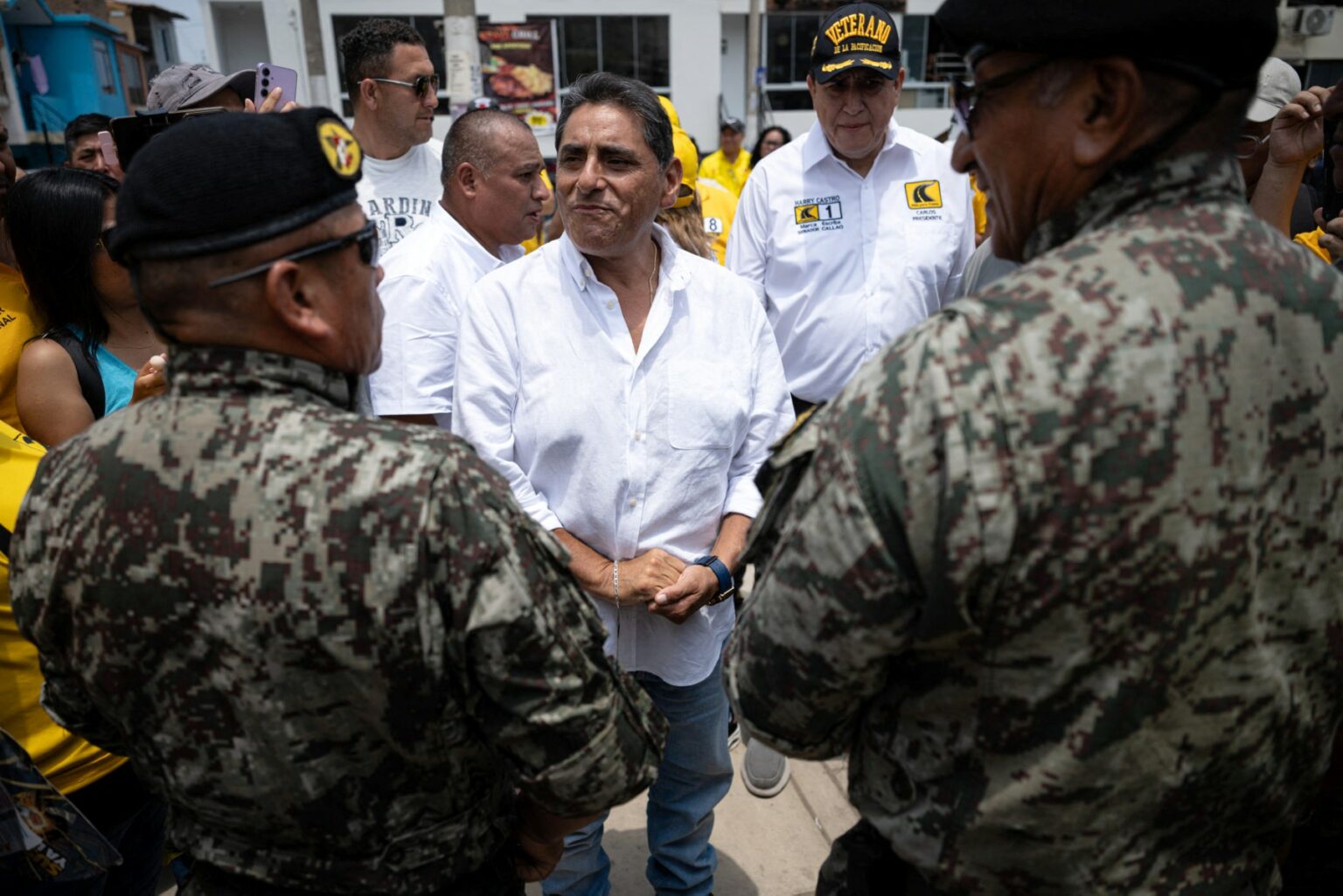
“We have to leave the Pact of San José and apply the death penalty in Peru because those miserable criminals don’t deserve to live,” Álvarez told AFP during a campaign stop at a market in Callao, the port city neighboring Lima.
“An iron fist against those criminals,” he added, proposing to declare hitmen as military targets.
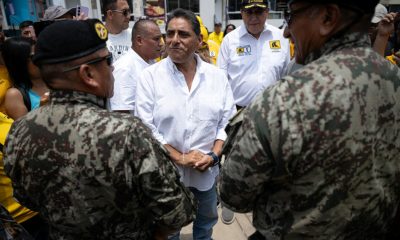
During the campaign event, Álvarez walked through stalls selling vegetables, groceries, and fish, greeting vendors while musicians played cumbia music nearby.
The 62-year-old candidate, who spent more than four decades working in television as a comedian, is a newcomer to politics and is running for president under the País para Todos party.
Polls place him fifth in voter preference with nearly 4% support in a fragmented race featuring 36 candidates.
“I am an artist who has taken a step into politics to bring peace to my country,” Álvarez told reporters while surrounded by supporters.
International
FBI: Man who attacked Michigan synagogue died from self-inflicted gunshot
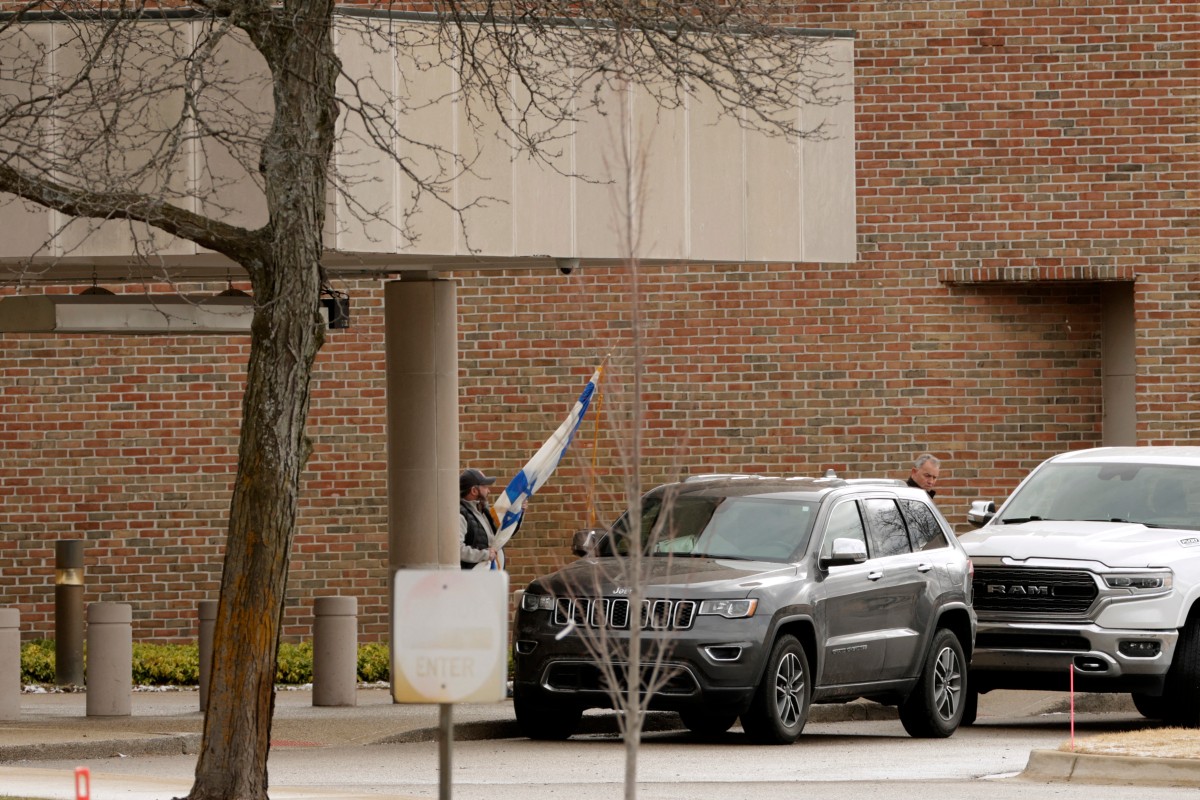
The man who died during Thursday’s attack on a synagogue in the United States suffered a self-inflicted gunshot wound to the head, according to the FBI.
FBI agent Jennifer Runyan told reporters that the suspect, identified as 41-year-old Lebanese citizen Ayman Mohamad Ghazali, shot himself at some point during the confrontation.
“At some point during the shooting, Ghazali suffered a self-inflicted gunshot wound to the head,” Runyan said during a press conference.
A spokesperson for the U.S. Department of Homeland Security confirmed the suspect’s identity.
Authorities said Ghazali drove a truck into the Temple Israel synagogue in West Bloomfield, located in the state of Michigan, on Thursday.
According to Michael Bouchard, sheriff of Oakland County, synagogue security personnel noticed the vehicle and confronted the suspect with gunfire.
Investigators said it would be premature to speculate about the motive for the attack, although reports indicate Ghazali recently lost relatives during Israeli strikes in Lebanon earlier this month.
“It would be irresponsible for me to speculate about his motive,” Runyan said.
Ghazali arrived in Detroit in 2011 on a spouse visa for U.S. citizens and obtained American citizenship in 2016, according to reporting by The New York Times.
He was the father of two teenagers, divorced from his wife in 2024, and had recently been working as a waiter.
The newspaper also reported that Ghazali attended a memorial service in the nearby city of Dearborn for relatives killed in the recent conflict, alongside other grieving family members from the Lebanese town of Machghara.
The Federal Bureau of Investigation said the incident is being investigated as an act of violence targeting the Jewish community.
A source from Michigan’s Lebanese-American community told CBS News that several of Ghazali’s relatives had been killed roughly ten days before the attack, leaving him deeply devastated.
International
Mexican Navy Ships Deliver Third Shipment of Humanitarian Aid to Cuba
Two logistics support vessels from the Mexican Navy — the ARM Papaloapan and the ARM Huasteco — docked again on Friday in the bay of Havana carrying a third shipment of humanitarian aid for Cuba.
The vessels had previously arrived on the Caribbean island on February 28 with a second cargo that included 1,200 tons of food, sent to help alleviate the country’s ongoing crisis, which has worsened following the U.S. oil restrictions affecting fuel supplies to the island.
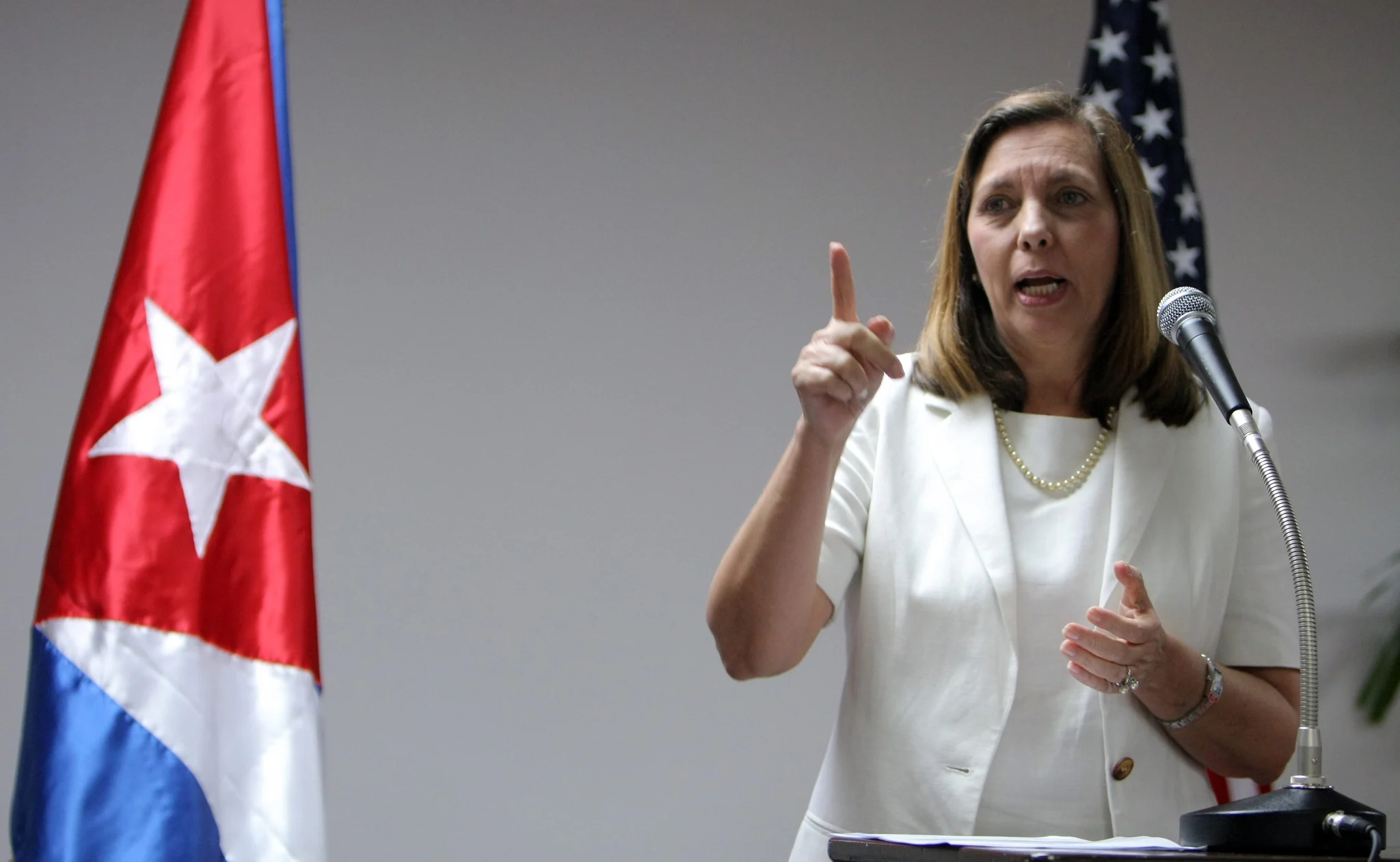
Cuba’s deputy foreign minister Josefina Vidal confirmed the new shipment in a social media post.
“Two ships carrying a third shipment of aid from the Government and the people of Mexico for the Cuban people are now arriving at the port of Havana. Thank you Mexico for your solidarity with Cuba,” she wrote.
Previous aid shipments
During the second shipment, the Papaloapan transported 1,078 tons of beans and powdered milk, while the Huastecocarried 92 tons of beans and 23 tons of assorted food products collected by social organizations with support from the government of Mexico City.
In recent months, Mexico has become the largest provider of humanitarian aid to Cuba, sending around 2,000 tons of supplies, mostly staple foods and hygiene products, in the two shipments prior to Friday’s delivery.
The first shipment alone included 814 tons of food.
Cuba praises Mexico’s support
Hours before the ships arrived, Cuban President Miguel Díaz-Canel highlighted Mexico’s support during a televised appearance, describing the country as “a friendly and brotherly nation that has shown tremendous solidarity,”particularly praising Mexican President Claudia Sheinbaum.
Díaz-Canel also addressed reports suggesting that Mexican donations were being resold in state-run stores, dismissing them as a “disinformation campaign” promoted by right-wing groups.

Peruvian presidential candidate proposes death penalty amid crime surge

FBI: Man who attacked Michigan synagogue died from self-inflicted gunshot

Mexican Navy Ships Deliver Third Shipment of Humanitarian Aid to Cuba
Tec de Monterrey honors one of its students for his contribution to nanotechnology in medicine

Defense Minister commends salvadoran soldier for Central American Cross Country victory

Extension of the state of emergency approved in southern Chile
-

 International2 days ago
U.S. Confirms Death of Six Crew Members in KC-135 Crash in Western Iraq
-

 International3 days ago
Trump Says Iran Is Welcome at 2026 World Cup but Warns of Security Concerns
-

 International4 days ago
Iran issues threat to Trump as conflict escalates over Strait of Hormuz
-

 International3 days ago
FBI Warns of Possible Iranian Drone Attack on U.S. West Coast
-

 International2 days ago
Ecuador Declares 60-Day National Emergency After Deadly Floods and Landslides
-
 International2 days ago
Mexican Navy Ships Deliver Third Shipment of Humanitarian Aid to Cuba
-

 International4 days ago
Driver detained after suspicious vehicle incident near the White House
-
 Sin categoría4 days ago
UN experts warn Nicaragua runs vast transnational network to monitor exiled dissidents
-
 International2 days ago
Trump Pushes for Regime Change in Cuba as Havana Confirms Talks With Washington
-
 International1 day ago
FBI: Man who attacked Michigan synagogue died from self-inflicted gunshot
-
 International1 day ago
Peruvian presidential candidate proposes death penalty amid crime surge
-
 Sin categoría3 days ago
FBI Most Wanted Fugitive Arrested in Mexico and Deported to U.S.