
International
Millions of Venezuelans abroad will not be able to vote for government obstacles
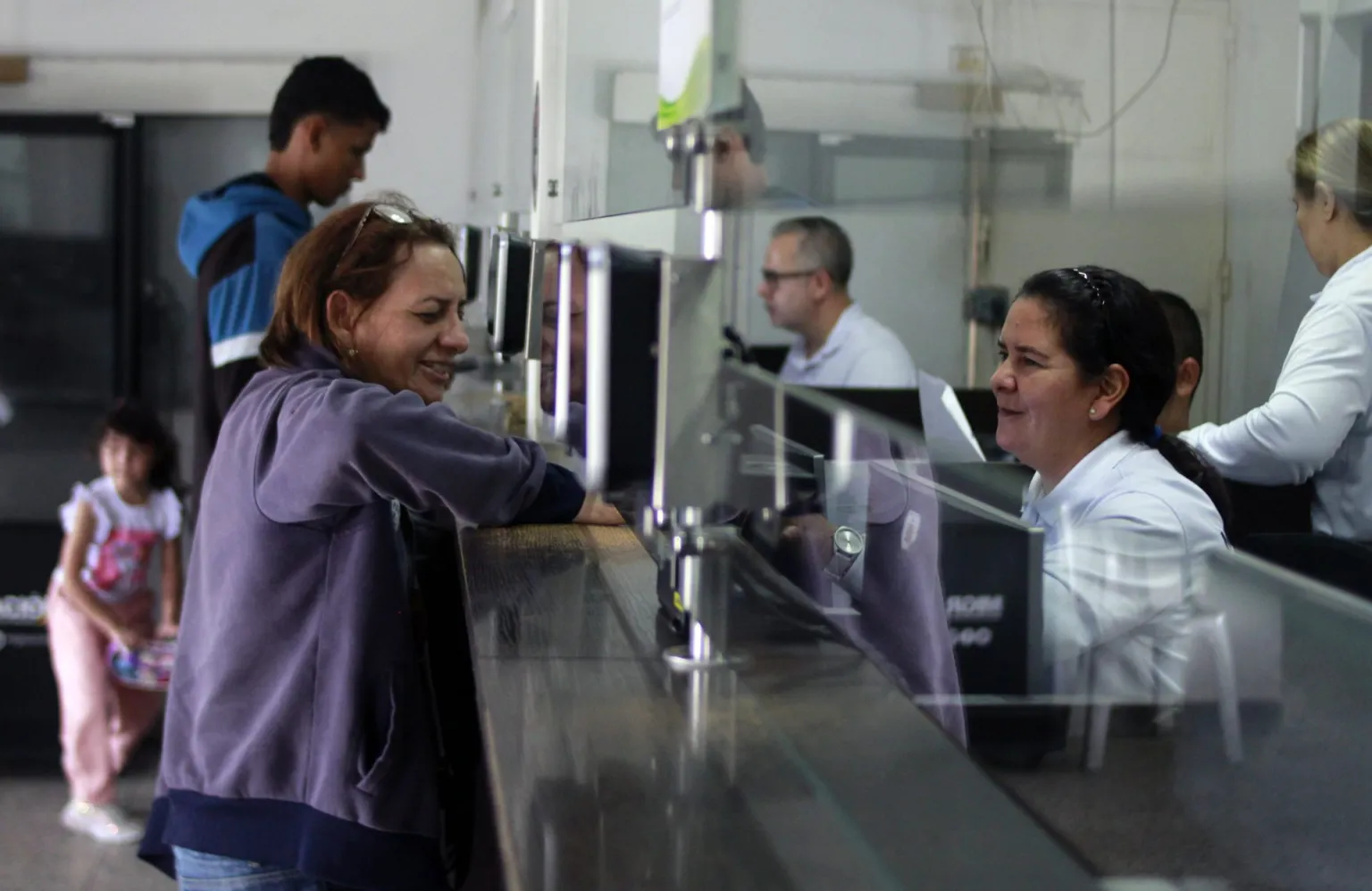
Venezuela currently has a population of approximately 29.4 million people, of which 21.4 million can theoretically vote in the presidential elections on July 28, both inside and outside the country.
However, due to the various requirements imposed by the Government for electoral registration abroad, only 69,211 Venezuelans abroad are authorized to pay – less than in the previous Venezuelan elections, which were 110,000 -, which represents a small fraction of the approximately eight million Venezuelans who, according to UN data, have emigrated, a figure that the Executive of Nicolás Maduro reduces to two million.
And even if there were no obstacles, not all Venezuelans who are abroad could vote because a large part of them are minors and others, fundamentally those who emigrated many years ago, lack interest in these elections.
Of the eight million Venezuelans who live outside their country, about five million are of legal age and should be able to vote in the elections, but only 69,000 are authorized to do so, explains Estefanía Parra Anselmi, international coordinator of Voluntad Popular and member of the command that groups the opponents who reside in Spain, to EFE.
About three million Venezuelans currently live in Colombia, making it the country that has welcomed the most citizens of that nationality.











This population arrived looking for better horizons due to the political, social and economic crisis in Venezuela.
According to the Interagency Coordination Platform for Refugees and Migrants from Venezuela of the International Organization for Migration (IOM), there are 2.9 million Venezuelan refugees and migrants in Colombia, which places this country as the regional epicenter of the Venezuelan exodus.
A good part of this population expects that the elections of July 28 will generate a change in their country, although many will not be able to vote due to difficulties in registering and the high cost of obtaining documents such as the valid passport, which allows you to vote abroad.
Spain is the European country that welcomes the most Venezuelan migrants, including many opposition leaders who left Venezuela in recent years.
Among them are Dinorah Figuera, Antonio Ledezma, Diego Arria and Leopoldo López, who are part of the Spanish campaign command of María Corina Machado.
These opponents have worked in favor of the candidacy of Edmundo González Urrutia and hope to defeat Maduro at the polls.
However, they fear that Maduro will not accept the results or manipulate them, since they consider his regime as one that resorts to cheating and fraud.
Therefore, they have asked European governments to take measures to prevent fraud.
Parliamentarians from European and Latin American countries will travel to Venezuela to be present in the presidential elections, and the opposition abroad has called for several demonstrations in support of their candidate.
Venezuelans in Brazil will face difficulties voting, since they could only register at the Embassy in Brasilia and the Consulate General of São Paulo, the only places where they will be able to vote on July 28.
Of the seven consulates that Venezuela had in Brazil, five were closed between 2019 and 2022 during the Government of Jair Bolsonaro, and did not reopen after the normalization of relations.
About 125,000 Venezuelans covered by Operation Reception live in Brazil, and it is estimated that in the last six years another 400,000 have entered, although many have continued to other countries. There are no clear figures on how many Venezuelans remain in Brazil in a position to vote.
About 1.5 million Venezuelans live in Peru, of which about 900,000 are of voting age.
Despite this, according to figures from the National Electoral Council (CNE) only 589 are authorized to vote.
Most have not been able to register due to the obstacles imposed by the authorities, which require permanent residence, a valid passport and identity card.
On July 28, the Venezuelan Consulate in Buenos Aires will open its doors to vote on a day that will include a migrant fair and the reception of Argentine leaders who collaborated in the search for freedom in Venezuela.
Elisa Trotta, a human rights activist, explains that the accompaniment seeks to support Venezuelan voters in Argentina.
In Argentina, 2,638 Venezuelans will vote, a small figure compared to the nearly 250,000 Venezuelan residents in the country.
Trotta affirms that this vote has a special symbolism and that the authorized will do so to express their desire for political change.
In Italy it is difficult to establish the number of resident Venezuelans because the majority have dual nationality.
According to the Venezuelan Embassy in Italy, there are 13,548 Venezuelans in the country, but the figures of the opposition command of María Corina Machado estimate between 300,000 and 350,000 Italian-Venezuelans.
The requirements imposed by the consulates have made it difficult for many to vote.
María Claudia López, president of the Italian-Venezuelan association and the opposition campaign, denounces that the consulates have asked for requirements that are impossible to meet, preventing many from voting.










International
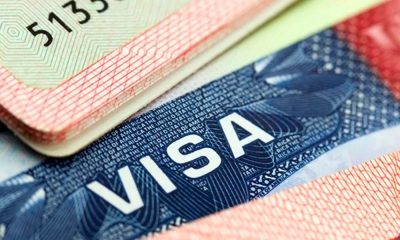
U.S. to Limit Visa Duration for Foreign Students and Journalists
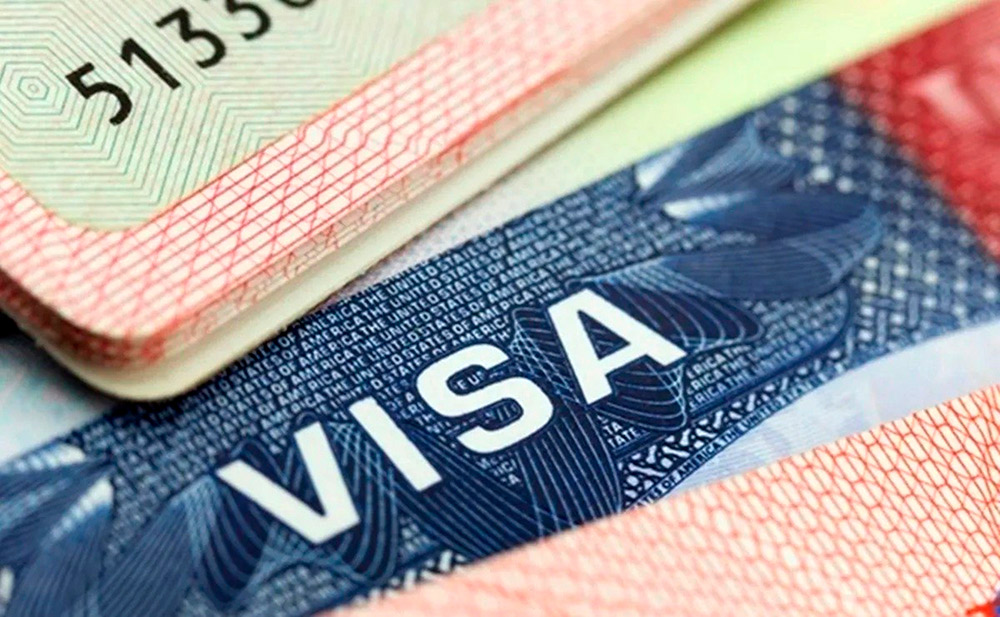
The United States has announced new limits on the legal length of stay for foreign students and journalists, marking the latest tightening of immigration policies under President Donald Trump.
The changes, outlined in an administrative rule published on Thursday, are expected to take effect in September, unless Congress blocks the measure.
Under the new policy, holders of student visas will be allowed to remain in the United States for no more than four years.
Foreign journalists will be limited to 240-day stays—approximately eight months—with the possibility of applying for extensions of the same duration.
The policy imposes even stricter rules on Chinese journalists, whose visas will be capped at 90 days.
More than 100 international news organizations and press freedom groups, including Agence France-Presse (AFP), criticized the measure in an open letter, arguing that it would reduce both the quantity and quality of international coverage of events in the United States.
The Republican Party, led by President Trump, currently holds a majority in Congress and has pledged to curb both illegal immigration and certain forms of legal immigration.
Previously, the United States generally issued student visas for the full duration of an academic program, while foreign journalists could receive visas valid for up to five years.
Central America
Nicaragua Cuts Diplomatic Ties With Italy Over Red Brigades Dispute

The Nicaraguan government announced on Thursday that it is severing diplomatic relations with Italy following criticism from the Italian government over Nicaragua’s long-standing decision to shelter Alessio Casimirri, a former member of the Red Brigades convicted in Italy for the 1978 kidnapping and murder of former Prime Minister Aldo Moro.
Italian Foreign Minister Antonio Tajani criticized the administration of co-presidents Daniel Ortega and Rosario Murillo on Wednesday for continuing to provide refuge to Casimirri, who was sentenced in Italy to six life terms for his role in Moro’s abduction and killing.
In a statement issued Thursday, Nicaragua’s Foreign Ministry said it was ending all diplomatic relations with Italy, describing Tajani’s remarks as “unjustified, aggressive, and irresponsible.”
Tajani made the comments during a gathering of conservative leaders from Europe and Latin America held in Madrid.
“We have absolutely nothing in common with the positions of extremist governments such as Nicaragua, a country that continues to harbor dangerous Red Brigades terrorists like Alessio Casimirri,” Tajani said, according to Italian media.
The diplomatic break marks a new escalation in tensions between the two countries over the decades-old case involving Casimirri, who has lived in Nicaragua for many years despite repeated calls from Italy for his extradition.
International
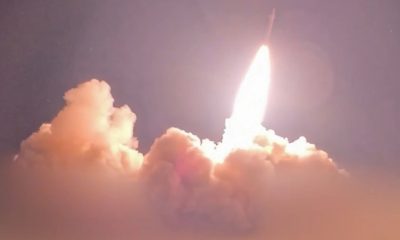
U.S. Strikes Hit Areas Near Strait of Hormuz as Tensions With Iran Escalate
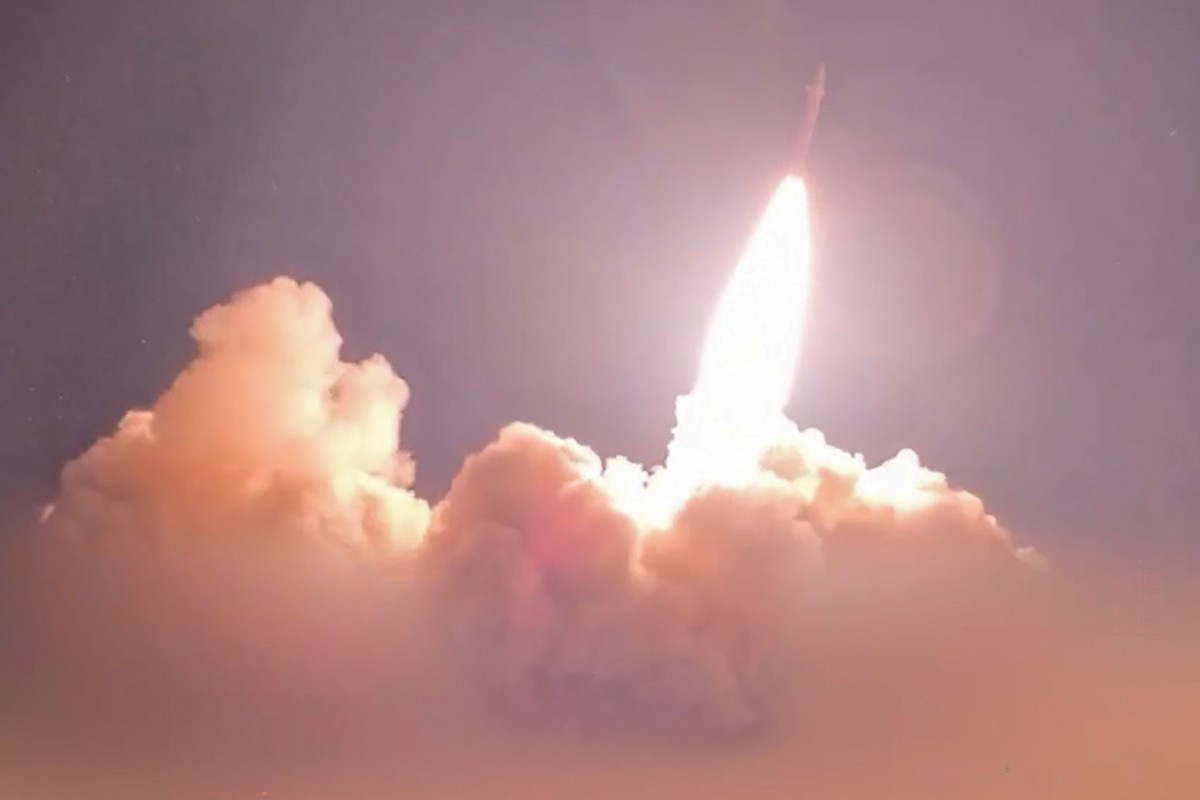
Several U.S. strikes targeted areas near the Strait of Hormuz on Thursday, according to Iranian state media citing local authorities, as hostilities between the United States and Iran intensified.
Officials in Iran’s Hormozgan Province said the island of Qeshm was struck multiple times by what they described as U.S. missiles during the evening. The reports were carried by the Iranian news agencies Fars and Tasnim.
Iranian state television also reported that the Bandar Abbas region, located on the Iranian coast overlooking the Strait of Hormuz, was the target of what authorities described as an “enemy U.S. air attack.”
According to local officials quoted by state television, no casualties have been reported following the strikes.
The reported attacks come amid renewed military tensions between Washington and Tehran, although U.S. authorities had not immediately commented on the reported operations.

U.S. to Limit Visa Duration for Foreign Students and Journalists

Nicaragua Cuts Diplomatic Ties With Italy Over Red Brigades Dispute

U.S. Strikes Hit Areas Near Strait of Hormuz as Tensions With Iran Escalate
Tec de Monterrey honors one of its students for his contribution to nanotechnology in medicine

Defense Minister commends salvadoran soldier for Central American Cross Country victory

Extension of the state of emergency approved in southern Chile
-
 International3 days ago
ICE reverses course and moves forward with New Jersey migrant detention facility project
-
 International3 days ago
Judge rules Trump’s IRS lawsuit was a “bad faith” attempt to manipulate the judicial process
-
 International2 days ago
France Holds Largest Bastille Day Military Parade as Europe Highlights Strategic Defense
-
 International2 days ago
President Noboa Declares New Security Strategy as Ecuador Faces Record Violence Levels
-
 International3 days ago
Marco Rubio launches U.S. campaign to “dismantle” the International Criminal Court
-
 International4 days ago
Venezuela Earthquake Death Toll Rises to 4,490 as Rescue Efforts Continue
-
 International2 days ago
Foreign Medical Teams Race to Prevent Health Crisis in Venezuela Earthquake Camps
-
 International1 day ago
Latin Music Stars Unite in Miami to Raise Aid for Victims of Venezuela’s Devastating Earthquake
-
 International1 day ago
Trump Administration Seeks Global Action Against “Resurgent” Left-Wing Terrorism
-
 International4 hours ago
U.S. Strikes Hit Areas Near Strait of Hormuz as Tensions With Iran Escalate
-
 International4 hours ago
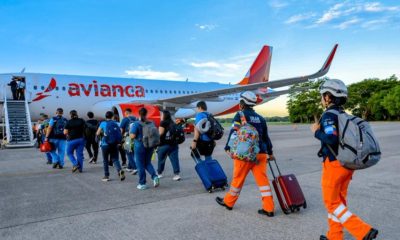
El Salvador Sends Eighth Humanitarian Flight to Earthquake-Hit Venezuela
-
 International4 hours ago
U.S. to Limit Visa Duration for Foreign Students and Journalists
-
 Central America4 hours ago
Nicaragua Cuts Diplomatic Ties With Italy Over Red Brigades Dispute