
International
China confirms “provisional agreement” with the Philippines to “de-escalate” maritime tensions
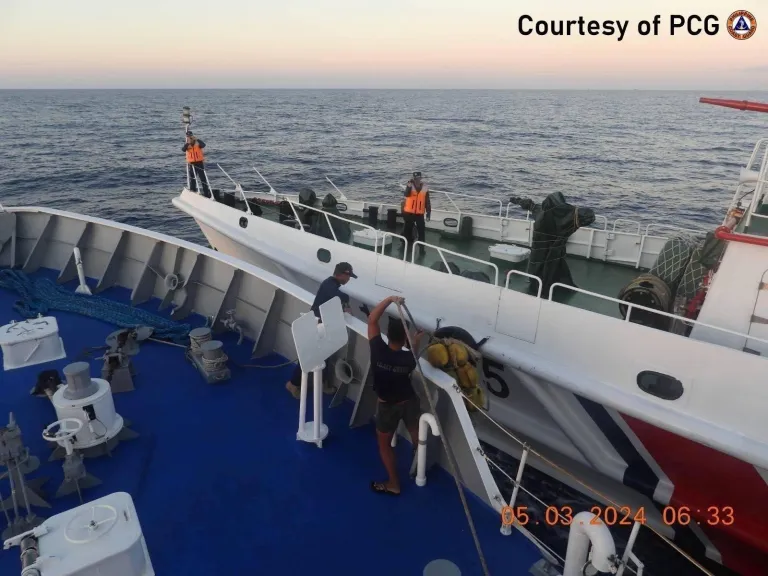
The Ministry of Foreign Affairs of China confirmed on Monday that it reached a “provisional agreement” with the Philippines to “de-escalate” the tensions around an atoll in the South China Sea that both countries claim and where violent ship collisions have occurred in recent months.
According to a spokesman for the Chinese Foreign Ministry, both parties agreed to “jointly manage the differences on maritime issues and work for de-escalation” in this region, after reaching an understanding around the “humanitarian resupply of life supplies” of the Philippine contingent located in the Second Thomas atoll.
The agreement was reached after a meeting held by representatives of both countries on July 2, which led to more consultations and the establishment of a direct line of communication between the Philippine president, Ferdinand Marcos Jr., and his Chinese counterpart, Xi Jinping.
One of the main points of friction between the two parties is related to the old Philippine ship Sierra Madre, straned with a military garrison in the Second Thomas since 1999 to claim the sovereignty of the atoll.
“We continue to demand that the Philippines tow the ship (Sierra Madre) and restore the state of Ren’ai Jiao (Second Thomas) from not housing personnel or facilities,” the Chinese Foreign Affairs spokesman said in a statement published in the early hours of Monday.









If the Philippines needs to send life supplies to the ship’s personnel, China is willing to allow it with a “humanitarian spirit,” as long as Manila informs Beijing in advance and after an “on-site verification” has been carried out, according to the official text.
In the event that the Philippines sends “a large amount” of construction materials to the warship, or tries to build fixed facilities or a permanent post, “China will not accept it at all and will resolutely stop it in accordance with the law,” stressed the Chinese Foreign Affairs spokesman.
“China has sovereignty over Ren’ai Jiao and the rest of the Nansha Qundao (Spratly islands), as well as its adjacent waters,” the spokesman said.
The Philippines and China maintain a growing sovereignty dispute in the South China Sea, where in recent months clashes between ships from both countries have multiplied.
In addition to the Second Thomas atoll, Manila and Beijing are disputed for sovereignty over the Scarborough reef, near the Philippine island of Luzon, and several islands of the Spratly archipelago, where Brunei, Malaysia, Vietnam and Taiwan also hold claims.
Tensions between China and the Philippines have increased since Marcos Jr. came to power in 2022, who has strengthened his military alliance with the United States and expanded access to its bases to US troops, including some of strategic access to the China Sea or the self-governed island of Taiwan.






International
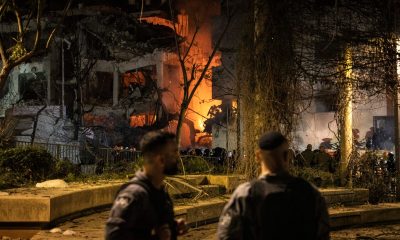
Iran Reports 201 Dead, 747 Injured After U.S. and Israeli Strikes
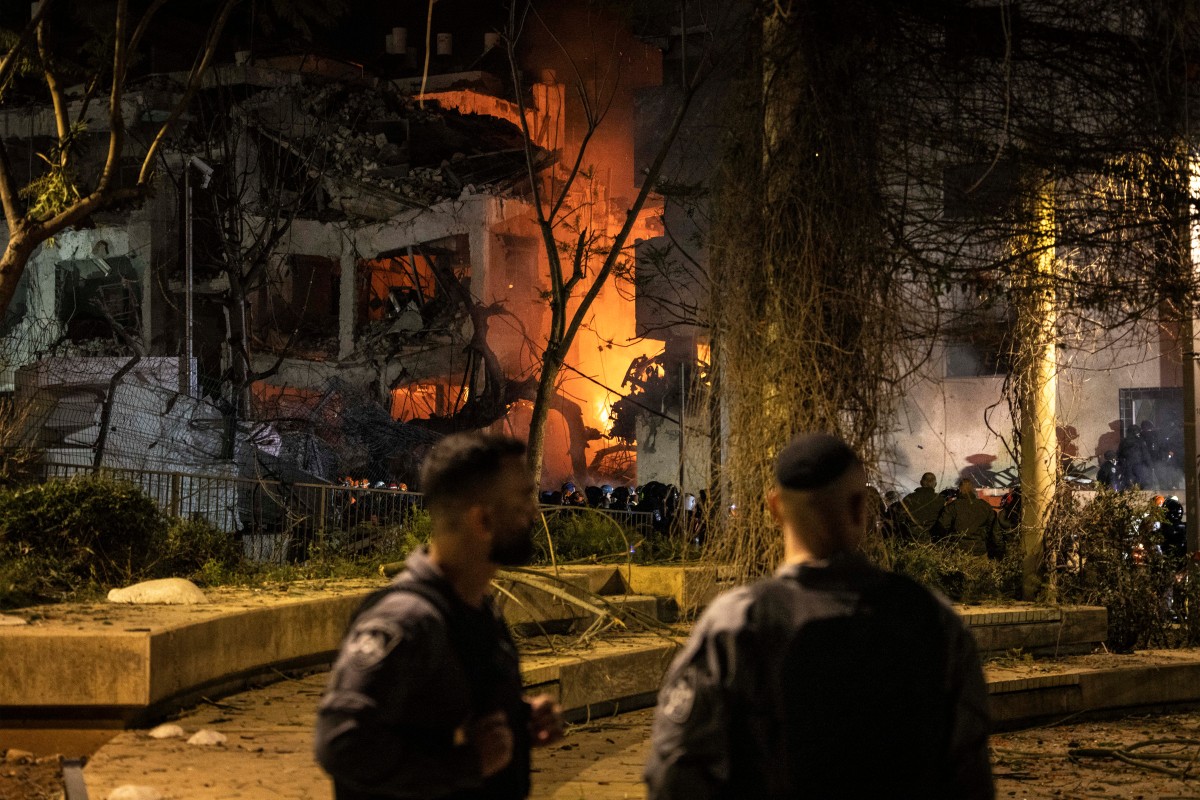
The Iranian Red Crescent Society reported Sunday night (local time) that at least 201 people were killed and 747 injured following attacks carried out by Israel and the United States against the Islamic Republic.
A spokesperson for the humanitarian organization said more than 220 rescue teams have been deployed across affected areas and that relief operations are continuing without interruption. The official highlighted the difficulty of treating the large number of wounded and the urgent need for additional resources in impacted provinces.
Out of Iran’s 31 provinces, 24 have reported damage, according to a statement carried by the Isna news agency. This marks the first overall casualty toll released by Iranian state-affiliated media since the launch of the offensive.
Among the dead are 85 schoolgirls from a school in the southern city of Minab, according to the country’s judiciary. “The number of martyrs at the Minab girls’ school has risen to 85,” the local prosecutor’s office said, as quoted by the judiciary’s website, Mizan Online.
Iranian President Masud Pezeshkian described the attack as a “savagery” that “constitutes a new black page in the record of countless crimes committed by the aggressors.”
Meanwhile, the international community continues to monitor the situation closely amid concerns about possible further reprisals and the broader impact on Middle East stability, energy markets, and global security.
AFP noted that it was unable to independently verify the casualty figures or the circumstances surrounding the events.
International
Pope Leo XIV Urges End to ‘Spiral of Violence’ in Middle East
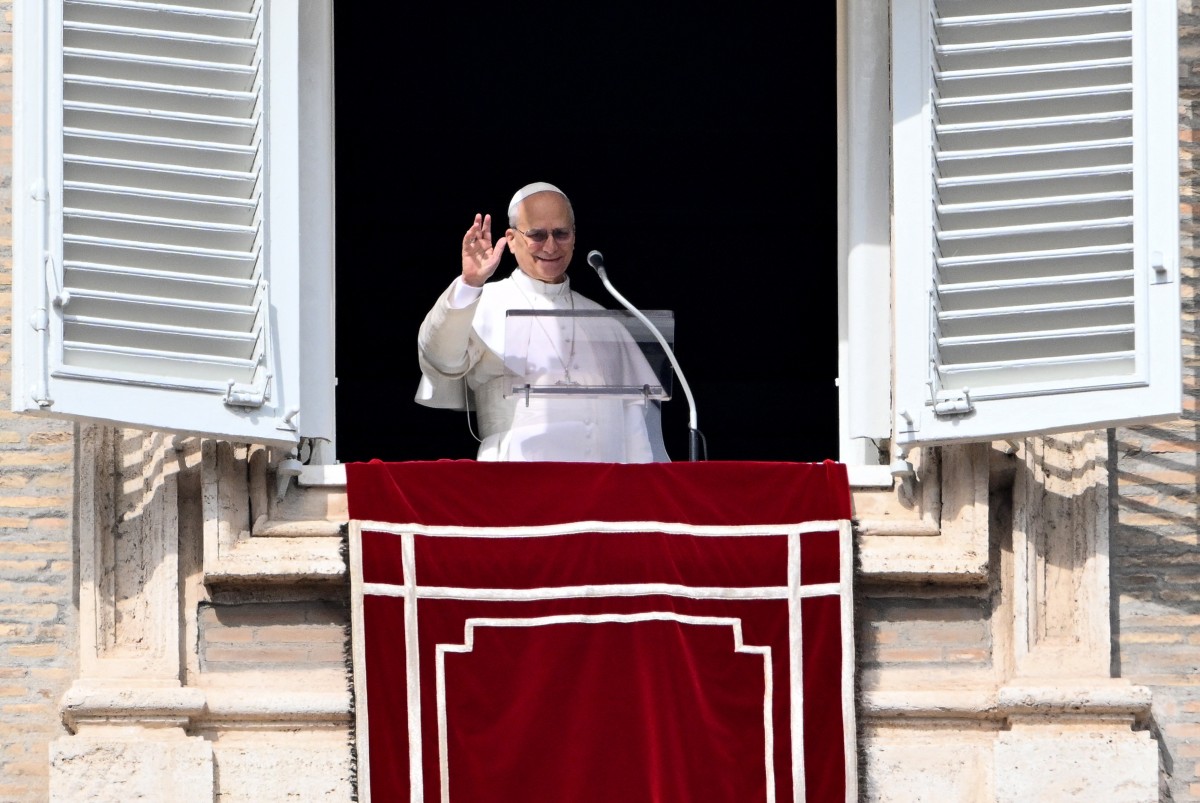
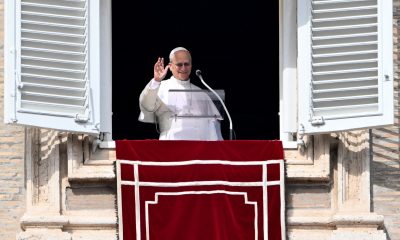
Pope Leo XIV on Sunday called for an end to the “spiral of violence” in the Middle East, following military strikes by the United States and Israel against Iran and subsequent retaliatory bombardments in the region.
“Faced with the possibility of a tragedy of enormous proportions, I urge the parties involved to assume their moral responsibility and stop the spiral of violence before it becomes an irreparable abyss,” the pontiff told the crowd gathered in St. Peter’s Square at the Vatican.
Speaking during the Angelus prayer, the U.S.-born pope said stability and peace cannot be achieved through threats or weapons. “Stability and peace are not built with reciprocal threats or with arms that sow destruction, suffering and death, but only through reasonable, sincere and responsible dialogue,” he declared.
The leader of the world’s 1.4 billion Catholics also called for diplomacy to “regain its role” amid escalating tensions.
In addition, the pope urged Afghanistan and Pakistan to urgently resume dialogue after several days of clashes between the two countries.
International
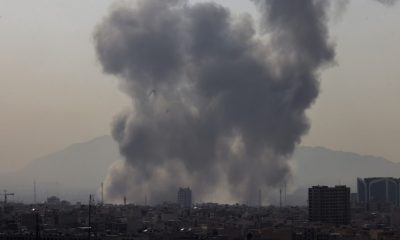
Security Council to Hold Emergency Meeting on Middle East Crisis
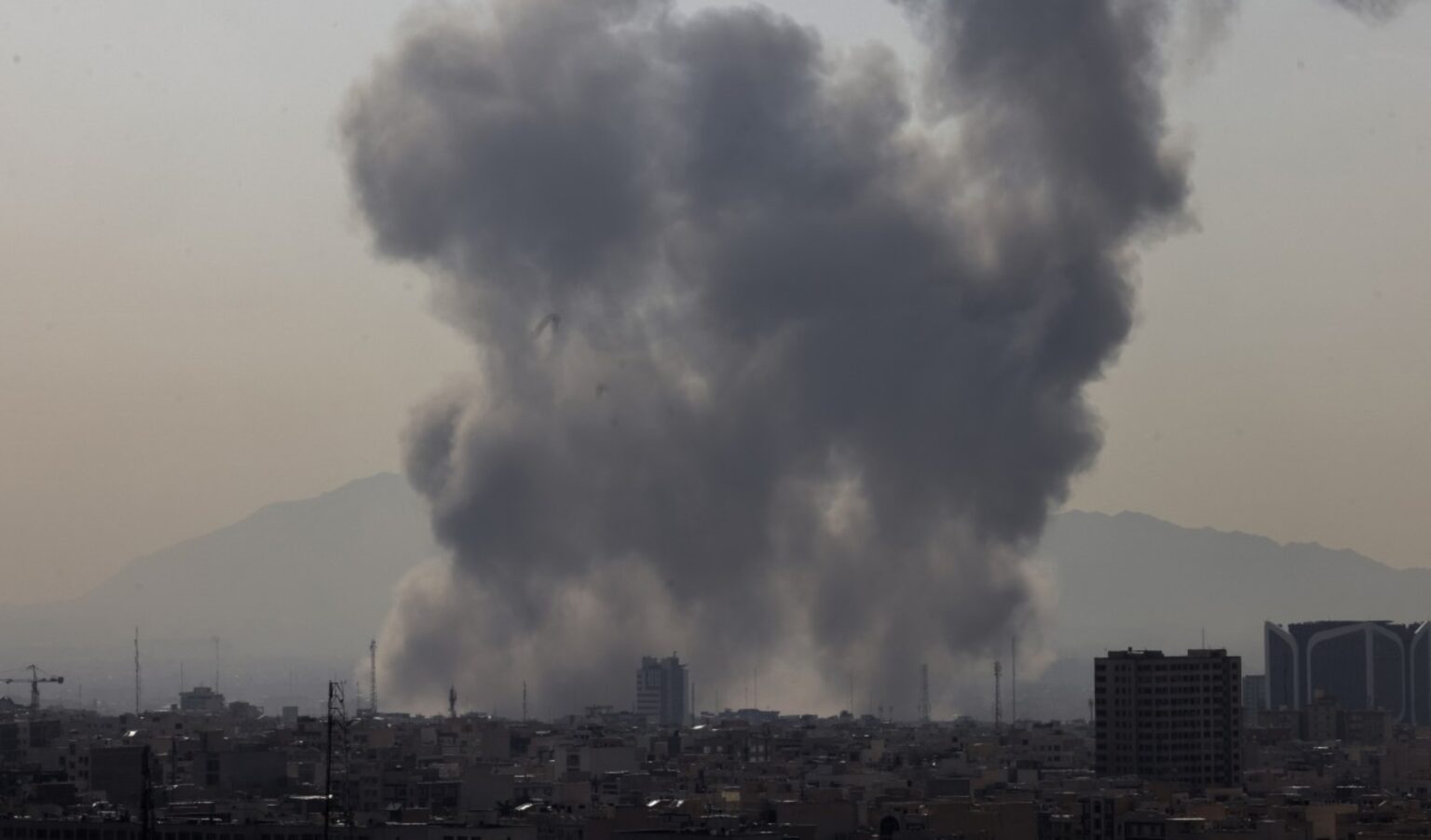
UN Secretary-General António Guterres on Saturday condemned the “military escalation in the Middle East” following attacks by the United States and Israel against Iran and Tehran’s retaliatory strikes, just hours before an urgent meeting of the UN Security Council.
“I call for the immediate cessation of hostilities and de-escalation,” Guterres said in a statement.
The Security Council is scheduled to meet on Saturday at 21:00 GMT (4:00 p.m. in New York) to address “the situation in the Middle East,” the United Nations announced.
The meeting, during which Guterres will deliver remarks, was convened at the request of France, Bahrain, Colombia, Russia and China, according to a diplomatic source.

Iran Reports 201 Dead, 747 Injured After U.S. and Israeli Strikes

Pope Leo XIV Urges End to ‘Spiral of Violence’ in Middle East

Security Council to Hold Emergency Meeting on Middle East Crisis
Tec de Monterrey honors one of its students for his contribution to nanotechnology in medicine

Defense Minister commends salvadoran soldier for Central American Cross Country victory

Extension of the state of emergency approved in southern Chile
-
 International4 days ago
Family of “El Mencho” Seeks Return of Body After Deadly Military Operation
-

 International4 days ago
Larry Summers Steps Down from Harvard Role Amid Epstein Controversy
-
 International4 days ago
Iran’s President Optimistic Ahead of Geneva Nuclear Talks with U.S.
-

 International4 days ago
Bill Gates Admits “Serious Mistake” Over Epstein Ties
-

 International4 days ago
Stephen Hawking Photo Appears in Newly Released Epstein Documents
-
 International3 days ago
Cocaine Production Surges 34% in 2023 as Market Expands into Africa and Asia
-
 International3 days ago
Clinton Accuses Republican Committee of Using Epstein Case to Shield Trump
-
 International3 days ago
Federal Judge Blocks Trump Policy Allowing Deportations to Third Countries
-
 International2 days ago
Trump Floats “Friendly Takeover” of Cuba Amid Rising Tensions
-
 International2 days ago
Argentina’s Senate Reviews Milei-Backed Labor Overhaul
-
 Sin categoría20 hours ago
Trump: ‘We Think It’s True’ Amid Claims Iran’s Supreme Leader Was Killed
-
 International20 hours ago
Security Council to Hold Emergency Meeting on Middle East Crisis
-
 International30 minutes ago
Iran Reports 201 Dead, 747 Injured After U.S. and Israeli Strikes
-
 International32 minutes ago
Pope Leo XIV Urges End to ‘Spiral of Violence’ in Middle East