Connect with us

International

The left proposes in France the veteran communist Chassaigne as a candidate to preside over the Assembly

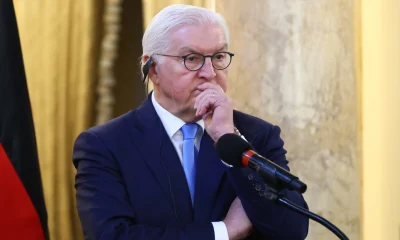
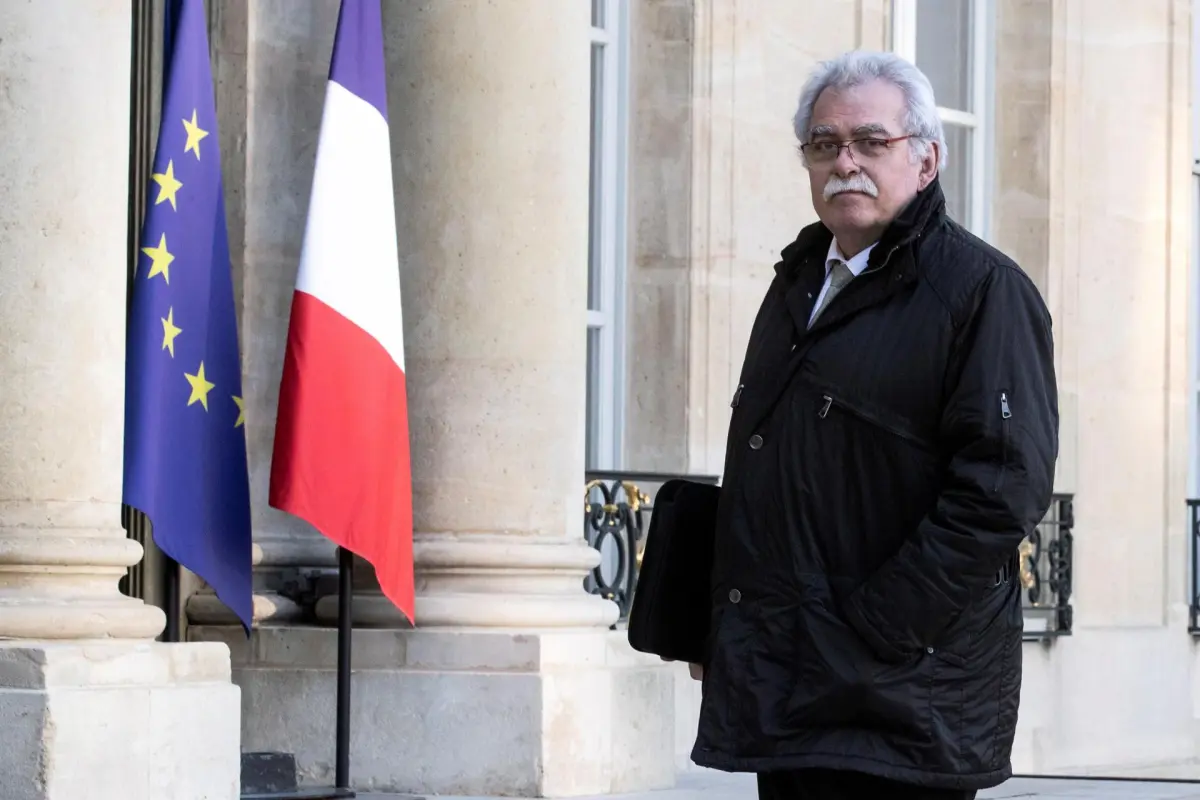
he left-wing coalition of the New Popular Front (NFP), in arduous negotiations to form a Government, managed on Wednesday to agree to present tomorrow, Thursday, a common candidate for the presidency of the French National Assembly, the communist veteran André Chassaigne.

Chassaigne, 74, is the name agreed by La Francia Insumisa (LFI), the Socialist Party (PS), the ecologists and the French Communist Party (PCF) to dispute the fourth hierarchical position of the French State that will be elected this Thursday at the opening of the legislative work.

Deputy since 2002, the politician of Puy-de-Dôme would have about 190 votes, those of the NFP and its partners, ahead of those of the centrist alliance of the French president, Emmanuel Macron, and the National Association (RN) of Marine Le Pen, second and third groups of the Lower House, respectively.

“We have the collective legitimacy to preside over the Assembly,” Chassaigne told the press, who said that he will be “faithful” to the values of the four groups that make up the New Popular Front, which won the legislative elections of June 30 and July 7 by a few dozen seats.

For the deputy from the interior of France, his experienced profile and knowledge of the parliamentary intricays have endorsed him to be chosen by the left.

Advertisement
20251204_amnistia_mh_728x90
previous arrow
next arrow

The communist will have several rivals in the vote, the first two rounds decided by an absolute majority and, if there is no result, by a simple majority and a third.

On behalf of the macronist Renaissance aspires to repeat the position Yaël Braun-Pivet, president between 2022 and 2024, and the far-right Sébastien Chenu, among others, will also be presented.

Behind the scenes, it is speculated that Chenu may withdraw after the first round of voting, leaving the way free through an eventual abstention of Braun-Pivet, in case it achieves the votes of the classic right and its partners, which would surpass the left.

Continue Reading
Advertisement
20251204_amnistia_mh_300x250

International

Colombia says it would not reject Maduro asylum request as regional tensions escalate

The Colombian government stated on Thursday that it would have no reason to reject a potential asylum request from Venezuelan President Nicolás Maduro should he leave office, as regional tensions persist over the deployment of U.S. military forces in the Caribbean since August.

“In the current climate of tension, negotiations are necessary, and if the United States demands a transition or political change, that is something to be assessed. If such a transition results in him (Maduro) needing to live elsewhere or seek protection, Colombia would have no reason to deny it,” said Colombian Foreign Minister Rosa Villavicencio in an interview with Caracol Radio.
However, Villavicencio noted that it is unlikely Maduro would choose Colombia as a refuge. “I believe he would opt for someplace more distant and calmer,” she added.

Colombian President Gustavo Petro also commented on Venezuela’s situation on Wednesday, arguing that the country needs a “democratic revolution” rather than “inefficient repression.” His remarks followed the recent detention and passport cancellation of Cardinal Baltazar Porras at the Caracas airport.

“The Maduro government must understand that responding to external aggression requires more than military preparations; it requires a democratic revolution. A country is defended with more democracy, not more inefficient repression,” Petro wrote on X (formerly Twitter), in a rare public criticism of the Venezuelan leader.

Petro also called for a general amnesty for political opponents and reiterated his call for forming a broad transitional government to address Venezuela’s prolonged crisis.

Advertisement
20251204_amnistia_mh_728x90
previous arrow
next arrow

Since September, U.S. military forces have destroyed more than 20 vessels allegedly carrying drugs in Caribbean and Pacific waters near Venezuela and Colombia, resulting in over 80 deaths.
U.S. President Donald Trump has repeatedly warned that attacks “inside Venezuela” will begin “soon,” while Maduro has urged Venezuelans to prepare for what he describes as an impending external aggression.

Continue Reading

International

Cuba battles out-of-control dengue and chikungunya epidemic as death toll rises to 44

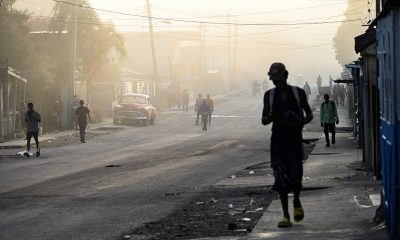
Cuba is facing a severe dengue and chikungunya epidemic that has already claimed at least 44 lives, including 29 minors, according to the Ministry of Public Health (Minsap). The outbreak—now considered out of control—has expanded across the entire country amid a critical shortage of resources to confront the emergency.

Authorities report more than 42,000 chikungunya infections and at least 26,000 dengue cases, though they acknowledge significant underreporting as many patients avoid seeking care in health centers where medicines, supplies, and medical personnel are scarce. The first cluster was detected in July in the city of Matanzas, but the government did not officially use the term “epidemic” until November 12.

Chikungunya—virtually unknown on the island until this year—causes high fever, rashes, fatigue, and severe joint pain that can last for months, leaving thousands temporarily incapacitated. Dengue, endemic to the region, triggers fever, muscle pain, vomiting, and, in severe cases, internal bleeding. Cuba currently has no vaccines available for either virus.

Minsap reports that of the 44 deaths recorded so far, 28 were caused by chikungunya and 16 by dengue.

The health crisis unfolds amid deep economic deterioration, marked by the absence of fumigation campaigns, uncollected garbage, and shortages of medical supplies—conditions that have fueled the spread of the Aedes aegypti mosquito, the primary vector for both diseases. “The healthcare system is overwhelmed,” non-official medical sources acknowledge.

Advertisement
20251204_amnistia_mh_728x90
previous arrow
next arrow

Beyond the health impact, the epidemic is heavily disrupting economic and family life. The intense joint pain caused by chikungunya has led to widespread work absences, while hospital overcrowding has forced relatives to leave their jobs to care for the sick. In November, authorities launched a clinical trial using the Cuban drug Jusvinza to reduce joint pain, though results have not yet been released.

Continue Reading

International

Ecuador on track for record violence as homicides hit highest level in Latin America again

Violence in Ecuador is expected to reach historic levels by the end of 2025, with the country set to record the highest homicide rate in Latin America for the third consecutive year, according to a report released Thursday by the Armed Conflict Location & Event Data Project (ACLED). The organization warns that criminal activity is not only persisting but could worsen in 2026.

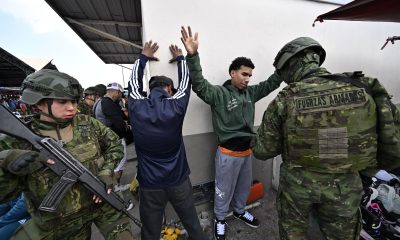
Official figures show 7,553 homicides recorded through October, surpassing the 7,063 registered throughout all of 2024. ACLED estimates that 71% of the population was exposed to violent incidents this year, despite President Daniel Noboa’s declaration of an “internal armed conflict” in an attempt to confront powerful criminal groups.

According to the report, several factors are driving the deterioration of security: a territorial war between Los Chonerosand Los Lobos, the two most influential criminal organizations in the country; the fragmentation of other groups after the fall of their leaders; and Ecuador’s expanding role as a strategic hub for regional drug trafficking.

Since 2021, violence has forced the internal displacement of around 132,000 people, while more than 400,000 Ecuadorians — equivalent to 2% of the population — have left the country. Between January and November alone, violent deaths rose 42%, fueled by prison massacres and clashes between rival gangs.

The report warns that conditions may deteriorate further. Ecuador has been added to ACLED’s 2026 Conflict Watchlist, which highlights regions at risk of escalating violence. The expansion of Colombian armed groups such as FARC dissidents and the ELN, state weakness, and a potential rerouting of drug trafficking corridors from the Caribbean to the Pacific intensify the threat.

Advertisement
20251204_amnistia_mh_728x90
previous arrow
next arrow

“The president is facing a wave of violence that shows no signs of easing,” the report concludes.

Continue Reading

Trending

Central News