
International
NATO summit highlights the discomfort with Orbán due to its proximity to Russia and China
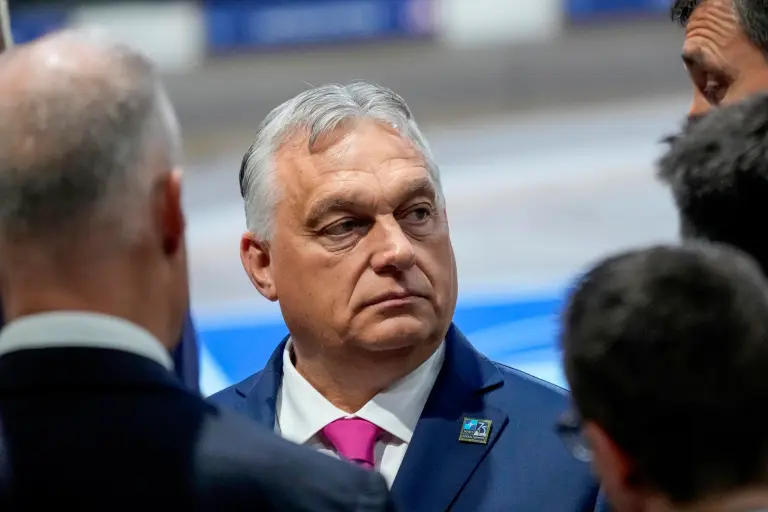
Different NATO countries expressed on Thursday their discomfort over the recent trips of the Hungarian Prime Minister, Viktor Orbán, to Moscow and Beijing coinciding with the beginning of his country’s presidency of the Council of the European Union (EU).
During the allied summit that concludes today in Washington, Orbán has been seen on different occasions isolated from the informal conversations between the leaders, or also during his participation in the gala dinner offered on Wednesday night at the White House by US President Joe Biden.
When asked about the possibility of Orbán traveling to Florida to meet with the Republican candidate for the U.S. Presidency. The German Chancellor, Olaf Scholz, said that what he does should do as a Hungarian Prime Minister and not as a representative of the Council of the EU.
“It has to be clear that what Mr. Orbán does he does as Hungarian Prime Minister and not on behalf of the Council of the EU,” Scholz said when asked about it by a German journalist upon his arrival at the NATO summit.
In past days, Scholz had expressed himself in similar terms regarding Orbán’s trips to Beijing and Moscow.











The Finnish president, Alexander Stubb, denied that there is division in the Atlantic Alliance over Ukraine and assured that Orbán is “in a frank minority.”
“But I fundamentally disagree with your approach and I will say it out loud. I don’t think it makes sense to have conversations with authoritarian regimes that violate international law,” he said.
He stressed that NATO is an alliance of values that believes in international law, fundamental rights, human rights, territorial integrity and the independence of States.
“We also believe in the prerogative of sovereign states to make their own political decisions in foreign affairs and security. What Russia is doing is promoting an imperial war. And Viktor Orbán does not have any mandate from the Alliance or the European Union to carry out any type of negotiation,” he said.
In Stubb’s opinion, Orbán can perform that task “on his own,” although he assured that he did not understand what purpose it would have.
The president of the European Council, Charles Michel, who also participates in the allied summit as a guest, made it clear that the rotating presidency of the Council of the EU “does not represent the EU externally.”
He stressed that the rotating presidencies have to play a role of “honest intermediary to defend European unity and help us build compromises.”
The EU High Representative for Foreign and Security Affairs, Josep Borrell, said today in an interview with EFE in Washington that “there is a deep unease in the European Union about this behavior” of the Hungarian president.
A few days after assuming the rotating presidency of the EU Council on July 1, Orbán, the member of the community club closest to the Kremlin, has visited Kiev, Moscow, Beijing and Washington in what he has described as a “peace mission” for the war in Ukraine.
These visits have generated, according to Borrell, “a regrettable confusion,” since Orbán has tried to give his trips an official air using, for example, the logo of his country as president of the Council of the EU on his trips to China and Russia, despite the fact that the community bloc has insisted that it has no competence or authority to negotiate on his behalf.
Faced with this situation, Borrell expressed his wish that the Foreign Ministers of the Twenty-Seven address this issue in the next Council, scheduled for July 22.










International
U.S. to Limit Visa Duration for Foreign Students and Journalists
The United States has announced new limits on the legal length of stay for foreign students and journalists, marking the latest tightening of immigration policies under President Donald Trump.
The changes, outlined in an administrative rule published on Thursday, are expected to take effect in September, unless Congress blocks the measure.
Under the new policy, holders of student visas will be allowed to remain in the United States for no more than four years.
Foreign journalists will be limited to 240-day stays—approximately eight months—with the possibility of applying for extensions of the same duration.
The policy imposes even stricter rules on Chinese journalists, whose visas will be capped at 90 days.
More than 100 international news organizations and press freedom groups, including Agence France-Presse (AFP), criticized the measure in an open letter, arguing that it would reduce both the quantity and quality of international coverage of events in the United States.
The Republican Party, led by President Trump, currently holds a majority in Congress and has pledged to curb both illegal immigration and certain forms of legal immigration.
Previously, the United States generally issued student visas for the full duration of an academic program, while foreign journalists could receive visas valid for up to five years.
Central America
Nicaragua Cuts Diplomatic Ties With Italy Over Red Brigades Dispute
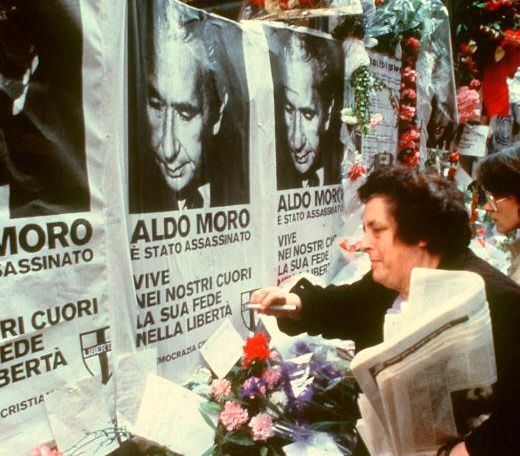
The Nicaraguan government announced on Thursday that it is severing diplomatic relations with Italy following criticism from the Italian government over Nicaragua’s long-standing decision to shelter Alessio Casimirri, a former member of the Red Brigades convicted in Italy for the 1978 kidnapping and murder of former Prime Minister Aldo Moro.
Italian Foreign Minister Antonio Tajani criticized the administration of co-presidents Daniel Ortega and Rosario Murillo on Wednesday for continuing to provide refuge to Casimirri, who was sentenced in Italy to six life terms for his role in Moro’s abduction and killing.
In a statement issued Thursday, Nicaragua’s Foreign Ministry said it was ending all diplomatic relations with Italy, describing Tajani’s remarks as “unjustified, aggressive, and irresponsible.”
Tajani made the comments during a gathering of conservative leaders from Europe and Latin America held in Madrid.
“We have absolutely nothing in common with the positions of extremist governments such as Nicaragua, a country that continues to harbor dangerous Red Brigades terrorists like Alessio Casimirri,” Tajani said, according to Italian media.
The diplomatic break marks a new escalation in tensions between the two countries over the decades-old case involving Casimirri, who has lived in Nicaragua for many years despite repeated calls from Italy for his extradition.
International
U.S. Strikes Hit Areas Near Strait of Hormuz as Tensions With Iran Escalate
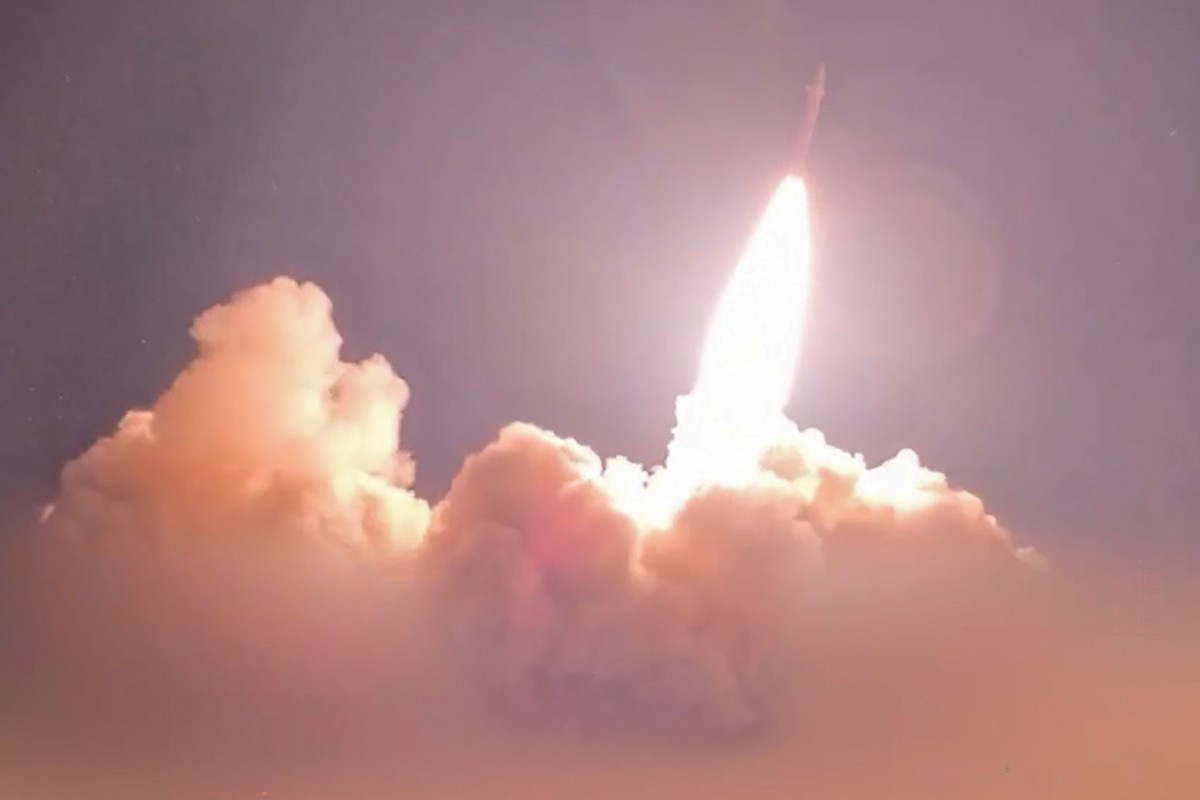
Several U.S. strikes targeted areas near the Strait of Hormuz on Thursday, according to Iranian state media citing local authorities, as hostilities between the United States and Iran intensified.
Officials in Iran’s Hormozgan Province said the island of Qeshm was struck multiple times by what they described as U.S. missiles during the evening. The reports were carried by the Iranian news agencies Fars and Tasnim.
Iranian state television also reported that the Bandar Abbas region, located on the Iranian coast overlooking the Strait of Hormuz, was the target of what authorities described as an “enemy U.S. air attack.”
According to local officials quoted by state television, no casualties have been reported following the strikes.
The reported attacks come amid renewed military tensions between Washington and Tehran, although U.S. authorities had not immediately commented on the reported operations.

U.S. to Limit Visa Duration for Foreign Students and Journalists

Nicaragua Cuts Diplomatic Ties With Italy Over Red Brigades Dispute

U.S. Strikes Hit Areas Near Strait of Hormuz as Tensions With Iran Escalate
Tec de Monterrey honors one of its students for his contribution to nanotechnology in medicine

Defense Minister commends salvadoran soldier for Central American Cross Country victory

Extension of the state of emergency approved in southern Chile
-

 International4 days ago
ICE reverses course and moves forward with New Jersey migrant detention facility project
-
 International15 hours ago
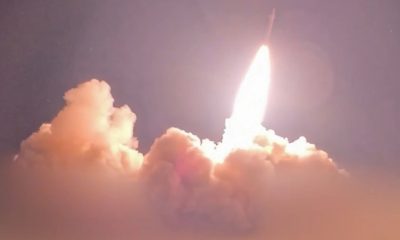
U.S. Strikes Hit Areas Near Strait of Hormuz as Tensions With Iran Escalate
-
 International4 days ago
Judge rules Trump’s IRS lawsuit was a “bad faith” attempt to manipulate the judicial process
-
 International4 days ago
Marco Rubio launches U.S. campaign to “dismantle” the International Criminal Court
-
 International3 days ago
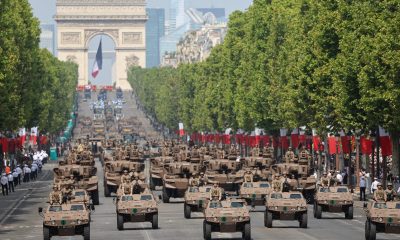
France Holds Largest Bastille Day Military Parade as Europe Highlights Strategic Defense
-
 International3 days ago
President Noboa Declares New Security Strategy as Ecuador Faces Record Violence Levels
-
 International4 days ago
Venezuela Earthquake Death Toll Rises to 4,490 as Rescue Efforts Continue
-
 International3 days ago
Foreign Medical Teams Race to Prevent Health Crisis in Venezuela Earthquake Camps
-

 International2 days ago
Latin Music Stars Unite in Miami to Raise Aid for Victims of Venezuela’s Devastating Earthquake
-
 International2 days ago
Trump Administration Seeks Global Action Against “Resurgent” Left-Wing Terrorism
-
 International15 hours ago
U.S. to Limit Visa Duration for Foreign Students and Journalists
-
 International15 hours ago
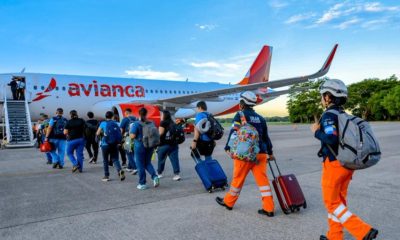
El Salvador Sends Eighth Humanitarian Flight to Earthquake-Hit Venezuela
-
 Central America15 hours ago
Nicaragua Cuts Diplomatic Ties With Italy Over Red Brigades Dispute