
International
On Lebanon’s line of fire, Spanish troops patrol between alerts and destruction
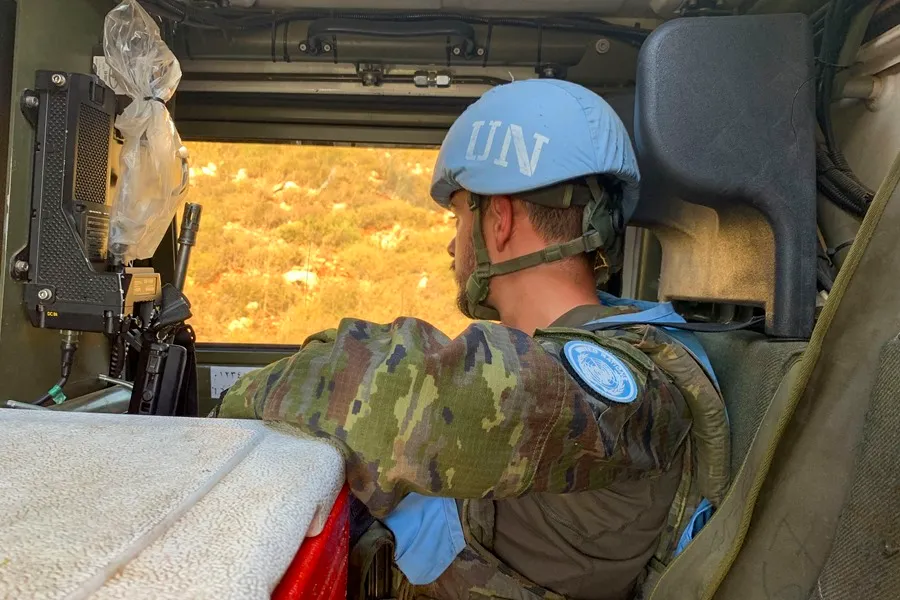
Early in the morning of what would be one of the most intense days in eight months of hostilities between the Lebanese Shiite group Hizbulá and the Israeli forces, a patrol of Spanish blue helmets receives the warning that a level 2 alert has been activated.
As mandated by the protocol, the group immediately goes to the position of the nearest UN peace mission in Lebanon (FINUL), something that they have to do quite often in the midst of the escalation that since October has hit their area of operations in the south of the Mediterranean country.
Another Spanish patrol arrives to take refuge at the same base, less than two kilometers from the border with Israel, where the hours go by while from the heliport you can observe in the distance the smoke of some impact on the mountain.
From time to time, you can hear the buzzing of the drones or a few distant explosions. “Another greeting,” jokes one of the military.
Well into the afternoon, eight hours after its activation, the alert that weighed on the entire East sector is lifted and the blue helmets can finally leave the facilities to continue their activities.











According to them, it was by far the most prolonged alert of that type since they arrived in Lebanon last month, when the last rotation of Spanish troops took place.
During the wait on Wednesday morning, the Israeli Army announced the arrival of at least 160 rockets to different parts of the north of the country, including the Lower Galilee region, further from the common border where its crossfire with Hizbulah is usually concentrated.
And in the previous hours the Shiite formation had lost an important commander, his loss of higher rank since the beginning of the clashes, which led him to launch a total of 19 attacks throughout the day, many of them of great magnitude, as confirmed in a series of statements.
The head of one of the Spanish patrols that took refuge at the base, Lieutenant Jesús Sánchez Burgos, explained to EFE that the frequency of the alerts does not follow any specific pattern and that “it depends on the day.”
“When we go on patrol we have (…) our area of responsibility divided into security zones, and they activate them depending on the probability of impact on those areas. When it touches level 2 or level 3, we have to welcome the nearest position,” he said.
“In this case, we were on patrol, they have touched level two and we have had to accept position 966, the position of the Serbs,” added the section chief.
Each patrol consists of two vehicles with a boss, driver, shooter and operator in each of them, which try to ensure compliance with UN Security Council resolution 1701, which ended the 2006 war between Israel and Hizbulah.
“Our mission here is to monitor the cessation of hostilities between the two States, support the Lebanese Armed Forces (LAF) and we are patrolling for that (…) But the situation right now is a little complicated, so that surveillance of that cessation is a little more complicated,” Sánchez acknowledged.
Before the alert was activated, the group that EFE joined was able to develop part of its patrol through the de facto divide between the two countries, also passing through ghost towns dotted with destroyed houses or businesses, and mountains of debris, such as Kafr Kila.
In other areas of the Spanish area of operations, such as the so-called “Christian corredor”, life “is normal” and a good part of the population continues in the area despite the outsping of violence, the lieutenant explained.
In southern Lebanon, about 700 Spanish soldiers are deployed, the vast majority in this contingent part of the Eastern sector, with a total of 3,500 blue helmets of different nationalities.
Its spokesman, Lieutenant Colonel José Irisarri Antón, told EFE that the forces keep a count of the security incidents, recording the type of projectile, the weapon used and the estimate of the damage caused.
But he recalled that the main objective of the patrols is to comply with resolution 1701, that is, “to try that there are no militias or armed personnel in the area that does not belong to the Lebanese Armed Forces,” in his words.
In this sense, the lieutenant colonel stressed that, in fact, they try to make about 25% of their patrols joint with the troops of Lebanon.
“In case we locate something that may involve a missile or mortar launch point, the LAF is informed, they are responsible for controlling that there is nothing and if there is something to seize it, and then destroy it,” he concluded.










International
Actress Hayden Panettiere Dies at 36, Representative Confirms

Actress Hayden Panettiere has died at the age of 36, her representative confirmed to CNN.
“It is with profound sadness that we share the tragic passing of our beloved Hayden. She was an incredible light and a force of nature who brought immeasurable love and joy to everyone who knew her, and to the millions who saw her on screen,” her father, Skip Panettiere, said in a statement to CNN.
The circumstances surrounding her death were not immediately known. ABC was the first outlet to report the news.
Panettiere rose to prominence in the late 2000s with her role as Claire Bennet in the television series “Heroes.” Her character was a cheerleader with the ability to heal herself, becoming one of the show’s most recognizable figures.
She later starred in the musical drama series “Nashville,” portraying Juliette Barnes, a young country music star whose career and personal life were central to the series.
Panettiere also appeared in the 2011 horror film “Scream 4” as Kirby Reed. She later returned to the franchise more than a decade later in “Scream VI.”
Her other notable film credits included “I Love You, Beth Cooper” and “Remember the Titans.”
Panettiere’s career spanned television and film, with roles that made her a familiar face to audiences from the 2000s onward.
International
Luigi Mangione Pleads Guilty to Killing UnitedHealthcare CEO Brian Thompson
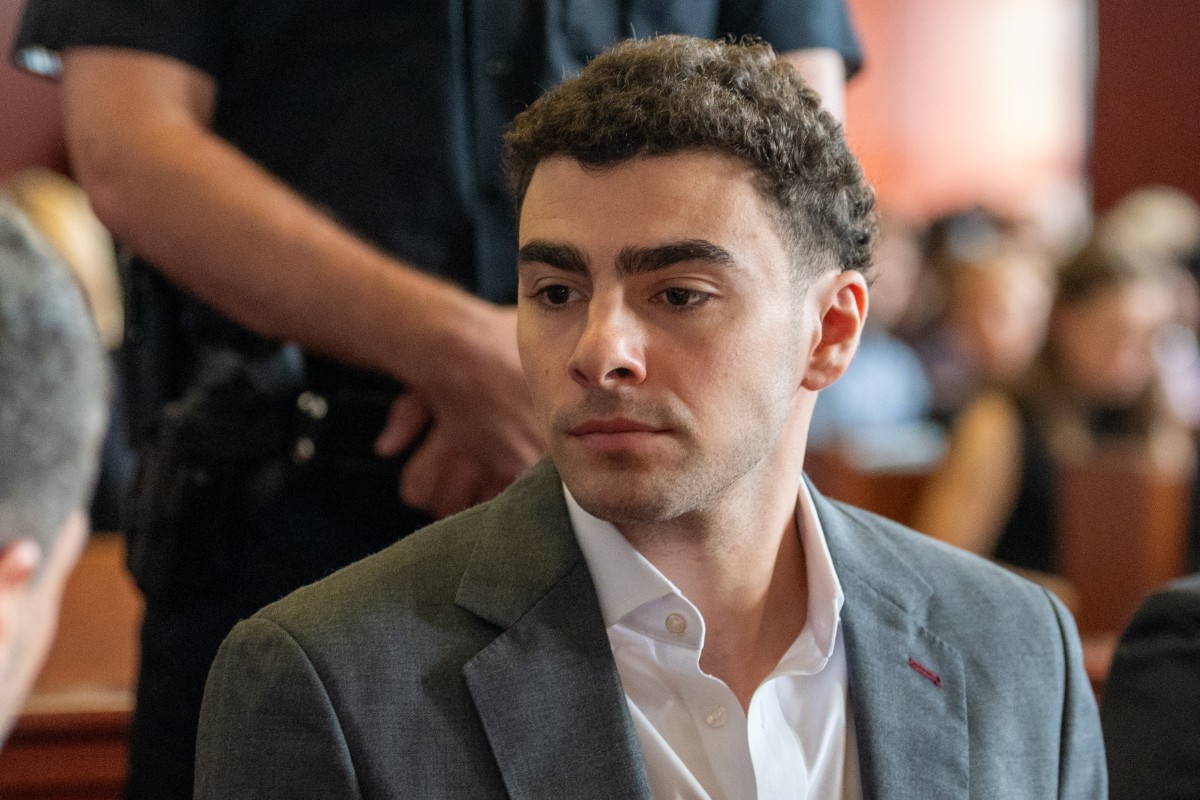
Luigi Mangione admitted Friday to fatally shooting Brian Thompson, the CEO of UnitedHealthcare, the largest health insurance group in the United States, during an appearance before a federal judge.
The case shocked the U.S. business community and dates back to December 2024, when Mangione opened fire on Thompson, 50, on a Manhattan street. Prosecutors have described the attack as being motivated by Mangione’s opposition to the U.S. health insurance system.
“On the morning of December 4, I shot Mr. Thompson in Manhattan and he died,” Mangione said as he pleaded guilty to a federal stalking charge related to his pursuit of the executive.
Mangione, 28, is scheduled to be sentenced on December 18, and prosecutors have indicated that they will seek a life sentence.
In addition to the federal charges related to stalking Thompson, Mangione also faces a murder case brought by the state of New York.
Following his guilty plea in federal court, Mangione’s defense asked a state court to dismiss the state charges, arguing that prosecuting him again for the same conduct would violate protections against double jeopardy.
“We have just filed our motion in state court to explain why the charges should be dismissed under New York’s protections against double jeopardy,” Mangione’s attorney, Karen Friedman Agnifilo, said Friday.
Both the federal and state cases could result in a life sentence. Two other federal charges that initially carried the possibility of the death penalty were dismissed by a judge earlier this year.
International
ICE Plan to Equip Agents With Electric Shock Gloves Raises Abuse Concerns
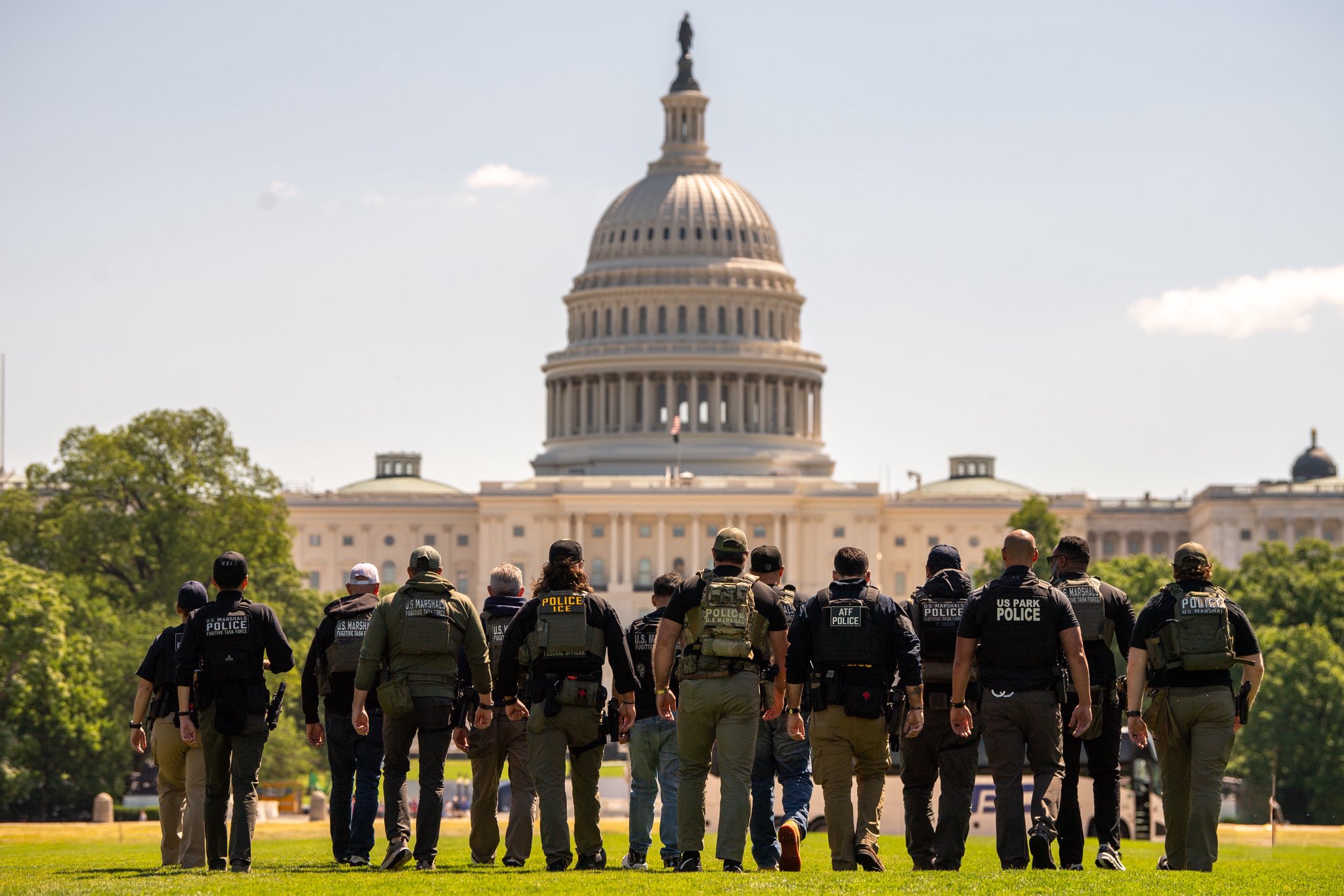
Plans to equip U.S. immigration agents with gloves capable of delivering electric shocks are raising concerns over potential abuses by a law enforcement agency that critics accuse of using excessive force and providing inadequate training to its personnel.
The plan involves the potential purchase of electric-shock gloves for agents with U.S. Immigration and Customs Enforcement (ICE), the agency primarily responsible for carrying out President Donald Trump’s campaign to deport millions of undocumented immigrants.
Democratic Representative Maxwell Frost criticized the proposal on X, arguing that the agency has already faced accusations of excessive force during immigration enforcement operations.
“As if assaulting and shooting people in the streets wasn’t enough,” Frost wrote. He also criticized the reported $20 million potential expenditure on the devices and called for greater restrictions on ICE.
The agency has faced growing scrutiny following a series of deadly shootings during immigration enforcement operations. Among the incidents were the deaths of two U.S. citizens in Minnesota in January who were participating in protests against the agency.
Critics have focused on the tactics used by ICE agents when detaining immigrants, as well as allegations that training standards for newly recruited personnel have been lowered.
According to a procurement plan first reported by the Associated Press, the Department of Homeland Security (DHS), which oversees ICE, could spend between $10 million and $20 million on the devices.
The gloves are described by the agency as tools intended for “distraction and de-escalation,” rather than lethal weapons. The system, known as GLOVE, stands for “Generated Low-Output Voltage Emitter.”
The device is manufactured by Compliant Technologies, a Kentucky-based company that describes its products as advanced non-lethal tools designed to protect and assist law enforcement and other personnel.
The proposal comes amid an intensifying national debate over ICE’s enforcement methods and the use of force during the Trump administration’s immigration crackdown.

Actress Hayden Panettiere Dies at 36, Representative Confirms

Luigi Mangione Pleads Guilty to Killing UnitedHealthcare CEO Brian Thompson

ICE Plan to Equip Agents With Electric Shock Gloves Raises Abuse Concerns

Three U.S. Executions Set for Same Day as Trump Pushes to Expand Death Penalty

Colombia Earthquake Death Toll Reaches 265 as Rescue Teams Race Against Time

German Authorities Investigate More Than 100 New Cases Against Convicted Nurse

Venezuela Raises Earthquake Death Toll to 6,301

CEAPI Backs Colombia’s New Government and Calls for Greater Public-Private Cooperation
Actress Hayden Panettiere Dies at 36, Representative Confirms
Three U.S. Executions Set for Same Day as Trump Pushes to Expand Death Penalty
Colombia Earthquake Death Toll Reaches 265 as Rescue Teams Race Against Time
ICE Plan to Equip Agents With Electric Shock Gloves Raises Abuse Concerns
Luigi Mangione Pleads Guilty to Killing UnitedHealthcare CEO Brian Thompson
-
 International12 hours ago
Actress Hayden Panettiere Dies at 36, Representative Confirms
-
 International4 days ago
Three U.S. Executions Set for Same Day as Trump Pushes to Expand Death Penalty
-
 International4 days ago
Colombia Earthquake Death Toll Reaches 265 as Rescue Teams Race Against Time
-
 International3 days ago
ICE Plan to Equip Agents With Electric Shock Gloves Raises Abuse Concerns
-
 International3 days ago
Luigi Mangione Pleads Guilty to Killing UnitedHealthcare CEO Brian Thompson