
International
The difficult fight against bloodletting on the roads in Peru
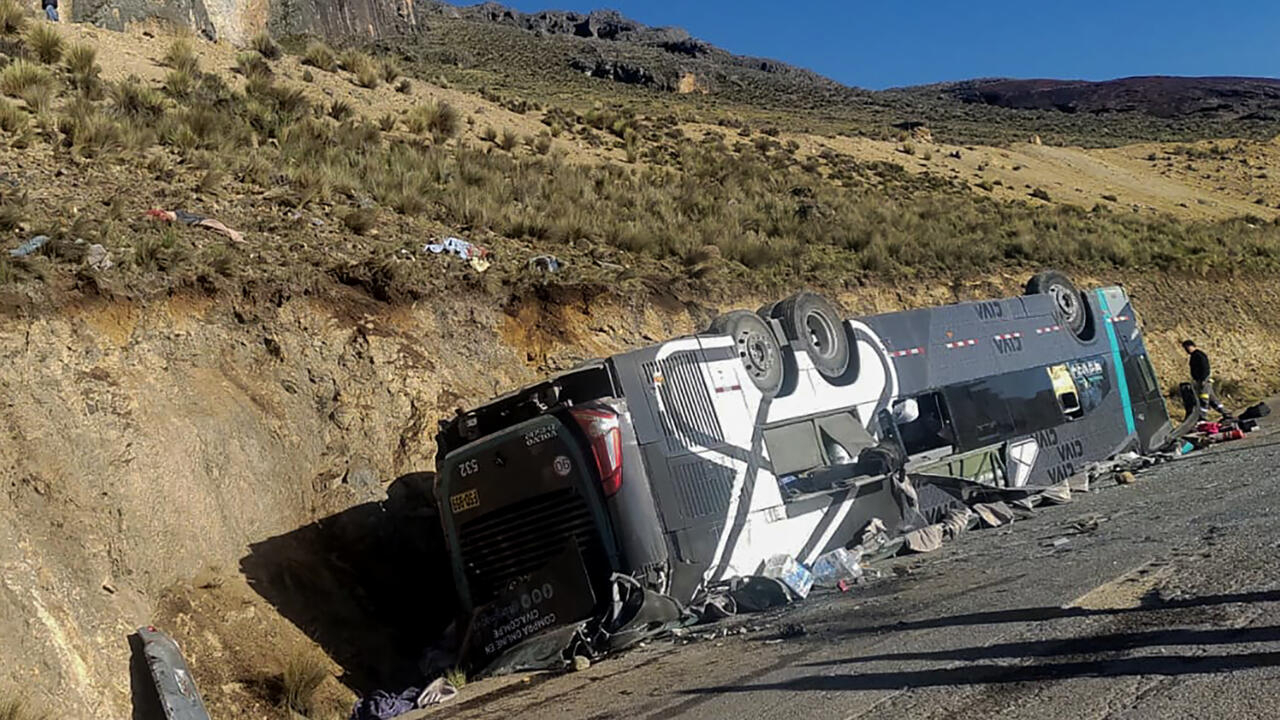
Shreed buses, frontal collisions of vehicles, invaded lanes… The scenes are repeated mainly on weekends.
Between 2021 and 2023 there was an annual average of 3,000 deaths on the roads, according to the National Road Safety Observatory of the Ministry of Transport (ONSV), which links the high accident with three main causes: recklessness at the wheel, speeding and drunkenness.
By the beginning of May, 970 people had died on the slopes. And there is still a lack of the school holiday season and several holidays, including the end of the year, when accidents usually increase.
In Peru, the mortality rate from traffic accidents was 14 people per 100,000 inhabitants in 2019, compared to the average of 17 victims per 100,000 in the Americas, according to the World Bank.
In 2023, 87,172 accidents were officially reported that left 3,138 dead.











The efforts of the authorities to improve control managed to reduce the rate to 9.5 deaths per 100,000 inhabitants last year, but the bloodlet on the roads continues.
Cornelio lost his family in March. A bus invaded the opposite lane of the Panamericana Highway and hit the family van, 147 km north of Lima.
This 36-year-old farmer was going ahead in another vehicle along with some workers. His wife, his two children, two brothers and a sister-in-law never arrived at the meeting place.
“My soul broke, we will never recover from this, for pleasure we have made the house. Now we have a void,” he tells AFP in a choppy voice.
Last month, in only four accidents there were 60 deaths, a figure not included in the count until the beginning of May.
“It is true that there are contributory factors, for example, the climatic issue, the state of a vehicle or a road, the human factor is predominant and determining,” Larry Ampuero, spokesman for the Superintendence of Transport (Sutran), tells AFP.
According to that organization, 70% of accidents occur in cities and 30% on roads.
“There is informality due to lack of control, but also there is no good road network, we have an infrastructure in poor condition and lack of maintenance,” said Martín Ojeda, manager of the interprovincial transport guild to RPP radio.
The human factor is in many cases related to the fatigue of the drivers of the public transport service. The law establishes a limit of ten hours a day for driving buses.
“Drivers generally suffer from drowsiness or tiredness because they work more hours than allowed,” Luis Quispe, director of Luz Ámbar, an NGO that studies the phenomenon of the high accident rate, tells AFP.
The interprovincial service guild maintains that it complies with the rules and that each bus travels with a spare driver, but the drivers question it.
“It is the fault of certain factors, both of the driver or the company that suddenly makes us work too many hours, practically 24 hours,” bus driver Julio Camarena tells AFP.
“They also have to see the state of the roads, which is terrible at the national level, we would say for the most part,” adds Camarena, 51, from the Yerbateros bus terminal in Lima.
On its side, the Association of Victims of Traffic Accidents (Aviactran) points to the indolence of the authorities and the lack of justice as the biggest problems on the roads.
“The State is not worried that accidents will increase, it does not want to solve the problem,” Carlos Villegas, president of that organization, tells AFP.
According to Villegas, so far this year there are “more than 36,000 accidents.”
“The authorities are responsible for all traffic accidents, that’s why we are going to sue them,” he emphasizes.
80% of the injured – he adds – do not receive justice in their lawsuits against companies and authorities “for corruption” of the system.
“We feel very disappointed with the State,” says Villegas, who created Aviactran because a drunk doctor at the wheel seriously injured his nine-year-old son in 2006.










International
Actress Hayden Panettiere Dies at 36, Representative Confirms

Actress Hayden Panettiere has died at the age of 36, her representative confirmed to CNN.
“It is with profound sadness that we share the tragic passing of our beloved Hayden. She was an incredible light and a force of nature who brought immeasurable love and joy to everyone who knew her, and to the millions who saw her on screen,” her father, Skip Panettiere, said in a statement to CNN.
The circumstances surrounding her death were not immediately known. ABC was the first outlet to report the news.
Panettiere rose to prominence in the late 2000s with her role as Claire Bennet in the television series “Heroes.” Her character was a cheerleader with the ability to heal herself, becoming one of the show’s most recognizable figures.
She later starred in the musical drama series “Nashville,” portraying Juliette Barnes, a young country music star whose career and personal life were central to the series.
Panettiere also appeared in the 2011 horror film “Scream 4” as Kirby Reed. She later returned to the franchise more than a decade later in “Scream VI.”
Her other notable film credits included “I Love You, Beth Cooper” and “Remember the Titans.”
Panettiere’s career spanned television and film, with roles that made her a familiar face to audiences from the 2000s onward.
International
Luigi Mangione Pleads Guilty to Killing UnitedHealthcare CEO Brian Thompson
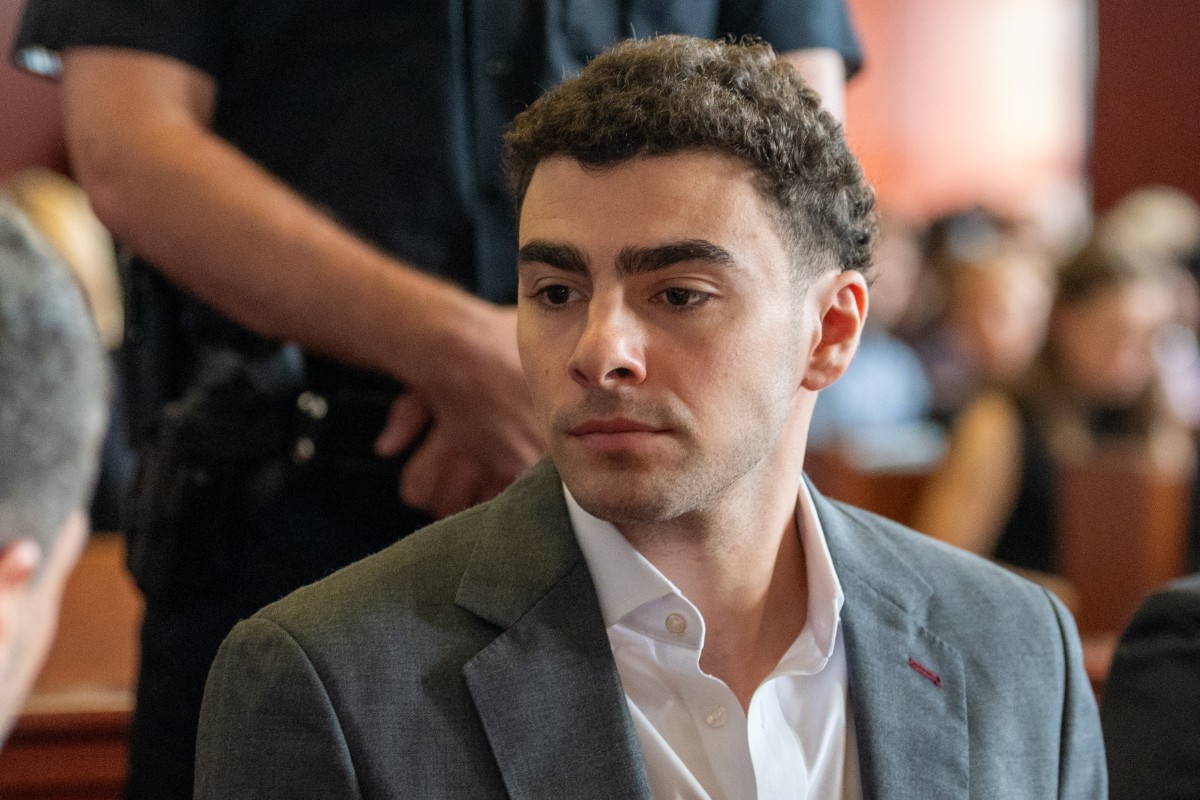
Luigi Mangione admitted Friday to fatally shooting Brian Thompson, the CEO of UnitedHealthcare, the largest health insurance group in the United States, during an appearance before a federal judge.
The case shocked the U.S. business community and dates back to December 2024, when Mangione opened fire on Thompson, 50, on a Manhattan street. Prosecutors have described the attack as being motivated by Mangione’s opposition to the U.S. health insurance system.
“On the morning of December 4, I shot Mr. Thompson in Manhattan and he died,” Mangione said as he pleaded guilty to a federal stalking charge related to his pursuit of the executive.
Mangione, 28, is scheduled to be sentenced on December 18, and prosecutors have indicated that they will seek a life sentence.
In addition to the federal charges related to stalking Thompson, Mangione also faces a murder case brought by the state of New York.
Following his guilty plea in federal court, Mangione’s defense asked a state court to dismiss the state charges, arguing that prosecuting him again for the same conduct would violate protections against double jeopardy.
“We have just filed our motion in state court to explain why the charges should be dismissed under New York’s protections against double jeopardy,” Mangione’s attorney, Karen Friedman Agnifilo, said Friday.
Both the federal and state cases could result in a life sentence. Two other federal charges that initially carried the possibility of the death penalty were dismissed by a judge earlier this year.
International
ICE Plan to Equip Agents With Electric Shock Gloves Raises Abuse Concerns

Plans to equip U.S. immigration agents with gloves capable of delivering electric shocks are raising concerns over potential abuses by a law enforcement agency that critics accuse of using excessive force and providing inadequate training to its personnel.
The plan involves the potential purchase of electric-shock gloves for agents with U.S. Immigration and Customs Enforcement (ICE), the agency primarily responsible for carrying out President Donald Trump’s campaign to deport millions of undocumented immigrants.
Democratic Representative Maxwell Frost criticized the proposal on X, arguing that the agency has already faced accusations of excessive force during immigration enforcement operations.
“As if assaulting and shooting people in the streets wasn’t enough,” Frost wrote. He also criticized the reported $20 million potential expenditure on the devices and called for greater restrictions on ICE.
The agency has faced growing scrutiny following a series of deadly shootings during immigration enforcement operations. Among the incidents were the deaths of two U.S. citizens in Minnesota in January who were participating in protests against the agency.
Critics have focused on the tactics used by ICE agents when detaining immigrants, as well as allegations that training standards for newly recruited personnel have been lowered.
According to a procurement plan first reported by the Associated Press, the Department of Homeland Security (DHS), which oversees ICE, could spend between $10 million and $20 million on the devices.
The gloves are described by the agency as tools intended for “distraction and de-escalation,” rather than lethal weapons. The system, known as GLOVE, stands for “Generated Low-Output Voltage Emitter.”
The device is manufactured by Compliant Technologies, a Kentucky-based company that describes its products as advanced non-lethal tools designed to protect and assist law enforcement and other personnel.
The proposal comes amid an intensifying national debate over ICE’s enforcement methods and the use of force during the Trump administration’s immigration crackdown.

Actress Hayden Panettiere Dies at 36, Representative Confirms

Luigi Mangione Pleads Guilty to Killing UnitedHealthcare CEO Brian Thompson

ICE Plan to Equip Agents With Electric Shock Gloves Raises Abuse Concerns

Three U.S. Executions Set for Same Day as Trump Pushes to Expand Death Penalty

Colombia Earthquake Death Toll Reaches 265 as Rescue Teams Race Against Time

German Authorities Investigate More Than 100 New Cases Against Convicted Nurse

Venezuela Raises Earthquake Death Toll to 6,301

CEAPI Backs Colombia’s New Government and Calls for Greater Public-Private Cooperation
Actress Hayden Panettiere Dies at 36, Representative Confirms
Three U.S. Executions Set for Same Day as Trump Pushes to Expand Death Penalty
Colombia Earthquake Death Toll Reaches 265 as Rescue Teams Race Against Time
ICE Plan to Equip Agents With Electric Shock Gloves Raises Abuse Concerns
Luigi Mangione Pleads Guilty to Killing UnitedHealthcare CEO Brian Thompson
-
 International13 hours ago
Actress Hayden Panettiere Dies at 36, Representative Confirms
-
 International4 days ago
Three U.S. Executions Set for Same Day as Trump Pushes to Expand Death Penalty
-
 International4 days ago
Colombia Earthquake Death Toll Reaches 265 as Rescue Teams Race Against Time
-
 International3 days ago
ICE Plan to Equip Agents With Electric Shock Gloves Raises Abuse Concerns
-
 International3 days ago
Luigi Mangione Pleads Guilty to Killing UnitedHealthcare CEO Brian Thompson