
International
What does it mean to recognize a new state?
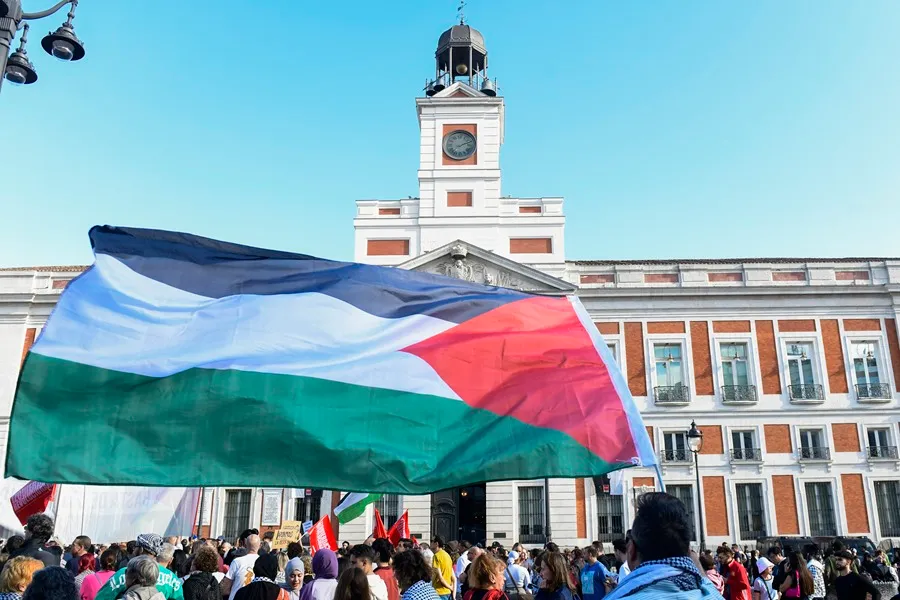
The announcement of the President of the Government, Pedro Sánchez, that Spain will recognize Palestine as a State on the 28th fulfills a political promise, although it does not clear up some questions about the practical consequences that the mandate will have.
The coalition government of PSOE and Sumar pledged to approve it, in line with the non-legislative proposal agreed in Congress in 2014 by most political groups, including the PP.
The situation in Palestine after the October 7 attacks by Hamas on Israel and the response of this country’s army in the Gaza Strip, which has caused more than 35,000 deaths, pushed the Sánchez Government to take the definitive step in order to press for a solution to the Middle East conflict.
The step of recognizing a State is a legal act regulated by International Law. It depends exclusively on the Government’s agreement, without the need to have the support of Parliament, although it may ask for it.
It is a unilateral decision and does not depend, in the case of Spain, whether or not it has the approval of the EU, which does not have competence in the area of recognition of States.









Of the 193 members of the United Nations, just over 140 recognize it as a State, which will be joined by Spain, Norway and Ireland on the 28th.
There are eight other EU members who have already taken the step, such as Sweden, Romania or Poland, but they have not made important partners such as Germany, France or Italy.
On April 10, 143 countries asked the UN General Assembly to endorse Palestine as a full-fledged state, but this decision must have the approval of the Security Council and the United States opposes it.
Recognizing a new State requires that there be a defined population, a delimited territory and a government that exercises authority over it. “In the case of Palestine, no assumption is now fulfilled because there are no internationally established borders,” the professor of Public International Law at the UNED, Eduardo Trillo, points out to EFE.
Similarly, Trillo points out, there is no government that has control over the entire Palestinian territory – the West Bank and the Gaza Strip -, since the first is exercised by the Palestinian National Authority (ANP) and in the second, Hamas had it until the war with Israel and is a faction that Spain does not consider an interlocutor.
According to Trillo, it is not something that Spain has to specify, because Palestine lacks defined limits according to international law. Therefore, the UNED professor adds, more than at the legal level, recognition should be interpreted as “a political push to the peace process and a support for the right of self-determination of the Palestinian people.”
Spain can from now on formalize political relations with Palestine and sign international treaties, among other initiatives. So far, Spain has signed a memorandum of understanding of cooperation since 1994 channeling humanitarian aid to the Palestinian people and another for the establishment of political consultations since 2012.
It is a discretionary measure of the Government, according to the professor of International Relations at the European University, Beatriz Gutiérrez. Today, it is the Consulate General of Spain, located in Jerusalem, that acts as an “embassy” and channels the relationship with the ANP.
Among the questions, Gutiérrez adds, is whether Spain would take the step of recognizing Jerusalem as the Palestinian capital, something it has not done so far.
The ANP has an office in Madrid, which since 2010 has had the rank of diplomatic mission – previously it was a “delegation” – and its premises have inviolability.
The head of the office acts as ambassador in practice and participates in the king’s receptions to the diplomatic corps. On its website, there is talk of “The Embassy of Palestine in Spain.”
The war conflict between Israel and Hamas makes it difficult to give content to the state recognition of Palestine. “Until the war is over, it is difficult to make a perspective of the practical effects. It is too early to see how it will be managed,” says the professor of the European University, who agrees that the measure adopted by Spain should be seen, above all, from “a symbolic rather than a legal point of view.”
South Sudan was the last country that Spain gave its endorsement in 2011, after almost all the citizens of this territory supported the separation of the north from the country in a referendum.
In the 21st century, Spain has recognized two other countries: Montenegro, in 2006, and East Timor, in 2002.






International
Paris prosecutors alert U.S. over alleged deepfake strategy linked to Elon Musk
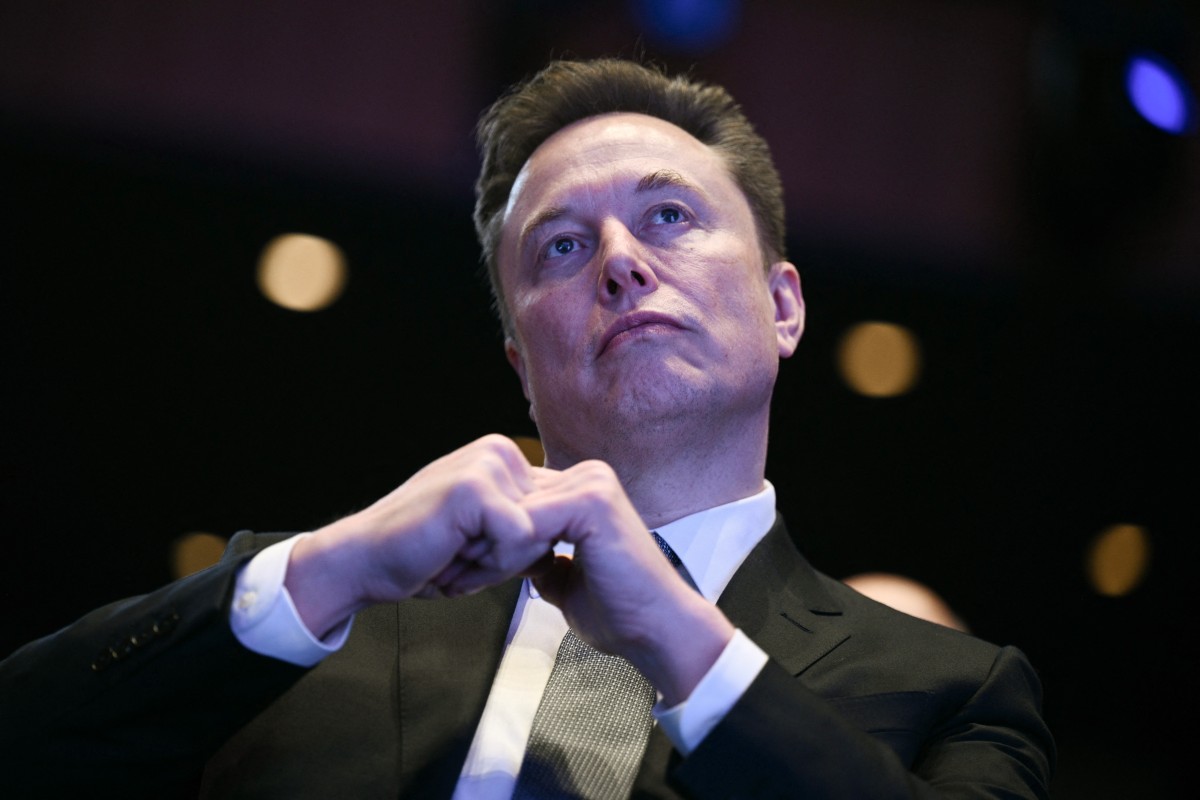
The Paris Prosecutor’s Office said on Saturday that it had alerted authorities in the United States over suspicions that tech entrepreneur Elon Musk may have encouraged the spread of sexualized deepfake content on the social platform X to artificially boost the company’s valuation.
According to prosecutors, the controversy surrounding explicit AI-generated videos—reportedly linked to Grok, the platform’s artificial intelligence system—may have been deliberately triggered to increase the market value of X and X AI.
The office added that the alleged strategy could be tied to the planned June 2026 public listing of a new entity formed through the merger of SpaceX and X AI.
French authorities said they contacted the U.S. Department of Justice as well as legal representatives at the U.S. Securities and Exchange Commission (SEC) earlier this week to share their concerns.
Responding on X in French to a report about the case, Musk referred to French prosecutors using an offensive term.
When contacted, X’s legal representative in France did not immediately comment.
Grok, the platform’s AI system, has its own account on X, allowing users to interact with it or request content generation. For a period, users were able to tag the bot in posts to generate or edit images, a feature that may have facilitated the spread of such material.
International
Netanyahu vows to target Iran’s leadership after missile strikes in southern Israel
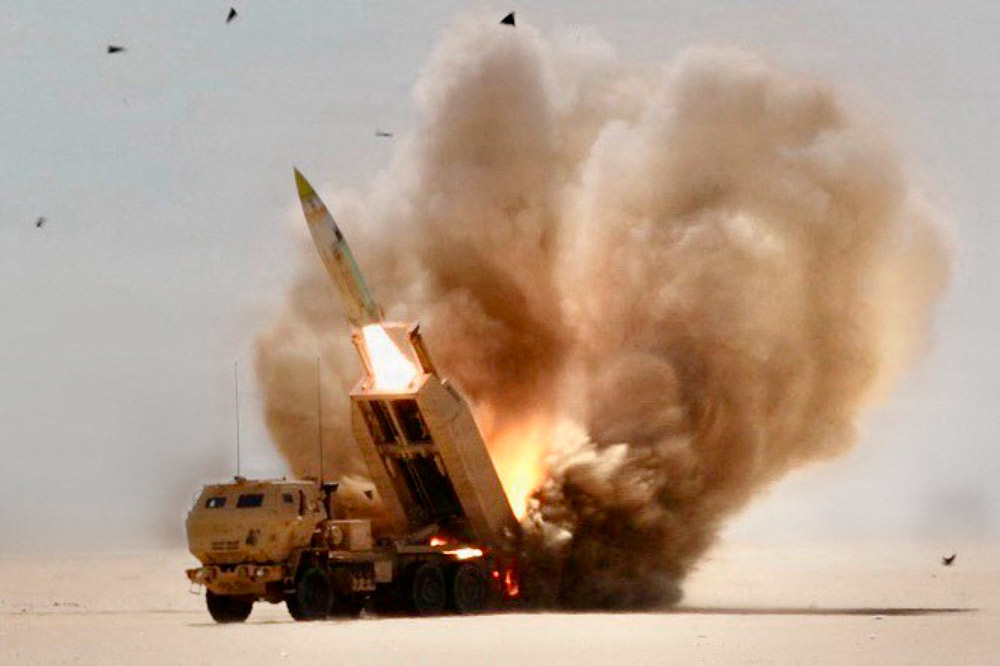
Israeli Prime Minister Benjamin Netanyahu vowed on Sunday to target Iran’s leadership directly, escalating rhetoric amid ongoing hostilities between Israel and Iran.
Speaking during a visit to the southern city of Arad, which was struck by an Iranian missile a day earlier, Netanyahu said Israel would intensify its response against Tehran.
“We are going after the regime. We are going after the Islamic Revolutionary Guard Corps, that gang of criminals,” he told reporters while standing among the debris left by the தாக்க.
He added that Israel intends to strike “personally” at Iran’s leadership, as well as its facilities and economic assets.
In addition to Arad, Iranian missiles also hit the city of Dimona on Saturday. The area is widely believed to host Israel’s undeclared nuclear facilities. The strike caused significant damage following a direct impact.
Netanyahu also visited Dimona, where he urged residents to strictly follow military instructions and seek shelter whenever warning sirens are activated.
“The entire nation is a front line, and the home front is also a front line. And when we are on the front line, we follow these instructions,” he said.
International
US panel backs Trump-themed coin amid controversy
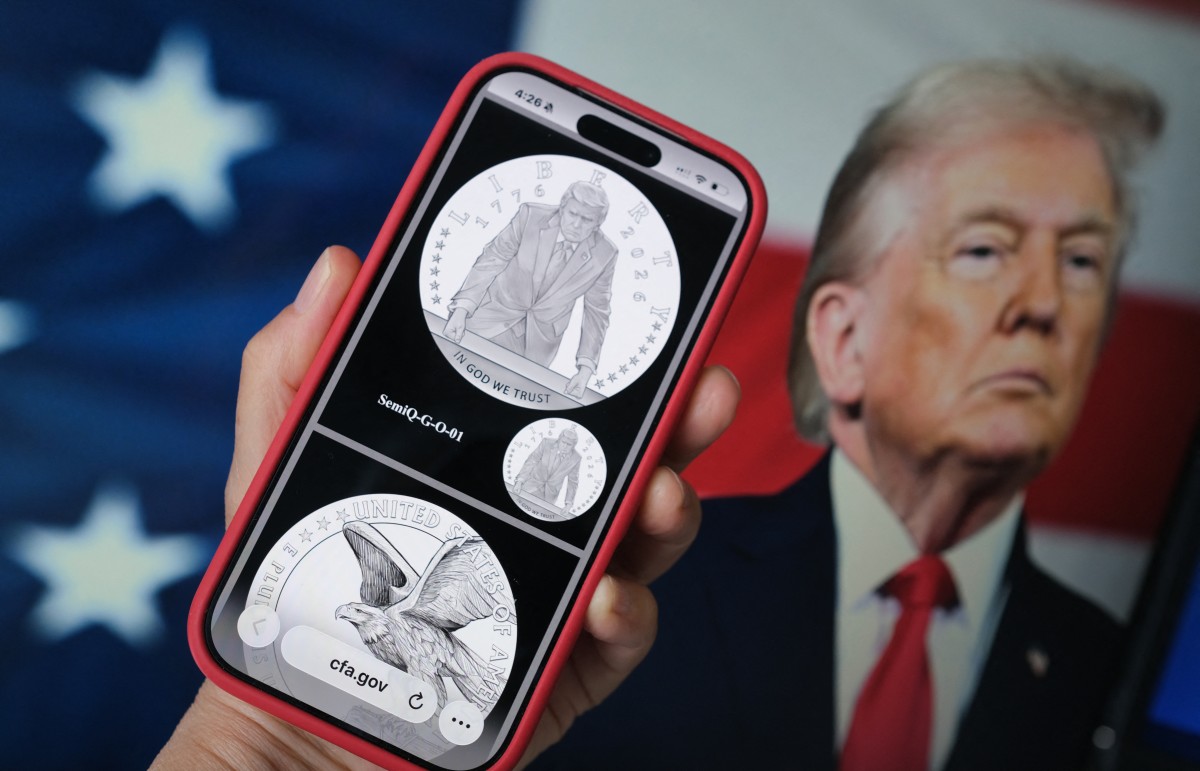
The United States Department of the Treasury confirmed to AFP that the Commission of Fine Arts approved the design of a new collectible coin featuring Donald Trump, with members of the commission appointed by the current administration.
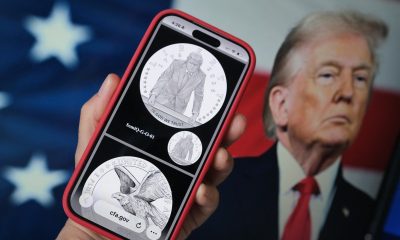
According to the proposal, the coin will feature an image of Trump standing with clenched fists over a desk on the obverse, while the reverse will display an eagle, a traditional symbol of the United States.
The sale price of the collectible has not yet been disclosed, although the United States Mint typically offers similar items for more than $1,000.
“There is no more iconic portrait for the front of these coins than that of our president Donald Trump,” U.S. Treasurer Brandon Beach said in a statement sent to AFP. He added that two additional coins — a $1 piece and a one-ounce gold coin — are also under consideration.
However, the Citizens Coinage Advisory Committee (CCAC), another body responsible for reviewing new coin proposals, declined to discuss the Trump design in late February.
“Only nations governed by kings or dictators place the image of a sitting leader on their currency,” said Donald Scarinciat the time. “No country in the world has minted coins featuring a democratically elected leader during their term in office,” he added.
When contacted by AFP, the Treasury Department did not immediately respond to requests for further comment.

Paris prosecutors alert U.S. over alleged deepfake strategy linked to Elon Musk

Netanyahu vows to target Iran’s leadership after missile strikes in southern Israel

Guatemala narrows emergency measures to hardest-hit gang violence areas
Tec de Monterrey honors one of its students for his contribution to nanotechnology in medicine

Defense Minister commends salvadoran soldier for Central American Cross Country victory

Extension of the state of emergency approved in southern Chile
-
 Central America5 days ago
Costa Rica closes embassy in Cuba, citing human rights concerns
-
 Central America3 days ago
Guatemala narrows emergency measures to hardest-hit gang violence areas
-

 International4 days ago
Meningitis outbreak in England rises to 27 cases with two deaths reported
-
 International4 days ago
U.S. lowers travel advisory for much of Venezuela but keeps high-risk zones under warning
-
 International3 days ago
US panel backs Trump-themed coin amid controversy
-

 International4 days ago
EU lawmakers move to ban AI tools that generate non-consensual nude images
-
 International4 days ago
Brazil offers to mediate Colombia-Ecuador tensions, calls for restraint
-
 International5 days ago
Hiroshima survivor who embraced Obama dies at 88
-
 International3 days ago
Fed’s Waller warns of rising inflation risks amid Middle East conflict
-
 International5 days ago
Colombia seeks ‘total suffocation’ of armed groups with regional support
-
 Central America5 days ago
Costa Rica closes Cuba embassy as president escalates rhetoric
-
 International19 hours ago
Netanyahu vows to target Iran’s leadership after missile strikes in southern Israel
-
 International19 hours ago
Paris prosecutors alert U.S. over alleged deepfake strategy linked to Elon Musk