For Gladys Bejerano, Comptrellor General of Cuba, the most noted corruption case in the country in decades, that of former Deputy Prime Minister and former Minister of Economy Alejandro Gil, felt like a “treayal.”
The top auditor of ministries and state companies of the socialist country highlights in an interview with EFE the “connotations” of the scandal, becoming the first senior Cuban official to talk about Gil since the investigation was announced two months ago.
“It hurts and hurts a lot because one thinks as a companion – and the people, as a Cuban – that a person who has been at that level, who has been handling the situations, the sacrifices that have had to be made,.. That he doesn’t have an attitude in correspondence, one really feels it as a betrayal, as something that is not the right thing, and that’s how we all feel. But there is moral and there is courage to face it,” he says.
Bejerano, 77, has been in charge of the Office of the Comptroller General and twenty years old. He advocates extracting “teachings” from this “sadly negative lesson.”
Gil was dismissed as Minister of Economy on February 2 without public explanations and on March 7 the president of Cuba, Miguel Díaz-Canel, announced that he was accused of “serious errors.” He spoke, without details, of “corruption”, “simulation” and “insensitivity.”
Advertisement
20260224_estafa_mh_728x90
20260212_constancia_pagos_mh_728x90
20250701_dengue_728x90
20250901_vacunacion_vsr-728x90
20250901_minsal_tetra_-728x90
20250701_vacunacion-influenza-728x90
20250701_vacunacion_vph-728x90
20250715_donacion_sangre_central_728x90
20231124_etesal_728x90_1
20230601_agenda_primera_infancia_728X90
domfuturo_netview-728x90
20240604_dom_728x90
CEL
“Every time there has been an event, it has been made public. I can assure you that,” says this member of the central committee of the Communist Party of Cuba (PCC, the only legal one), convinced that “sooner than later and to the extent of being objective” “all the information” will be provided.
He emphasizes that the Cuban system does not minimize corruption “neither for the amount nor because it is from below or above,” although he understands that this case has “more meaning.” He clarifies that the investigation into Gil did not start from the Office of the Comptroller General.
Bejerano recognizes that the crisis has increased corruption in Cuba somewhat because “there is a greater need” and a shortage of “everything,” although it “does not justify.” Some people, he points out, “give in to the black market” and others take advantage, “even cruelly.”
It indicates that 76% of the illegalities detected occur “at the base level” and that its “battle” is to reduce them to “zero”, for a question of “principles” and “convictions” of the revolution.
“People don’t fall into parachute corruption. It’s a process: corruption is decomposition. It is a process of loss of values, of self-esteem, of self-respect (…). There are others that are for self-sufficiency, for vanity, for arrogance,” he describes.
Advertisement
20260224_estafa_mh_728x90
20260212_constancia_pagos_mh_728x90
20250701_dengue_728x90
20250901_vacunacion_vsr-728x90
20250901_minsal_tetra_-728x90
20250701_vacunacion-influenza-728x90
20250701_vacunacion_vph-728x90
20250715_donacion_sangre_central_728x90
20231124_etesal_728x90_1
20230601_agenda_primera_infancia_728X90
domfuturo_netview-728x90
20240604_dom_728x90
CEL
Bejerano admits that 23% of the country’s control systems have deficiencies, mainly due to lack of technical or human capabilities (only 60% of the positions of the Office of the Comptroller General are filled): “The controls are not at the level” that the Comptroller’s Office wants and that the country, the Government and the PCC need, he says.
He also explains that the GAESA business conglomerate, of the Armed Forces, is not under his supervision. This state group – which includes telecommunications, almost the entire tourism sector, remittances, import and distribution firms, banks, gas stations, real estate and other businesses – is the main contribution to the gross domestic product (GDP).
He argues that GAESA has “superior discipline and organization” for its decades of business experience and that the Office of the Comptroller’s Office concentrates “forces” where “advances” are needed.
About the link between corruption and the growing inequalities in the country, Bejerano links it to the emergence of the private sector and points out that some people have more because they work and “have results,” but believes that there are also “illegalities.”
“We are not going to admit either state or private individuals who commit such crimes and who offend and mistreat the people. That can’t be allowed: it’s not what we want, it’s not the model. We want honest, fighting and hardworking people to be able to have their business in order, fulfilling their obligations to the treasury, to society,” he replies.
Advertisement
20260224_estafa_mh_728x90
20260212_constancia_pagos_mh_728x90
20250701_dengue_728x90
20250901_vacunacion_vsr-728x90
20250901_minsal_tetra_-728x90
20250701_vacunacion-influenza-728x90
20250701_vacunacion_vph-728x90
20250715_donacion_sangre_central_728x90
20231124_etesal_728x90_1
20230601_agenda_primera_infancia_728X90
domfuturo_netview-728x90
20240604_dom_728x90
CEL
Regarding the execution of the budget, also the competence of the Comptroller’s Office, it goes on the set that so far this year “income was fulfilled” and “expenses were reduced.” “There is a behavior, we could say, favorable,” he says, although he often points out that “it is not that the problem is already solved” because the public deficit is “quite high.”
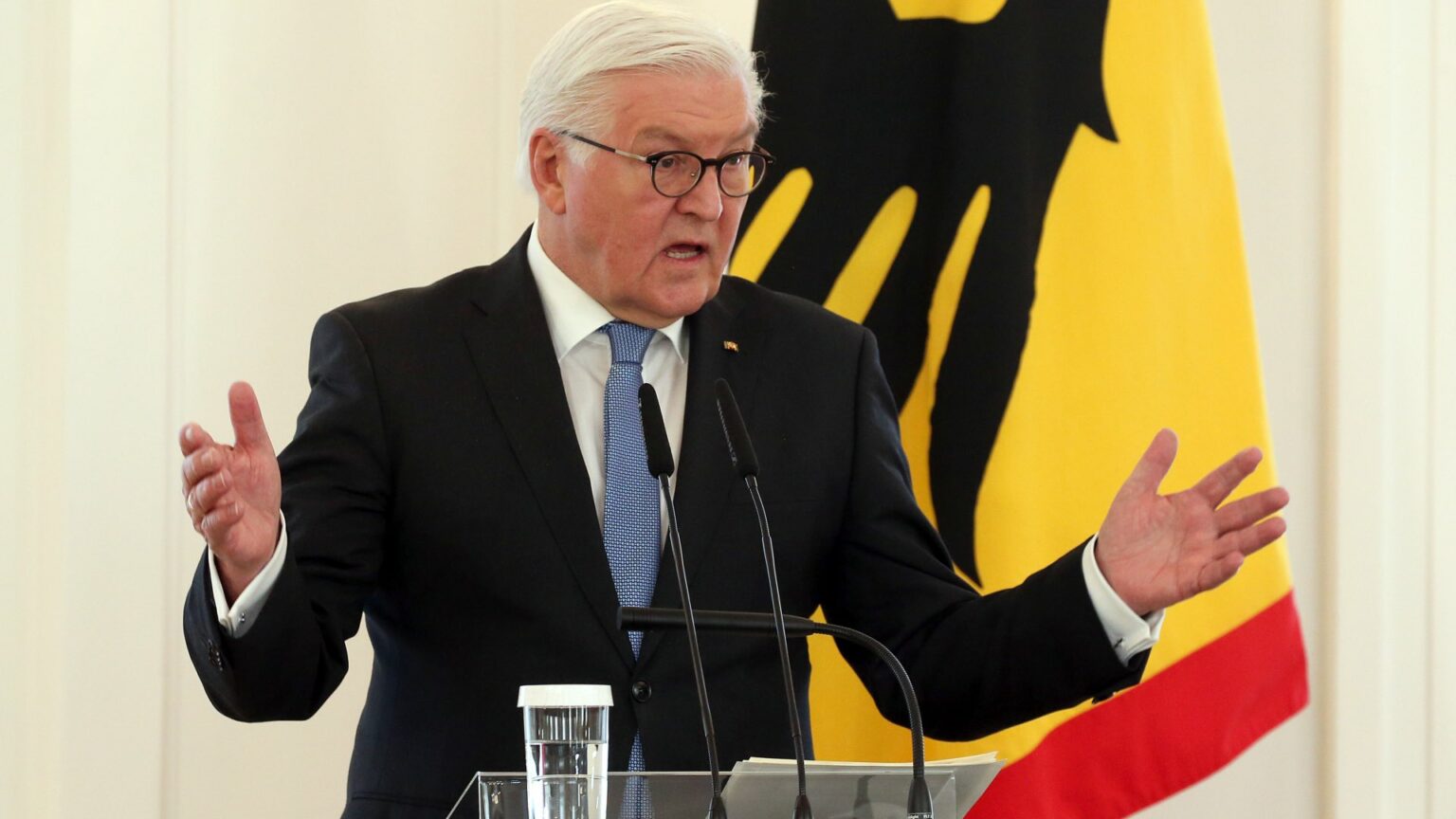
German president says trust in U.S. leadership is ‘lost’ amid global tensions
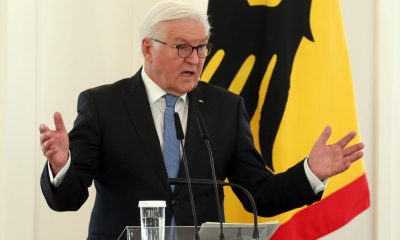
German President Frank-Walter Steinmeier said on Tuesday that trust between the United States and its Western allies has been “lost,” warning that the damage could persist beyond the presidency of Donald Trump.
“The rupture is very deep, and the loss of trust in U.S. great power policy is significant—not only among its allies, but also, as I observe, globally,” Steinmeier said during a speech in Berlin marking the 75th anniversary of Germany’s Foreign Ministry.
Referring to the future of transatlantic relations, he stated that “there is no return to the situation before January 20, 2025,” the date marking the start of Trump’s second term in the White House.
“Even a future U.S. administration will no longer be able to resume the role of a benevolent hegemon guaranteeing a liberal international order,” added Steinmeier, who previously served as Germany’s foreign minister.
He also criticized the war against Iran, describing it as “contrary to international law” and calling it “a political mistake with serious consequences.”
Advertisement
20260224_estafa_mh_728x90
20260212_constancia_pagos_mh_728x90
20250701_dengue_728x90
20250901_vacunacion_vsr-728x90
20250901_minsal_tetra_-728x90
20250701_vacunacion-influenza-728x90
20250701_vacunacion_vph-728x90
20250715_donacion_sangre_central_728x90
20231124_etesal_728x90_1
20230601_agenda_primera_infancia_728X90
domfuturo_netview-728x90
20240604_dom_728x90
CEL
“This war is avoidable and unnecessary,” he said.
Although the German presidency is largely ceremonial, Steinmeier’s remarks reflect a broader concern within Germany, aligning with the government’s cautious stance while going further in tone.
Trump claims talks with Iran as G7 meets to address global tensions
U.S. President Donald Trump said that the United States has held talks with Iran—a claim denied by Tehran—and has temporarily paused his threat to target the country’s electrical infrastructure.
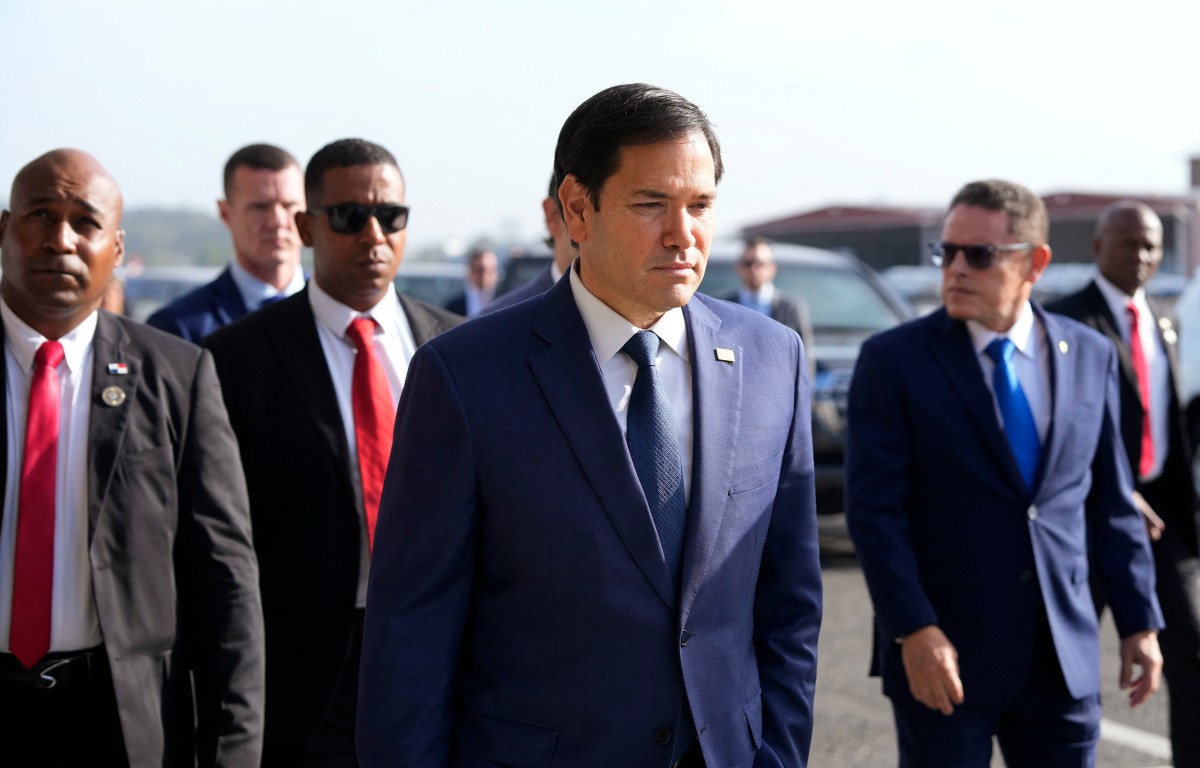
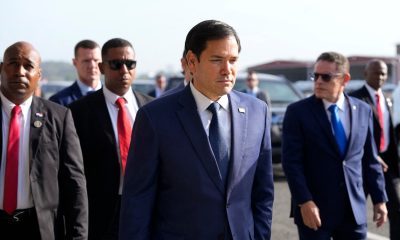
In his first overseas trip since the United States and Israel launched their offensive on February 28, U.S. Secretary of State Marco Rubio is expected to address key global issues, including the situation in the Middle East, according to State Department spokesperson Tommy Pigott.
Foreign ministers from the Group of Seven will meet in Cernay-la-Ville, close to Versailles, on the outskirts of Paris.
During the meeting, Rubio will hold discussions with his counterparts on “the war between Russia and Ukraine, the situation in the Middle East, and threats to global peace and stability,” Pigott said.
France currently holds the presidency of the G7, whose members also include the United Kingdom, Canada, Germany, Italy, and Japan.
Advertisement
20260224_estafa_mh_728x90
20260212_constancia_pagos_mh_728x90
20250701_dengue_728x90
20250901_vacunacion_vsr-728x90
20250901_minsal_tetra_-728x90
20250701_vacunacion-influenza-728x90
20250701_vacunacion_vph-728x90
20250715_donacion_sangre_central_728x90
20231124_etesal_728x90_1
20230601_agenda_primera_infancia_728X90
domfuturo_netview-728x90
20240604_dom_728x90
CEL
Although all G7 nations are close allies of the United States, none has offered explicit support for Washington’s military actions against Iran, a stance that has reportedly frustrated Trump.
Last Saturday, G7 foreign ministers called for an “immediate and unconditional end” to Iranian attacks against U.S. allies in the Middle East.
Pentagon to deploy 3,000 troops to Persian Gulf as Middle East tensions escalate
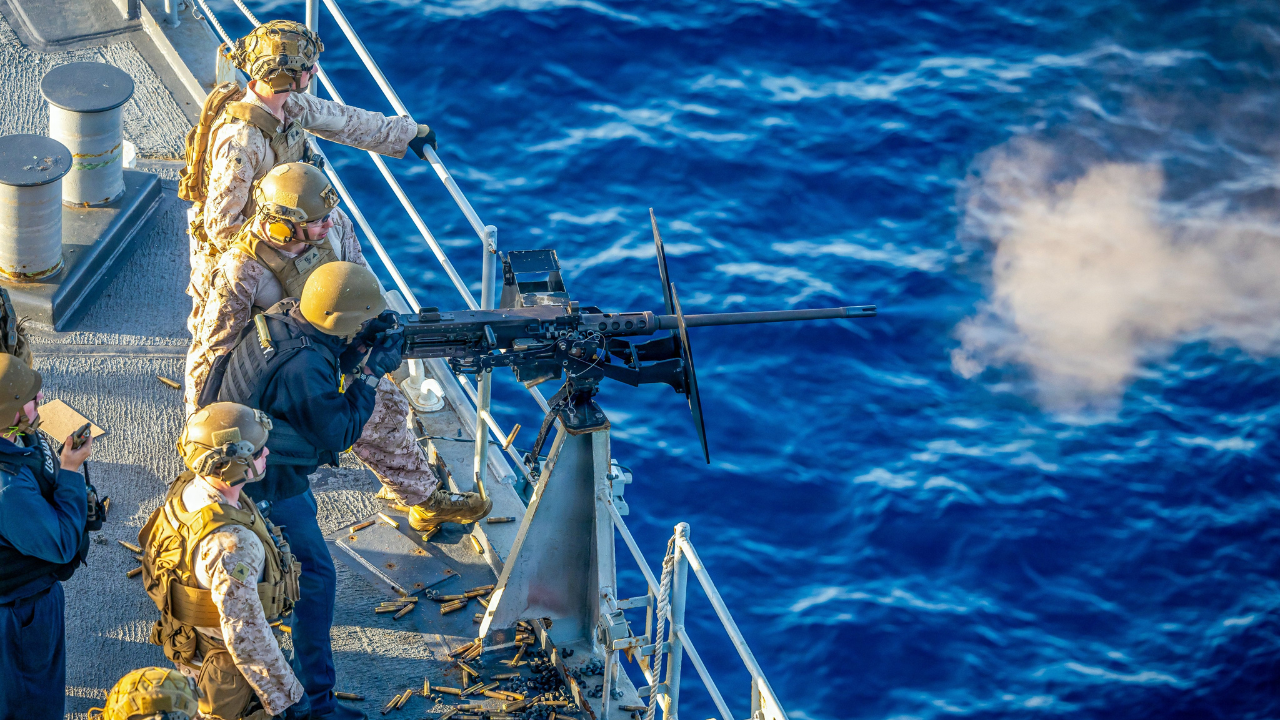
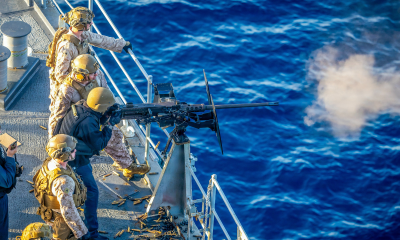
The Pentagon is planning to deploy nearly 3,000 troops from the 82nd Airborne Division to the Persian Gulf, according to two senior officials cited Tuesday by Spanish newspaper El País.
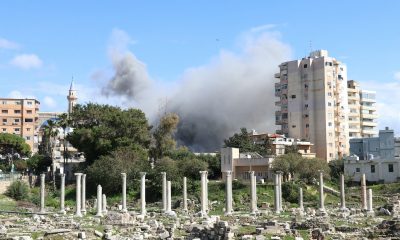
Meanwhile, Hezbollah warned it would confront any attempt at occupation following Israel’s announcement that its military will take control of southern Lebanon up to the Litani River, located about 30 kilometers from the border.
In recent hours, the Israel Defense Forces carried out airstrikes on Beirut, while Iran and Hezbollah responded with attacks on Israel, leaving at least six people with minor injuries in Tel Aviv.
The escalation comes as global markets react to renewed instability. The price of oil rose again above $100 per barrel after a brief decline the previous day, following an announcement by U.S. President Donald Trump of a five-day truce on attacks targeting Iran’s energy infrastructure.
Despite the announcement, Iranian authorities reported that two projectiles struck a gas pipeline in Khorramshahr and administrative buildings at a gas facility in Isfahan early Tuesday.