
International
Widespread regret and condolences for the death of Iranian President Ebrahim Raisí
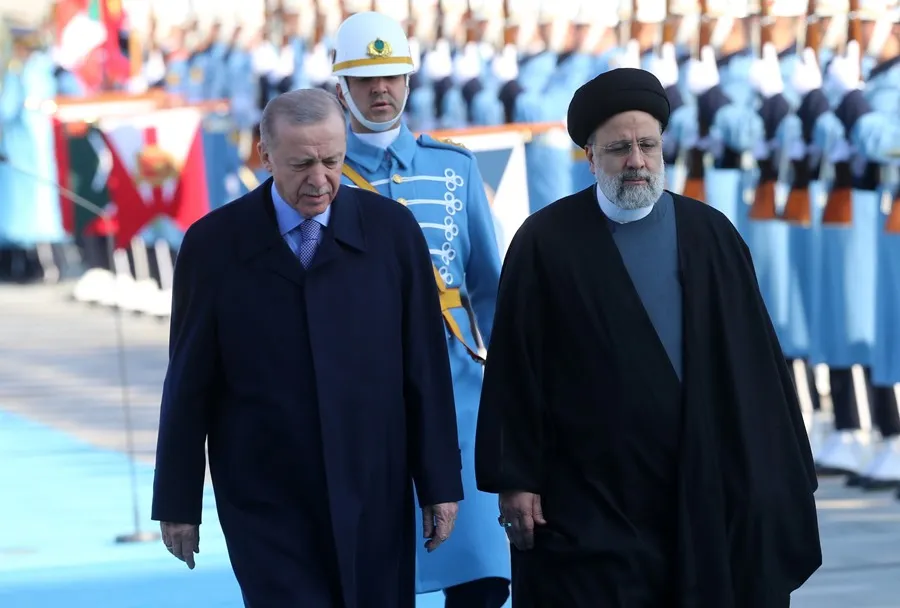
The death in a helicopter accident of the president of Iran, Ebrahim Raisí and the Minister of Foreign Affairs, Hosein Amir Abdolahian, has generated great regret in Arab countries and widespread condolences in the West.
The helicopter in which Raisí and other authorities were traveling disappeared for unexplained reasons this Sunday when it was returning from the city of Tabriz and the aircraft was found today in a mountainous area of the Varzeqan region, in Eastern Azerbaijan.
Among the Arab countries, the Lebanese government decreed on Monday three days of official mourning for the death of President Raisí.
Lebanon maintains good relations with Iran, one of the foreign powers that are considered most influential in the nation, due in large part to the close collaboration between Tehran and the Lebanese Shiite group Hizbulá.
The president of Syria, Bashar al-Asad, expressed his condolences and thanked Ebrahim Raisí for his work to strengthen the ties between the two countries, important allies at various levels.









The president of Iran had made a historic visit to Damascus a year ago, the first of an Iranian leader of his level since 2010, a year before the outst of the war in Syria.
Iran is a key route for supplying oil derivatives and other goods to Syria, subject to a series of international sanctions that limit its trade activities, and also maintains a strong armed presence in Syrian territory, where Iranian advisers and pro-Iranian militias are present.
For his part, the president of the Palestinian National Authority, Mahmud Abbas, on Monday offered his condolences to the Islamic Republic of Iran after the fatal accident and that of Tunisia, Kais Said, also expressed “great sadness and pain.”
Meanwhile, the president of Turkey, the Islamist Recep Tayyip Erdogan, expressed his condolences for his “esteemed counterpart and brother” Raisí and highlighted the efforts of the deceased “for the peace of the Iranian people and our region during his term.”
One of the most heartfelt reactions was that of the Lebanese Shiite group Hizbulá, a close ally of Tehran.
“For us he was an older brother, a strong supporter and a firm defender of our cause, and of the cause of the nation, especially Jerusalem and Palestine. And a protector of the Resistance movements and its mujahideen in all the positions of responsibility he held,” Hizbulah said in a statement.
The Lebanese group is part of an informal anti-Israeli alliance led by Tehran known as the “Axis of Resistance”, several of whose members hold fronts of support for the Palestinian Islamist movement Hamas in the framework of the war that began seven months ago in Gaza.
Hizbulah, who leads one of those fronts against Israel from southern Lebanon, allegedly receives strong arms and logistical support from his Iranian allies.
And the de facto government of the Taliban in Afghanistan also expressed its condolences on the death of Ebrahim Raisí, who was part of a Cabinet determined to build good relations with the fundamentalists despite occasional incidents.
Under the command of Raisi, who came to power in 2021 and was one of the favorites to succeed the supreme Iranian leader, Ali Khamenei, Tehran became one of the few countries interested in improving bilateral relations with the Taliban when they took power in Afghanistan that same year.
The Emir of Qatar, Tamim bin Hamad al Thani, and the Shiite Houthi rebels of Yemen expressed their “sincere condolences” to Iran on Monday in two messages.
Qatar is one of the closest Arab countries to Iran and has mediated on several occasions between the Government of Tehran and other countries, in particular the United States, to bring views on issues such as the nuclear program or that of Iranian ballistic missiles.
The Houthis of Yemen are an Iran-backed Shiite political and religious movement that took up arms in 2014 against the internationally recognized Yemeni government, and since then they control large areas of the north and center of that country in the south of the Arabian Peninsula.
In recent months, Houthis have managed to attract international attention for their attacks with ballistic missiles and drones, allegedly Iranian, against Israeli merchant ships or ships linked to Israel in the Red Sea, in retaliation for that country’s war in Gaza.
Russian President Vladimir Putin today expressed his condolences for the “enormous tragedy” of Raisi’s death, whom he described as a “friend.”
“As a true friend of Russia, he made a valuable personal contribution to the development of good-neighbourly relations between our countries and made great efforts to bring them to the level of strategic partnership,” the Russian president added.
Russia and Iran have strengthened their relations in recent years, especially since the beginning of the war in Ukraine, since Tehran supplies Moscow with the Shahed drones with which it bombs the territory of the neighboring country.
For his part, Chinese President Xi Jinping assured that his people “have lost a good friend.”
Xi highlighted the “important contributions of the Iranian president to the security and stability” of his country, as well as to “its development and prosperity,” according to a spokesman for the Foreign Ministry. In this line, the Chinese leader recognized Raisí’s efforts to “strengthen and develop the integral strategic relationship” between China and Iran, ties that he believes will “continue to be strengthened.”
In 2021, China and Iran sealed a 25-year economic cooperation agreement that broadly provides for Chinese investments in the Iranian energy and infrastructure sectors.
The president of the European Council, Charles Michel, expressed condolences for the death of Raisí, Minister Abdolahian and his entourage. “Our thoughts are with the families,” he wrote in a message on his social network account X.
The head of European diplomacy, Josep Borrell, joined with a statement in which he also conveyed his condolences to the rest of the deceased authorities, their relatives and “the affected Iranian citizens.”
Meanwhile, the NATO spokeswoman, in a message on social network X wrote: “Our condolences to the people of Iran for the death of President Raisí, Foreign Minister Amir Abdolahian and other people who died in the helicopter accident.”
Japan also sent its condolences to Iran. “There is nothing sadder than the news of a sudden death like this. We convey our condolences to the Government of Iran and its people, as well as to the families of the victims,” said Japanese government spokesman Yoshimasa Hayashi.






International
Trump orders U.S. control of Strait of Hormuz after failed Iran talks
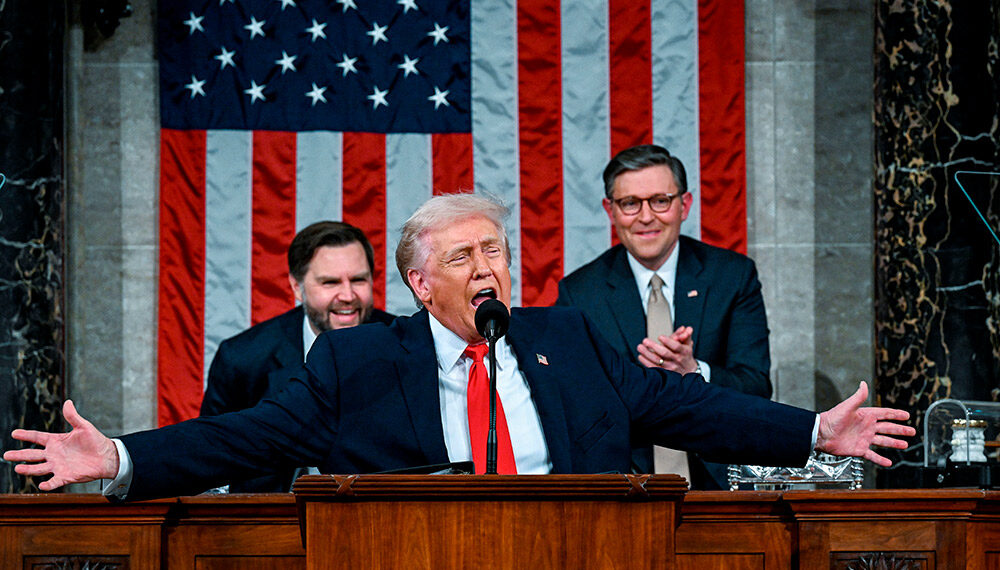
U.S. President Donald Trump announced on Sunday that the United States will take control of the Strait of Hormuz“effective immediately,” following the collapse of negotiations with Iran held in Islamabad.
In a post on Truth Social, Trump said he had ordered the U.S. Navy to block vessels attempting to enter or exit the strategic waterway, a key route for global energy trade.
“The meeting went well, agreement was reached on most points, but the only really important one — nuclear weapons — was not approved,” Trump said, referring to the talks with Iranian representatives.
The president also stated that he had instructed authorities to intercept ships in international waters that had paid tolls to Iran to transit the strait, calling such payments “illegal.” He further accused Tehran of hindering an agreement by deploying mines in the area, describing the move as “international extortion.”
Trump added that the United States will undertake efforts to clear mines from the strait and expressed confidence that a future agreement ensuring free navigation could eventually be reached.
The announcement came after Vice President JD Vance and special envoys Steve Witkoff and Jared Kushner briefed the president on the outcome of the negotiations, considered the highest-level contacts between the two countries since the 1979 Islamic Revolution.
While Trump acknowledged that enough progress had been made to maintain a temporary truce, he criticized Iran for remaining unwilling to abandon its nuclear ambitions, calling its position “very inflexible” on the central issue.
International
Child Found Malnourished in Van in France; Father Admits Confinement

French gendarmes discovered a child in a van in Hagenbach, in northeastern France, after a neighbor reported hearing what she described as “childlike noises” coming from the parked vehicle.
After unlocking the van, officers found the boy lying in a fetal position, unclothed and covered with a blanket, surrounded by garbage and near human waste, according to a statement from the Mulhouse prosecutor, Nicolas Heitz.
Authorities said the child appeared pale and severely malnourished. Due to prolonged confinement in a seated position, he was no longer able to walk. He was immediately taken to a hospital in Mulhouse for medical care.
The boy’s father, who lived with his partner and two daughters aged 10 and 12, admitted to keeping the child confined and depriving him of proper care.
According to the prosecutor, the man said he placed the child in the van in November 2024, claiming he wanted to “protect him” because his partner intended to have the boy admitted to a psychiatric facility.
The suspect also stated that he allowed the child out of the vehicle in May 2025 and permitted him to enter the family apartment around mid-year, when the rest of the family was on vacation.
The man’s partner—who is not the child’s mother—also faces charges, including failure to report abuse. However, she has denied all accusations.
International
Europe Faces Jet Fuel Shortage Risk Amid Hormuz Disruption
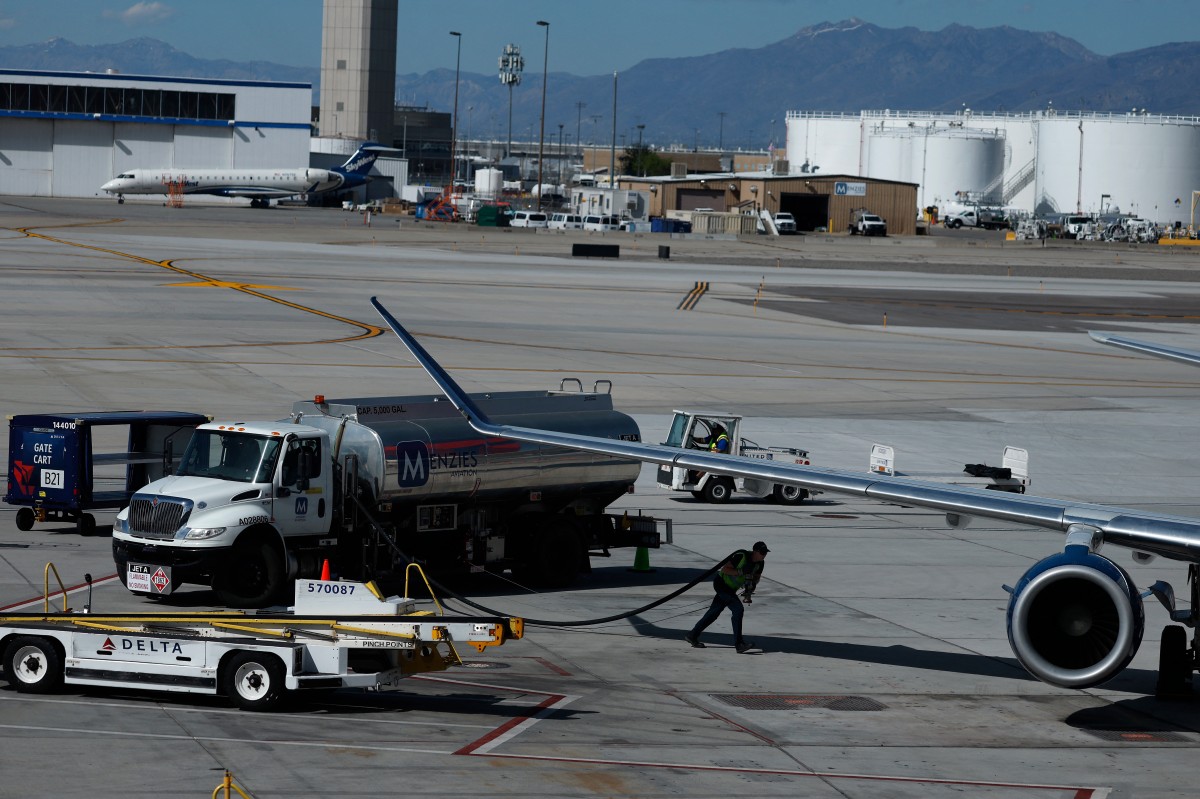
The Airports Council International Europe has warned of a potential “systemic shortage” of jet fuel if maritime traffic through the Strait of Hormuz is not restored within the next three weeks, according to a letter reviewed by AFP on Friday.
In the document, addressed to the European Commission and first reported by the Financial Times, the European airport lobby stated that a “systemic jet fuel shortage will become a reality” in the European Union unless stable and significant transit through the strait resumes soon.
The association, which represents around 600 airports across 50 countries, called on Brussels to implement “urgent monitoring of fuel availability and supply” over the next six months.
Jet fuel prices have surged amid the conflict in the Middle East and the ongoing disruption in the Strait of Hormuz, a critical chokepoint for global energy transport.
The conflict escalated on February 28 following joint U.S. and Israeli airstrikes against Iran.
In response, Tehran imposed several countermeasures, including blocking maritime traffic through the strait, a route through which roughly 20% of the world’s oil, jet fuel, and gas supply passes.

Trump orders U.S. control of Strait of Hormuz after failed Iran talks

Panama and Costa Rica strengthen border alliance to combat organized crime

Ancelotti leaves door open for Neymar’s return to Brazil’s 2026 World Cup squad
Tec de Monterrey honors one of its students for his contribution to nanotechnology in medicine

Defense Minister commends salvadoran soldier for Central American Cross Country victory

Extension of the state of emergency approved in southern Chile
-
 International3 days ago
Europe Faces Jet Fuel Shortage Risk Amid Hormuz Disruption
-
 International4 days ago
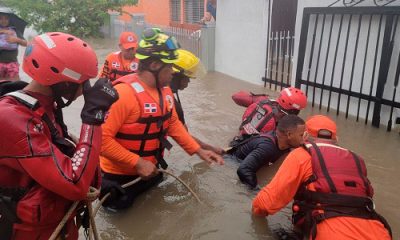
Flooding in Dominican Republic leaves child dead and thousands affected
-

 International3 days ago
Child Found Malnourished in Van in France; Father Admits Confinement
-

 Central America5 days ago
Gunfire and protests mark controversial rector reelection at Guatemala’s USAC
-

 International3 days ago
Artemis II crew prepares for Earth return and splashdown recovery
-
 Central America2 days ago
Panama and Costa Rica strengthen border alliance to combat organized crime
-
 Sports2 days ago
Ancelotti leaves door open for Neymar’s return to Brazil’s 2026 World Cup squad
-

 International5 days ago
Bill Gates to testify before Congress over Epstein connections
-
 International24 hours ago
Trump orders U.S. control of Strait of Hormuz after failed Iran talks
-

 Central America5 days ago
Seven arrested in Guatemala over disappearance of six near Mexico border