
International
Refugees from the Sudan war rebuild their lives between fear and hope
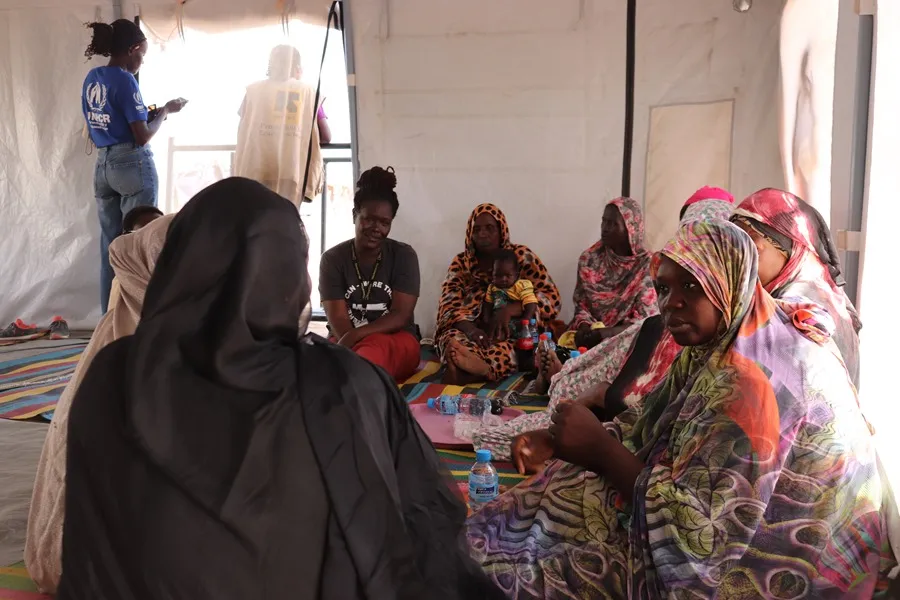
Every afternoon, a group of women fleeing the conflict in Sudan gather in a tent in the transit center of Renk, a border town in the territory of South Sudan, to participate in a workshop on gender violence, where they share their testimony, receive the attention of professionals and begin to heal the wounds that the war left them in body and mind.
Some of the attendees are South Sudanese returnees; others, Sudanese refugees, and all try to overcome the fear, suffering and violence, in many sexual cases, that they lived during their escape from the war that broke out more than a year ago between the Army of Sudan and the paramilitary group Rapid Support Forces (FAR).
They sit in a circle and listen in silence to one of the women who decides to explain her story. Some nod, a tear runs down the cheek of another who plays with the hem of her colorful dress, while a woman decides to add her experience.
The safety and well-being of their children was the first thing, despite being paralyzed by fear. Salma, a fictitious name, tells EFE that his three children were unable to sleep due to the fear of bombs and gunfire. Now they sleep a little better, but they are still restless.
“We fled our home in Khartoum (capital of Sudan) around midnight. No car. We walked in silence to another town and another and another,” Salma says about the nightmare of leaving his house behind and crossing the Joda border crossing to apply for refuge in South Sudan.









He doesn’t talk about her. She doesn’t feel prepared. She explains that she lost her husband along the way, without giving details, and is grateful because the little ones can go to a kind of nursery in the center, but regrets that the elderly cannot continue studying.
Dunia, also a pseudonym, feels lucky to have her husband, but shares her concern for minors. “I want my children to be able to go back to school. We want them to open a school here, we don’t want to go to the Mabán refugee camp,” he explains.
After spending half a month in the Renk transit center, the refugees are transferred to the Mabán camp, a nearby location, but neither Dunia nor other women want to: “The facilities are not good and they rape girls and women when they move away to the latrines or to look for firewood in the outskirts,” he says.
Sexual violence against women is a common weapon in all wars. It’s not easy to talk about this episode in their lives. None of them do it. Shame and social and community rejection weighs, and they do not want to reopen wounds that are still healing.
According to a report issued in February by the Office of the United Nations High Commissioner for Human Rights, “at least 118 people were exposed to sexual violence, including rape, gang rape and attempted rape,” while Sudanese human rights organizations raise the figure to more than 370 in just over a year of war in the African country.
However, these figures are only the tip of the iceberg. The director of the government Department for the Fight against Violence against Women and Children, Salima Ishaq, told EFE that only 2% of the victims of sexual violence have dared to report it to the authorities, while the rest avoid it because of “social restrictions” or “for fear of reprisals.”
“The estimates indicate that the complaints we receive do not exceed 2% of the actual incidents of sexual violence, which means that the total number could reach 7,000 cases of sexual violence,” he added.
Sexual violence has another retaliation: unwanted pregnancies. The Sudanese authorities announced in mid-May that they had taken in a dozen babies abandoned by women raped by FAR fighters, although they did not disclose possible cases resulting from alleged rapes committed by members of the Army.
Yamila was robbed of everything during her escape. Some armed men took her husband and demanded a ransom. He doesn’t have money or know where he is, not even if he’s still alive. “I want him to come back. I’ve thought about killing myself because my children ask me about him and I don’t know what to answer, but I have to move on for them,” he says in tears.
“They are the future. I want you to study and go to university. They are sad because they don’t go to class. One wants to be a teacher, the other wants to be a doctor,” he adds. Despite everything, he appreciates the company of the other women because they give him strength.
It agrees with her Nouran, who recognizes the positive effect that this therapy group has among the participants: “We talk about our problems and look for solutions. Together we are stronger and we help and advise each other, we talk about the children…”
The session ends, but they all feel a little lighter and more lively. They think that when they say something out loud, they take a weight off their back. Tomorrow they will return and little by little they will reinforce this network of women with which they are rebuilding their lives with a shared desire: that the war ends to return to their home, Sudan.






International
UN warns Venezuela earthquakes could affect up to 6.76 million people
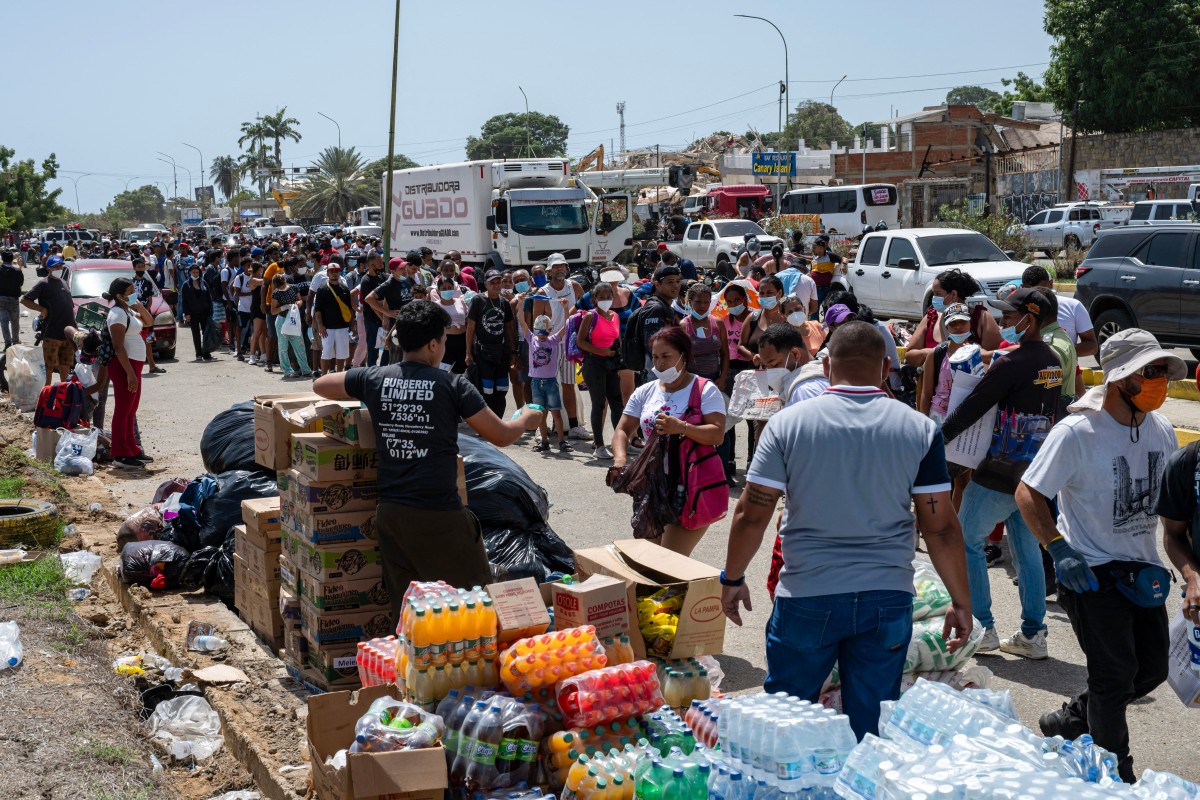
Up to 6.76 million people could be affected by the devastating earthquakes that struck Venezuela on June 24, according to an assessment released by the International Organization for Migration (IOM), a United Nations agency.
The organization said the projections are based on available population data and damage assessments, and include up to two million people living in Caracas, the country’s capital.
The estimates highlight the potentially massive humanitarian impact of the disaster, the IOM warned.
Entire buildings collapsed in La Guaira, a coastal area north of Caracas, following the powerful twin earthquakes that reached magnitudes of 7.2 and 7.5 on Wednesday.
The national death toll has risen to 920, while rescue teams continue searching for people trapped beneath the rubble in coastal regions and other affected areas.
UN humanitarian chief Tom Fletcher told AFP on Friday that more than 50,000 people were reported missing.
The IOM also revealed that it worked with Microsoft’s artificial intelligence laboratory on an initial satellite mapping analysis, which showed that 31.5% of buildings in the town of Catia La Mar had suffered damage.
Authorities and international rescue teams continue operations as Venezuela faces one of its largest humanitarian emergencies in recent years.
International
United Nations Coordinates Relief Efforts as Venezuela Death Toll Rises After Twin Quakes
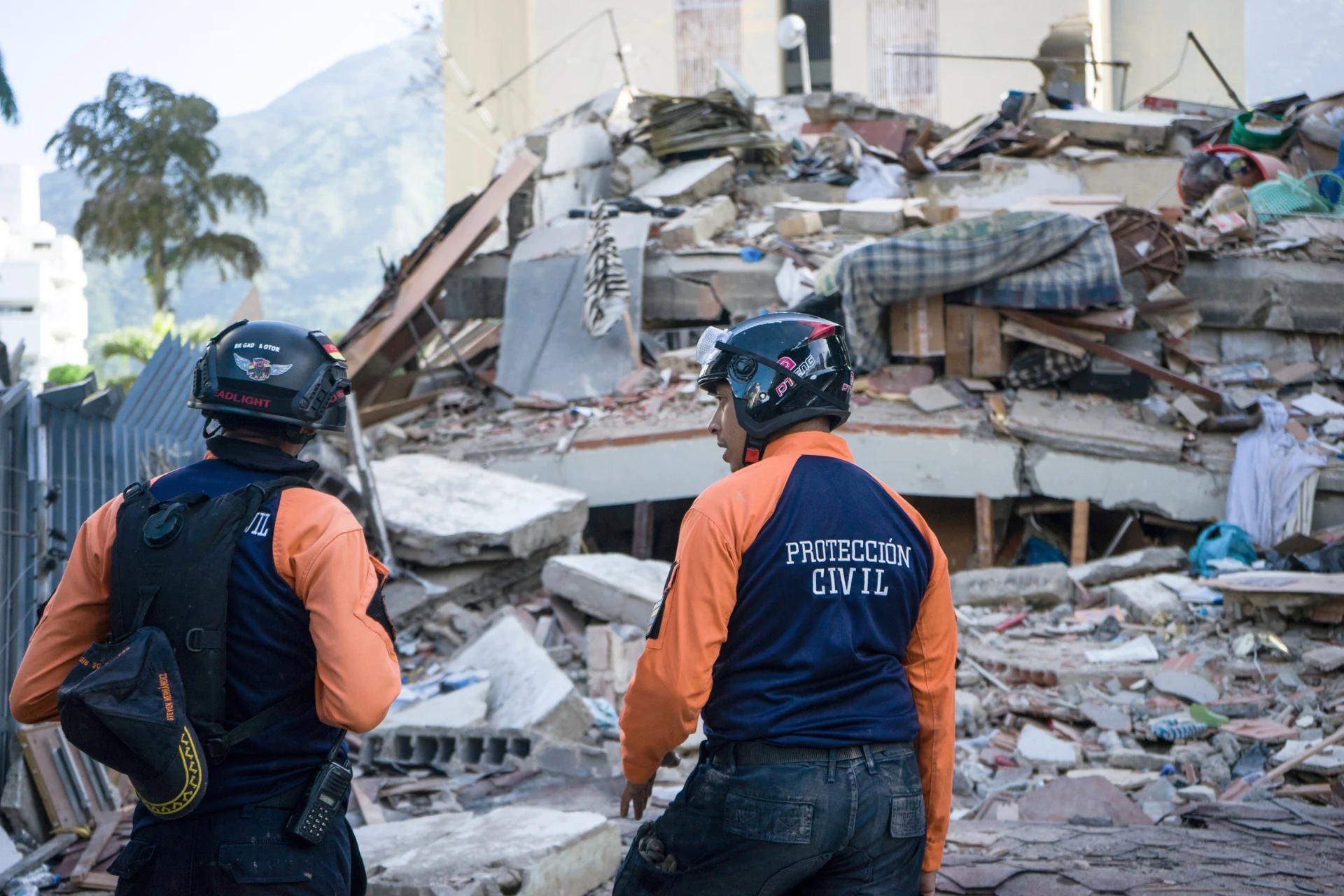
United Nations Secretary-General António Guterres on Thursday expressed his condolences to the people of Venezuela following the two devastating earthquakes that struck the country and highlighted the ongoing coordination between UN humanitarian teams and interim President Delcy Rodríguez.
Speaking during the UN’s daily press briefing, spokesperson Stéphane Dujarric said Guterres was deeply saddened by the loss of life and widespread destruction caused by the disaster.
“The Secretary-General is deeply distressed by the loss of life and the widespread devastation caused by the earthquakes that struck Venezuela yesterday. He extends his heartfelt condolences to the families of the victims and wishes a speedy recovery to those injured,” Dujarric stated.
Venezuela was struck on Wednesday by two powerful earthquakes measuring 7.2 and 7.5 in magnitude. According to official figures, the disaster has left at least 164 people dead and 971 others injured.
Dujarric noted that preliminary reports indicate significant damage across several states, including the capital, Caracas. Numerous casualties have been reported, while other individuals remain trapped beneath collapsed structures or are still missing.
“Critical infrastructure has been damaged and essential services have been disrupted,” the spokesperson said.
The United Nations confirmed that its humanitarian team remains in close contact with interim President Delcy Rodríguez and other relevant authorities as emergency operations continue.
To support relief efforts, the UN has established a coordination center in Caracas and is assisting local authorities to ensure that humanitarian aid reaches affected communities as quickly and efficiently as possible.
Guterres also welcomed the expressions of solidarity and offers of assistance from countries around the world that responded following news of the disaster, underscoring the importance of international cooperation in addressing the humanitarian emergency.
International
OAS Secretary General Pledges Regional Assistance Following Venezuela Quake Disaster
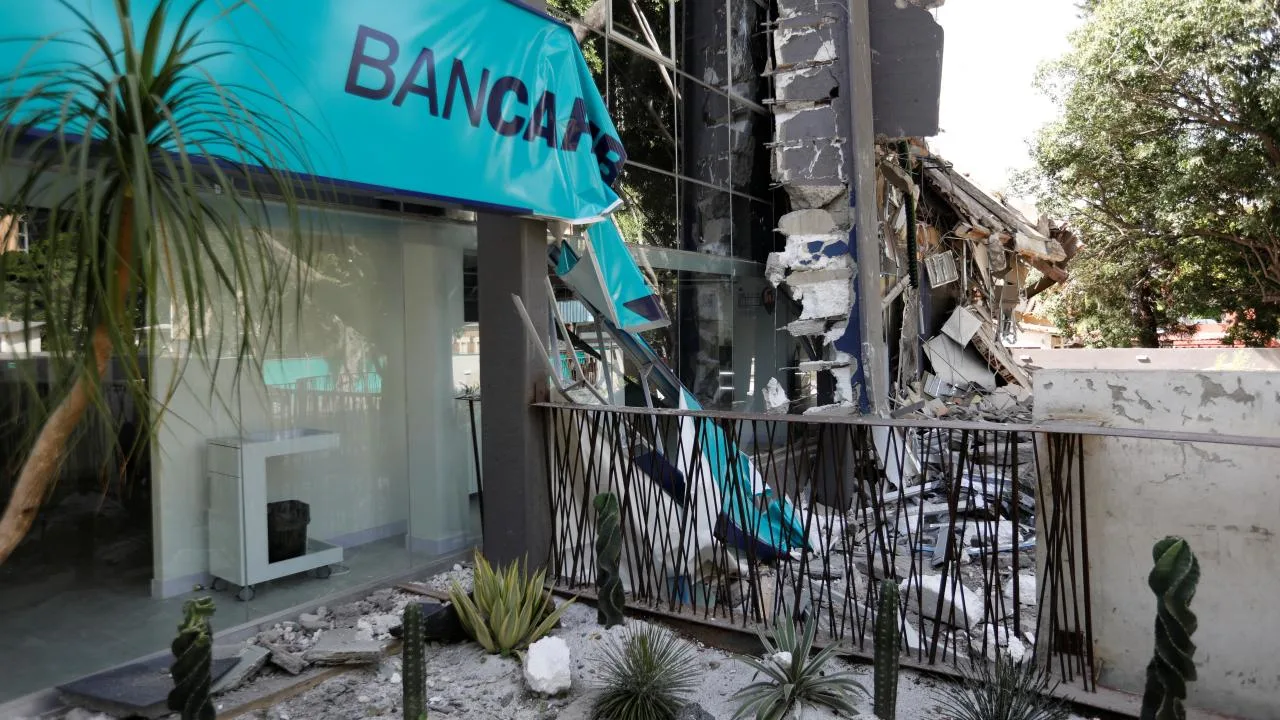
The Secretary General of the Organization of American States (OAS), Albert Ramdin, said on Thursday that the “hemispheric community” stands ready to provide “full support” to Venezuela and its people following the powerful earthquakes that struck the country overnight, leaving at least 164 people dead and nearly 1,000 injured.
Speaking at the conclusion of the OAS General Assembly, Ramdin expressed solidarity not only with Venezuela but also with Colombia, Curaçao and Aruba, where the tremors were also felt.
“Above all, our thoughts are with these peoples,” he said during his remarks.
Ramdin noted that while many details about the disaster are still emerging, countries across the hemisphere are prepared to assist Venezuela as it responds to the crisis.
“Much remains unknown at this stage, but the hemispheric community will be ready to support the people of Venezuela during this very difficult time,” he stated, reiterating the organization’s commitment to helping those affected.
According to updated information released by the Venezuelan government, the powerful earthquakes have been followed by at least 30 aftershocks. Authorities have also reported extensive structural damage, including numerous building collapses in La Guaira, the area considered hardest hit by the disaster.
Rescue efforts are currently focused on La Guaira, where emergency teams continue searching for survivors trapped beneath the rubble as officials assess the full extent of the damage.

UN warns Venezuela earthquakes could affect up to 6.76 million people

United Nations Coordinates Relief Efforts as Venezuela Death Toll Rises After Twin Quakes

OAS Secretary General Pledges Regional Assistance Following Venezuela Quake Disaster
Tec de Monterrey honors one of its students for his contribution to nanotechnology in medicine

Defense Minister commends salvadoran soldier for Central American Cross Country victory

Extension of the state of emergency approved in southern Chile
-

 International5 days ago
Cristiano Ronaldo Makes History as First Player to Score in Six World Cups
-
 Central America4 days ago
El Salvador and Chile Mark 150 Years of Relations With Expanded Bilateral Cooperation
-
 International3 days ago
United Nations Coordinates Relief Efforts as Venezuela Death Toll Rises After Twin Quakes
-
 International4 days ago
WHO Expects Deadly Hantavirus Outbreak on Cruise Ship to End by July 2
-
 International3 days ago
OAS Secretary General Pledges Regional Assistance Following Venezuela Quake Disaster
-

 International4 days ago
Bill Gates Says Jeffrey Epstein Made “Veiled” Threats Over Extramarital Affairs
-
 International5 days ago
U.S. Proposes Higher Citizenship Fees and Limits on Immigration Fee Waivers
-
 Central America5 days ago
Costa Rica Launches Largest Police Operation in History, Dismantles Major Drug Cartel
-
 International20 hours ago
UN warns Venezuela earthquakes could affect up to 6.76 million people