
International
EU countries agree to use profits from frozen Russian assets in defense of Ukraine
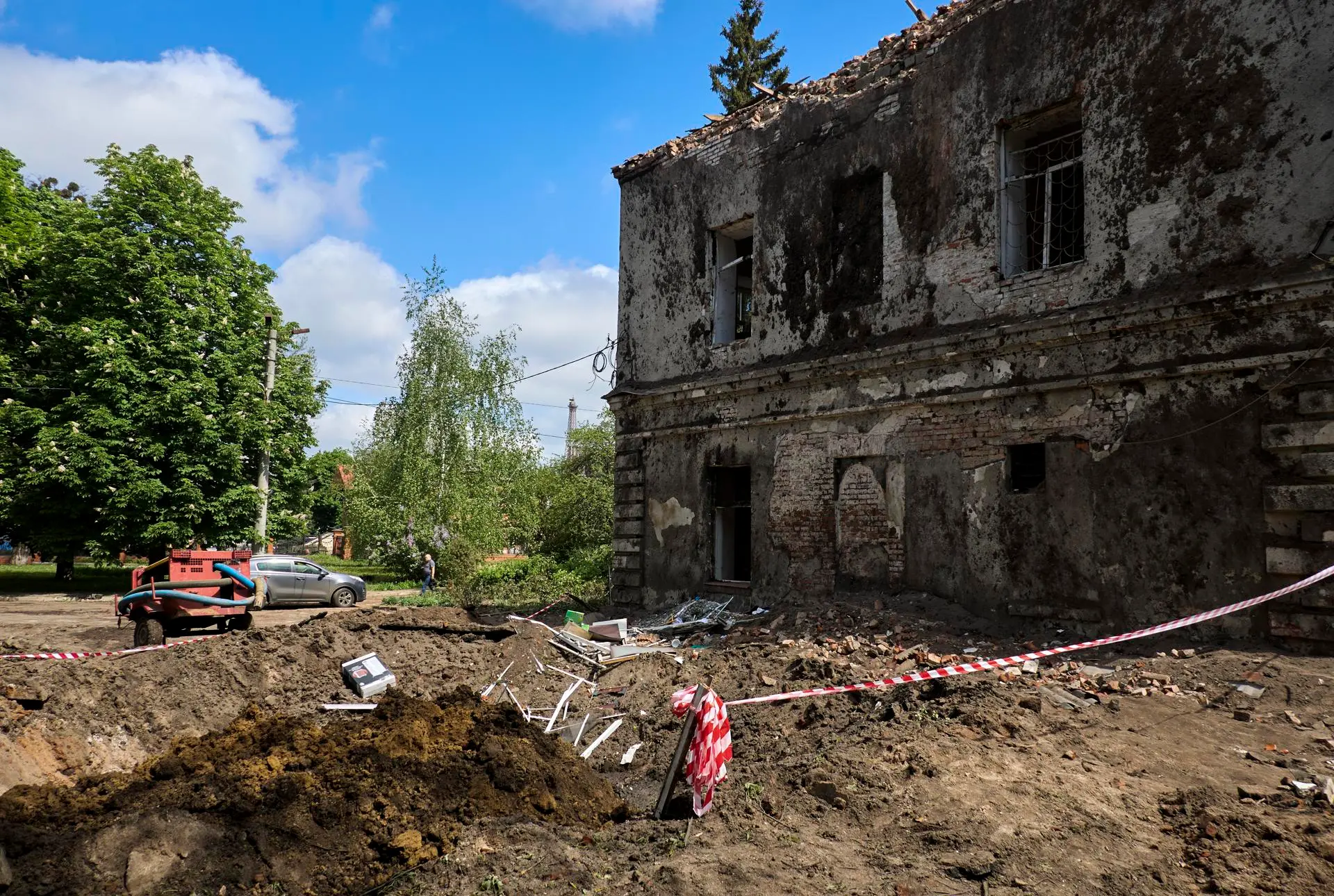
The ambassadors of the member states to the European Union (EU) reached an agreement on Wednesday in principle to use the benefits of frozen Russian assets to support “the recovery and military defense” of Ukraine in the face of Russia’s aggression.
“The EU ambassadors agreed in principle on measures on the extraordinary benefits of Russia’s fixed assets,” the Belgian presidency of the Council of the EU wrote in its profile of social network X.
He added that the money “will serve to support the recovery of Ukraine and military defense in the context of Russian aggression.”
The European Commission proposed last March to use the extraordinary benefits of Russian assets frozen by the sanctions in relation to the war in Ukraine, which amount to between 2.5 and 3 billion euros per year, to finance weapons and ammunition for that country mainly.
The first transfer of profits to help Ukraine defend itself against Russia is expected to take place in July.
Community sources detailed that 90% of the profits of fixed assets will go to the European Peace Support Fund (FEAP) for military support. The FEAP is an instrument through which EU countries co-finance the shipment of weapons to Ukraine since the beginning of the Russian invasion in February 2022.









The other 10% will go to the macro-financial aid package to Ukraine from the general budget of the European Union. This year, the community club agreed on an aid of 50 billion euros to Ukraine that is part of the revised community budget, covers the next four years until 2027 and is disbursed in the form of loans (33 billion euros) and grants (17 billion).
Most of the frozen Russian assets are deposited in Euroclear, a Brussels-based body that owns about 192 billion euros.
Belgium keeps a part of the profits of those securities in terms of corporate taxes, a fact that has been criticized by other Member States.
That country argues that it is a “general tax, not something that has been invented for Ukraine” and that part of what is collected serves precisely to help Kiev with its weapons needs and to support refugees.
The sources specified that the tax revenues generated in Belgium by those profits will continue to be allocated to Ukraine in its entirety.
The corporate tax is 25% in Belgium and applies to all companies, according to the sources, who insisted that it is impossible to eliminate it.
However, they recalled that in 2022 Belgium decided to allocate all those extraordinary corporate tax revenues to support Ukraine and that in 2023 they created a specific fund for it.
For the fiscal year of 2024, an amount of 1.7 billion euros of national corporate taxes is expected from immobilized Russian assets, of which about 1 billion have already been allocated to Ukraine.
The new legislation will apply to the remaining extraordinary benefits after this mandatory taxation, according to the sources.
The ambassadors of the Member States decided that the rate that Euroclear will charge for handling the assets will be 0.3%.
Some States such as Austria, Ireland, Malta and Cyprus are reluctant to buy weapons for Ukraine because of their policy of neutrality and Hungary has repeatedly said that it does not support the idea.






International
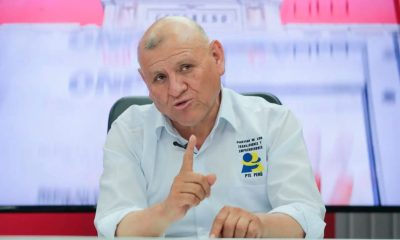
Peruvian presidential candidate Napoleón Becerra dies in campaign road accident
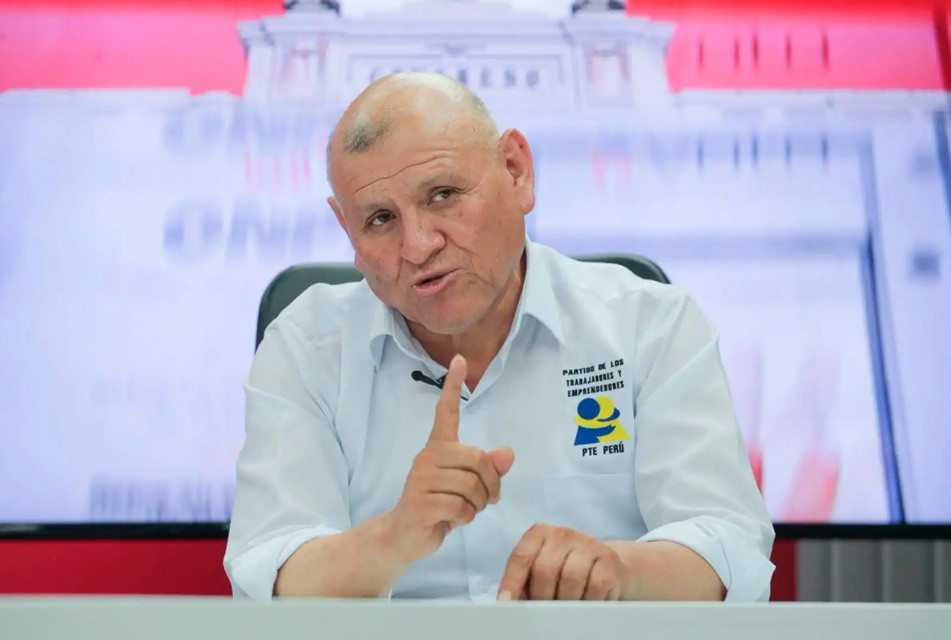
Presidential candidate Napoleón Becerra, representing the Partido de los Trabajadores y Emprendedores (PTE) in Peru, died in a traffic accident while traveling to a campaign event, local authorities confirmed Sunday.
Becerra, who also served as president of the centrist political party, ranked among the lowest in opinion polls in a crowded field of more than 30 candidates competing in the presidential election scheduled for April 12.
Recent surveys place Rafael López Aliaga at the top of voter preferences.
The accident occurred near the town of Ayacucho, in southern Peru, when the vehicle carrying the candidate overturned for reasons that remain under investigation.
“The candidate Becerra has died,” Balvin Huamani, mayor of the district of Pilpichaca, told RPP radio.
According to Huamani, he personally transported the 61-year-old candidate to a local health center, where doctors confirmed his death.
The Jurado Nacional de Elecciones (JNE) expressed condolences over Becerra’s passing and wished a speedy recovery to the three people who were traveling with him and were injured in the crash.
International
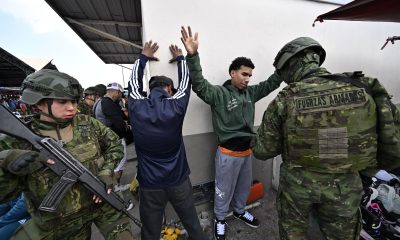
Noboa intensifies anti-cartel crackdown as violence persists in Ecuador
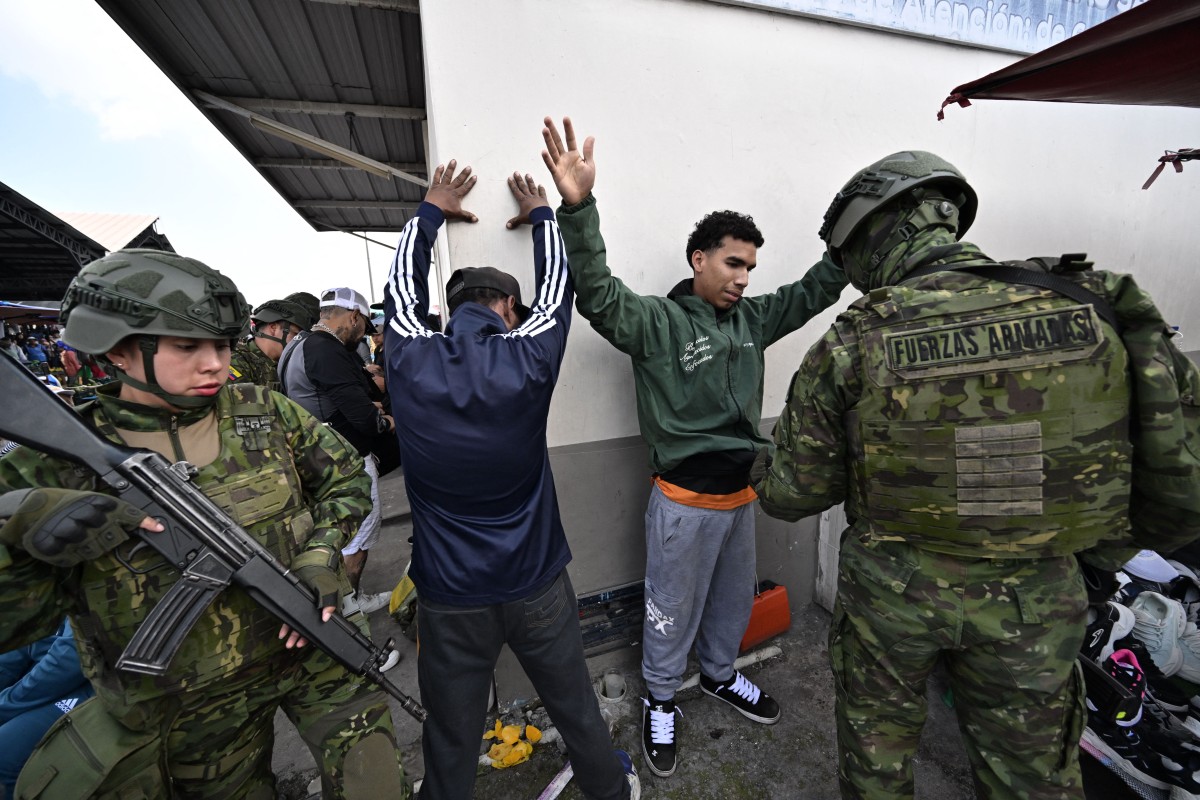
A close ally of Washington, Ecuadorian President Daniel Noboa has pursued a hardline security strategy against cocaine cartels for more than two years, yet homicide, disappearance and extortion rates remain high across the country.
Between Sunday night and the morning of March 31, Ecuador’s armed forces will launch a “very strong offensive” with “advisory support” from the United States, Interior Minister John Reimberg announced Tuesday.
The government has kept details of the operation confidential and has not confirmed whether U.S. troops will be deployed on Ecuadorian soil, as has occurred at times during Noboa’s administration.
As part of the security measures, residents in the coastal provinces of Guayas, Los Ríos, Santo Domingo de los Tsáchilas, and El Oro will be subject to a nightly curfew from 11:00 p.m. to 5:00 a.m. local time for the next two weeks.
“We are in a war,” Reimberg said, urging citizens to remain indoors. “Do not take risks. Stay home and allow the security forces and our allies to do the work that must be done.”
Although Ecuador does not produce cocaine, it has become a major departure point for drugs heading to the United States. Meanwhile, the violence associated with trafficking has increasingly affected the local population.
Bordering the world’s largest cocaine producers, Colombia and Peru, Ecuador has gone from being considered a relatively peaceful country to recording one of the highest homicide rates in Latin America—52 killings per 100,000 inhabitants—according to the **Observatory of Organized Crime.
International
Peruvian presidential candidate proposes death penalty amid crime surge
Peru is facing an unprecedented surge in crime ahead of its presidential election scheduled for April 12, with violence fueled by extortion networks and a wave of contract killings linked to organized crime.
Police data show that 2,200 homicides tied to organized crime were recorded in 2025, while extortion complaints increased by 19%, underscoring the growing security crisis in the South American nation.
Amid this backdrop, presidential candidate Álvarez has proposed reinstating the death penalty if elected, arguing that extreme measures are needed to curb the violence.
To implement the proposal, Álvarez said Peru would withdraw from the American Convention on Human Rights—also known as the Pact of San José—which the country signed in 1978. The agreement prevents member states that have abolished capital punishment from reinstating it.
Currently, Peruvian law only allows the death penalty in cases of treason during wartime.
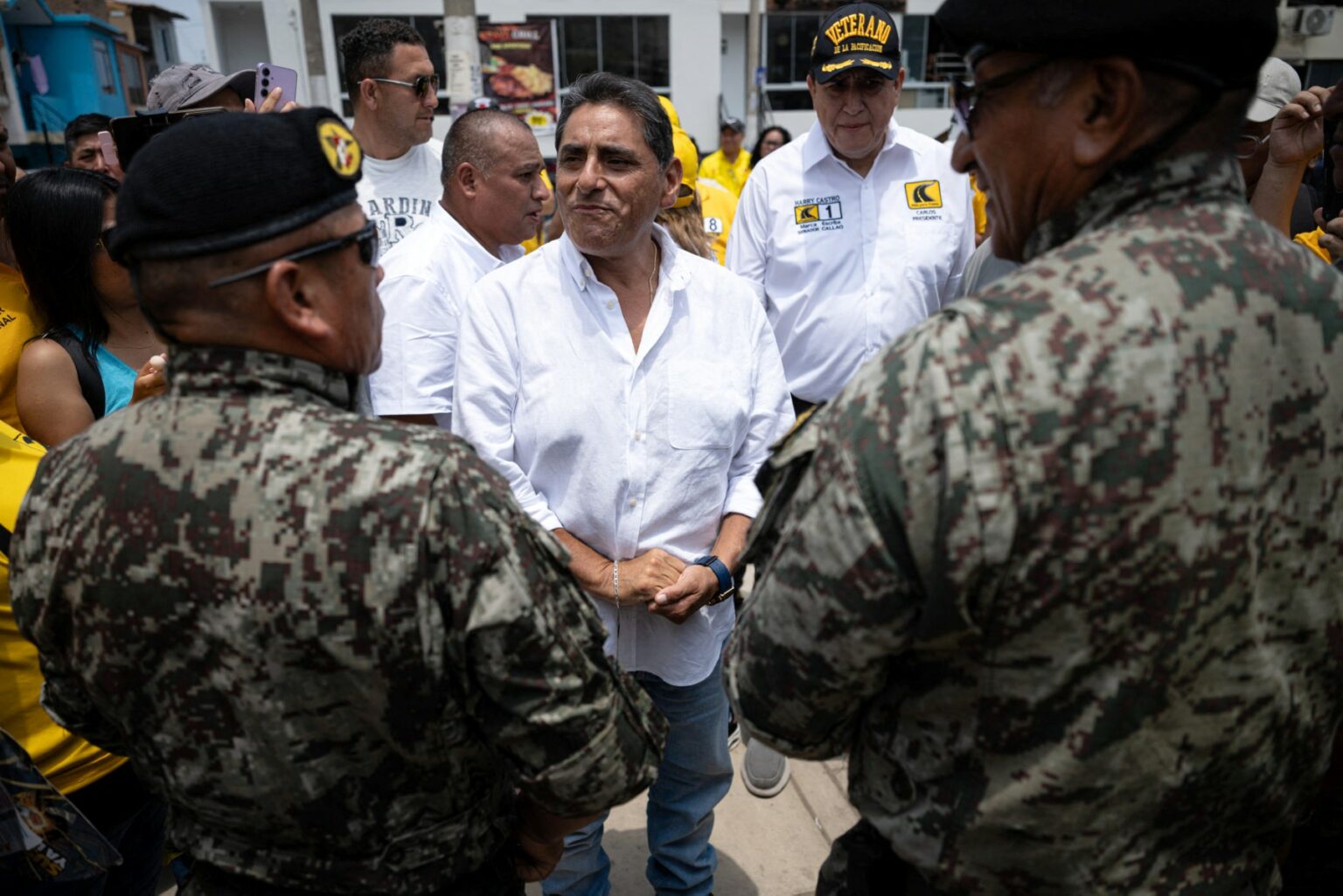
“We have to leave the Pact of San José and apply the death penalty in Peru because those miserable criminals don’t deserve to live,” Álvarez told AFP during a campaign stop at a market in Callao, the port city neighboring Lima.
“An iron fist against those criminals,” he added, proposing to declare hitmen as military targets.
During the campaign event, Álvarez walked through stalls selling vegetables, groceries, and fish, greeting vendors while musicians played cumbia music nearby.
The 62-year-old candidate, who spent more than four decades working in television as a comedian, is a newcomer to politics and is running for president under the País para Todos party.
Polls place him fifth in voter preference with nearly 4% support in a fragmented race featuring 36 candidates.
“I am an artist who has taken a step into politics to bring peace to my country,” Álvarez told reporters while surrounded by supporters.

Peruvian presidential candidate Napoleón Becerra dies in campaign road accident

Noboa intensifies anti-cartel crackdown as violence persists in Ecuador

Peruvian presidential candidate proposes death penalty amid crime surge
Tec de Monterrey honors one of its students for his contribution to nanotechnology in medicine

Defense Minister commends salvadoran soldier for Central American Cross Country victory

Extension of the state of emergency approved in southern Chile
-
 International2 days ago
U.S. Confirms Death of Six Crew Members in KC-135 Crash in Western Iraq
-

 International3 days ago
Trump Says Iran Is Welcome at 2026 World Cup but Warns of Security Concerns
-

 International4 days ago
Iran issues threat to Trump as conflict escalates over Strait of Hormuz
-

 International3 days ago
FBI Warns of Possible Iranian Drone Attack on U.S. West Coast
-

 International2 days ago
Ecuador Declares 60-Day National Emergency After Deadly Floods and Landslides
-

 International2 days ago
Mexican Navy Ships Deliver Third Shipment of Humanitarian Aid to Cuba
-

 International4 days ago
Driver detained after suspicious vehicle incident near the White House
-
 Sin categoría4 days ago
UN experts warn Nicaragua runs vast transnational network to monitor exiled dissidents
-
 International2 days ago
Trump Pushes for Regime Change in Cuba as Havana Confirms Talks With Washington
-

 International2 days ago
FBI: Man who attacked Michigan synagogue died from self-inflicted gunshot
-
 International2 days ago
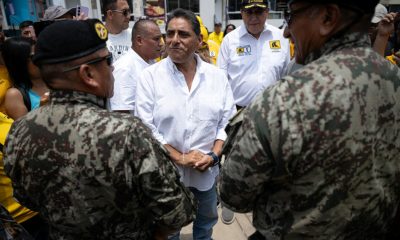
Peruvian presidential candidate proposes death penalty amid crime surge
-
 International5 hours ago
Noboa intensifies anti-cartel crackdown as violence persists in Ecuador
-
 International5 hours ago
Peruvian presidential candidate Napoleón Becerra dies in campaign road accident
-
 Sin categoría3 days ago
FBI Most Wanted Fugitive Arrested in Mexico and Deported to U.S.