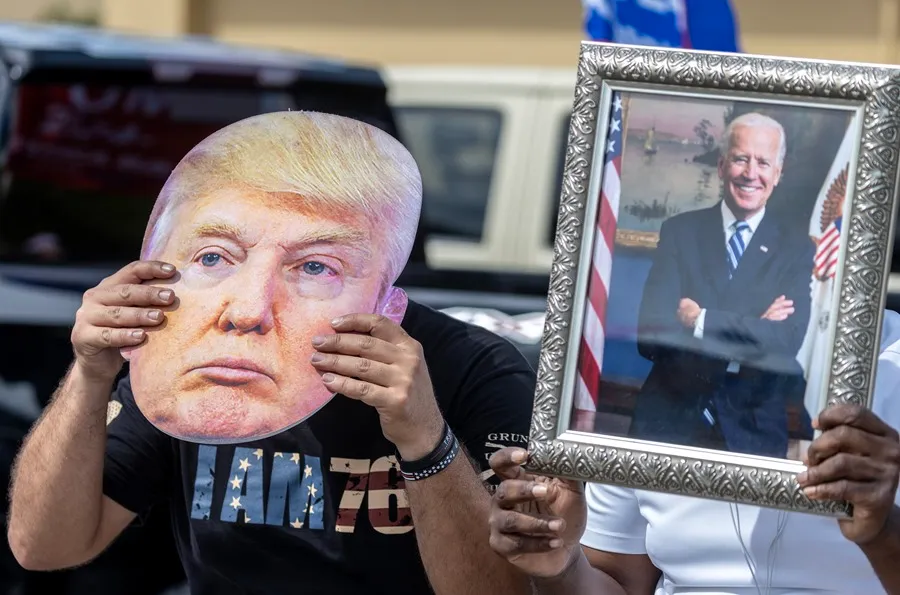
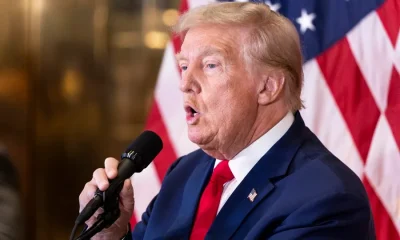
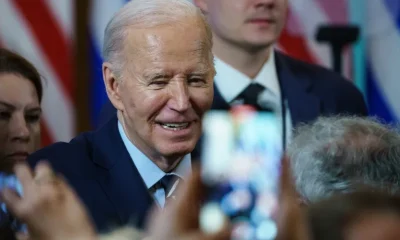
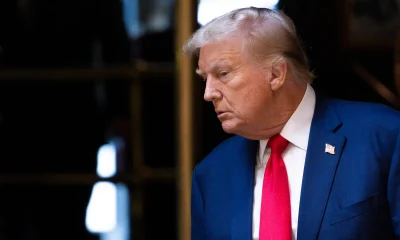
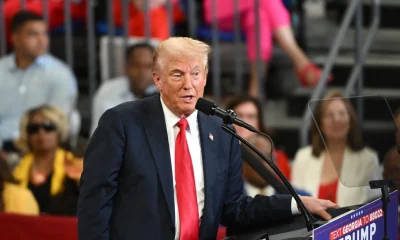
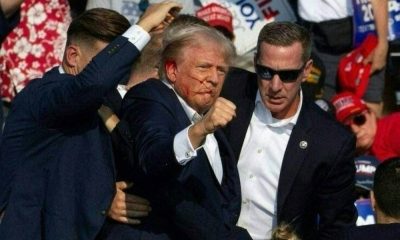
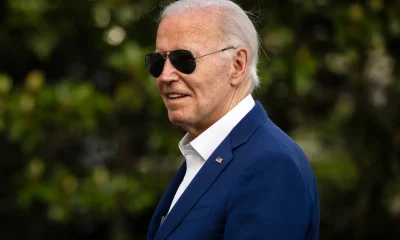
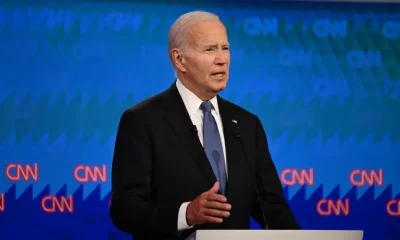
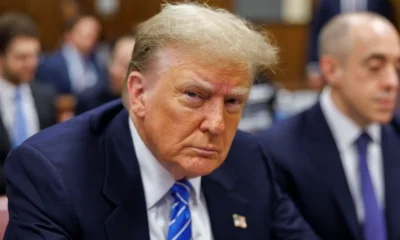
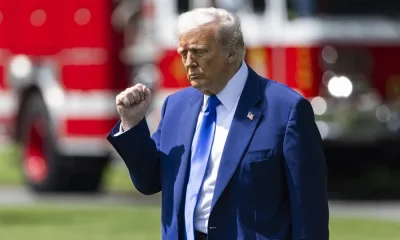
US President Joe Biden cut the lead of former President Donald Trump (2017-2021) to two percentage points in the face of next November’s presidential elections, at a time when the majority of voters express negative opinions about both opponents.
According to the NBC News poll released this Sunday, Biden cuts Trump’s previous advantage to only two points (44%-46%) in this contest, an improvement over last January’s poll, when the difference was five percentage points (42%-47%) in favor of Trump.
In this close face-to-face fought between Biden and Trump, the proportion of those who say they have a great interest in the presidential race has reached its lowest level in almost 20 years, with only 64% of registered voters with a high interest in the elections.
This is a significantly lower figure than that collected by NBC News at this time in the presidential contests of 2008 (74%), 2012 (67%), 2016 (69%) and 2020 (77%).
The survey was carried out from April 12 to 16, at a very turbulent moment in US politics, coinciding with the beginning of the criminal trial of Trump in New York, as well as new attacks and intensified tensions in the Middle East.
Advertisement
20260224_estafa_mh_728x90
20260212_constancia_pagos_mh_728x90
20250701_dengue_728x90
20250901_vacunacion_vsr-728x90
20250901_minsal_tetra_-728x90
20250701_vacunacion-influenza-728x90
20250701_vacunacion_vph-728x90
20250715_donacion_sangre_central_728x90
20231124_etesal_728x90_1
20230601_agenda_primera_infancia_728X90
domfuturo_netview-728x90
20240604_dom_728x90
CEL
While Biden, 81, surpasses Trump, 77, in issues related to the right to abortion and the unification of the country, the former Republican president is ahead in terms of competition and inflation management.
This latest nationwide survey by the NBC News channel finds that inflation and immigration top the list of the most important problems facing the country, while only a third of voters give credit to Biden for an improvement in the economy.
Democratic pollster Jeff Horwitt, of Hart Research Associates, who conducted the poll together with Republican Bill McInturff, of Public Opinion Strategies, said that “Americans do not agree much these days, but nothing unites the country more than the desire to stop paying attention to these elections.”
The survey shows that the two candidates are essentially tied between independent voters (Biden 36%, Trump 34%) and among those between the ages of 18 and 34 (Biden 44%, Trump 43%).
“One of the great mysteries of the polls of this cycle is whether young voters have defected from Biden,” or whether the Democrats have maintained their advantage among this demographic group, the poll points out.
Advertisement
20260224_estafa_mh_728x90
20260212_constancia_pagos_mh_728x90
20250701_dengue_728x90
20250901_vacunacion_vsr-728x90
20250901_minsal_tetra_-728x90
20250701_vacunacion-influenza-728x90
20250701_vacunacion_vph-728x90
20250715_donacion_sangre_central_728x90
20231124_etesal_728x90_1
20230601_agenda_primera_infancia_728X90
domfuturo_netview-728x90
20240604_dom_728x90
CEL
In this context, the survey highlights how the low interest of voters and the independent candidacy of Robert F. Kennedy Jr. “potentially complicate what has been a stable presidential contest more than six months before election day.”
While Trump has a two-percentage-point advantage over Biden in the direct confrontation, the Democratic president leads the former Republican president by two points (39% -37%) in a vote between five candidates that includes Kennedy (13%) and other candidates from third parties.
FBI Warns of Possible Iranian Drone Attack on U.S. West Coast
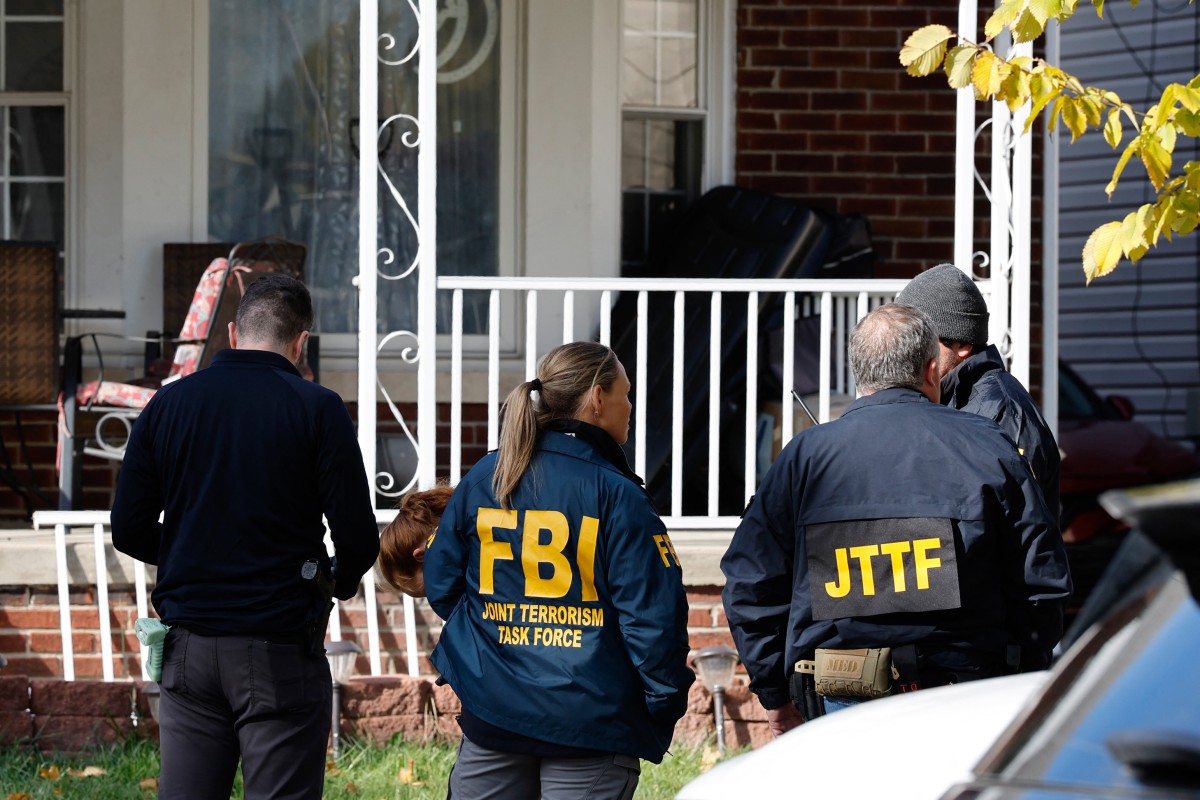
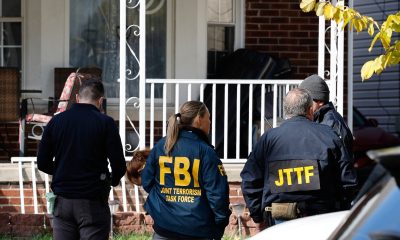
The Federal Bureau of Investigation (FBI) has warned police departments in California about a possible Iranian plan to carry out a drone attack against the west coast of the United States, according to a report published Wednesday by ABC News.
The warning was issued through a memorandum sent to agencies participating in a Joint Terrorism Task Force, outlining the possibility of a surprise attack involving unmanned aerial vehicles launched from a vessel off the U.S. coastline.
According to the document, intelligence suggested that in early February 2026 Iran may have considered an attack against unspecified targets in California if the United States carried out airstrikes on Iranian territory.
However, the memo also noted that authorities lack additional details about the timing, method, specific targets, or individuals responsible for the alleged plan.
Reports cited by U.S. media indicate that the alert coincided with the start of a military offensive by the administration of Donald Trump against the Iran, a development that has heightened tensions across the Middle East.
Advertisement
20260224_estafa_mh_728x90
20260212_constancia_pagos_mh_728x90
20250701_dengue_728x90
20250901_vacunacion_vsr-728x90
20250901_minsal_tetra_-728x90
20250701_vacunacion-influenza-728x90
20250701_vacunacion_vph-728x90
20250715_donacion_sangre_central_728x90
20231124_etesal_728x90_1
20230601_agenda_primera_infancia_728X90
domfuturo_netview-728x90
20240604_dom_728x90
CEL
Law enforcement sources with counterterrorism experience told the Los Angeles Times that the warning is part of a routine precautionary advisory based on information from the U.S. Coast Guard.
The sources emphasized that there is no credible indication of an imminent attack and no evidence that Iran currently has the capability to successfully carry out such an operation.
California is home to the largest Iranian community in the United States. According to the Migration Policy Institute, more than half of Iranian immigrants in the country lived in the state in 2019, including around 140,000 people in Los Angeles County alone.
The city also hosts a neighborhood widely known as “Tehrangeles,” where a large Iranian community began settling in the 1960s and continued to grow following the Iranian Revolution.
Trump Says Iran Is Welcome at 2026 World Cup but Warns of Security Concerns
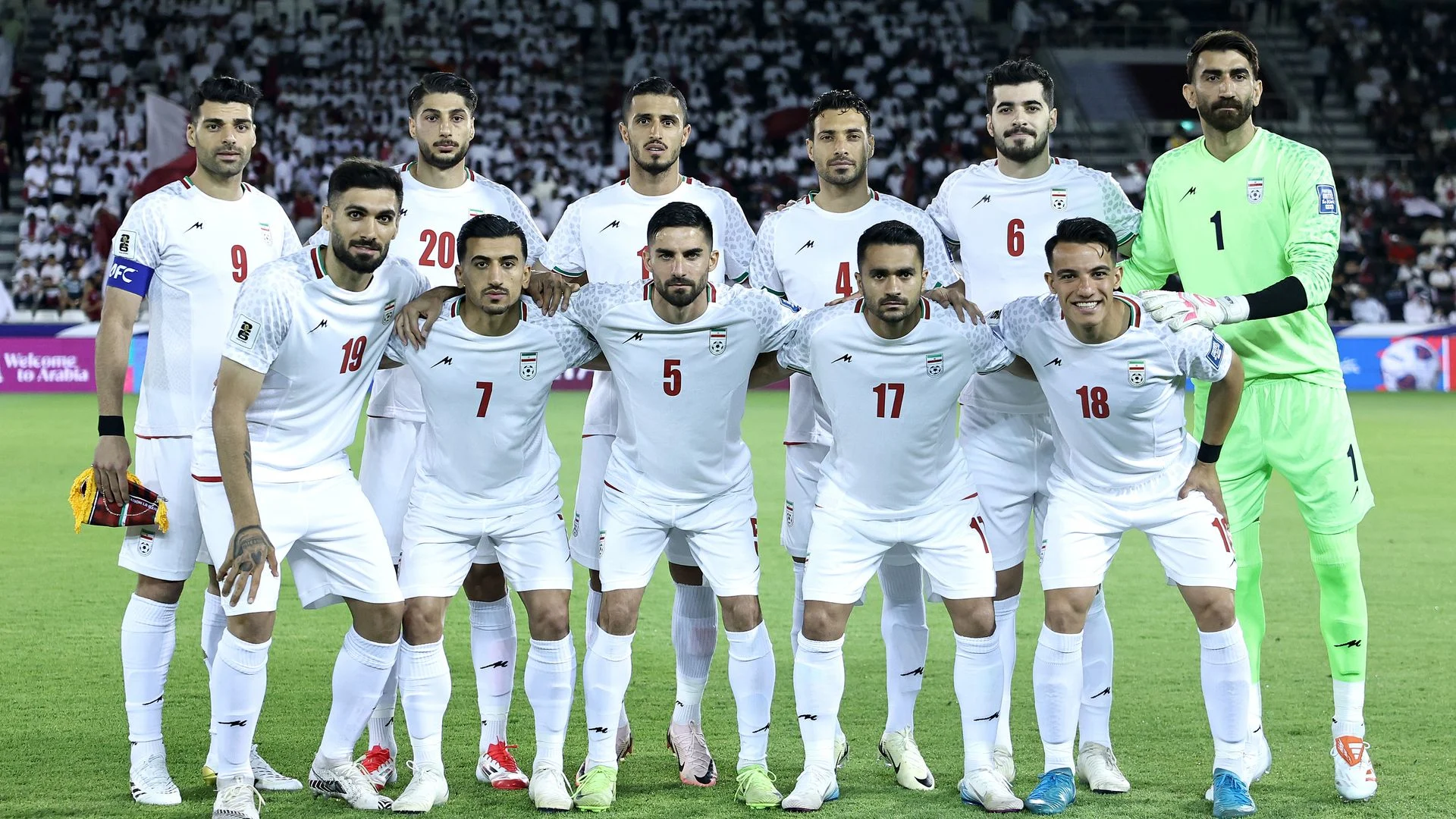
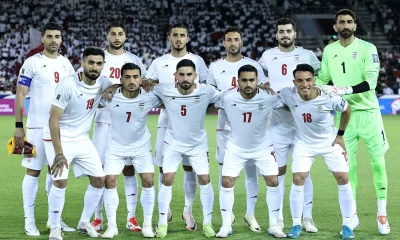
The President of the United States, Donald Trump, said Thursday that the national football team of Iran is “welcome” to participate in the 2026 World Cup, although he suggested it might be safer for the team not to take part in the tournament.
“The Iranian national soccer team is welcome at the World Cup, but I really don’t think it’s appropriate for them to be there, for their own safety,” Trump wrote on his social media platform Truth Social.
His comments came a day after Iran’s sports minister, Ahman Donyamali, said that there are currently no conditions for the country to participate in the tournament following the killing of Iran’s Supreme Leader, Ali Khamenei, during a military offensive launched on February 28 by Israel and the United States.
“After the corrupt government killed our leader, there are no conditions that allow us to take part in the World Cup,” the Iranian official said. He added that the country has faced two wars in the past eight or nine months, resulting in thousands of civilian deaths, making participation in the tournament unlikely.
On Tuesday, the president of FIFA, Gianni Infantino, met with Trump at the White House.
Advertisement
20260224_estafa_mh_728x90
20260212_constancia_pagos_mh_728x90
20250701_dengue_728x90
20250901_vacunacion_vsr-728x90
20250901_minsal_tetra_-728x90
20250701_vacunacion-influenza-728x90
20250701_vacunacion_vph-728x90
20250715_donacion_sangre_central_728x90
20231124_etesal_728x90_1
20230601_agenda_primera_infancia_728X90
domfuturo_netview-728x90
20240604_dom_728x90
CEL
Following the meeting, Infantino said that Trump reiterated that Iran’s national team would be allowed to compete in the FIFA World Cup 2026.
“We discussed the current situation in Iran and the fact that the Iranian team has qualified to participate in the FIFA World Cup 2026. During the conversation, President Trump reiterated that the Iranian team is, of course, welcome to compete in the tournament in the United States,” Infantino wrote on Instagram.
Iran issues threat to Trump as conflict escalates over Strait of Hormuz
The head of Iran’s Supreme National Security Council, Ali Larijani, threatened U.S. President Donald Trump on Tuesday, warning him to “beware of being eliminated.”
The Republican president had warned on Monday that he would strike Iran “very hard” if the Islamic Republic blocked oil shipments through the Strait of Hormuz, which has effectively been closed since the war began eleven days ago.
“Iran is not afraid of your empty threats. Others more powerful than you tried to destroy the Iranian nation and failed. Beware that you are not eliminated,” Larijani wrote on X.
Earlier, Iran’s Revolutionary Guards — the ideological military force of the Islamic Republic — also said their forces would move to block oil exports from the Gulf.
Meanwhile, Israeli Prime Minister Benjamin Netanyahu said Israel’s military offensive against Iran is far from over.
Advertisement
20260224_estafa_mh_728x90
20260212_constancia_pagos_mh_728x90
20250701_dengue_728x90
20250901_vacunacion_vsr-728x90
20250901_minsal_tetra_-728x90
20250701_vacunacion-influenza-728x90
20250701_vacunacion_vph-728x90
20250715_donacion_sangre_central_728x90
20231124_etesal_728x90_1
20230601_agenda_primera_infancia_728X90
domfuturo_netview-728x90
20240604_dom_728x90
CEL
“Our aspiration is that the Iranian people free themselves from the yoke of tyranny; ultimately, that depends on them. But there is no doubt that with the measures taken so far we are breaking their bones, and we are not finished yet,” Netanyahu said in a statement.