
International
Russia and NATO, the antagonism that can lead to direct confrontation
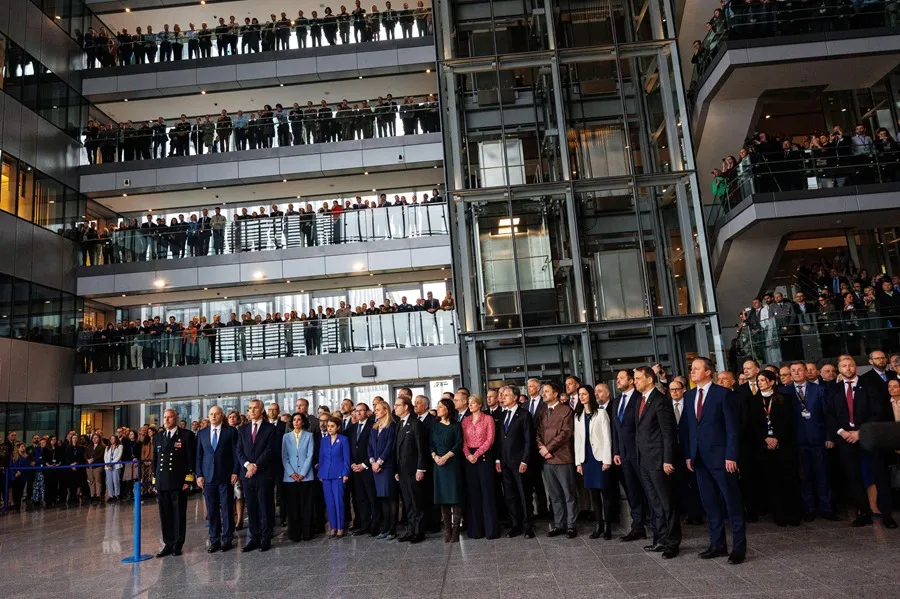
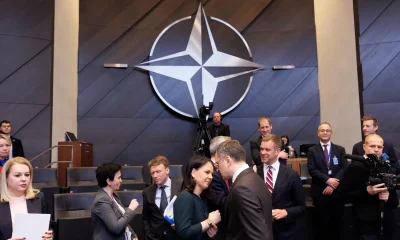
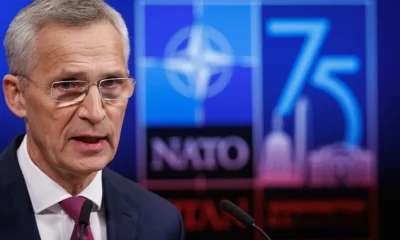
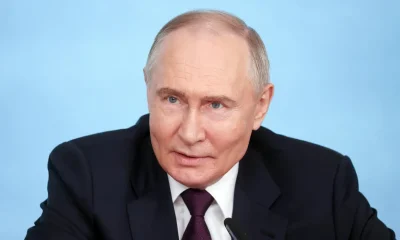
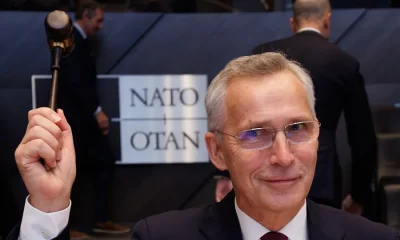
The Kremlin warned today on the 75th anniversary of NATO that relations between Russia and the Western bloc are on the verge of “direct confrontation” due to the involvement of the allied countries in the war in Ukraine.
“Relationships, practically, have now led to a level of direct confrontation,” said Dmitri Peskov, presidential spokesman, at his daily telephone press conference.
The antagonism between Moscow and the Alliance has experienced very tense moments since 1949, both in the times of the Soviet Union – construction of the Berlin Wall, Cuban Crisis, invasion of Czechoslovakia and Afghanistan – and with the Russian Federation since 1991 (bombing of Yugoslavia and the war with Georgia).
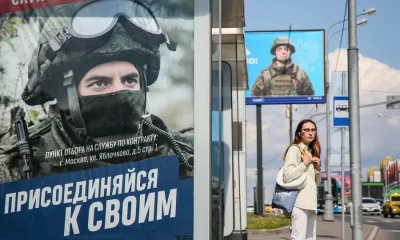
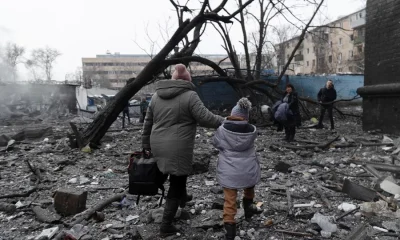
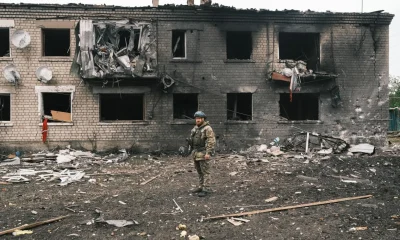
But the tension has reached unsuspected limits since Russia started the military campaign in Ukraine in February 2022, a conflict that has strengthened NATO, something that took the Kremlin on guard off guard.
“NATO continues to demonstrate its essence, since NATO was conceived as an alliance, configured, created and directed by the United States as an instrument of confrontation, especially on the European continent. And, in this regard, it continues to fulfill its function,” said the presidential spokesman.
Peskov assured that this block “at the present time does not contribute in any case to the security, predictability and stability of security on the continent.”











“Contrary, it is a destabilizing factor,” he said.
In addition, he accused the allies of continuing their approach and reinforcing the presence of their military infrastructure near the Russian border, one of the arguments used at the time by Moscow to invade the neighboring country.
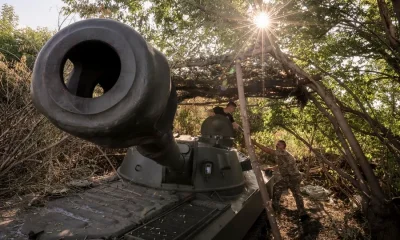
The Kremlin has been accusing NATO of participating “directly” in the war in Ukraine for months by supplying huge amounts of weapons to Kiev, which, according to Moscow, will not prevent its victory and will only prolong the conflict.
“The NATO countries, the Alliance itself, is not that it is constantly increasing (their presence), but that it has already been involved in the conflict in Ukraine,” Peskov said.
In turn, Moscow has condemned the comments of some European leaders – specifically, the French President, Emmanuel Macron – on the possible sending of troops to Ukraine, something that the White House has totally ruled out.
In fact, the Kremlin today denied “plans to make contacts at the highest level,” in particular with Macron.
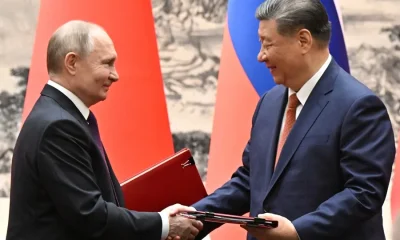
“President Vladimir Putin remains open to dialogue with those who express an interest in developing relations with our country,” said Peskov, who reiterated that the president “always” is willing to sit down and negotiate “to solve the most complex global and regional problems.”
At the same time, Russia has denied plans to attack NATO member countries and that it has “aggressive intentions” against Poland and the Baltics.
“Now they say that Ukraine is about to lose, which cannot be allowed, since as soon as Ukraine loses, Russia will attack NATO. Our president has already said it, ‘silly and nonsense,’” said Sergey Lavrov, Russian Foreign Minister.
That does not detract from the fact that the Baltics have decided to strengthen security and that Finland and Sweden, neutral countries with pragmatic relations with Moscow for decades, decided to join NATO.
That is considered Putin’s biggest miscalculation, since Russia now has 1,300 kilometers more border with the Alliance than before the war.
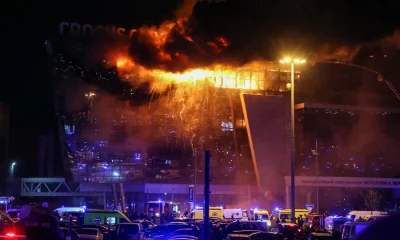
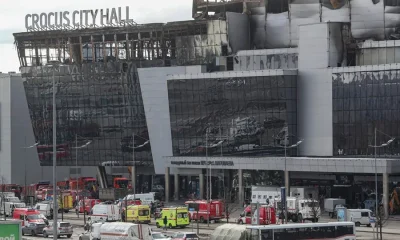
The brutal attack on March 22 against a concert hall on the outskirts of Moscow, which left 145 dead and highlighted the lack of foresight of the Russian security forces, has only exacerbated the tension.
The West warned about possible jihadist attacks two weeks in advance, warnings that were disqualified by Putin, who insists on the existence of a “Ukrainian print.”
“Russia behaves in such a way in the international arena that it can hardly be attacked by Islamic fundamentalists,” Putin said when meeting with the union members on Thursday.
The newspaper ‘The Washington Post’ reported that the United States even mentioned the Crocus City Hall as a possible target, news that was immediately branded as “disinformation” by Moscow.
“Today, Ukraine (…) has become an openly terrorist state,” Lavrov said.
Precisely, the defense ministers of Russia, Sergei Shoigu, and France, Sébastien Lecornu, addressed the fight against international terrorism on Wednesday in their first telephone conversation in a year and a half.
“France does not have any information that allows a link to be established between this attack and Ukraine. We ask Russia to stop manipulating,” said the official statement issued by Paris.




















































International
Portuguese Authorities Seize 2.6 Tons of Cocaine Worth More Than $550 Million in Drug Bust
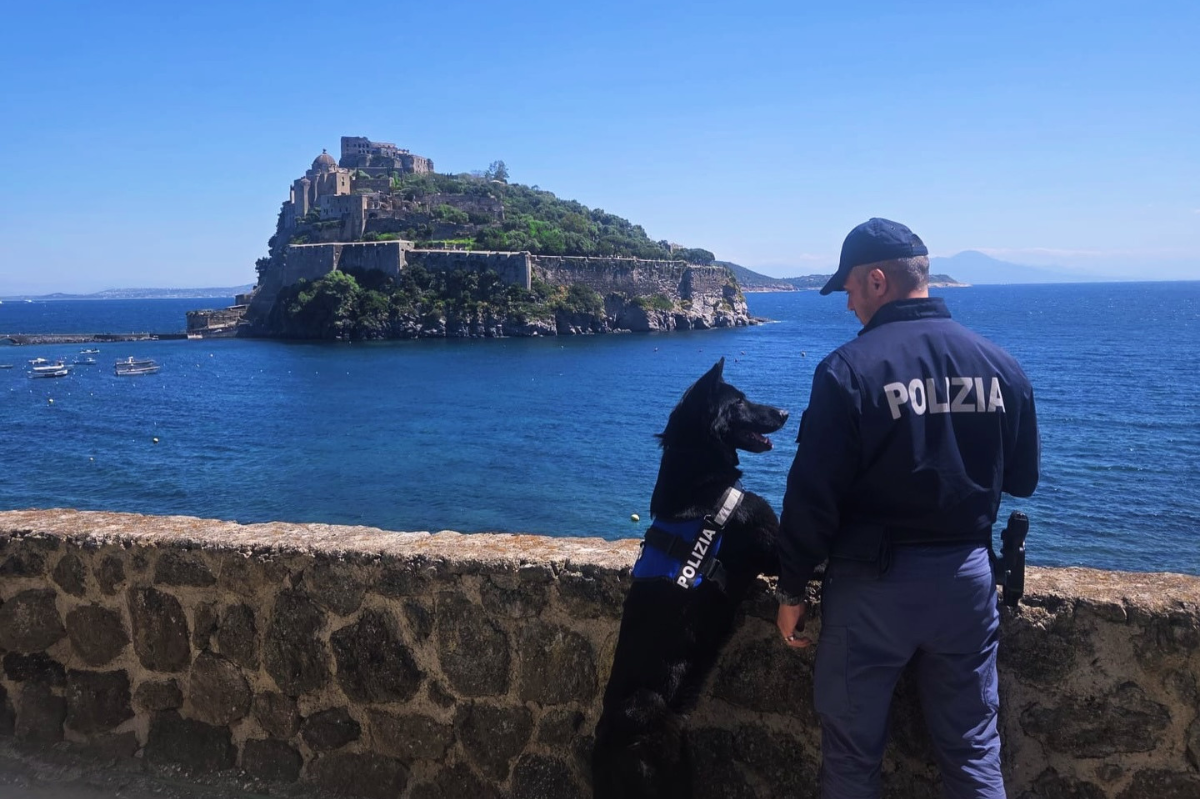
Italian financial police reported Monday that Portuguese authorities intercepted a speedboat carrying more than 2.6 tons of cocaine, with an estimated street value exceeding $550 million.
Four people — two Spanish nationals, one Albanian citizen, and a man from Gibraltar — were arrested in connection with the operation, according to Italian authorities.
The vessel was intercepted off the coast of Lisbon by Portugal’s maritime police following an investigation led by Italian authorities.
Italian financial police estimated that the seized shipment had a street value of approximately 500 million euros ($570 million), making it one of the largest drug seizures reported in the region in recent years.
Portuguese authorities said the interception took place on Thursday, about 90 kilometers (50 nautical miles) southwest of Cape Espichel, during an operation targeting international drug trafficking routes.
International
U.S. and Iran Maintain Ceasefire as Trump Expresses Optimism Over New Talks
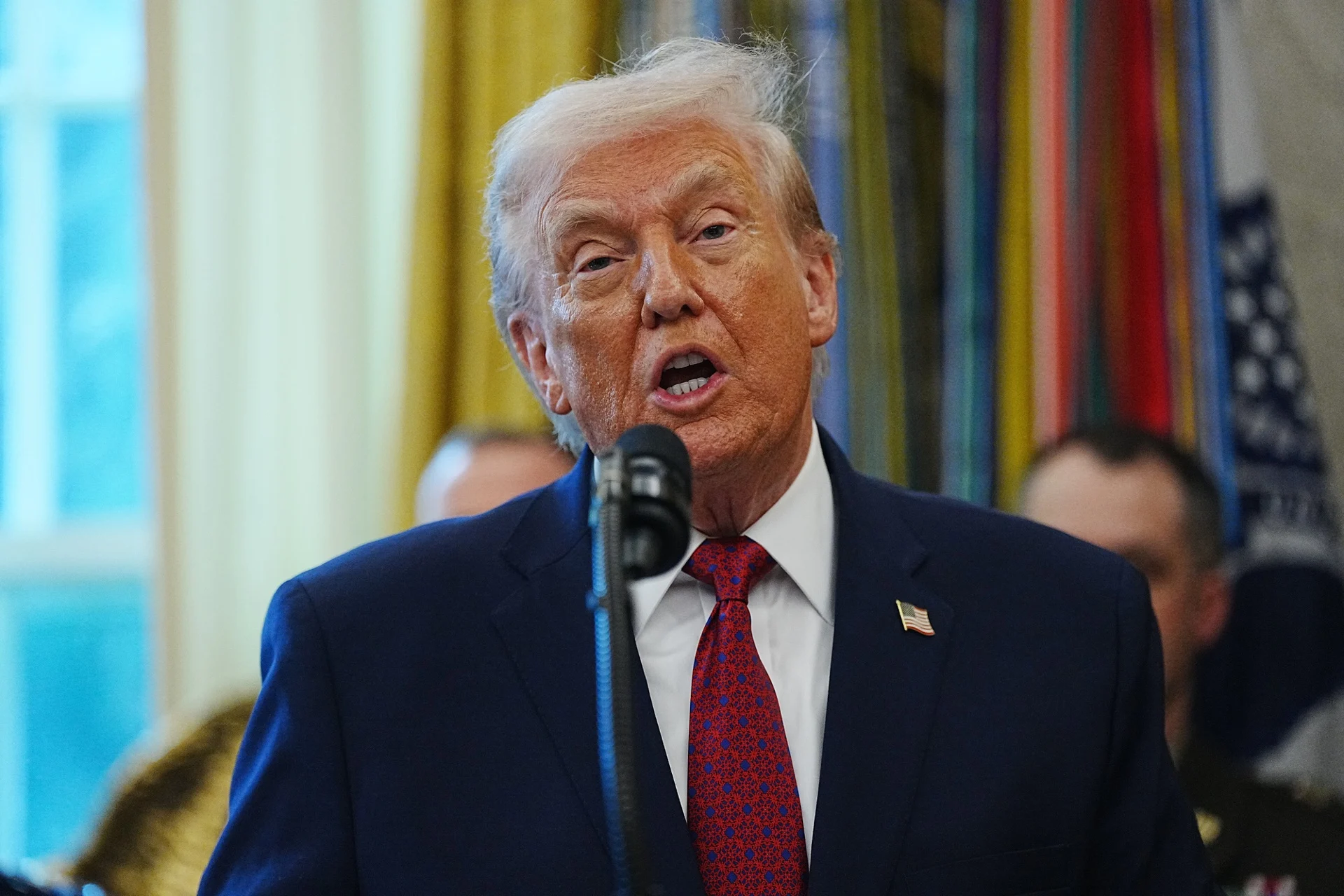
U.S. President Donald Trump said Monday that there are “good chances” of reaching an agreement with Iran, as both sides maintained a ceasefire for the third consecutive day following weeks of escalating hostilities.
Trump expressed optimism about the possibility of resuming diplomatic negotiations aimed at ending the conflict, which began in late February and has raised international concerns over its impact on global markets and energy supplies.
The fighting has remained suspended since Saturday, after the United States resumed airstrikes against Iran amid a dispute over control of the Strait of Hormuz, a key route for global oil shipments. The renewed military action had previously caused the collapse of an earlier ceasefire agreement.
Asked about the prospects for negotiations aboard Air Force One, Trump said: “I have a lot of patience… We’ll see what happens. I think there are good chances that something could happen.”
The U.S. president also highlighted Washington’s military capabilities, saying: “We have a lot of ammunition,” while adding that he would like to have more resources due to U.S. support for Ukraine.
U.S. Ambassador to the United Nations Mike Waltz said Trump was allowing diplomatic efforts more time, explaining that the president was “giving some space to the talks” while maintaining that Washington remains prepared to take action if necessary.
Meanwhile, tensions continue in other areas of the Middle East. Saudi Arabia reported that it intercepted drones launched from Iraq by groups allied with Tehran and urged the Iraqi government to take measures to prevent further attacks.
International
Police Investigate After Remains of Five Newborns Found in French Apartment

French authorities have opened a murder investigation after the discovery of human remains believed to belong to five newborn babies inside an apartment in the historic center of a city, the local prosecutor’s office reported Monday night.
According to prosecutors, a 32-year-old woman had given birth at home on Sunday to a healthy baby before being taken to a hospital for medical care.
The discovery was made after the woman’s 32-year-old partner began searching the residence after reportedly learning, once again and at a late stage, that she had been pregnant.
During the search, the man found what appeared to be human remains and informed the hospital, which then alerted prosecutors.
A forensic doctor determined that the remains likely belonged to five newborn infants. Authorities have not yet established the circumstances or motive behind the case.
Investigators have not been able to interview the mother, who remains hospitalized following the delivery.
Prosecutors also confirmed that the couple has two other children, aged eight and nine years old. The investigation remains ongoing as authorities work to clarify the events surrounding the discovery.


Portuguese Authorities Seize 2.6 Tons of Cocaine Worth More Than $550 Million in Drug Bust

U.S. and Iran Maintain Ceasefire as Trump Expresses Optimism Over New Talks

Police Investigate After Remains of Five Newborns Found in French Apartment
Tec de Monterrey honors one of its students for his contribution to nanotechnology in medicine

Defense Minister commends salvadoran soldier for Central American Cross Country victory

Extension of the state of emergency approved in southern Chile
-

 International5 days ago
Wildfires in France Burn Nearly Three Times More Land Than in 2025, Interior Minister Says
-
 International23 hours ago
U.S. and Iran Maintain Ceasefire as Trump Expresses Optimism Over New Talks
-
 International23 hours ago
Police Investigate After Remains of Five Newborns Found in French Apartment
-
 International5 days ago
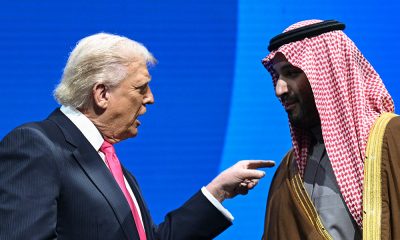
Israel Says Saudi Recognition Would Mark ‘Historic Breakthrough’ for Middle East Peace
-
 International23 hours ago
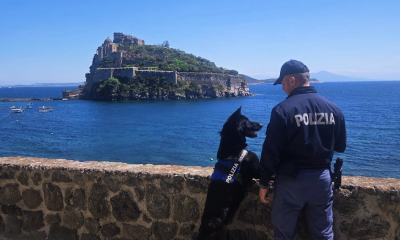
Portuguese Authorities Seize 2.6 Tons of Cocaine Worth More Than $550 Million in Drug Bust
-

 International2 days ago
Costa Rica Seeks to Expand Extradition Law to Target Organized Crime
-

 International2 days ago
China Accuses U.S. AI Firms of Using Chinese Models to Train Artificial Intelligence
-

 Central America2 days ago
EU Urges Nicaragua to Hold Free and Transparent Elections Amid Proposed Electoral Reforms
-

 International2 days ago
Three Killed, Four Injured in Shooting Near Seattle’s Space Needle