
International
Trump responds to López Obrador that he “won’t give him even 10 cents” for migration
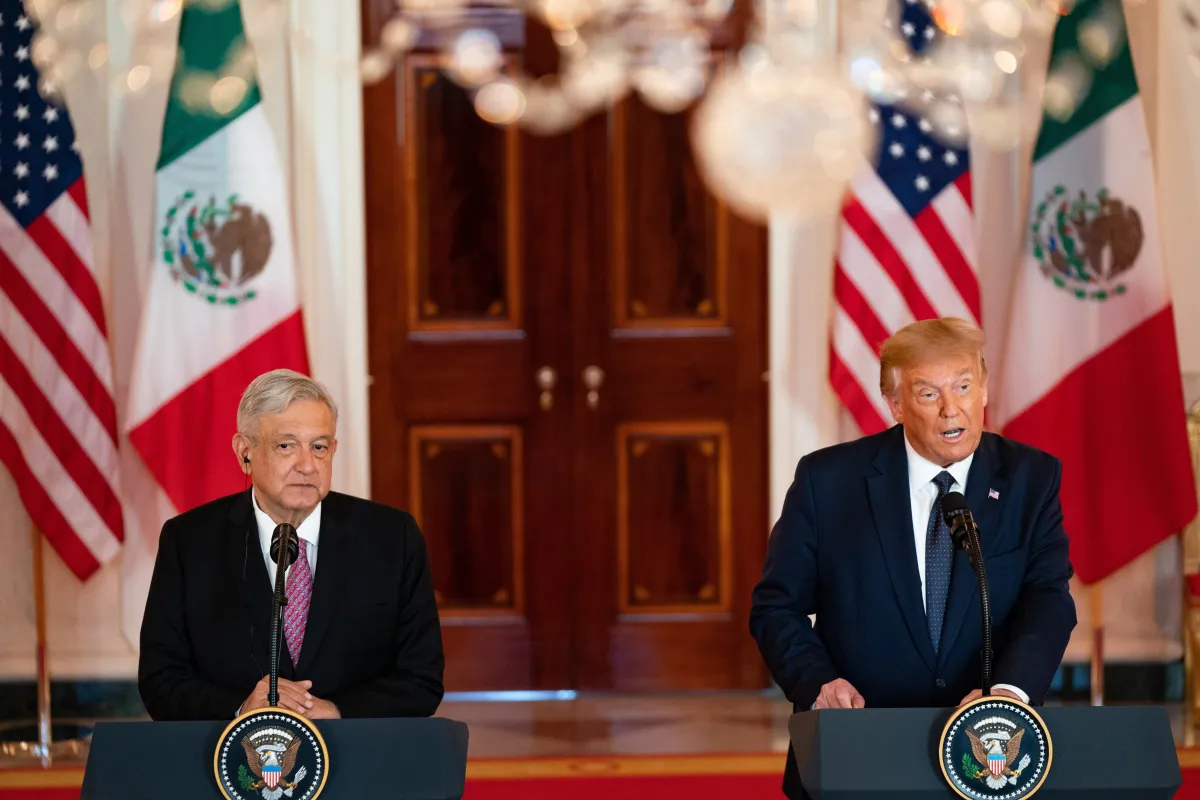
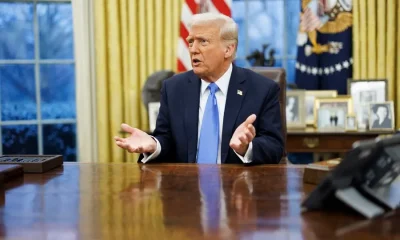
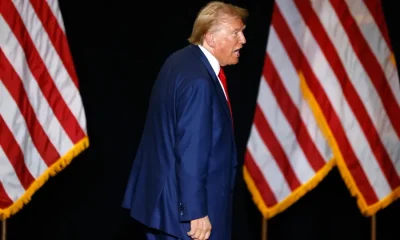
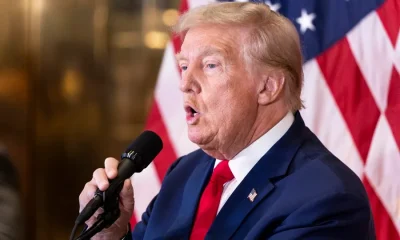
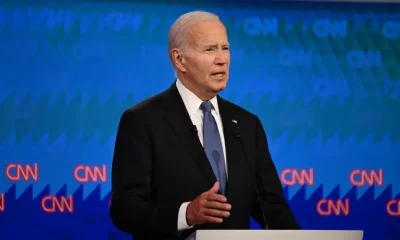
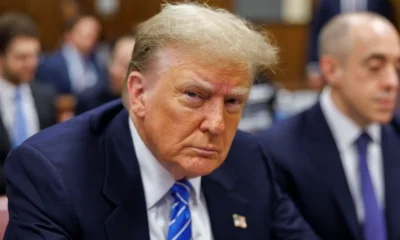
Former US President Donald Trump (2017-2021), future candidate of the Republican Party for the November elections, assured that he would not give even 10 cents for migration to the president of Mexico, Andrés Manuel López Obrador.
Trump made these statements during an interview with Fox News, in which he reacted to the comments made by López Obrador a week ago in an interview with CBS, where he asked the United States to invest $20 billion annually for the development of Latin America and thus reduce migration.
The tycoon rejected López Obrador’s requests and suggested that, if he were in the White House, the Mexican would not even have dared to make that request.
“They would never tell me that with me,” Trump said, adding: “I wouldn’t give him 10 cents.”
López Obrador has been asking the United States for years to invest billions of dollars in the development of impoverished countries in Latin America and the Caribbean, as a strategy to prevent their nationals from being forced to migrate to the north.









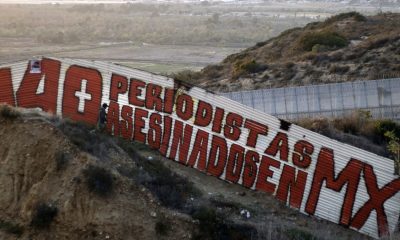
Meanwhile, Trump, who arrived at the White House in 2017 with the promise of building a wall on the border with Mexico, has adopted strong anti-immigration rhetoric at his campaign rallies.
He has gone so far as to affirm that foreigners “poison” U.S. blood and has proposed plans ranging from massive deportations to the construction of giant centers to detain undocumented migrants.
The president of Mexico was convinced in an interview with the American program ’60 Minutes’, broadcast on March 24, that Trump will not follow the construction of a wall on the southern border, to return to the White House, and that the wall also “does not work” to solve the current migratory chaos.
“The wall doesn’t work!” exclaimed the Mexican ruler, who believes that Trump would not raise it “because he needs Mexico.” “We understood each other very well. We signed a trade agreement that has been favorable for both peoples. He knows it. And President Biden too,” he said in the interview with ’60 Minutes’ correspondent Sharyn Alfonsi.
For López Obrador, the solution to the migration crisis on the southern border is because Washington commits to sending 20 billion dollars a year to the poorest countries in Latin America and the Caribbean and legalizes millions of law-abiding irregular Mexican immigrants based in the United States, among other conditions.



































































International
Trump Pushes for Regime Change in Cuba as Havana Confirms Talks With Washington
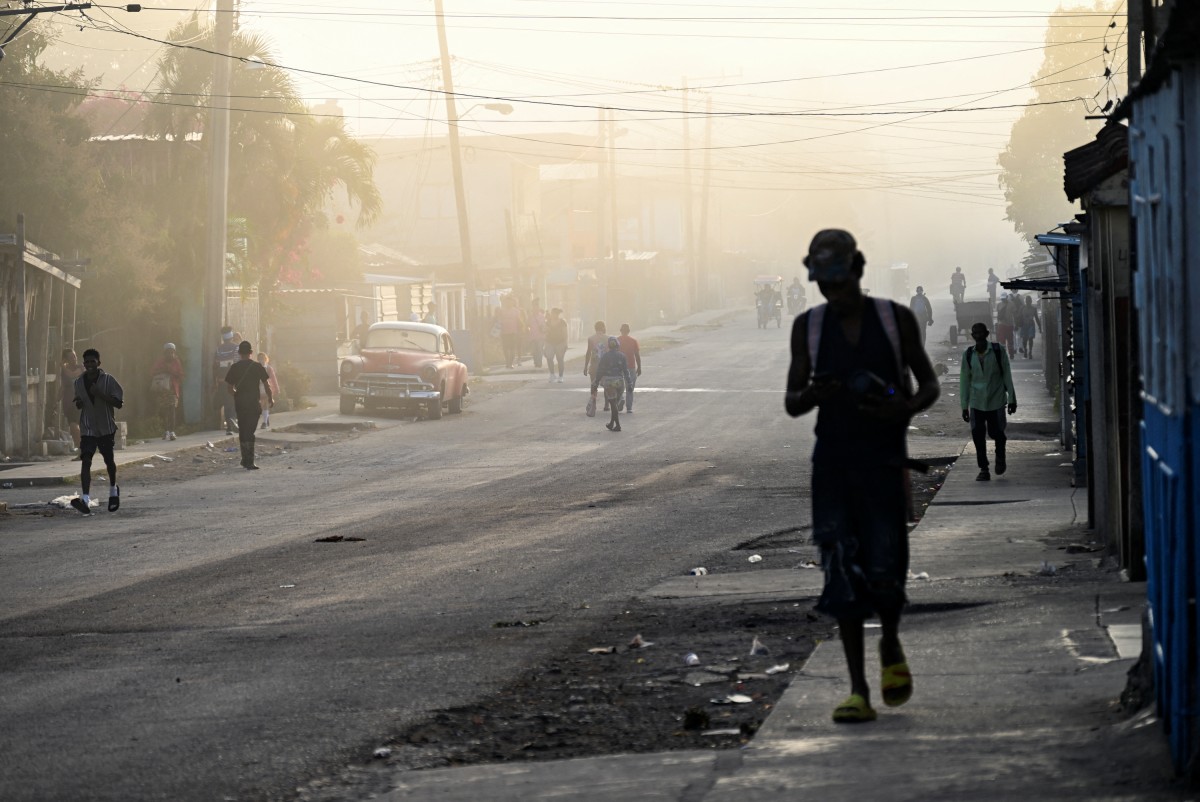
U.S. President Donald Trump has made no secret of his desire for political change in Cuba, located just 150 kilometers from the United States. Washington considers the island an “exceptional threat,” citing its close ties with Russia, Chinaand Iran, longtime allies of Havana.
Trump has urged Cuba to “reach a deal” with Washington or face consequences, as the island struggles with a severe energy crisis that has nearly paralyzed its economy after the United States cut oil shipments from Venezuela, its main fuel supplier. The U.S. has also warned other countries against selling fuel to Havana.
Cuban President Miguel Díaz-Canel confirmed that Cuban officials have recently held talks with representatives of the U.S. government. The statement came during a meeting with senior members of the ruling Communist Party of Cuba and the executive committee of the Council of Ministers, according to footage broadcast on Cuban television.
“These conversations have been aimed at seeking solutions through dialogue to the bilateral differences that exist between our two nations,” Díaz-Canel said.
Reports of intermediaries and possible negotiations
According to television images, among those attending the meeting was Raúl Guillermo Rodríguez Castro, grandson of former Cuban leader Raúl Castro. Although he holds no official government position, U.S. media have identified him as a possible interlocutor with U.S. Secretary of State Marco Rubio in what have been described as secret discussions between Washington and Havana.
For some Cubans, any potential agreement with Washington is viewed pragmatically. “As long as it benefits us, we can reach an agreement — but on our terms,” said Sergio Guerra, a 55-year-old agricultural vendor, speaking to AFP.
Díaz-Canel’s remarks confirm earlier statements by Trump, who indicated in January that his administration had already begun contacts with senior Cuban officials.
Mexico calls for diplomacy
Meanwhile, Mexico welcomed the possibility of dialogue after recently sending more than 2,000 tons of humanitarian aid to Cuba to help mitigate the crisis.
Mexican President Claudia Sheinbaum said her country would always promote peace and diplomatic dialogue, particularly in response to what she described as the long-standing injustice of the U.S. embargo on the Cuban people.
International
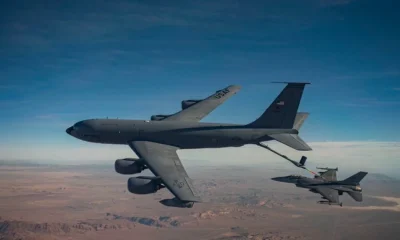
U.S. Confirms Death of Six Crew Members in KC-135 Crash in Western Iraq
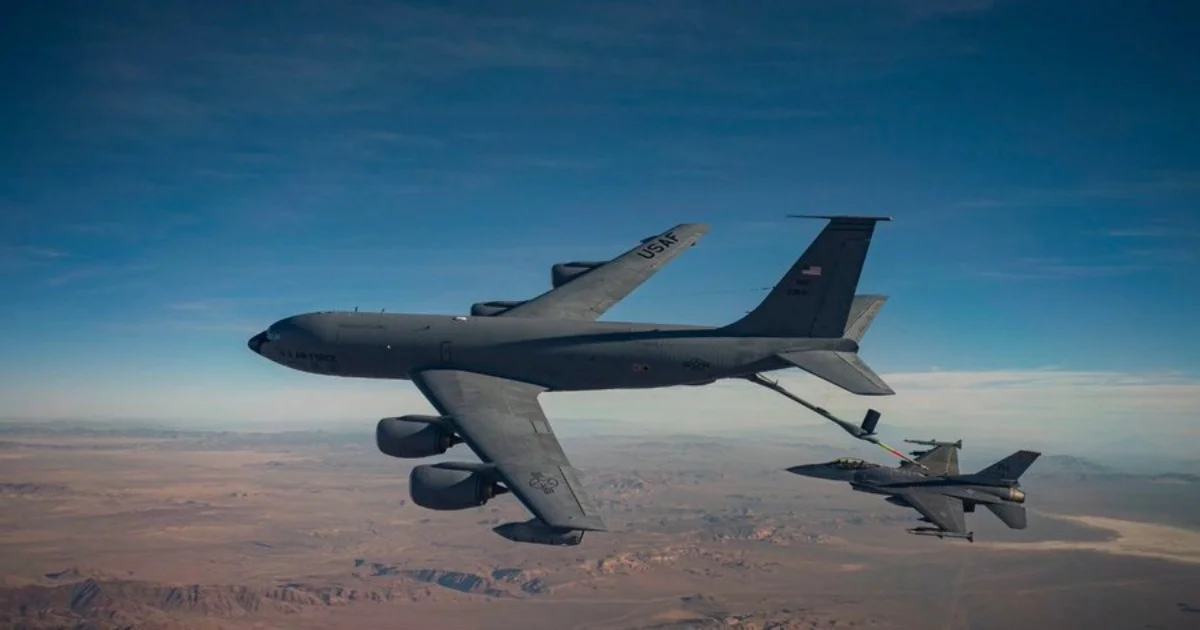
The United States confirmed on Friday that all six service members aboard a KC-135 refueling aircraft that crashed in western Iraq on Thursday have died, revising an earlier report that initially confirmed four fatalities.
The United States Central Command (CENTCOM), based in Florida, said the circumstances surrounding the incident remain under investigation, but stressed that the loss of the aircraft was not caused by enemy or friendly fire.
With the deaths of the six crew members — whose identities have not yet been released — the total number of U.S. military personnel killed since the start of the conflict with Iran on February 28 has risen to 14.
According to U.S. officials, seven soldiers were killed in direct Iranian attacks, one died due to a medical emergency in Kuwait, and the remaining casualties occurred in the aircraft crash in Iraq.
Conflicting claims about the crash
A pro-Iranian militia known as Islamic Resistance in Iraq claimed responsibility for shooting down the aircraft, saying its fighters targeted the tanker using air defense systems, causing it to crash.
The group later stated that it also attacked a second U.S. aircraft in western Iraq, which allegedly made an emergency landing at “one of the enemy’s airports,” while its crew escaped safely.
However, CENTCOM has rejected those claims and said it has no information confirming an attack on a second aircraft.
Iranian officials have also suggested that the tanker was struck by a missile fired by Iraqi armed groups, but the United States has not supported that assertion.
Second incident since conflict began
According to U.S. military reports, this is the second accident involving U.S. forces since the war began.
On Thursday, the aircraft carrier USS Gerald R. Ford — the largest in the U.S. fleet — experienced a fire on board, leaving two Marines injured. CENTCOM said the incident was not related to enemy action.
International
FBI Warns of Possible Iranian Drone Attack on U.S. West Coast

The Federal Bureau of Investigation (FBI) has warned police departments in California about a possible Iranian plan to carry out a drone attack against the west coast of the United States, according to a report published Wednesday by ABC News.
The warning was issued through a memorandum sent to agencies participating in a Joint Terrorism Task Force, outlining the possibility of a surprise attack involving unmanned aerial vehicles launched from a vessel off the U.S. coastline.
According to the document, intelligence suggested that in early February 2026 Iran may have considered an attack against unspecified targets in California if the United States carried out airstrikes on Iranian territory.
However, the memo also noted that authorities lack additional details about the timing, method, specific targets, or individuals responsible for the alleged plan.
Reports cited by U.S. media indicate that the alert coincided with the start of a military offensive by the administration of Donald Trump against the Iran, a development that has heightened tensions across the Middle East.
Law enforcement sources with counterterrorism experience told the Los Angeles Times that the warning is part of a routine precautionary advisory based on information from the U.S. Coast Guard.
The sources emphasized that there is no credible indication of an imminent attack and no evidence that Iran currently has the capability to successfully carry out such an operation.
California is home to the largest Iranian community in the United States. According to the Migration Policy Institute, more than half of Iranian immigrants in the country lived in the state in 2019, including around 140,000 people in Los Angeles County alone.
The city also hosts a neighborhood widely known as “Tehrangeles,” where a large Iranian community began settling in the 1960s and continued to grow following the Iranian Revolution.


Trump Pushes for Regime Change in Cuba as Havana Confirms Talks With Washington

U.S. Confirms Death of Six Crew Members in KC-135 Crash in Western Iraq

FBI Most Wanted Fugitive Arrested in Mexico and Deported to U.S.
Tec de Monterrey honors one of its students for his contribution to nanotechnology in medicine

Defense Minister commends salvadoran soldier for Central American Cross Country victory

Extension of the state of emergency approved in southern Chile
-
 International5 days ago
Mexico, Brazil and Colombia left out of Trump’s “Shield of the Americas” summit
-

 Central America3 days ago
Guatemala Remains in “Restricted” Press Freedom Category, Chapultepec Index Warns
-
 International3 days ago
Trump Raises Possibility of “Friendly Takeover” of Cuba Amid Deepening Crisis
-

 International2 days ago
Iran issues threat to Trump as conflict escalates over Strait of Hormuz
-

 International2 days ago
Driver detained after suspicious vehicle incident near the White House
-

 International19 hours ago
FBI Warns of Possible Iranian Drone Attack on U.S. West Coast
-

 International19 hours ago
Trump Says Iran Is Welcome at 2026 World Cup but Warns of Security Concerns
-

 Central America3 days ago
UN Report Warns of Nicaragua’s “Transnational” Surveillance Network Targeting Dissidents
-
 Sin categoría2 days ago
UN experts warn Nicaragua runs vast transnational network to monitor exiled dissidents
-

 Central America3 days ago
UN Rapporteur Warns of “Deep Crisis” in Guatemala’s Judicial System
-
 International15 minutes ago
U.S. Confirms Death of Six Crew Members in KC-135 Crash in Western Iraq
-
 Sin categoría19 hours ago
FBI Most Wanted Fugitive Arrested in Mexico and Deported to U.S.
-
 International9 minutes ago
Trump Pushes for Regime Change in Cuba as Havana Confirms Talks With Washington