
Central America
Guatemala: Volcano of Fuego activity increases
May 4 |
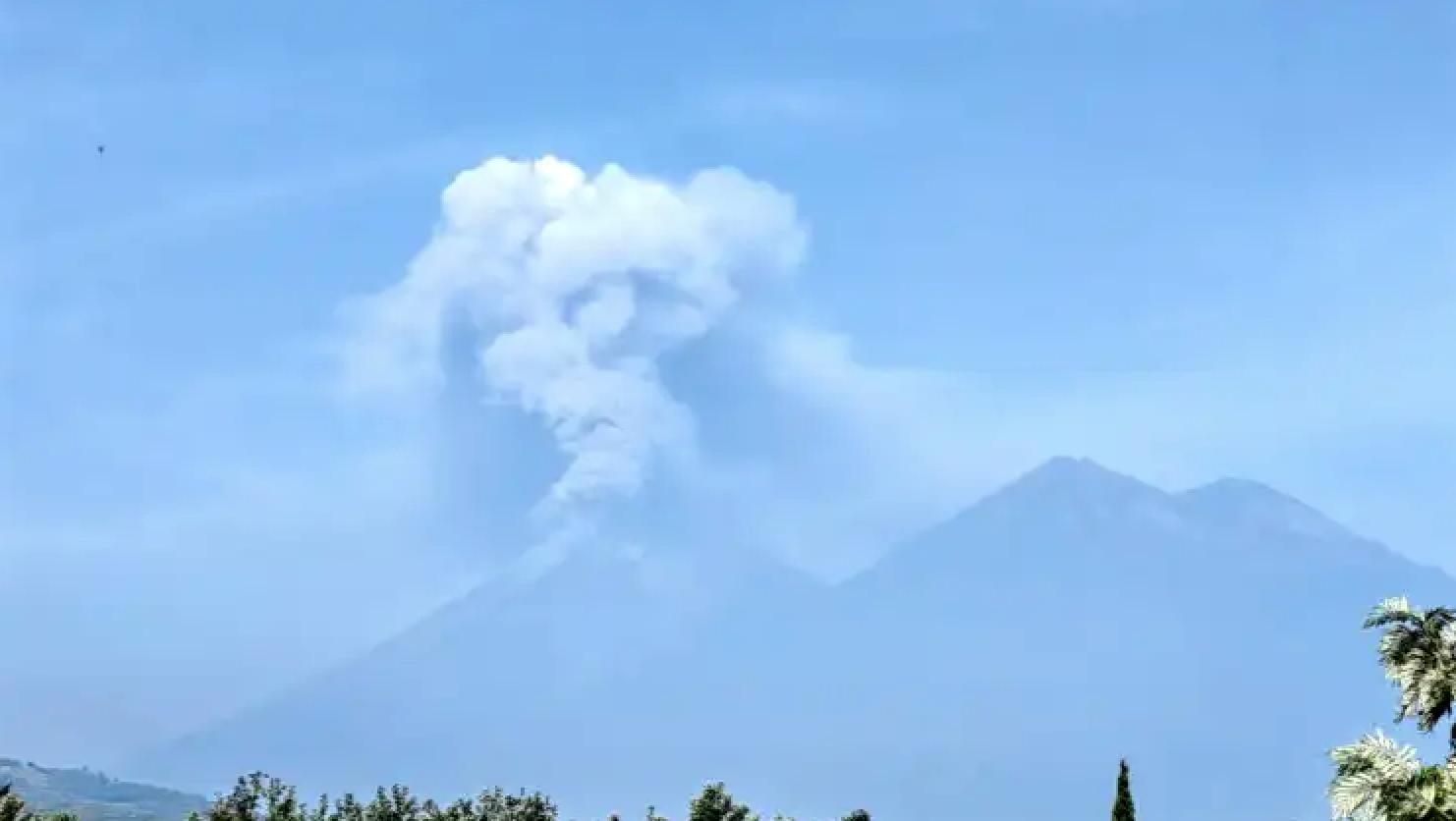
In the Special Volcanological Bulletin BEFGO #019-2023, issued at 5:10 a.m. Insivumeh details that the volcanic surveillance network and reports from Insivumeh field observers confirm a progressive increase in the volcanic activity of Volcán de Fuego as of 2:00 a.m. this Thursday.
“So far a new eruptive stage of predominantly effusive characteristics has been observed, which is expressed through the formation of a lava flow in the direction of the Ceniza ravine,” reads the bulletin.
It adds that the eruptions generate constant avalanches, incandescence over the crater and constant sounds are reported accompanying the gas and ash column that so far is dispersed in a southwest direction.
“This activity is expected to increase in the next minutes to hours, forming gas and ash columns of greater height, violent explosions loaded with ash, lava flows in other directions and pyroclastic flows towards the Ceniza and Las Lajas ravines, which may travel distances between 5 and 7 kilometers. It is not discarded that these flows also descend by any other ravine, so you should not stay near or within the ravines of the volcano,” it is mentioned.









According to Insivumeh, it maintains permanent visual and instrumental surveillance through seismic stations and OVFGO observers.
According to the SSG, during the early morning of May 4, an increase of activity in the Fuego volcano was observed through the Crelosa camera.
It points out that this activity has originated an accumulation of volcanic material in the direction of the Ceniza ravine, forming a lava flow in this area.
He adds that the activity persists “with moderate and strong explosions that generate ballistic fall, ash columns and rumblings that are sensitive to the population located in the surroundings of the volcano. Due to the constant activity, avalanches and pyroclastic flows may be generated in this and other directions”.
He points out that the ash dispersion, according to the wind direction record, shows ash displacement in a southwest direction. The maximum projected length according to wind speed is 8 km for deposits that can reach up to 10 mm in thickness and 30 km for those areas that can be affected by deposits of up to 1 mm.






Central America
Guatemala isolates Barrio 18 leader after attacks that killed 11 police
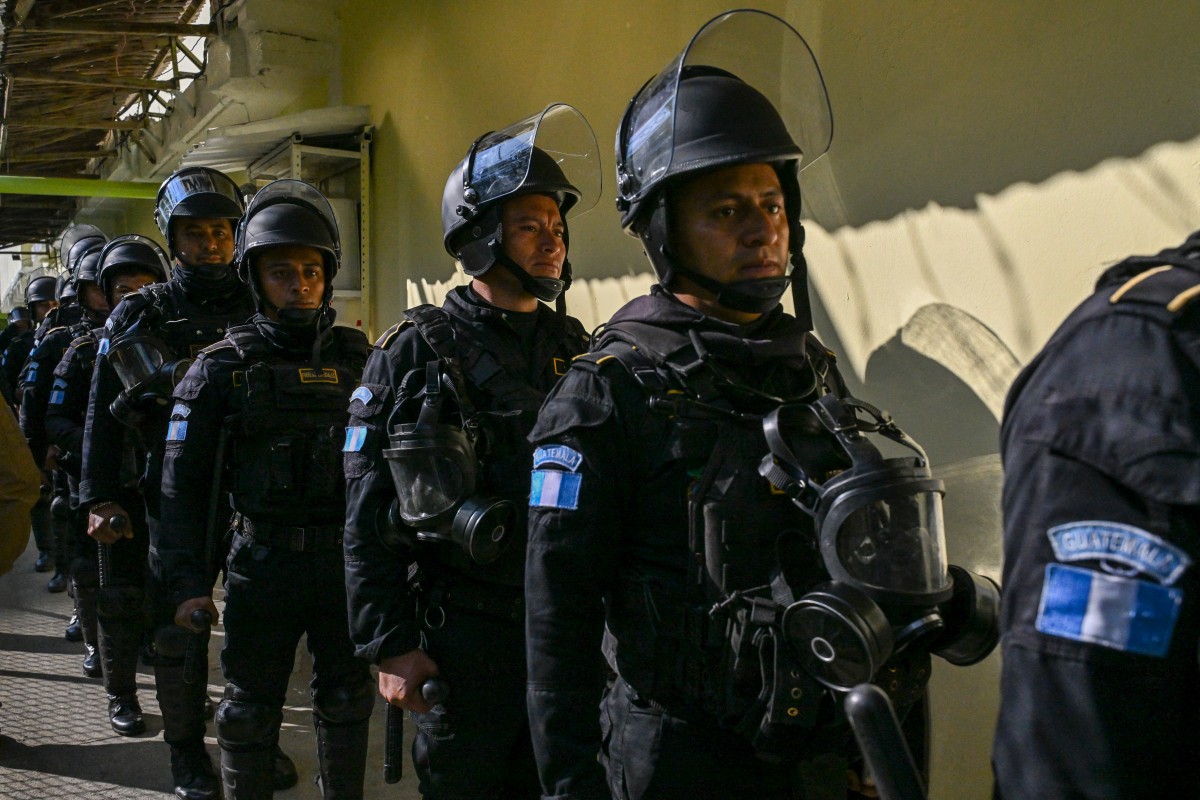
Guatemalan authorities have placed a leader of the Barrio 18 gang in an isolated cell without الكهرباء or “privileges” after he was accused of triggering a recent wave of violence that left 11 police officers dead, the government said on Sunday.
Members of Barrio 18, which is designated as a “terrorist” organization by both the United States and Guatemala, carried out the killings on January 18 in retaliation for the government’s takeover of three prisons that had been under the control of inmates linked to the group.
In response to the attacks, President Bernardo Arévalo declared a month-long state of siege, arguing that gang members were seeking better conditions in prison or transfers to lower-security facilities.
In a message posted on X alongside photographs, Arévalo announced the isolation of Aldo Dupie, also known as “El Lobo,” one of the gang leaders who allegedly directed the uprisings.
Images released by the government show Dupie inside a small cell with narrow windows, built from metal containers, in a secured area of the Renovación I prison in southern Guatemala — the same facility where the hostage-taking riot took place.
With a shaved head and a stern expression, the gang leader appears alone and in handcuffs, according to the photographs.
Guatemala’s prison system said the “new area,” protected by metal fencing and barbed wire, will house high-risk inmates who will remain without privileges or electricity.
Sports
Shakira ignites El Salvador with near sold-out residency at Mágico González Stadium
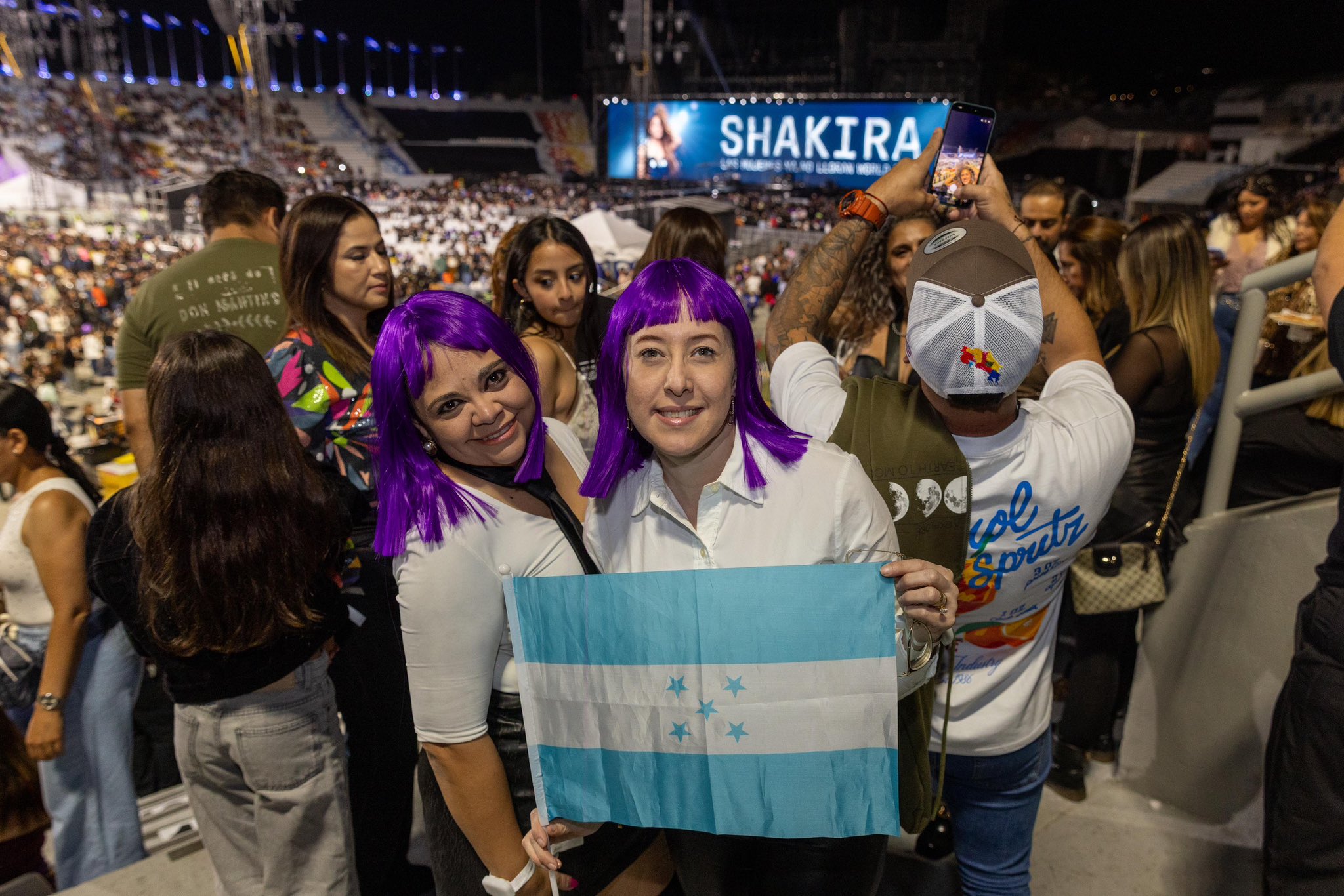
The recently renovated Jorge “Mágico” González Stadium is rolling out the red carpet for Colombian superstar Shakira, whose string of concerts has sold out almost entirely, confirming the powerful bond between the artist and Salvadoran fans.
The scale of the experience begins as soon as attendees arrive at the venue. Outside the stadium, organizers have installed several photo spots so concertgoers can capture a souvenir from the major event.
Fans attending the Las Mujeres Ya No Lloran World Tour will witness a top-tier visual production, where technology and robotic lighting effects will shape an atmosphere that shifts dramatically from one segment of the show to another — moving from the intensity of ’90s rock to the festive explosion of urban pop.
Security and crowd management have been top priorities, with a coordinated operation aimed at ensuring smooth entry and exit, allowing spectators to focus solely on enjoying hits that have defined generations.
Beyond the music, the event marks a milestone for the country’s live-entertainment industry, positioning El Salvador as a destination capable of hosting artist residencies once reserved for cities such as Las Vegas or London.
The excitement is already visible across the capital: hotels are at full capacity and local businesses are riding the wave of enthusiasm sparked by the latest songs from the Colombian star.
Central America
Salvadoran fans plan birthday surprise for Shakira at historic show
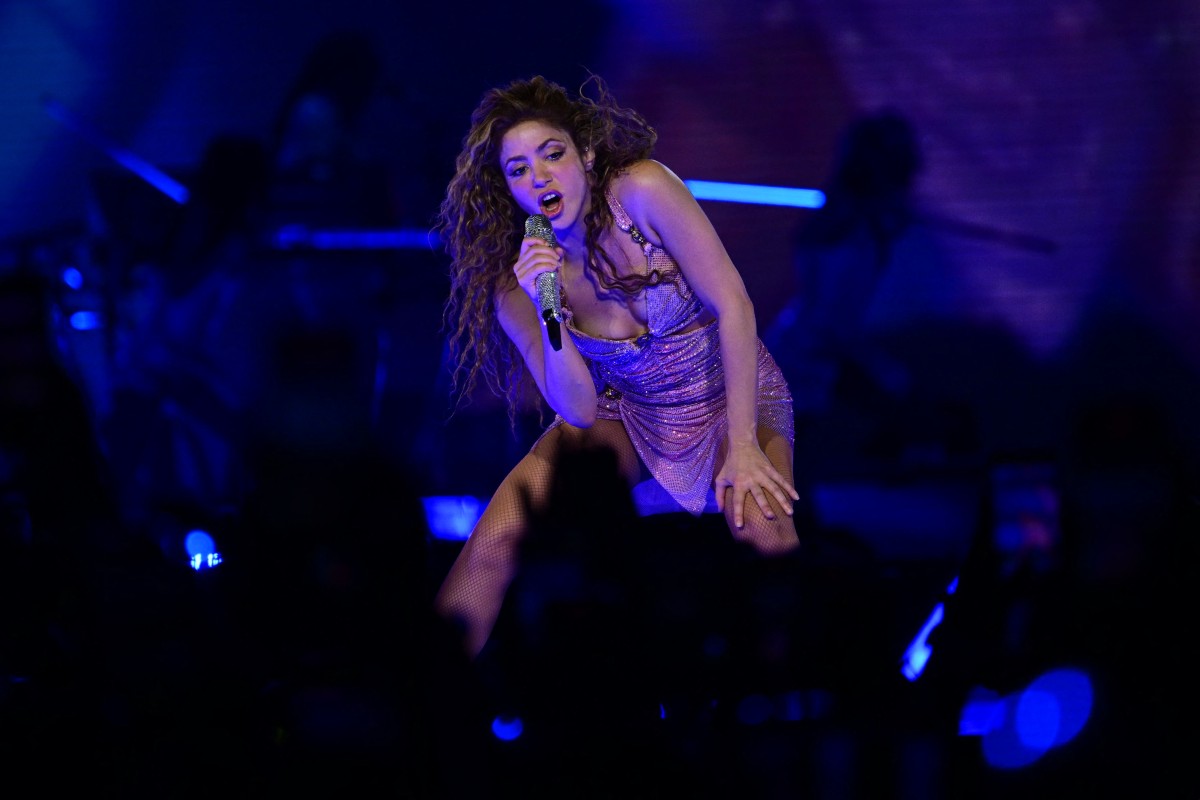
The president of Shakira’s Fan Club in El Salvador was interviewed by Diario El Salvador on Saturday as she made her way to her entrance gate at Jorge “Mágico” González Stadium, ahead of the historic concert the Colombian superstar is set to perform in the country.
Before the first of the five shows that make up Shakira’s Salvadoran residency, the fan leader revealed that supporters had prepared a special surprise for the singer, who turned 49 on February 2.
“Today I’m here around the stadium with the props we made for her celebration, with postcards and her songs. We also have kits ready to sing ‘happy birthday’ to our She Wolf,” she said.
She explained that the group used social media to ask fans seated in the Ultra Platinum and Platinum sections to find them and pick up birthday pennants, party headbands, balloons and whistles. The idea is to sing “happy birthday” while Shakira introduces her band, offering what they describe as a special Central American welcome.
“For me, she has been a megastar since the first time I saw her in 1996. I saw her again in 2006, here at the stadium. Last year we traveled to Colombia three times to see her, and today I’m beyond excited that she chose El Salvador,” the fan said.
She added that visitors from across Central America and other countries have traveled for the concerts and will also have the opportunity to discover the country. “I’m very excited about everything she makes us feel,” she said.

Guatemala isolates Barrio 18 leader after attacks that killed 11 police

Shakira ignites El Salvador with near sold-out residency at Mágico González Stadium

Salvadoran fans plan birthday surprise for Shakira at historic show
Tec de Monterrey honors one of its students for his contribution to nanotechnology in medicine

Defense Minister commends salvadoran soldier for Central American Cross Country victory

Extension of the state of emergency approved in southern Chile
-

 International5 days ago
Delcy Rodríguez Takes Control of Chavismo as Venezuela Enters a U.S.-Supervised Transition
-
 Central America4 days ago
Panama Will Not Be Threatened, President Says Amid Rising Tensions With China
-

 International5 days ago
HRW Warns Trump’s Influence Has Weakened Human Rights in Latin America
-
 International4 days ago
Díaz-Canel Calls for Talks With Washington Without Pressure as U.S. Tightens Oil Sanctions
-
 International3 days ago
Colombia to Send High-Level Delegation to Ecuador to Ease Trade Tensions
-
 International4 days ago
Venezuela Debates Broad Amnesty Law Covering 27 Years of Chavismo
-
 Central America2 days ago
Salvadoran fans plan birthday surprise for Shakira at historic show
-

 Central America4 days ago
Bukele’s Approval Rating Climbs to 91.9% in El Salvador, Survey Shows
-
 Central America16 hours ago
Guatemala isolates Barrio 18 leader after attacks that killed 11 police
-
 Sports1 day ago
Shakira ignites El Salvador with near sold-out residency at Mágico González Stadium
-

 International3 days ago
Super Bowl Halftime Show Puts Bad Bunny—and Immigration Politics—Back in the Spotlight