
International
U.S. authorities say new Ohio train derailment poses no public risk

March 6th |
Ohio authorities say there is no indication of any public health risk from the derailment of a Norfolk Southern freight train between Dayton and Columbus, the second company train derailment in the state in a month.
Norfolk Southern and Clark County officials say 28 of the southbound train’s 212 cars, including four empty tanker trucks, derailed about 4:45 p.m. Saturday in Springfield Township, near a business park and the county fairgrounds. Springfield is about 46 miles (74 kilometers) west of the state capital of Columbus.
As a precautionary measure, residents living within 1,000 feet (305 meters) were asked to shelter in place and responding firefighters deployed the county’s hazardous materials team as a precautionary measure, but authorities said early Sunday that there was “no indication of injury or public health risk at this time.”
A team from Norfolk Southern, the hazardous materials team and the Ohio Environmental Protection Agency “each independently examined the accident site and verified that there was no evidence of spills at the site,” authorities said.









Authorities confirmed Sunday afternoon that no hazardous materials were involved in the derailment.
However, Norfolk Southern general manager Kraig Barner said a couple of other cars on the train headed from Bellevue, Ohio, to Birmingham, Alabama, were carrying liquid propane and a couple more were carrying ethanol. The rest of the train was made up of mixed cargo, such as steel and finished automobiles, he said.
“Many of the cars that derailed were empty cars,” Barner said.
Officials said two of the four empty tank cars that derailed had been carrying diesel exhaust fluid and the other two had residual amounts of polyacrylamide water solution, which Barner said is an additive commonly used in wastewater treatment.
County officials say environmental officials have confirmed that the derailment is not near a protected water source, meaning there is no risk to public water systems or private wells. The shelter-in-place order affected only four or five homes, officials said.
No injuries to the public or the two-person train crew were reported, he said. The cause of the derailment is under investigation and the findings will be turned over to the Federal Railroad Administration, Barner said.
Ohio Gov. Mike DeWine said Saturday night that President Biden and Transportation Secretary Pete Buttigieg had called him “to offer assistance from the federal government.”
On Feb. 3, 38 cars of a Norfolk Southern freight train in East Palestine, in northeastern Ohio near Pennsylvania, derailed and several of the train’s cars carrying hazardous materials caught fire.
Although no one was injured, nearby neighborhoods in both states were in danger. The accident prompted the evacuation of about half of the town’s approximately 5,000 residents, an ongoing multi-governmental emergency response, and lingering concerns among villagers about long-term health impacts.






International
New York Announces First 2,000 Seats in Universal 2-K Program
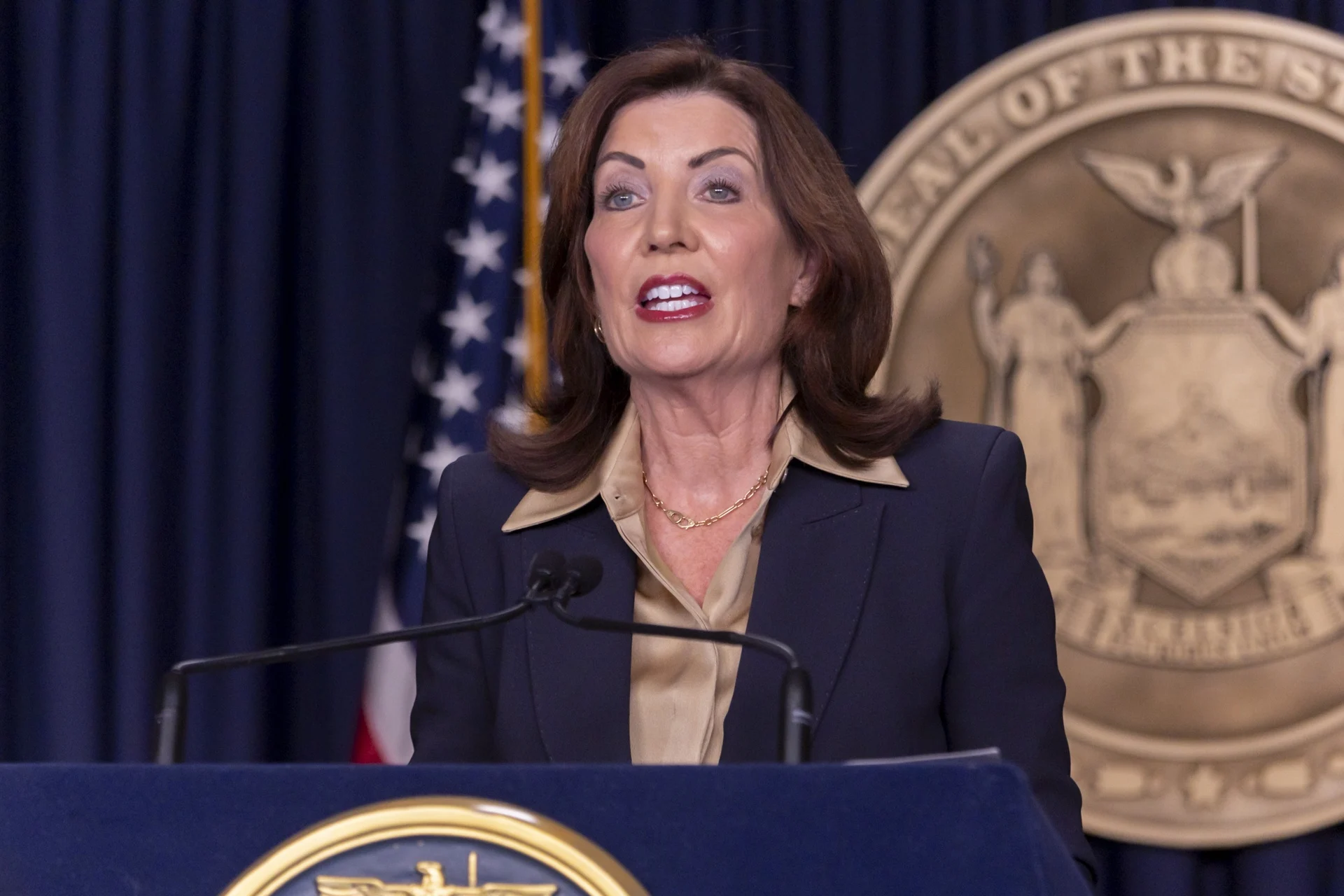
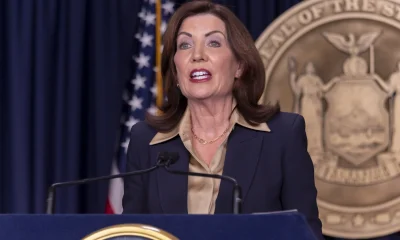
The Governor of New York, Kathy Hochul, and New York City Mayor Zohran Mamdani took another step today in their universal early education agenda by announcing the communities that will have access to the first 2,000 seats in the new 2-K program this fall — an initiative backed by a $73 million investment.
The funding is part of the $1.2 billion package previously unveiled by Hochul to strengthen child care and early childhood education across the city, one of the key campaign promises of the now Social Democratic mayor.
At the time of the announcement, the governor also outlined additional funds to reinforce the existing 3-K early education infrastructure, a program launched under former Mayor Bill de Blasio (2014–2021).
When the 2-K initiative was introduced in January, Mayor Mamdani explained that its first phase would offer 2,000 seats, with the goal of eventually expanding into a universal program — a commitment supported by the governor.
State investment in child care and preschool services is expected to increase to $4.5 billion by fiscal year 2027.
Among the first communities set to benefit from the 2,000 seats are Upper Manhattan and Inwood — areas with large Dominican populations — as well as Fordham and Kingsbridge in the Bronx, a borough with a Latino majority.
In East Brooklyn, Canarsie, Brownsville, and Ocean Hill will also be included. Meanwhile, Ozone Park and the Rockaways are among the neighborhoods that will see the rollout of the 2-K program.
International
Warner Bros. Developing First ‘Game of Thrones’ Movie With ‘Andor’ Writer

Warner Bros. is developing the first feature film based on the hit saga Game of Thrones, with Beau Willimon — screenwriter of Andor — attached to direct, according to a report published Tuesday by Page Six.
The project, currently in early development, will focus on the conquest of King Aegon I Targaryen. A separate television adaptation centered on the same historical storyline within the franchise is also in early stages at HBO.
However, the outlet noted that it remains unclear whether the film will move forward following the recent acquisition of Warner Bros. Discovery by Paramount Skydance.
If the merger is finalized, the movie could potentially be shelved, although that scenario appears unlikely given that the Game of Thrones franchise remains one of HBO’s most valuable and beloved properties.
After six seasons adapting the work of George R. R. Martin, the platform expanded the universe with House of the Dragon, a prequel series set 200 years before the events of Game of Thrones that explores the history of House Targaryen.
International
Spain’s Prime Minister to Address Nation Amid Trump’s Trade Threats
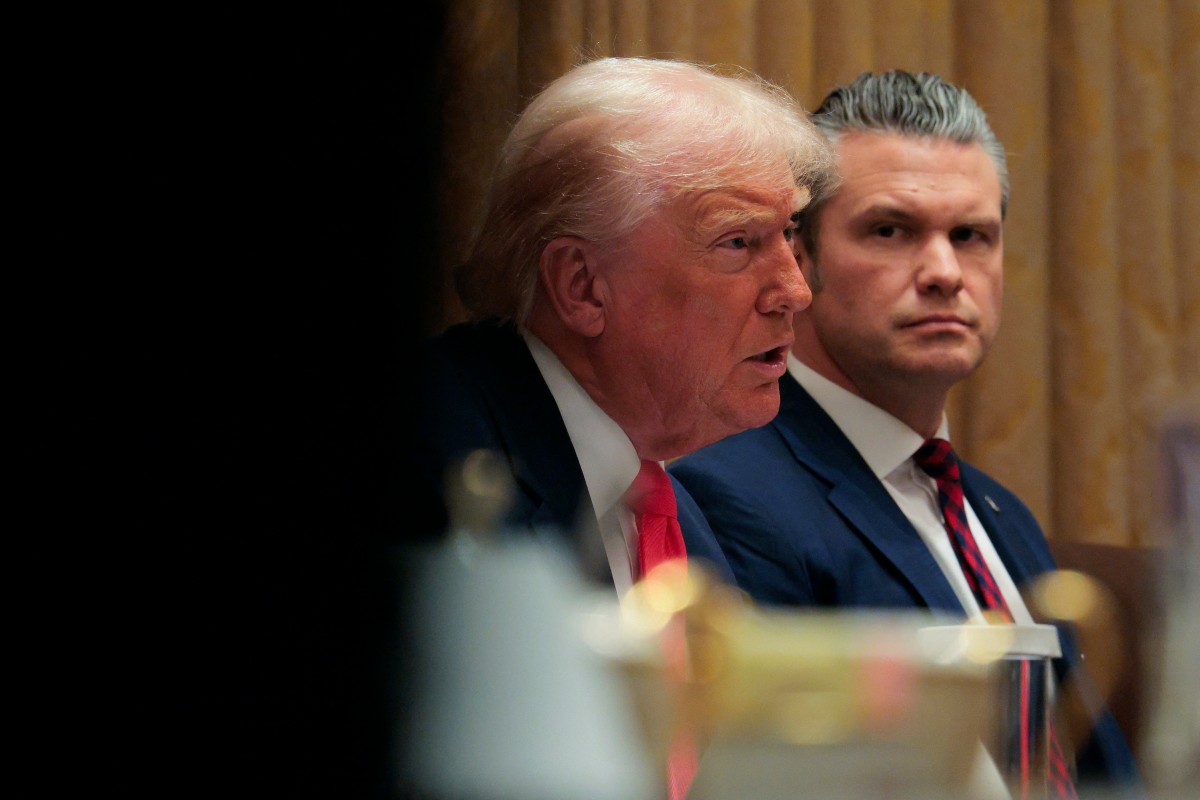
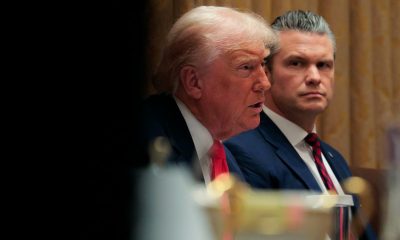
The Prime Minister of Spain, Pedro Sánchez, will deliver an institutional address this Wednesday at the Moncloa Palace regarding the escalating situation in the Middle East and recent threats directed at Spain by U.S. President Donald Trump.
The Spanish government announced that Sánchez will make a statement at 9:00 a.m. local time to outline his position on the latest developments following the U.S. and Israeli attacks on Iran.
Sánchez is expected to reiterate Spain’s reasons for opposing the use of U.S. military bases on Spanish soil in the operation—an action he has already described as being outside international law—while also expressing criticism of the Iranian regime.
Government sources indicated that the address had been planned prior to Trump’s remarks criticizing Spain’s stance. However, following those comments, Sánchez is now also expected to respond directly to the U.S. president’s statements.
Trump has threatened to “cut all trade with Spain” and said he wants “nothing to do” with the country after Madrid refused to authorize the use of the Morón and Rota military bases in southern Spain for operations against Tehran.
The U.S. president also labeled Spain “a terrible NATO partner” and warned that “no one” would tell him he could not use the facilities.
In response, the Spanish government stated that Spain fulfills its commitments to NATO and European defense. It also warned Trump that any review of bilateral trade relations must respect international law and the agreements in place between the European Union and the United States.

New York Announces First 2,000 Seats in Universal 2-K Program

Warner Bros. Developing First ‘Game of Thrones’ Movie With ‘Andor’ Writer

Guatemala’s Attorney General Fails in Bid for Top Court Seat Amid Corruption Allegations
Tec de Monterrey honors one of its students for his contribution to nanotechnology in medicine

Defense Minister commends salvadoran soldier for Central American Cross Country victory

Extension of the state of emergency approved in southern Chile
-

 International2 days ago
Iran Reports 201 Dead, 747 Injured After U.S. and Israeli Strikes
-

 International2 days ago
Pope Leo XIV Urges End to ‘Spiral of Violence’ in Middle East
-

 International4 days ago
Trump Floats “Friendly Takeover” of Cuba Amid Rising Tensions
-

 Sin categoría3 days ago
Trump: ‘We Think It’s True’ Amid Claims Iran’s Supreme Leader Was Killed
-

 International3 days ago
Security Council to Hold Emergency Meeting on Middle East Crisis
-

 International1 day ago
Brazil’s Supreme Court Rejects Bolsonaro’s Bid for House Arrest
-

 International4 days ago
Argentina’s Senate Reviews Milei-Backed Labor Overhaul
-

 International1 day ago
Anti-ICE Billboard Campaign Targets Immigration Spending in 31 U.S. Cities
-
 International1 day ago
Trump Warns of ‘Major Wave’ of Attacks as Iran Conflict Escalates
-

 International1 day ago
Mexico Calls for Immediate Probe After National Dies in ICE Custody
-

 Central America1 day ago
Panama Canal Monitoring Trade as Middle East Conflict Disrupts Shipping
-
 International1 day ago
Bolivia Orders Three Investigations Into Deadly Military Plane Crash
-
 International4 hours ago
New York Announces First 2,000 Seats in Universal 2-K Program
-
 International4 hours ago
Spain’s Prime Minister to Address Nation Amid Trump’s Trade Threats
-
 Central America4 hours ago
Guatemala’s Attorney General Fails in Bid for Top Court Seat Amid Corruption Allegations
-
 International4 hours ago
Warner Bros. Developing First ‘Game of Thrones’ Movie With ‘Andor’ Writer