
International
US inflation slows in November in smallest spike in year

| By AFP | Beiyi Seow |
US consumer inflation eased in November, according to government data released Tuesday, bringing some relief to policymakers with the smallest annual increase in nearly a year.
Officials are closely eying the monthly inflation report for signs that painfully high consumer prices are definitively moderating at last, as surging costs of living force households to dip into their savings.
The consumer price index (CPI), a closely-watched measure of inflation, jumped 7.1 percent from a year ago, down from 7.7 percent in October, according to Labor Department figures.
But the overall number is still about three times the pre-pandemic pace.











Prices ticked up 0.1 percent from October to November, a smaller-than-expected increase after a prior 0.4 percent jump, the latest data showed.
President Joe Biden reacted with cautious optimism about the US economy, saying the figures gave “a reason for some optimism for the holiday season and I would argue for the year ahead.”
Core prices, which exclude the volatile food and energy segments, rose 0.2 percent in November, down from a 0.3 percent pick-up in October.
“The index for shelter was by far the largest contributor to the monthly all items increase, more than offsetting decreases in energy indexes,” the Labor Department said in a statement.
Food inflation nudged up as well, underscoring the financial squeeze that households are still experiencing.
While an improvement from before, the data likely reinforces official views that costs remain far too high, and US central bankers are poised to push on in their quest to cool the world’s biggest economy.
The Federal Reserve has raised the benchmark lending rate six times this year in hopes of lowering demand, walking a fine line between reining in prices and triggering a recession.
The lower inflation figure is likely to fuel optimism for easing in the Fed’s aggressive campaign as its policy-setting committee starts a two-day meeting Tuesday that is widely expected to culminate in a smaller rate hike.
Right direction
Consumer inflation remains much higher than the Fed’s longer-term goal of two percent, even as prices are “moving in the right direction,” said economist Rubeela Farooqi of High Frequency Economics Tuesday.
But “further sustained improvement” over the coming months could allow the Fed to slow its pace of rate hikes more, she added.
While goods prices are decelerating, they still contribute heavily to CPI changes and a reversal of the trend will take time, she warned in an earlier analysis.
James Knightley of ING told AFP that while the asking price for rents appears to be falling in many cities, most people are still paying “considerably more” than last year.
Analysts have also been watching price increases in services, given that quickly rising wages feed into this segment and “continue to run hot,” he noted.
“This is clearly an area of concern for the Fed,” he said.










































































International
EU Faces Migration Crisis After 60,000 Migrants Arrive in Spain’s Ceuta Enclave

The arrival of around 60,000 migrants from Morocco to Spain’s Ceuta enclave triggered a major European Union crisis on Friday, after Madrid described the situation as an “attack” on its territorial integrity.
At least 34 people died while attempting to reach the Spanish territory, according to local authorities.
Hundreds of migrants had begun arriving in Ceuta earlier in the week, either by swimming across the border or climbing security fences. Most of those who entered were young men and teenagers.
However, the situation escalated dramatically early Thursday morning, when the number of arrivals surged within a few hours, reaching nearly 60,000 people. According to the Spanish government, the vast majority of them — around 48,000 migrants — had returned to Morocco by Friday evening.
The episode represents one of the most serious migration crises faced by the autonomous city of Ceuta, which has a population of around 84,000 residents, in recent years.
Several European countries responded strongly to the crisis, with Italy announcing the temporary suspension of the Schengen free movement agreement with Spain, a measure supported by Finland and Denmark.
“The temporary suspension of Schengen with Spain is a necessary decision to protect the security of our citizens and defend Europe’s borders,” Italian Foreign Minister Antonio Tajani said in a post on X.
Italy’s Interior Ministry confirmed that the country had tightened controls on maritime and air entry points from Spain, but clarified that the measure would not affect Spanish or European citizens traveling to Italy.
The additional checks will specifically target non-European citizens arriving from Spain, according to the ministry.
The measure will remain in effect for one month starting Saturday, authorities said.
Spain’s Foreign Minister José Manuel Albares responded to the Italian announcement through a statement on X, as European governments continued discussions over the consequences of the migration crisis.
International
Chuck Schumer Unveils Proposal to Strengthen Oversight of the U.S. Presidency
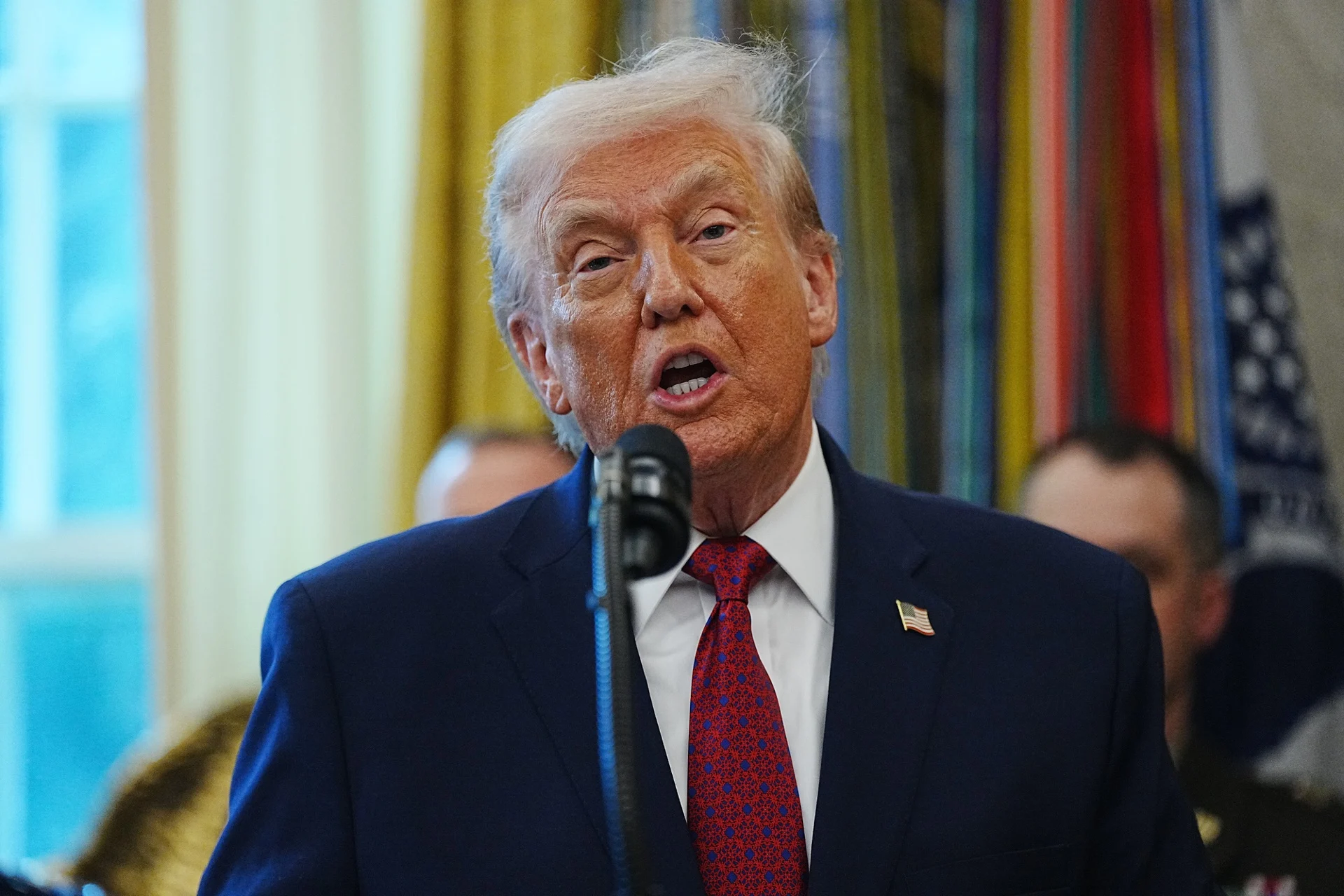
U.S. Senate Democratic Leader Chuck Schumer on Thursday announced legislation to establish a federal anti-corruption office aimed at strengthening oversight of the executive branch and preventing future presidents from using the White House for personal financial gain.
Schumer said the proposal was prompted by what he described as President Donald Trump’s misuse of the presidencyto benefit his family’s business interests.
“In just 18 months, the Trump family has made more than $4 billion by exploiting the influence of the presidency,” Schumer alleged.
The New York senator also argued that the alleged corruption has had direct economic consequences for American households.
“The same corrupt practices Trump is using to pocket billions of dollars are also forcing Americans to pay, on average, $3,100 more each year because of the rising cost of living,” he said.
The legislation was introduced alongside Democratic Senators Alex Padilla, Jeff Merkley, and Andy Kim.
According to Schumer, the bill has two primary objectives: “First, to return money to the American people. Second, to ensure that no one can ever steal from them again.”
He added that the proposal would create legal mechanisms allowing citizens to seek the recovery of funds allegedly obtained through government corruption.
“The fact that Trump stole money from the American people does not make it his. Americans deserve to get that money back,” Schumer said.
Under the proposed legislation, any U.S. citizen—as well as state attorneys general acting on behalf of their residents—would be authorized to file civil lawsuits to recover funds allegedly acquired through corrupt practices by public officials.
“Our bill would empower any individual, including a state attorney general acting on behalf of the people of that state, to bring legal action to recover money stolen from the public through government corruption,” Schumer said.
The measure is expected to face debate in Congress, where Republicans and Democrats remain deeply divided over executive accountability and the scope of presidential powers.
International
Trump Administration Urges Latin America to Increase Defense Spending Against Organized Crime
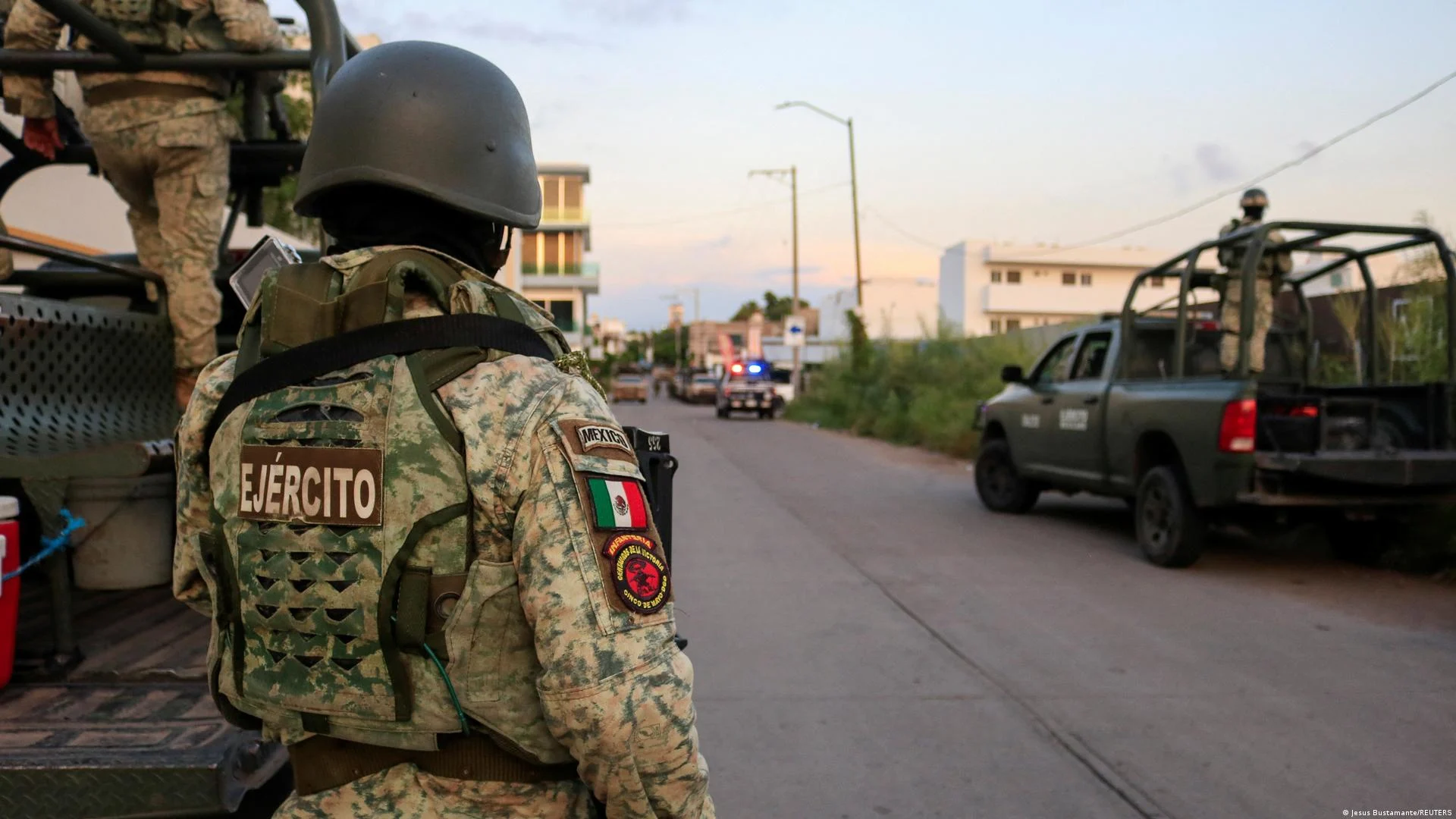
The administration of U.S. President Donald Trump on Wednesday urged Latin American countries to increase investment in defense and security to strengthen the fight against organized crime and drug trafficking networks.
The appeal was made by Elbridge Colby, the U.S. Under Secretary of Defense for Policy, in an article published by Americas Quarterly. Colby argued that governments across the region should assume greater responsibility for protecting their territories from transnational criminal organizations.
“It is essential that our neighbors in the region invest more in their own defense and security. There is no reason why any country, especially those facing significant narco-terrorist threats, should spend so little on defense,” Colby wrote.
The Pentagon official described it as “absurd” that some Latin American nations allocate less than 1% of their Gross Domestic Product (GDP) to defense, although he did not identify the countries. He contrasted that with NATO members in Europe, many of which are increasing defense expenditures to 3.5% of GDP, with an additional 1.5% devoted to security-related investments.
Colby, who participated earlier this month in the Conference of Defense Ministers of the Americas in Cusco, Peru, said there is “a historic opportunity” for the United States and its regional partners to strengthen cooperation against drug trafficking and other transnational threats.
He also defended the proposed Shield of the Americas, a military partnership promoted by the Trump administration to combat organized crime and supported by several conservative governments in the region. The initiative does not include Brazil or Mexico.
In addition, Colby said the administration’s security strategy includes an updated interpretation of the Monroe Doctrine, the long-standing U.S. foreign policy principle that historically viewed Latin America as part of Washington’s sphere of influence.
“Of course, we recognize that the Monroe Doctrine is controversial in many circles. But it is also frequently misunderstood,” he said.
According to Colby, the United States is not seeking “exploitation, subordination or dependence,” but rather a region characterized by greater prosperity, stability and security.
He also stated that Washington is prepared to use “all available resources,” including the U.S. Armed Forces, to combat drug trafficking and irregular migration. Colby highlighted ongoing counternarcotics operations in the Caribbean, despite criticism from human rights organizations that have questioned some missions over allegations of extrajudicial killings in international waters.


EU Faces Migration Crisis After 60,000 Migrants Arrive in Spain’s Ceuta Enclave

Chuck Schumer Unveils Proposal to Strengthen Oversight of the U.S. Presidency

Trump Administration Urges Latin America to Increase Defense Spending Against Organized Crime
Tec de Monterrey honors one of its students for his contribution to nanotechnology in medicine

Defense Minister commends salvadoran soldier for Central American Cross Country victory

Extension of the state of emergency approved in southern Chile
-
 International2 days ago
EU Faces Migration Crisis After 60,000 Migrants Arrive in Spain’s Ceuta Enclave
-
 International5 days ago
U.S. and Iran Maintain Ceasefire as Trump Expresses Optimism Over New Talks
-

 International5 days ago
Portuguese Authorities Seize 2.6 Tons of Cocaine Worth More Than $550 Million in Drug Bust
-

 International5 days ago
Police Investigate After Remains of Five Newborns Found in French Apartment
-

 International4 days ago
Five Bodies Found in Ecuador as Police Probe Suspected Gang Turf War
-
International3 days ago
Chuck Schumer Unveils Proposal to Strengthen Oversight of the U.S. Presidency
-

 International4 days ago
Georgia Teen Sentenced to Life Without Parole for Deadly School Shooting
-
 Central America4 days ago
Prosecutors Accuse Ex-Defense Minister of Undermining Press Freedom in Honduras
-

 International3 days ago
FAO and WFP Seek $42 Million to Prepare Southern Africa for Unprecedented El Niño
-
 International3 days ago
Trump Administration Urges Latin America to Increase Defense Spending Against Organized Crime