
International
Mexico lawmakers block president’s electoral reform, advance ‘Plan B’
| By AFP |
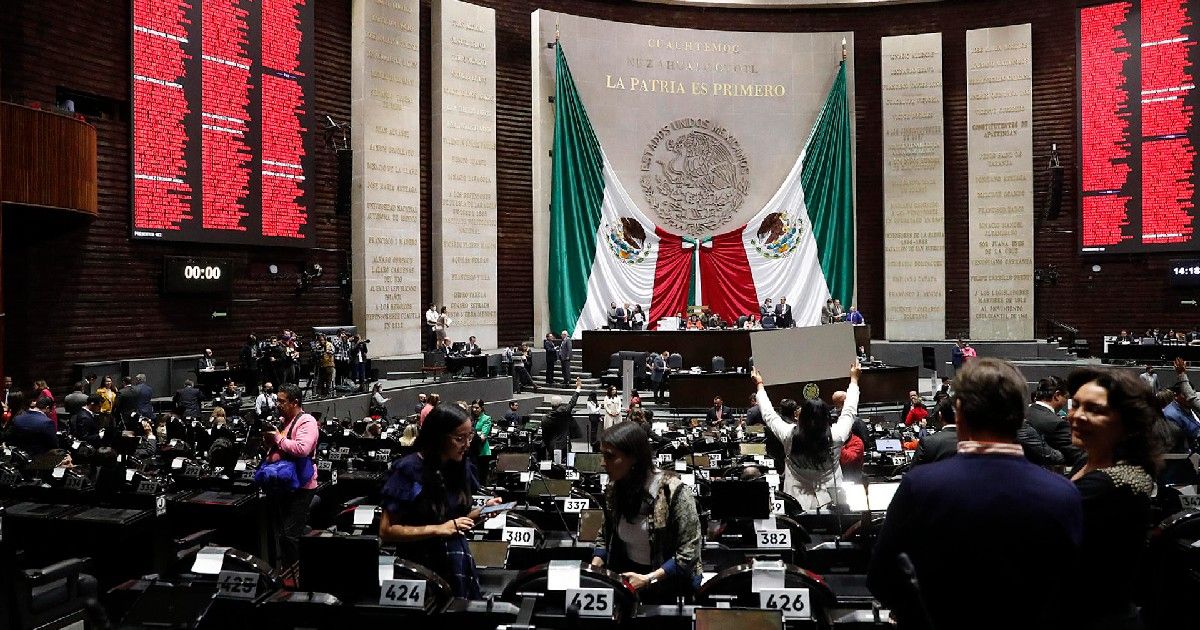
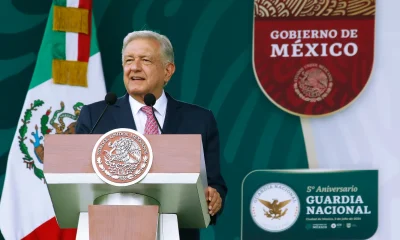
Mexican lawmakers blocked divisive electoral reforms proposed by President Andres Manuel Lopez Obrador that sparked mass street protests, but advanced less radical changes on Wednesday.
The rejection by the lower house of Congress late Tuesday was a blow to Lopez Obrador, who needed support from at least two-thirds of lawmakers to change the constitution.
Instead he sought to push through watered-down reforms, including a reduction in the budget of the National Electoral Institute (INE), the independent body that organizes the country’s elections.
Lopez Obrador’s so-called “Plan B,” which required approval by a simple majority of lawmakers, was passed in the Chamber of Deputies by 261 votes in favor and 216 against.











The opposition Institutional Revolutionary Party branded the changes a “betrayal of Mexico.”
The proposals must still be approved by the upper house, the Senate, where the ruling party and its allies also have a majority.
Last month, tens of thousands of demonstrators marched in Mexico City demanding a halt to the proposed reforms, which they see as an attack on one of the country’s most important democratic institutions.
Lopez Obrador alleges that the INE endorsed fraud when he ran unsuccessfully for the presidency in 2006 and 2012, before winning in 2018.
Under his initial plan, the INE would have been replaced by a new body with members chosen by voters instead of lawmakers.
The number of seats in the lower house of Congress would have been reduced from 500 to 300, and those in the Senate from 128 to 96.
New York-based advocacy group Human Rights Watch warned before the vote that the changes “could seriously undermine electoral authorities’ independence, putting free, fair elections at risk.”
“President Lopez Obrador’s proposed changes to the electoral system would make it much easier for whichever party holds power to co-opt the country’s electoral institutions to stay in power,” said HRW researcher Tyler Mattiace.
“Given Mexico’s long history of one-party rule maintained through questionable elections, it is extremely problematic that legislators would consider a highly regressive proposal that would weaken the independence of the elections authority.”
Lopez Obrador, who has an approval rating of nearly 60 percent but is barred by the constitution from running for a second term, insists that his reform plan sought to “strengthen democracy.”
He dismissed the opposition protest against his proposal, and two weeks later led hundreds of thousands of his supporters on a march through Mexico City in a show of political strength.







































































International
Three Killed, Four Injured in Shooting Near Seattle’s Space Needle

International
China Accuses U.S. AI Firms of Using Chinese Models to Train Artificial Intelligence

China on Monday accused U.S. artificial intelligence companies of using Chinese AI models to train their own systems, escalating tensions in the technological rivalry between the world’s two largest economies.
In a statement, China’s Ministry of Commerce said it has evidence that “many U.S. artificial intelligence companies have distilled Chinese models during their research, development and training processes.”
Model distillation is a machine learning technique that transfers knowledge from a larger, more advanced model to a smaller and faster one, allowing it to perform efficiently while requiring fewer computing resources. The approach is widely used across the AI industry.
U.S. officials have previously argued that Chinese firms employ distillation on a large scale to unlawfully replicate proprietary American AI systems. Beijing dismissed those allegations, calling them unfounded.
According to the Chinese ministry, Washington’s accusations “lack both factual and legal basis, apply double standards in practice, and represent a typical act of AI hegemony.”
“China will take all necessary measures to firmly safeguard its legitimate rights and interests,” the ministry added.
The statement comes days after a senior White House official accused Chinese startup Moonshot AI of secretly copying Anthropic’s most advanced AI model to develop its Kimi K3 system.
Moonshot’s latest model drew significant attention across the U.S. technology sector following its release, reigniting debate over China’s growing competitiveness in artificial intelligence.
Last week, U.S. Treasury Secretary Scott Bessent warned that Washington could impose sanctions on China as the administration considers restricting or banning foreign-developed open-source AI models, many of which are built using model distillation techniques.
International
Costa Rica Seeks to Expand Extradition Law to Target Organized Crime

Costa Rican President Laura Fernández announced that her administration will submit a constitutional reform bill to Congress on August 3 aimed at expanding the legal grounds for extraditing Costa Rican nationals accused of serious crimes.
Under current legislation, Costa Rican citizens can only be extradited to face prosecution abroad for international drug trafficking and terrorism. The proposed reform would broaden that list to include a wider range of organized crime offenses.
Speaking before the Legislative Assembly while presenting a broader package of public security initiatives, Fernández said the proposal seeks to strengthen the country’s fight against transnational criminal organizations.
“We are going to expand the grounds for extradition to include serious crimes,” the president said.
The initiative would allow the extradition of Costa Rican nationals accused of financing drug trafficking or terrorism, money laundering, human trafficking, migrant smuggling, arms and organ trafficking, contract killings, organized crime-related homicides, cybercrime and cyberterrorism.
“We will not stop in our national crusade against organized crime or in our relentless war against drug trafficking,” Fernández said.
A political ally of U.S. President Donald Trump, Fernández took office in May after campaigning on a promise to adopt a tougher stance against organized crime, which she has linked to the recent rise in violence in Costa Rica, a country long regarded as one of the safest in Latin America.
Costa Rica currently permits the extradition of its own citizens only for international drug trafficking and terrorism, following a 2025 constitutional amendment promoted by former President Rodrigo Chaves, who now serves as the country’s Minister of the Presidency and Finance.


Three Killed, Four Injured in Shooting Near Seattle’s Space Needle

China Accuses U.S. AI Firms of Using Chinese Models to Train Artificial Intelligence

Costa Rica Seeks to Expand Extradition Law to Target Organized Crime
Tec de Monterrey honors one of its students for his contribution to nanotechnology in medicine

Defense Minister commends salvadoran soldier for Central American Cross Country victory

Extension of the state of emergency approved in southern Chile
-

 Central America4 days ago
CDC Issues Level 2 Travel Alert for Costa Rica Amid Chikungunya Outbreak
-

 International3 days ago
Wildfires in France Burn Nearly Three Times More Land Than in 2025, Interior Minister Says
-

 Central America4 days ago
Honduras Warns of Possible New Dengue Epidemic as Cases Continue to Rise
-
 International3 days ago
Israel Says Saudi Recognition Would Mark ‘Historic Breakthrough’ for Middle East Peace
-

 Central America23 hours ago
EU Urges Nicaragua to Hold Free and Transparent Elections Amid Proposed Electoral Reforms
-
 International5 hours ago
Costa Rica Seeks to Expand Extradition Law to Target Organized Crime
-
 International5 hours ago
China Accuses U.S. AI Firms of Using Chinese Models to Train Artificial Intelligence
-
 International5 hours ago
Three Killed, Four Injured in Shooting Near Seattle’s Space Needle