
International
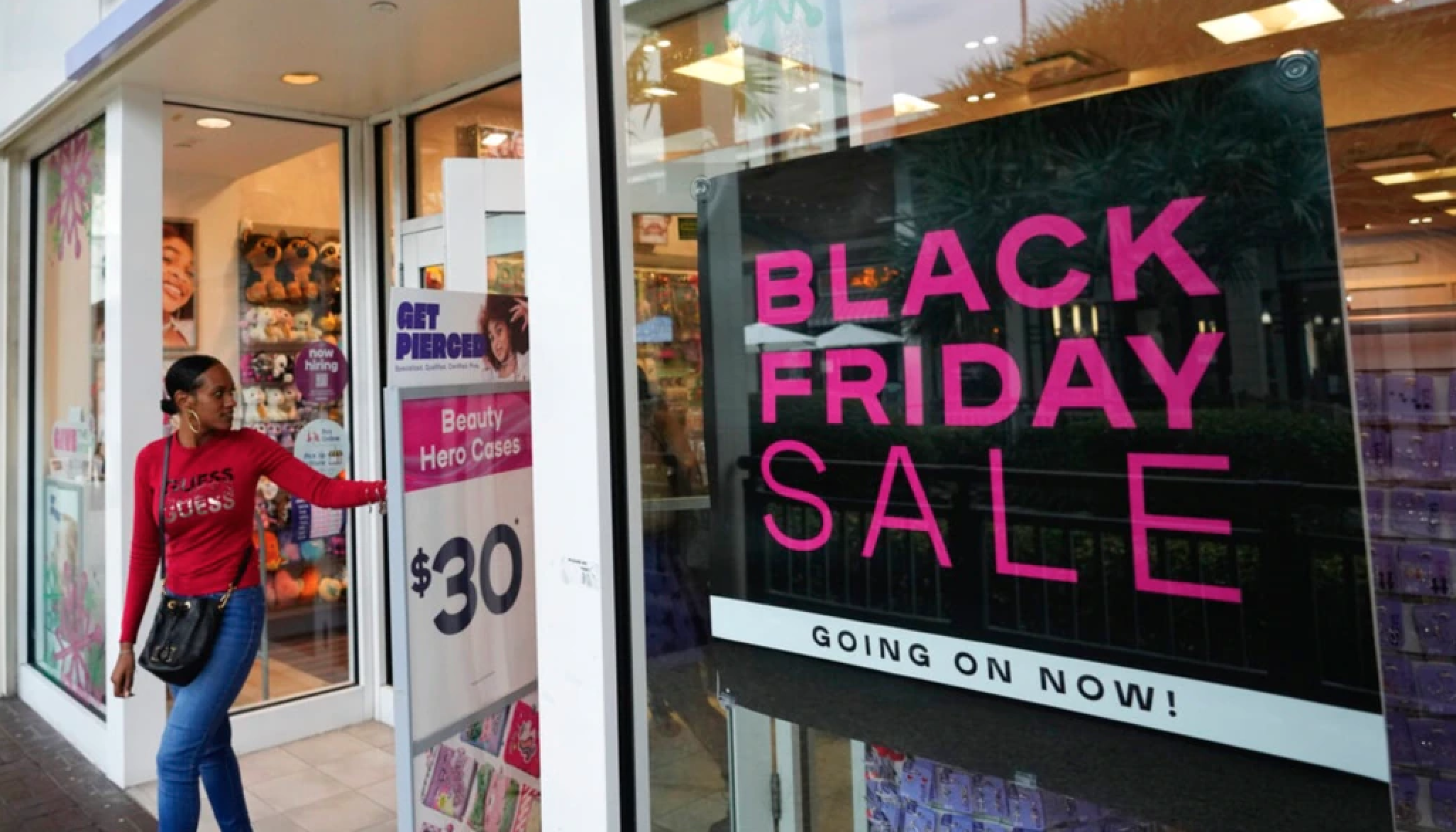
Inflation clouds ‘Black Friday’ kickoff of US holiday shopping season
| By AFP | John Biers |
Retailers unveiled a trove of fresh seasonal promotions Friday, as they try to coax sales from reticent shoppers whose holiday cheer has been tempered by inflation and worries over a softening economy.
“Black Friday,” the unofficial start of the US holiday shopping season, announced itself with the annual day-after-Thanksgiving deluge of online promotions and early store openings.
But industry experts have been cautious about this year’s prospects, in light of price pressures that have exacerbated concerns about an oversupply of goods.
A year ago, retailers faced product shortfalls in the wake of shipping backlogs and factory closures related to Covid-19. To avert a repeat, the industry front-loaded its holiday imports this year, leaving it vulnerable to oversupply at a time when consumers are cutting back.











“Supply shortages was yesterday’s problem,” said Neil Saunders, managing director for GlobalData Retail, a consultancy. “Today’s problem is having too much stuff.”
Saunders said retailers have made progress in reducing excess inventories, but oversupply will mean deep discounts in many categories, including electronics, home improvement and apparel.
Online shoppers spent $5.3 billion on Thanksgiving Day itself, according to an Adobe report early Friday, up 2.9 percent from a year ago.
Higher costs for gasoline and household staples like meat and cereal are a nationwide issue, and they do not burden everyone equally.
“The lower incomes are definitely hit worst by the higher inflation,” said Claire Li, senior analyst at Moody’s. “People have to spend on the essential items.”
Diminishing savings
Leading forecasts from Deloitte and the National Retail Federation project a single-digit percentage rise in sales, but this is unlikely to exceed the inflation rate.
Adobe has forecast an overall holiday sales increase of 2.5 percent, less than a third of the level from last year. Besides inflation, Adobe cited higher Federal Reserve interest rates and an uptick in brick-and-mortar shopping as factors.
European countries like Britain and France have been marking Black Friday for a few years now too, but with soaring inflation, merchants there face a similar dilemma.
“Retailers are desperate for some spending cheer but the worry is that it could turn out to be more of a Bleak Friday,” said Hargreaves Lansdown analyst Susannah Streeter.
US shoppers have remained resilient throughout the pandemic, often spending more than expected even when consumer sentiment surveys suggest they are in a gloomy mood.
Part of the reason has been the unusually robust state of savings, with many households banking government pandemic aid payments at a time of reduced consumption due to virus restrictions.
But that cushion is starting to whittle away. After hitting $2.5 trillion in excess savings in mid-2021, the benchmark fell to $1.7 trillion in the second quarter, according to Moody’s.
Accompanying this drop has been a rise in credit card debt visible in Federal Reserve data and anecdotally described by chains that also report more purchases made with food stamps.
Mixed picture
Recent earnings reports from retailers paint a mixed picture on consumer health.
Target stood on the downcast side, pointing to a sharp decline in shopping activity in late October, potentially portending a weak holiday season.
The big-box chain expects a “very promotional” holiday season, said Chief Executive Brian Cornell.
“We’ve had a consumer who has been dealing with very stubborn inflation for quarter after quarter now,” Cornell said on a conference call with analysts.
He added that customers are “shopping very carefully on a budget.”
But Lowe’s, another big US chain specializing in home-improvement, offered a different view, describing the same late-October period as “strong.”
“We are not seeing anything that feels or looks like a trade down or consumer pullback,” said Lowe’s Chief Executive Marvin Ellison.
Consumers like Charmaine Taylor, who checks airline websites frequently, are staying vigilant.
Taylor, who works in child care, has had her travel plans thwarted due to exorbitant plane ticket prices — and she is unsure of how much she can spend on family this year.
“I’m trying to give them some little gifts,” she said at a park in Harlem earlier this week. “I don’t know if I’ll be able to. Inflation is hitting pretty hard.”








































































International
EU Faces Migration Crisis After 60,000 Migrants Arrive in Spain’s Ceuta Enclave
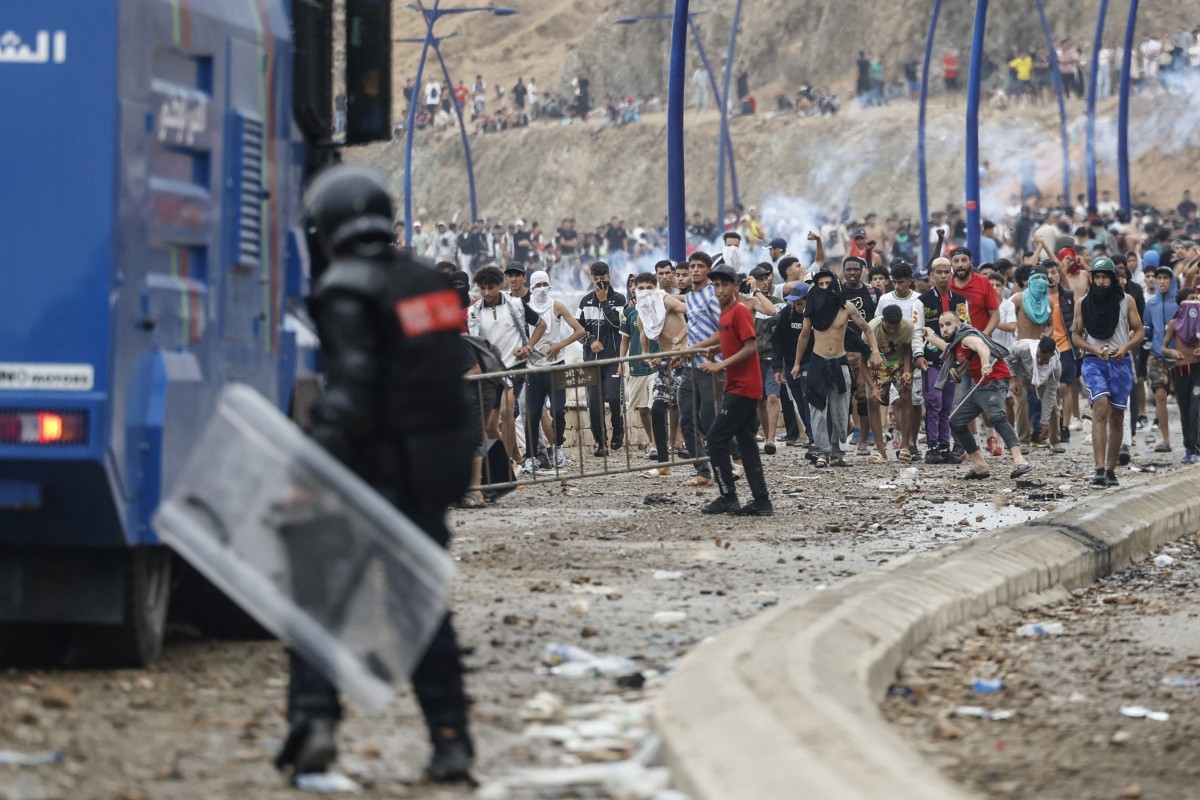
The arrival of around 60,000 migrants from Morocco to Spain’s Ceuta enclave triggered a major European Union crisis on Friday, after Madrid described the situation as an “attack” on its territorial integrity.
At least 34 people died while attempting to reach the Spanish territory, according to local authorities.
Hundreds of migrants had begun arriving in Ceuta earlier in the week, either by swimming across the border or climbing security fences. Most of those who entered were young men and teenagers.
However, the situation escalated dramatically early Thursday morning, when the number of arrivals surged within a few hours, reaching nearly 60,000 people. According to the Spanish government, the vast majority of them — around 48,000 migrants — had returned to Morocco by Friday evening.
The episode represents one of the most serious migration crises faced by the autonomous city of Ceuta, which has a population of around 84,000 residents, in recent years.
Several European countries responded strongly to the crisis, with Italy announcing the temporary suspension of the Schengen free movement agreement with Spain, a measure supported by Finland and Denmark.
“The temporary suspension of Schengen with Spain is a necessary decision to protect the security of our citizens and defend Europe’s borders,” Italian Foreign Minister Antonio Tajani said in a post on X.
Italy’s Interior Ministry confirmed that the country had tightened controls on maritime and air entry points from Spain, but clarified that the measure would not affect Spanish or European citizens traveling to Italy.
The additional checks will specifically target non-European citizens arriving from Spain, according to the ministry.
The measure will remain in effect for one month starting Saturday, authorities said.
Spain’s Foreign Minister José Manuel Albares responded to the Italian announcement through a statement on X, as European governments continued discussions over the consequences of the migration crisis.
International
Chuck Schumer Unveils Proposal to Strengthen Oversight of the U.S. Presidency
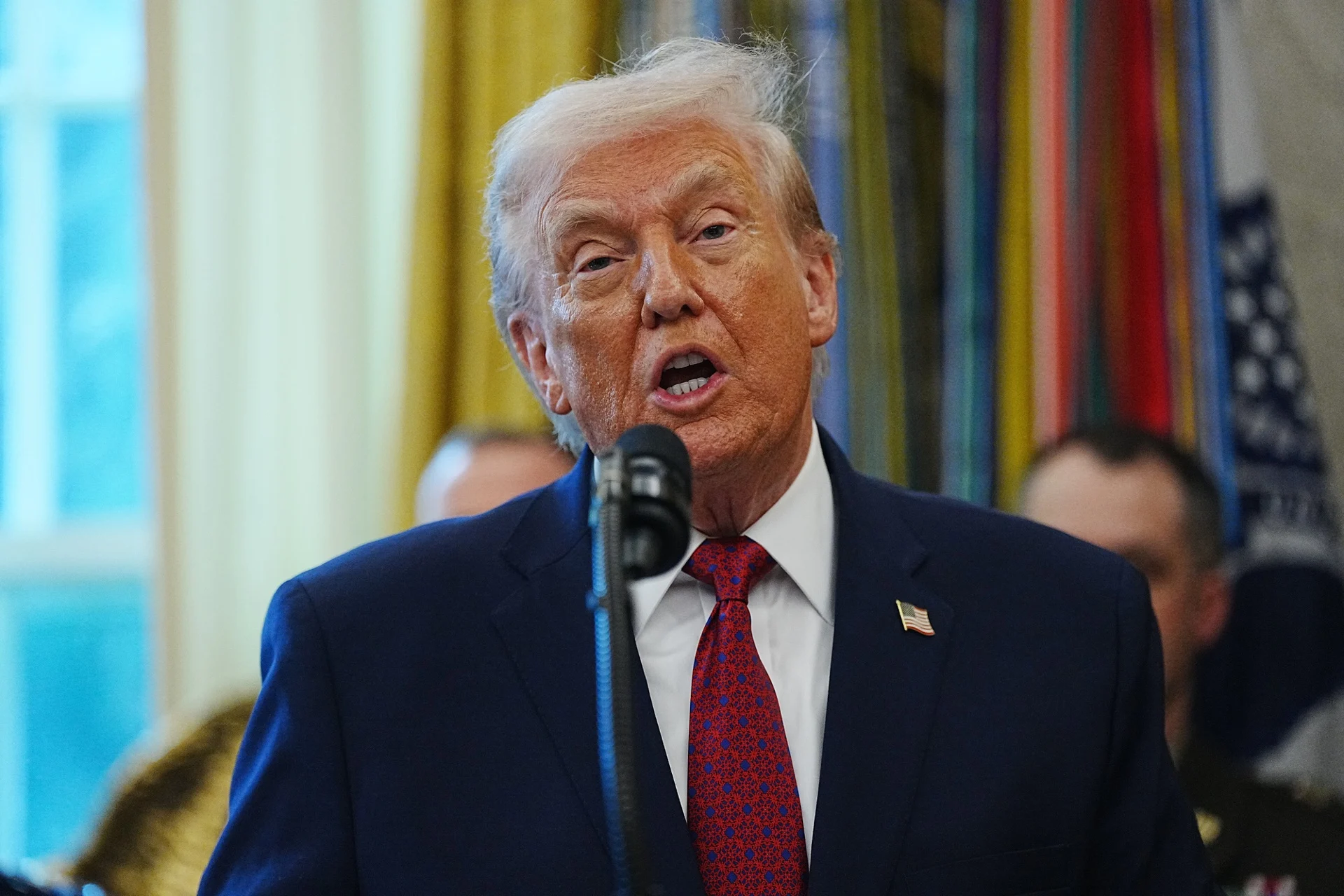
U.S. Senate Democratic Leader Chuck Schumer on Thursday announced legislation to establish a federal anti-corruption office aimed at strengthening oversight of the executive branch and preventing future presidents from using the White House for personal financial gain.
Schumer said the proposal was prompted by what he described as President Donald Trump’s misuse of the presidencyto benefit his family’s business interests.
“In just 18 months, the Trump family has made more than $4 billion by exploiting the influence of the presidency,” Schumer alleged.
The New York senator also argued that the alleged corruption has had direct economic consequences for American households.
“The same corrupt practices Trump is using to pocket billions of dollars are also forcing Americans to pay, on average, $3,100 more each year because of the rising cost of living,” he said.
The legislation was introduced alongside Democratic Senators Alex Padilla, Jeff Merkley, and Andy Kim.
According to Schumer, the bill has two primary objectives: “First, to return money to the American people. Second, to ensure that no one can ever steal from them again.”
He added that the proposal would create legal mechanisms allowing citizens to seek the recovery of funds allegedly obtained through government corruption.
“The fact that Trump stole money from the American people does not make it his. Americans deserve to get that money back,” Schumer said.
Under the proposed legislation, any U.S. citizen—as well as state attorneys general acting on behalf of their residents—would be authorized to file civil lawsuits to recover funds allegedly acquired through corrupt practices by public officials.
“Our bill would empower any individual, including a state attorney general acting on behalf of the people of that state, to bring legal action to recover money stolen from the public through government corruption,” Schumer said.
The measure is expected to face debate in Congress, where Republicans and Democrats remain deeply divided over executive accountability and the scope of presidential powers.
International
Trump Administration Urges Latin America to Increase Defense Spending Against Organized Crime
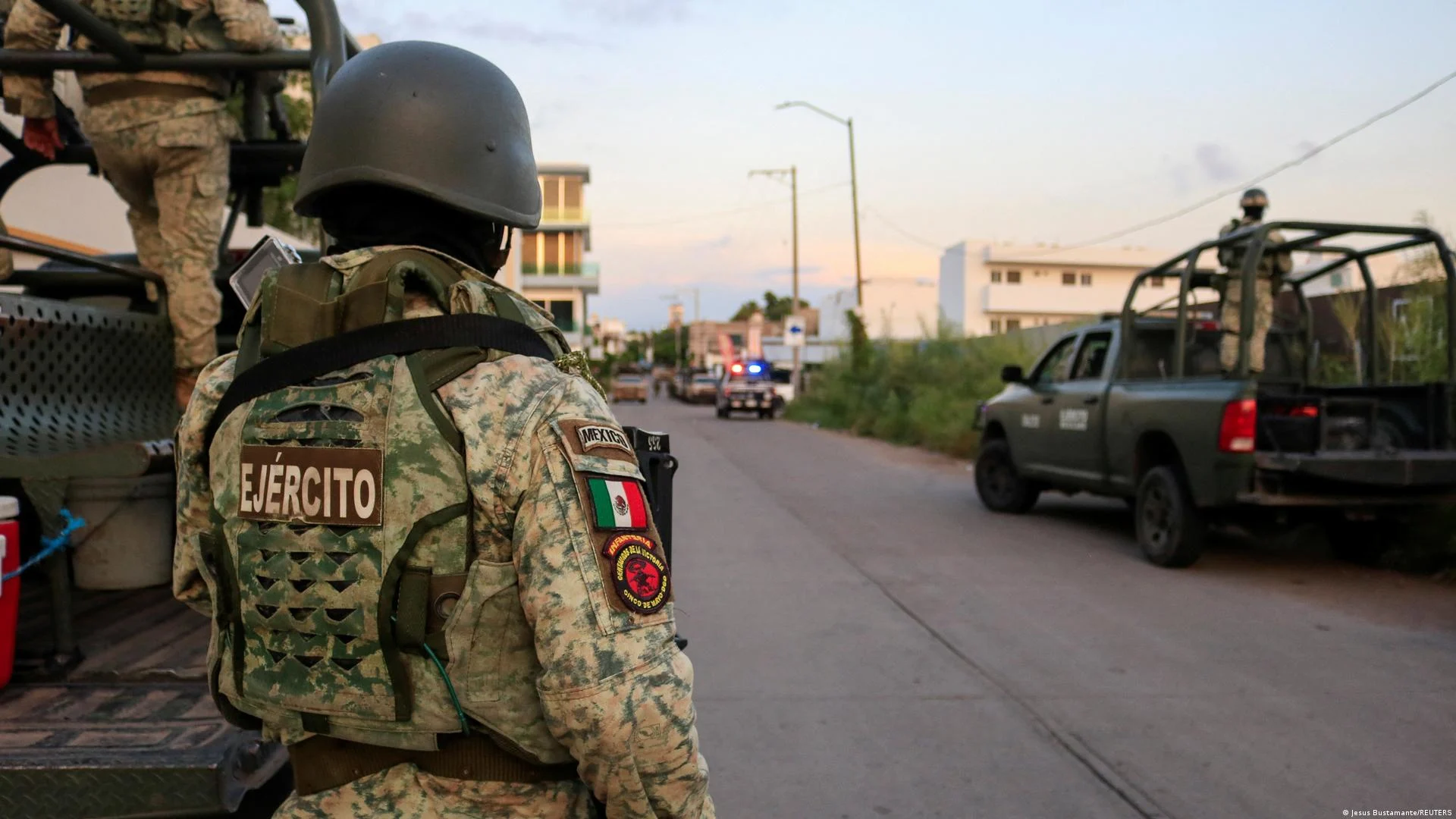
The administration of U.S. President Donald Trump on Wednesday urged Latin American countries to increase investment in defense and security to strengthen the fight against organized crime and drug trafficking networks.
The appeal was made by Elbridge Colby, the U.S. Under Secretary of Defense for Policy, in an article published by Americas Quarterly. Colby argued that governments across the region should assume greater responsibility for protecting their territories from transnational criminal organizations.
“It is essential that our neighbors in the region invest more in their own defense and security. There is no reason why any country, especially those facing significant narco-terrorist threats, should spend so little on defense,” Colby wrote.
The Pentagon official described it as “absurd” that some Latin American nations allocate less than 1% of their Gross Domestic Product (GDP) to defense, although he did not identify the countries. He contrasted that with NATO members in Europe, many of which are increasing defense expenditures to 3.5% of GDP, with an additional 1.5% devoted to security-related investments.
Colby, who participated earlier this month in the Conference of Defense Ministers of the Americas in Cusco, Peru, said there is “a historic opportunity” for the United States and its regional partners to strengthen cooperation against drug trafficking and other transnational threats.
He also defended the proposed Shield of the Americas, a military partnership promoted by the Trump administration to combat organized crime and supported by several conservative governments in the region. The initiative does not include Brazil or Mexico.
In addition, Colby said the administration’s security strategy includes an updated interpretation of the Monroe Doctrine, the long-standing U.S. foreign policy principle that historically viewed Latin America as part of Washington’s sphere of influence.
“Of course, we recognize that the Monroe Doctrine is controversial in many circles. But it is also frequently misunderstood,” he said.
According to Colby, the United States is not seeking “exploitation, subordination or dependence,” but rather a region characterized by greater prosperity, stability and security.
He also stated that Washington is prepared to use “all available resources,” including the U.S. Armed Forces, to combat drug trafficking and irregular migration. Colby highlighted ongoing counternarcotics operations in the Caribbean, despite criticism from human rights organizations that have questioned some missions over allegations of extrajudicial killings in international waters.


EU Faces Migration Crisis After 60,000 Migrants Arrive in Spain’s Ceuta Enclave

Chuck Schumer Unveils Proposal to Strengthen Oversight of the U.S. Presidency

Trump Administration Urges Latin America to Increase Defense Spending Against Organized Crime
Tec de Monterrey honors one of its students for his contribution to nanotechnology in medicine

Defense Minister commends salvadoran soldier for Central American Cross Country victory

Extension of the state of emergency approved in southern Chile
-
 International21 hours ago
EU Faces Migration Crisis After 60,000 Migrants Arrive in Spain’s Ceuta Enclave
-
 International4 days ago
U.S. and Iran Maintain Ceasefire as Trump Expresses Optimism Over New Talks
-
 International4 days ago
Portuguese Authorities Seize 2.6 Tons of Cocaine Worth More Than $550 Million in Drug Bust
-

 International3 days ago
Five Bodies Found in Ecuador as Police Probe Suspected Gang Turf War
-
International2 days ago
Chuck Schumer Unveils Proposal to Strengthen Oversight of the U.S. Presidency
-

 International4 days ago
Police Investigate After Remains of Five Newborns Found in French Apartment
-

 International3 days ago
Georgia Teen Sentenced to Life Without Parole for Deadly School Shooting
-
 Central America3 days ago
Prosecutors Accuse Ex-Defense Minister of Undermining Press Freedom in Honduras
-

 International5 days ago
Costa Rica Seeks to Expand Extradition Law to Target Organized Crime
-

 International5 days ago
China Accuses U.S. AI Firms of Using Chinese Models to Train Artificial Intelligence
-
 International2 days ago
FAO and WFP Seek $42 Million to Prepare Southern Africa for Unprecedented El Niño
-
 International2 days ago
Trump Administration Urges Latin America to Increase Defense Spending Against Organized Crime
-

 International5 days ago
Three Killed, Four Injured in Shooting Near Seattle’s Space Needle