
International
In Canada’s Arctic, Inuit traditions help combat youth depression
AFP | by Anne-Sophie THILL
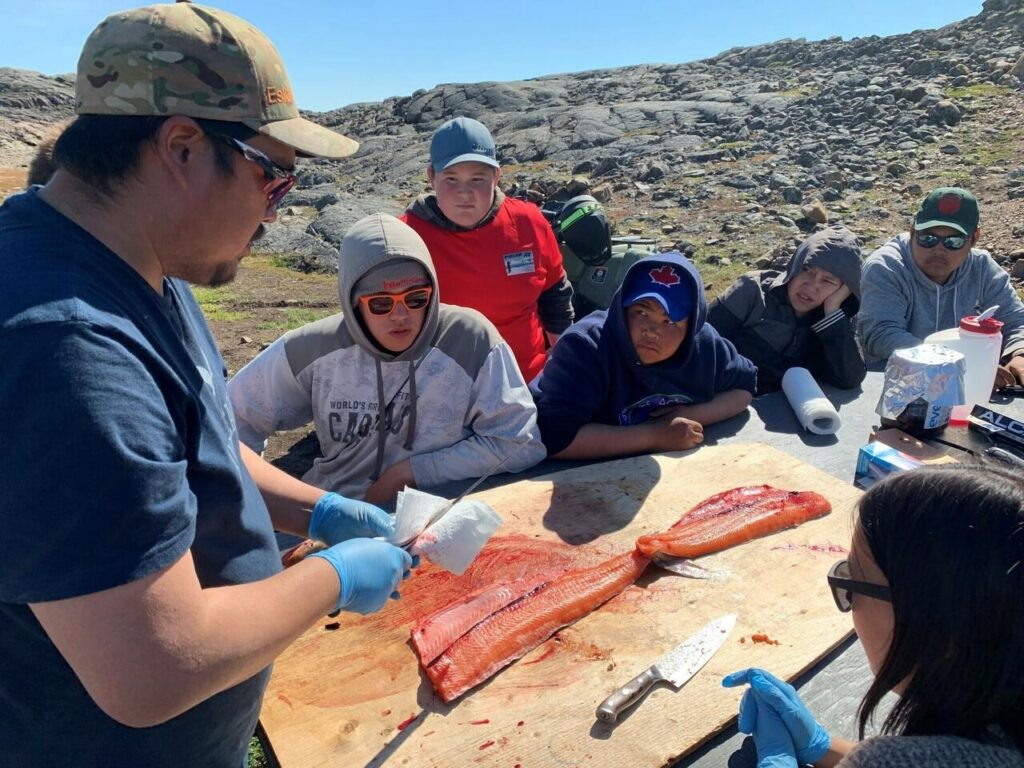
Filleting a fish, lighting a fire or building an igloo: In Canada’s Arctic, Inuit youth are being encouraged to connect with their culture in an attempt to prevent severe depression and save lives.
A dozen teenagers and young adults gather around instructor Alex Flaherty. They don’t want to miss any of the traditional hunter’s precise gestures as he carves a fish or lights a fire.
“Our culture has changed so much in the last 50 years when people used to live in igloos… the change is happening so fast, (and) we are losing our culture,” he tells AFP.
Flaherty blames the societal shifts for a series of social ills such as violent crime, substance abuse and a high rate of suicide.
Hoping to help remedy these problems, he’s taken hundreds of teenagers hiking, camping and hunting in the vast tundra in the past three years.











In addition to keeping alive Inuit culture, his government-funded Polar Outfitting program also aims to bolster young people’s mental health and teach them to adapt to a changing climate — in a region that is warming much faster than elsewhere.
Flaherty says he takes mostly youth aged 12 to 20 years old, “because that’s when their lifestyle starts changing (and) when they need help.”
In the summer, they hike across the rocky, windswept lands near the bay city of Iqaluit that is home to some 7,000 residents — and is accessible only by plane most months.
They also learn to make fishing nets to catch Arctic char and to navigate and survive in the pristine but unforgiving environment.
In the dead of winter, when sunlight is reduced to just a few hours per day, they will go out on the ice to fish, and build igloos.
‘Not just about fishing’
At 22, Annie Kootoo is the oldest in the current class. She gushes with joy after spending 10 days in the wilderness.
“I did a lot of activities that I don’t usually do, and it’s been very helpful for my mental health,” she says.
Chris Laisa, a 14-year-old echoes the sentiment. “I feel great,” he says after a lesson.
“It was fun because I learned how to fillet a fish, how to prepare it.”
Flaherty, standing nearby, adds that it’s “not just about fishing. It’s about clearing your mind, being outdoors and sharing with others.”
In the Nunavut territory of northern Canada, where the average age is 28, young people are deeply affected by the isolation and intergenerational traumas caused by past colonial policies.
Like many Indigenous peoples in Canada, the Inuit are haunted by memories of being forced into residential schools where they were stripped of their language and culture, and abused by teachers and headmasters.
Here the suicide rate is much higher than the rest of the country — 76.6 per 100,000 inhabitants in 2020 compared to 10.1, according to Statistics Canada.
Camilla Sehti, the Nunavut government’s head of mental health and addictions services, goes through a long list of what’s contributed to the crisis: “It’s just so many factors.”
Healing, she says, “starts with reconnecting people to their culture.”
“I think colonization had a huge impact on this territory and the ability for people to feel connected to self,” she explains, describing new mental health initiatives that emphasize “family, culture and community.”
After losing her best friend two years ago, Minnie Akeeagok started posting warnings on social media about depression and suicide.
“Everybody in Nunavut knows someone who has committed suicide or faced mental health issues. I personally know more than five,” the 18-year-old told AFP.
“We need more resources, more accessibility within the mental health field in Nunavut,” she says, noting that in the far off communities of this Arctic territory the situation is even more dire.










International
German Authorities Investigate More Than 100 New Cases Against Convicted Nurse
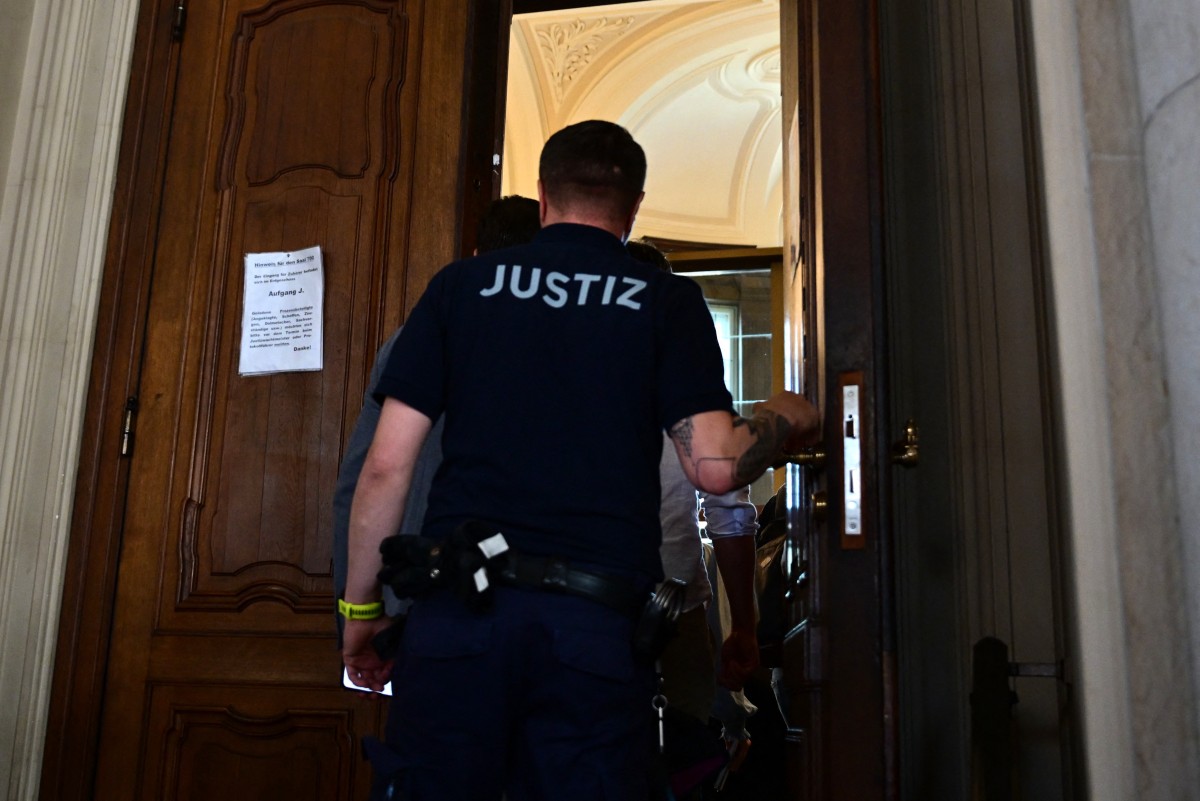
German authorities announced Monday that they are investigating more than 100 additional cases involving a nurse who was sentenced to life in prison in November for the murder of 10 patients.
The man, who was 44 at the time of his conviction, worked in palliative care at a hospital in Würselen, near Aachen. He was also found guilty of 27 attempted murders.
Aachen prosecutors are now examining 121 new cases, a spokesperson for the office said.
Prosecutors leading the investigation are preparing a new indictment that could be filed next year. Nearly 40 bodies have so far been exhumed as part of the investigation, which covers alleged incidents dating back to September 2022.
Meanwhile, prosecutors in the city of Cologne are investigating 18 additional cases. According to a spokesperson, the oldest case dates back to 2010.
Before working at the Würselen hospital, the nurse is believed to have worked at a clinic in eastern Cologne, according to local media reports.
At the time of his November conviction, the court ruled that the severity of his crimes was particularly serious, a finding that would make it difficult for him to obtain early release after 15 years in prison.
Between December 2023 and May 2024, the nurse administered overdoses of sedatives or painkillers to terminally ill patients, most of them elderly, according to the indictment in the original case.
His alleged motive was to sedate patients who required care so that he could minimize his workload during night shifts, prosecutors said.
According to the indictment, the nurse worked «without enthusiasm» and «without motivation». When faced with patients requiring extensive care, he allegedly became «irritated» and showed a lack of empathy.
The case has revived painful memories in Germany of Niels Högel, a former nurse and serial killer who was sentenced to life imprisonment in June 2019 for the murders of at least 85 patients.
International
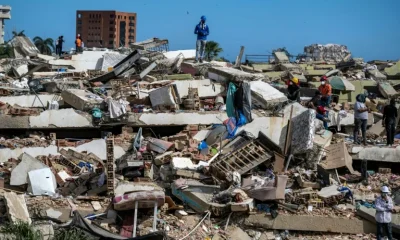
Venezuela Raises Earthquake Death Toll to 6,301
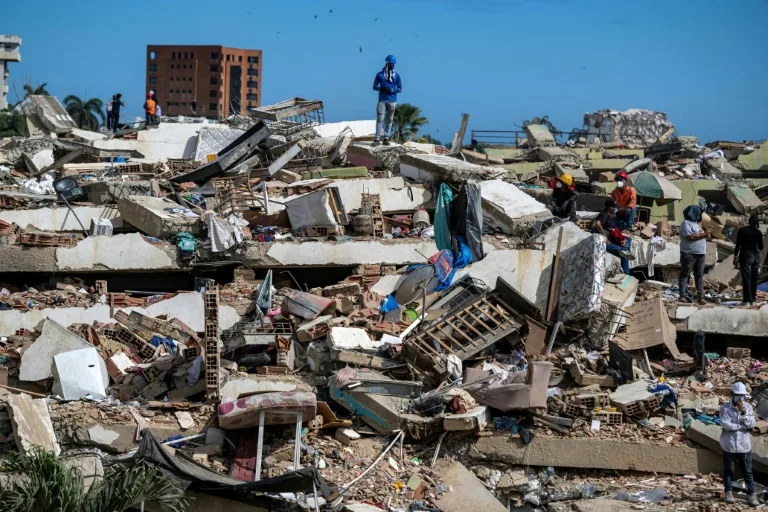
The death toll from the earthquakes that struck Venezuela on June 24 has risen to 6,301, while relatives continue searching for missing people among the rubble of collapsed buildings, parliamentary leader Jorge Rodríguez said Monday.
So far, the Venezuelan government has not released an official figure for the number of people missing after the magnitude 7.2 and 7.5 earthquakes, which caused around 190 buildings to collapse, most of them in the coastal state of La Guaira, about 25 miles (40 kilometers) from Caracas.
The latest figure represents an increase from the 6,125 deaths reported by Venezuelan authorities on August 3.
According to statements made to local media by La Guaira Governor José Alejandro Terán, around 1,400 people were still missing just over a week ago.
Thousands of homes remain at risk
In addition to buildings that completely collapsed, authorities have classified another 9,567 structures as being at «high risk». Meanwhile, 12,411 homes remain under a «restricted» classification.
As a result, many families who lived in these properties have been relocated to temporary shelters or have sought accommodation with relatives and friends.
Nearly 24,000 people left homeless by the disaster are currently living in camps in Caracas and La Guaira, a popular tourist destination whose economy has been severely affected by the earthquakes.
The situation sparked renewed concern among Venezuelans on Monday after a magnitude 7.4 earthquake, with its epicenter in Colombia, was felt across several regions of Venezuela.
The earthquake in Colombia left at least 111 people dead and dozens injured, according to preliminary figures released by authorities in that country.
International
CEAPI Backs Colombia’s New Government and Calls for Greater Public-Private Cooperation

The Ibero-American Business Alliance Council (CEAPI), led by its president, Núria Vilanova, participated in the inauguration ceremony of Abelardo de la Espriella as Colombia’s new president. The events were held on August 7 in Cali and brought together heads of state and institutional representatives from numerous countries.
CEAPI maintains a strong relationship with Colombia as part of its mission to serve as a meeting point between Ibero-American business leaders and the region’s main institutions and governments. The organization has more than 25 members in Colombia, including Jaime Gilinski, Luis Carlos Sarmiento, Omar González and Diego Urrea. In addition, Colombia hosted the seventh CEAPI Ibero-American Congress, held in Cartagena de Indias in 2024.
During his inauguration speech, President De la Espriella identified confidence and economic stability as key pillars of his administration and emphasized the role of private enterprise in Colombia’s future.
He also reaffirmed his intention to govern for all Colombians and strengthen institutional dialogue, while referring to Spain’s democratic transition and the leadership of former Prime Minister Adolfo Suárez.
Vilanova said she has seen this commitment firsthand during meetings with members of the new government, who have expressed their willingness to work closely with business leaders and the private sector to promote economic growth.
According to CEAPI, the government is considering measures aimed at strengthening legal certainty and business confidence, encouraging investment and promoting formal employment.
For Vilanova, Colombia’s new political and economic stage represents an opportunity to demonstrate that «when the public and private sectors are aligned, they can achieve more».
«Colombia has everything it needs to make it happen. And Ibero-American business leaders are ready to support it», she said, adding that CEAPI is already working with the government to organize a future investment delegation to the country.
The organization said the planned visit would seek to strengthen business ties and identify new investment opportunities in Colombia, reinforcing the role of the private sector in the country’s economic development.

German Authorities Investigate More Than 100 New Cases Against Convicted Nurse

Venezuela Raises Earthquake Death Toll to 6,301

CEAPI Backs Colombia’s New Government and Calls for Greater Public-Private Cooperation
Tec de Monterrey honors one of its students for his contribution to nanotechnology in medicine

Defense Minister commends salvadoran soldier for Central American Cross Country victory

Extension of the state of emergency approved in southern Chile
-

 International4 days ago
Appeals Court blocks Trump’s White House ballroom project without congressional approval
-

 International4 days ago
Abelardo de la Espriella sworn in as Colombia’s president for 2026-2030
-
 International4 days ago
Rubio warns Cuba U.S. pressure campaign will continue through Trump’s term
-
 International4 days ago
US announces $1 billion security assistance package for Colombia under new government
-
 International2 days ago
Colombia Earthquake Leaves at Least 22 Dead as Rescue Efforts Continue
-
 International3 days ago
Joe Biden’s Prostate Cancer Has Spread to His Bones, Son Hunter Reveals
-
 International2 days ago
Record 230 Migrants Cross English Channel to UK in Single Boat
-
 International20 hours ago
Venezuela Raises Earthquake Death Toll to 6,301
-
 International20 hours ago
CEAPI Backs Colombia’s New Government and Calls for Greater Public-Private Cooperation
-
 International20 hours ago
German Authorities Investigate More Than 100 New Cases Against Convicted Nurse