
International
Europe tries to save energy ahead of winter
AFP
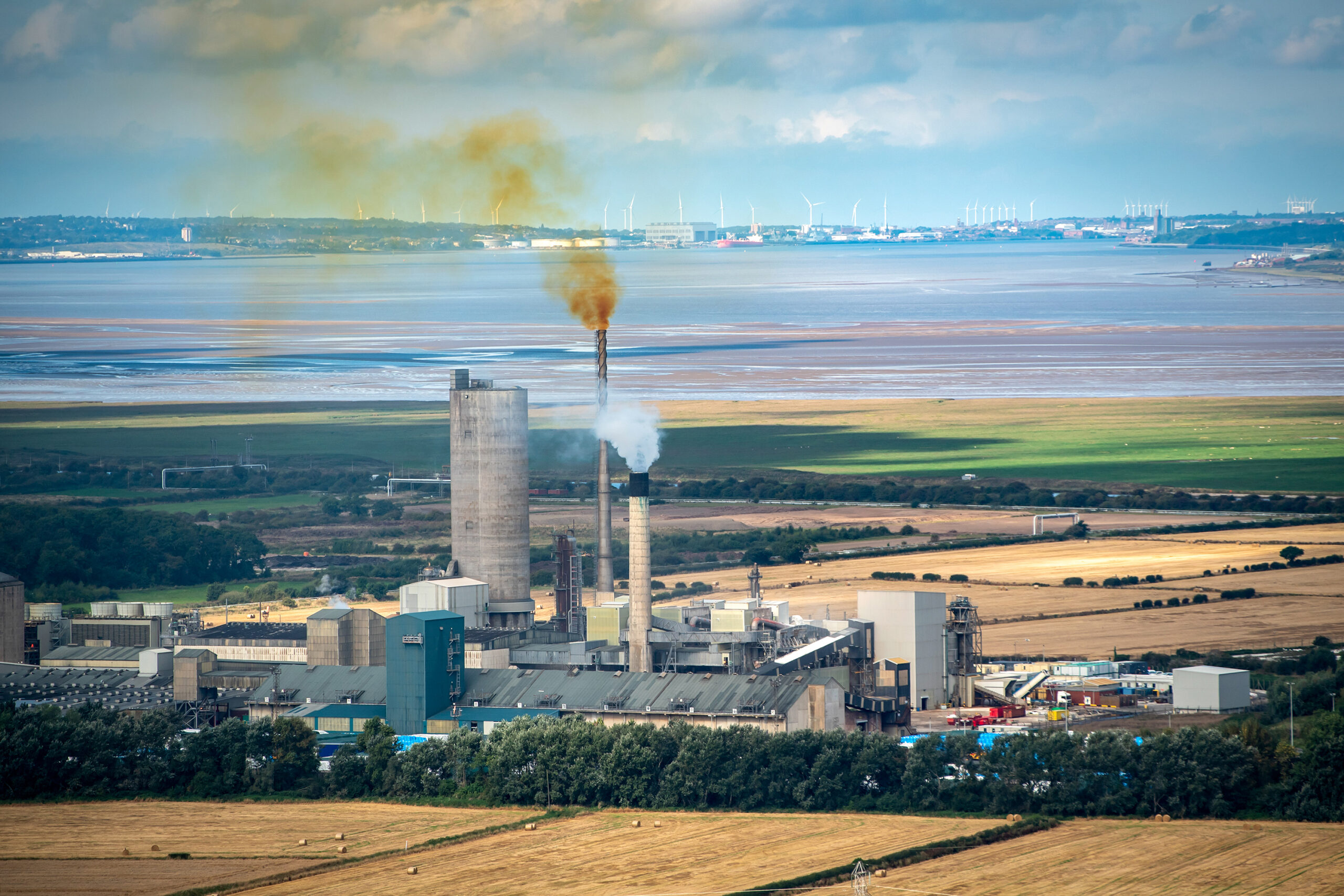
European Union nations are launching power saving drives as they seek to reign in soaring gas and electricity bills and conserve ever-more scarce resources following Russia’s invasion of Ukraine.
The 27-nation bloc, which has accused Moscow of waging an “energy war”, plans to cut gas consumption by 15 percent between August 1, 2022 and March 31, 2023 to cope with the crisis.
A snapshot of national efforts so far:
– Public buildings –
Italy launched earlier this year what it called “Operation Thermostat” to try to lower heating and cut back on air conditioning in schools and public buildings.









France and Germany have also called on their public sectors to lead the way in saving power in the same way. In Germany, public buildings including the Bundestag, or parliament, will have to do without hot water.
– Closed doors, open shops –
In France shops that use air conditioning must keep their doors closed or face a fine.
And in Germany shops have launched an advertising campaign to inform customers that they can go inside, even if the doors are closed.
In Spain, since August 10 air conditioning has to be turned down and be set at no lower than 27 degrees Celsius (80.6 degrees Fahrenheit) during the warmest months of the year, in rules affecting everything from public transport to shops, offices, theatres and cinemas.
The legislation also affects heating in winter, when temperatures can be set no higher than 19C.
By the end of September, any air-conditioned or heated premises in Spain must have an automatic door-closing mechanism installed to avoid energy waste.
– Illuminated advertising –
In France, illuminated advertising screens will be banned between 1 am and 6 am, except in airports and railway stations. The ban which could soon be brought forward to 10 pm, mirroring Germany.
A two-square-metre digital LCD screen uses the equivalent of the average annual consumption of a household for lighting and household appliances, except heating.
– Swimming pools and saunas –
Germany has banned heating private swimming pools from September.
Several cities have lowered the temperature in their swimming pools and made cuts in urban lighting.
A housing cooperative in the eastern city of Dresden made national headlines when it announced it would limit hot water to certain times of day.
And Vonovia, Germany’s largest property group, plans to limit the temperature in its 350,000 homes to 17 degrees Celsius at night.
In Finland people are being urged to spend less time in their beloved saunas.
– Public lighting –
In Vienna, there will be no Christmas lights this year on the Ring, the famous boulevard that encircles the centre of the Austrian capital.
And the lights at the Christmas market in the square in front of the city hall will only be switched on at night and not at dusk, about an hour later, on average, every day.
In Spain, from 10 pm shops have to switch off window-display lighting in a move also affecting the illumination of public buildings.
In Germany, the Bavarian city of Augsburg has turned off its fountains, dimmed the facades of public buildings at night and is debating switching off some under-used traffic lights.
– Small daily gestures –
Under its “A degree lower” campaign, Finland will from October encourage its citizens to turn down their radiators, take shorter showers and not heat their garages.
Germany’s summer campaign involved encouraging buying more water-efficient shower heads.






International
Mexico, Brazil and Colombia left out of Trump’s “Shield of the Americas” summit
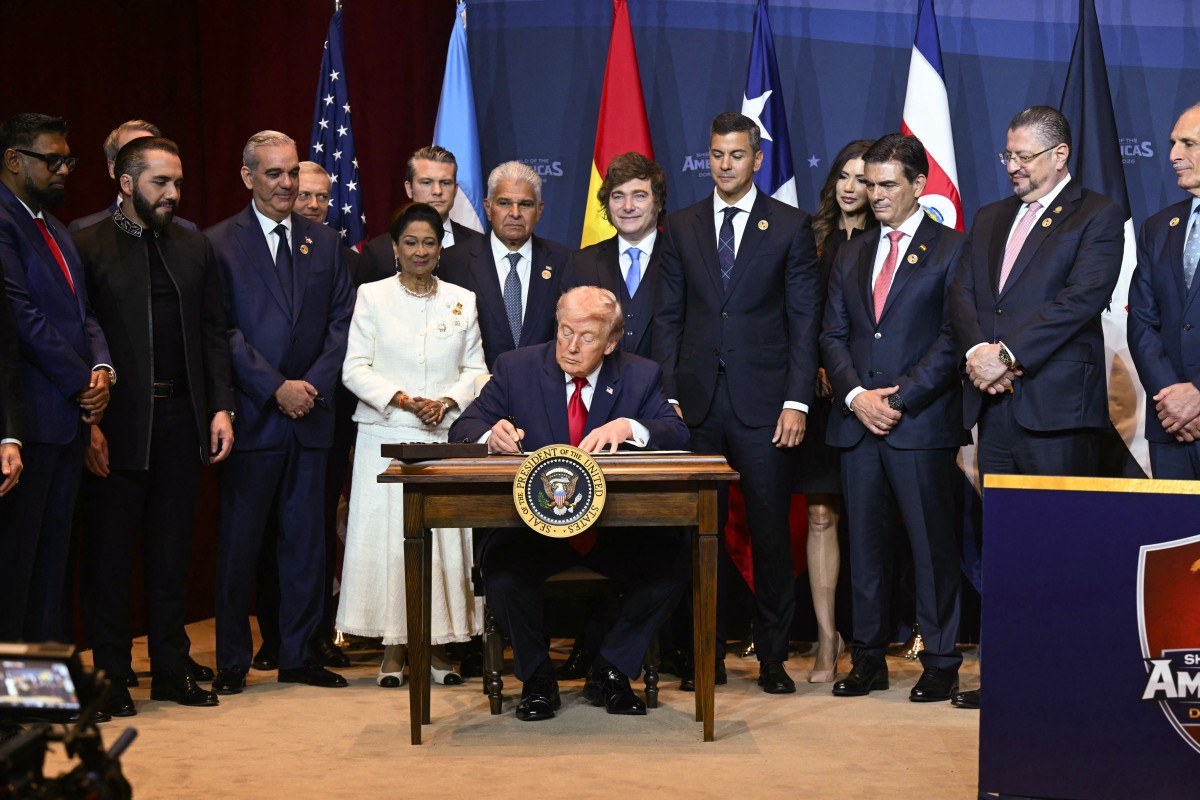
Left-wing governments in Latin America, including Mexico, Brazil and Colombia, were excluded from the “Shield of the Americas” summit convened by U.S. President Donald Trump.
The meeting, held in Miami, Florida, brought together 12 presidents from across the continent to discuss strategies to combat drug cartels and organized crime.
In Mexico’s case, President Claudia Sheinbaum had recently rejected the use of military force as a solution to the drug trafficking problem. She has argued that her administration’s security strategy is producing results and emphasized that force alone is not the answer.
During the summit, Trump said that most narcotics entering the United States come through Mexico and referred to his previous conversations with Sheinbaum on the issue.
“I like the president very much, she’s a very good person,” Trump said. “But I told her: ‘Let me eradicate the cartels.’ And she said, ‘No, no, no, please, president.’ We have to eradicate them. We have to finish them.”
The remarks highlighted ongoing differences between Washington and Mexico over how to confront drug trafficking networks operating across the region.
International
Trump announces 17-nation alliance in the Americas to “destroy” drug cartels
U.S. President Donald Trump announced on Saturday the creation of a 17-nation alliance across the Americas aimed at dismantling drug cartels, during a regional summit held at his golf club in Doral.
Speaking to a group of allied leaders at the Shield of the Americas Summit, Trump said the initiative would rely on military force to eliminate powerful criminal networks operating throughout the hemisphere.
“The heart of our agreement is the commitment to use lethal military force to destroy these sinister cartels and terrorist networks. Once and for all, we will put an end to them,” Trump told the assembled heads of state.
The Republican leader argued that large portions of territory in the Western Hemisphere have fallen under the control of transnational gangs and pledged U.S. support to governments seeking to confront them. He even suggested the potential use of highly precise missiles against cartel leaders.
Before making the announcement, Trump greeted the roughly twelve leaders attending the summit, including close allies such as Javier Milei, Daniel Noboa and Nayib Bukele, whom he described as a “great president.”
The meeting forms part of Trump’s broader regional strategy inspired by his reinterpretation of the Monroe Doctrine, which seeks to reinforce Washington’s influence in the Americas, strengthen security cooperation and counter the growing presence of powers such as China.
Trump pointed to recent U.S. actions in the region as examples of his administration’s approach, including the operation that led to the capture of former Venezuelan president Nicolás Maduro earlier this year.
The summit also takes place amid escalating international tensions following the conflict launched last week by the United States and Israel against Iran.
International
Trump replaces Homeland Security Secretary Kristi Noem with Senator Markwayne Mullin
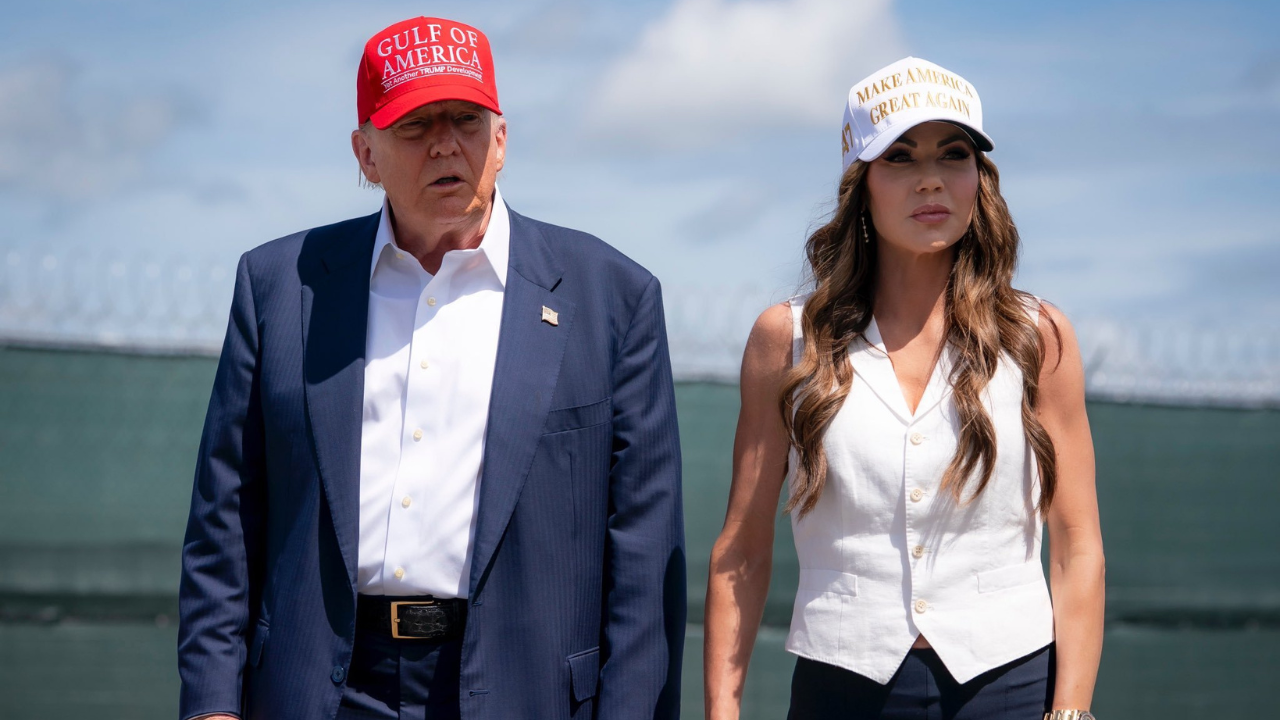
U.S. President Donald Trump announced Thursday the departure of Kristi Noem as Secretary of Homeland Security, one of the key architects of the administration’s policy of deporting undocumented immigrants.
Noem, who has been assigned a new role as a “special envoy” to Latin America, will be replaced starting March 31 by Republican Senator Markwayne Mullin, the president said in a message posted on his social media platform Truth Social.
According to media reports, Trump made the decision after Noem’s recent hearings in Congress, during which she faced tough questions regarding the awarding of a major public contract.

Mexico, Brazil and Colombia left out of Trump’s “Shield of the Americas” summit
Trump announces 17-nation alliance in the Americas to “destroy” drug cartels

Trump replaces Homeland Security Secretary Kristi Noem with Senator Markwayne Mullin
Tec de Monterrey honors one of its students for his contribution to nanotechnology in medicine

Defense Minister commends salvadoran soldier for Central American Cross Country victory

Extension of the state of emergency approved in southern Chile
-
 International5 days ago
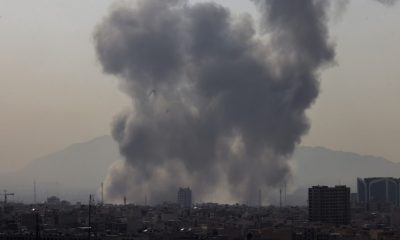
Claudia Sheinbaum: Operation Against ‘El Mencho’ Was Based on Pending Arrest Warrants
-
 International5 days ago
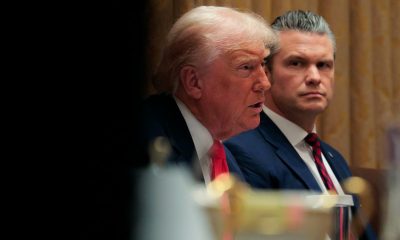
White House Says Spain Agrees to Cooperate with U.S. Military After Trump Threatens Trade Embargo
-
 International5 days ago
Spain Denies Any Agreement to Cooperate with U.S. Military in Iran Operations
-
 Central America5 days ago
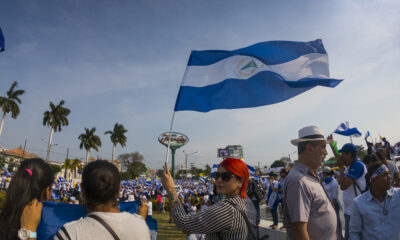
Nicaragua Held Responsible for Harassment of Opposition Prosecutor and His Family
-
 International2 days ago
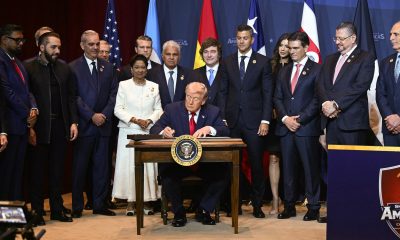
Trump announces 17-nation alliance in the Americas to “destroy” drug cartels
-
 International3 days ago
Young Woman Will Represent Mexico at 2026 World Cup Opener, Says President Sheinbaum
-
International1 day ago
Mexico, Brazil and Colombia left out of Trump’s “Shield of the Americas” summit
-
 International3 days ago
Trump replaces Homeland Security Secretary Kristi Noem with Senator Markwayne Mullin