
Central America
President of Panama announces blood cancer diagnosis
AFP
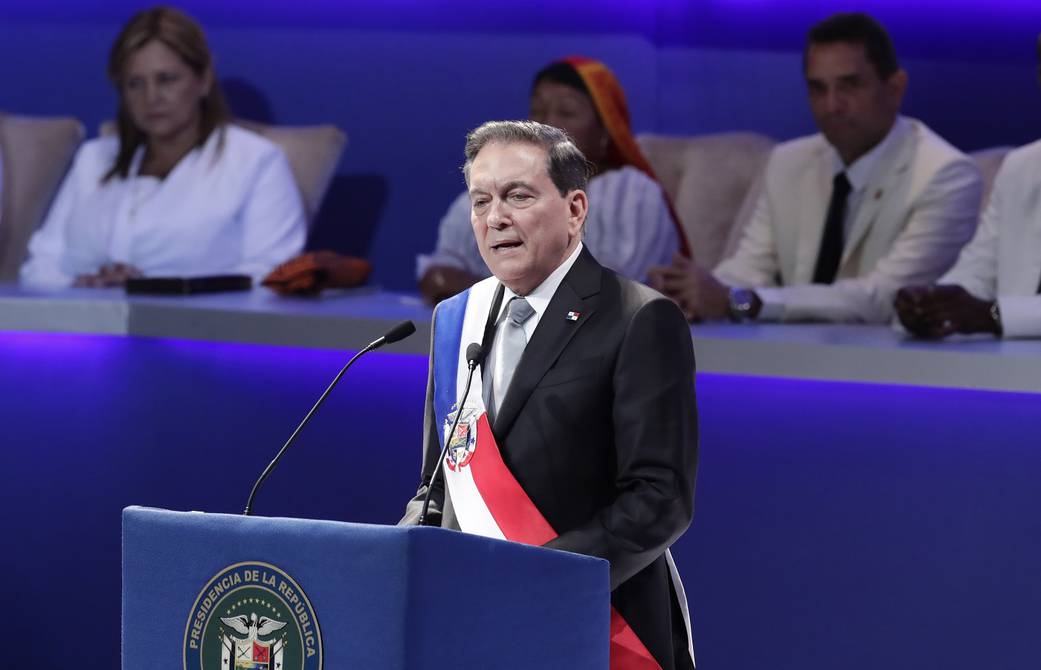
The President of Panama Laurentino Cortizo said on Monday that he has blood cancer, although the 69-year-old said he feels well and is in “good spirits.”
In late May, Cortizo’s doctors detected “a decrease in hemoglobin and white blood cell count” during routine testing, the president said in a televised statement.
Specialists recommended that a bone marrow biopsy be performed, and samples were sent to a US laboratory, and he was diagnosed with “intermediate risk” myelodysplastic syndrome, a type of cancer that hinders the production of blood cells.
Cortizo said he will undergo a second evaluation in the US city of Houston in July to find out the extent of the disease.











“I want to say that I feel well, I’m in good spirits and that I will continue with my regular work,” he added.
“The disease diagnosed to the president is a type of blood cancer,” Julio Sandoval, a doctor specializing in internal medicine and critical care, told AFP.
According to Sandoval, this type of cancer causes a decrease in hemoglobin, and abnormal levels of platelets and white blood cells, making the patient feel tired and weak, and leading to weight loss.
The disease can be caused “by a genetic disorder that develops silently and appears after the age of 60,” Sandoval said.
Life expectancy, which will depend on the specific type of cancer Cortizo has, can range “from six months to 15 years,” he added.










Central America
Panama launches anti-drone measures as prison security crisis deepens
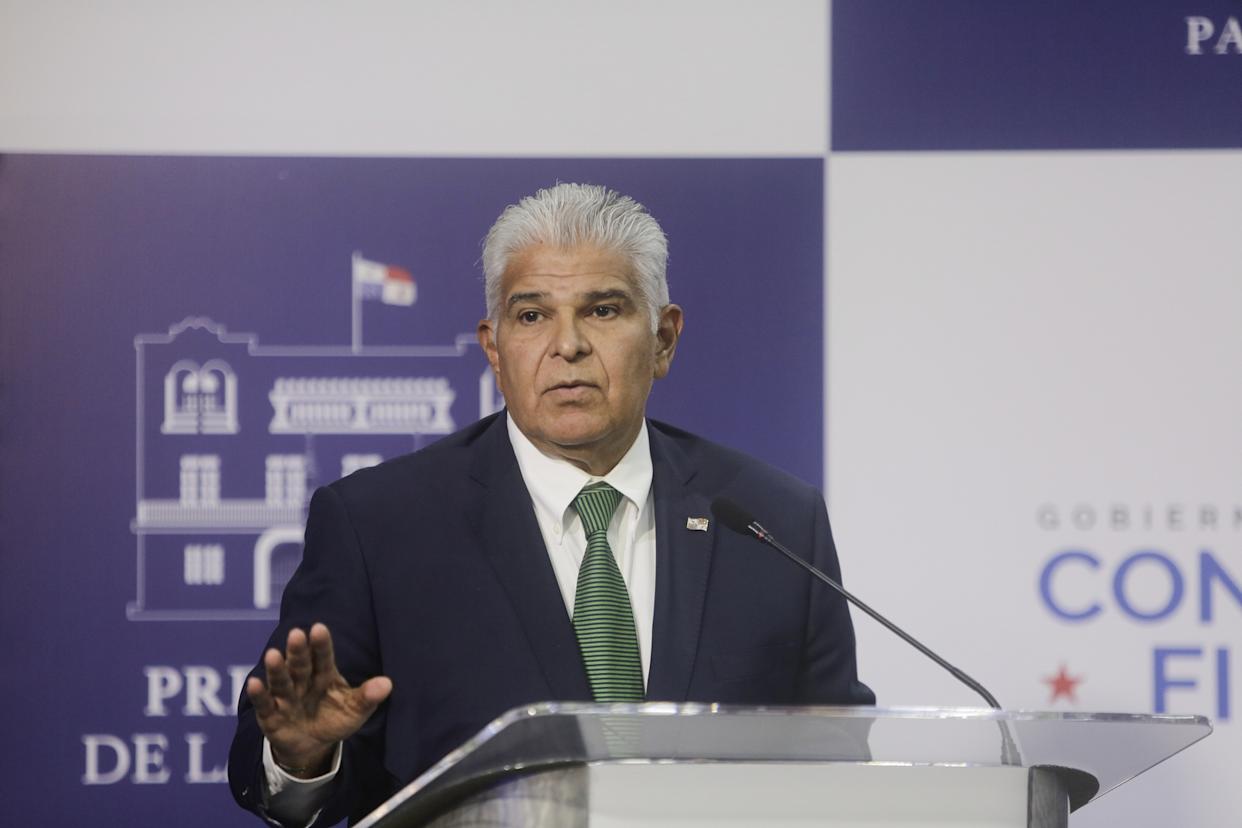
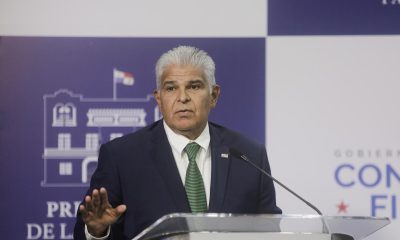
Panama will restrict airspace around its prisons to prevent drones from delivering drugs and weapons to inmates, President José Raúl Mulino announced Thursday as his administration moves to address a growing prison security crisis.
The measure is part of a broader strategy that includes the construction of a new penitentiary designed to isolate gang leaders, according to the president.
“We are implementing an airspace blocking system so that drones can no longer fly over the prisons,” Mulino told reporters during a visit to the province of Bocas del Toro.
The system was tested last week with the aim of preventing drones from nearby areas from being used to transport or drop drugs inside correctional facilities, the president added.
Panama’s prison system has faced increasing pressure following the escape of nearly 200 inmates from La Joyita prison, located near Panama City, on January 1. Most of the prisoners have since been recaptured.
The security situation gained further attention after the escape and the June 17 killing of a 10-year-old girl in the capital, who was caught in a hit attack targeting her stepfather.
Following the La Joyita prison break, Mulino said the country’s penitentiary system had “collapsed” and announced last week, during his annual government report, plans to build a facility aimed at separating high-ranking gang members from the general prison population.
“The system collapsed, not only because of organization but because of corruption. All the drugs and weapons that enter prisons pass through a door, and there is someone — whether a prison guard or a member of the national police — who allows them to enter,” Mulino said Thursday.
Panama recorded a homicide rate of 14.2 per 100,000 inhabitants in 2025. However, the Caribbean province of Colón registered a rate three times higher than the national average.
Meanwhile, the country’s prisons currently hold around 24,000 inmates, despite having capacity for only 14,700, according to official figures.
Central America
Regional Naval Operations Strike Drug Cartels, Disrupting Cocaine and Weapons Trafficking Routes
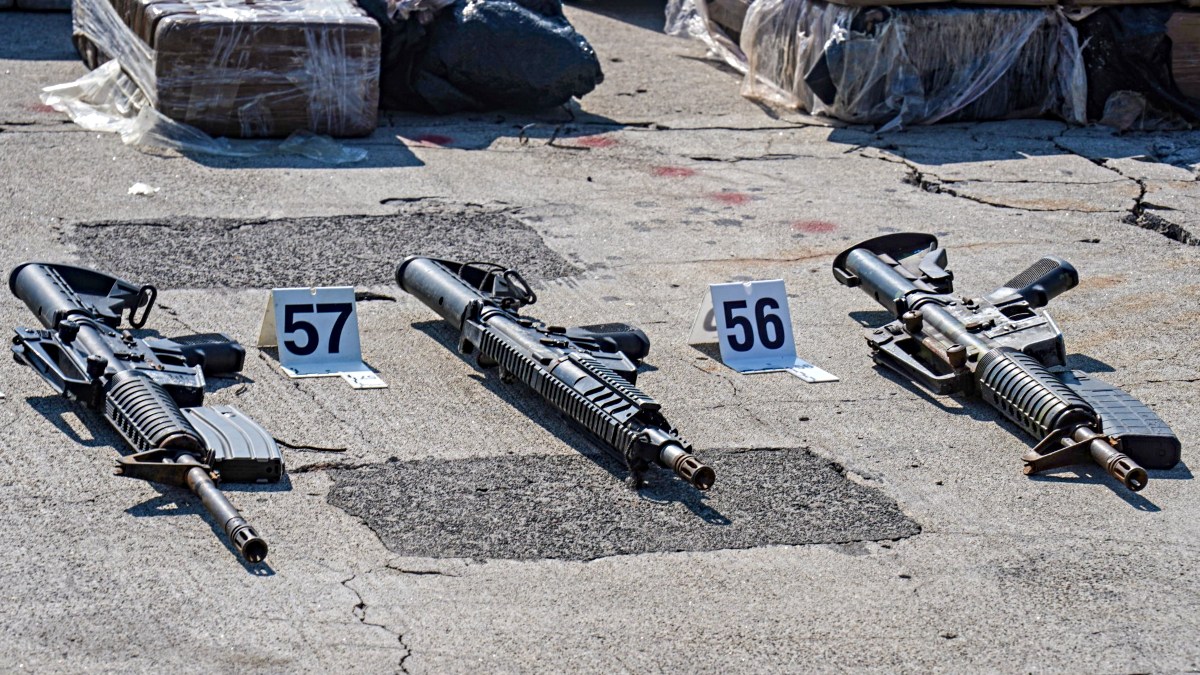
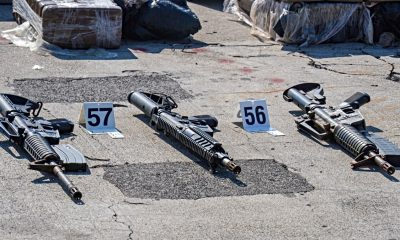
Transnational operations carried out by regional naval forces, including El Salvador’s National Navy, the United States Coast Guard, and Mexico’s Secretariat of the Navy (SEMAR), have dealt significant blows to international drug trafficking organizations.
The operations have not only led to the seizure of massive cocaine shipments, such as the 6.68 metric tons of cocaine valued at approximately $167 million presented last Wednesday by El Salvador’s Security Cabinet, but have also resulted in the confiscation of high-powered weapons allegedly intended as payment to criminal organizations, according to Security Minister Gustavo Villatoro.
“Based on the strength of the data, not just the narratives, we can state that our National Navy has documented the only known operation in the Pacific Ocean in which a criminal organization from the south was transporting drugs and exchanging them with a group from the north for firearms,” Villatoro said.
The exchange of weapons for drugs between criminal groups in the Pacific Ocean represents a logistical method in which South American cartels from countries such as Colombia and Ecuador negotiate with Mexican and Central American organizations to trade military-grade weapons for cocaine shipments.
Regional naval authorities have identified that meeting points located farther from the coastline in international waters make it easier for armed groups to receive supplies and carry out exchanges undetected. As a result, El Salvador’s National Navy deploys teams from the Trident Naval Task Force (FTNT) aboard maritime patrol vessels to intercept these operations.
Initially, the patrol units are ordered to travel up to 200 nautical miles offshore, but later receive instructions from the Maritime Operations Center to extend their missions beyond 1,000 nautical miles, reaching coordinates used by drug trafficking vessels operating in the open sea.
“We cannot lose focus on the routes these criminal organizations use to move drugs,” Minister Villatoro said, emphasizing the importance of maintaining surveillance over the various maritime corridors used for narcotics trafficking.
Central America
Violent Killings of Women in Honduras Remain High During First Half of 2026
Violent deaths of women remain a major concern in Honduras, according to preliminary data released by the Violence Observatory of the National Autonomous University of Honduras.
Between January and June 2026, the country recorded 139 violent deaths of women, one more than the 138 reported during the same period in 2025.
The Observatory’s director, Migdonia Ayestas, said that although the increase is minimal, the figures confirm that violence against women remains a persistent problem.
“Violence against women is a serious issue. The ways in which they are being killed have become increasingly brutal and inhumane,” Ayestas said.
She explained that documented cases include dismemberment, beheadings, sexual assaults, and bodies abandoned in public places, acts that she said reflect the violence carried out by criminal organizations.
Ayestas stressed that the analysis should go beyond the number of victims and focus on the effectiveness of the justice system.
“We should not only count how many women are killed, but also how many cases are investigated, how many arrests are made, and how many reach the courts,” she said.
According to the Observatory, more than 8,000 women have died violent deaths in Honduras since 2005, leaving thousands of children orphaned.
Ayestas also called for stronger prevention efforts, improved education, and more effective criminal investigations to address the crisis. She argued that the current state of emergency alone has not been sufficient to dismantle criminal organizations or significantly reduce violence, emphasizing the need for comprehensive strategies to prevent these crimes and combat impunity.
The first-half figures for 2026 underscore that violence against women remains one of Honduras’ most pressing security and human rights challenges.

Panama launches anti-drone measures as prison security crisis deepens

Tensions Escalate in Middle East as U.S. Bombs Iran After Maritime Attacks

Deadly Drug Trade Rivalry Suspected After Eight Bodies Discovered in Southern Mexico
Tec de Monterrey honors one of its students for his contribution to nanotechnology in medicine

Defense Minister commends salvadoran soldier for Central American Cross Country victory

Extension of the state of emergency approved in southern Chile
-
 International4 days ago
Wildfires Burn Nearly 7,800 Hectares in France as Extreme Heat Fuels Fire Risk
-
 Central America1 day ago
Panama launches anti-drone measures as prison security crisis deepens
-
 International3 days ago
Deadly Drug Trade Rivalry Suspected After Eight Bodies Discovered in Southern Mexico
-
 International4 days ago
UN Appeals for $296 Million in Emergency Aid Following Venezuela Earthquakes
-
 International4 days ago
USAR El Salvador Helps Rescue Dogs Trapped for 12 Days Beneath Earthquake Rubble
-
 Central America3 days ago
Regional Naval Operations Strike Drug Cartels, Disrupting Cocaine and Weapons Trafficking Routes
-

 International4 days ago
German Doctor Sentenced to Life for Murdering 15 Patients in Serial Killing Case
-
 International3 days ago
Tensions Escalate in Middle East as U.S. Bombs Iran After Maritime Attacks