
International
Leftist Colombia candidate demands audit of vote count software

AFP
The campaign team of leftist Gustavo Petro, leading in opinion polls in Colombia’s presidential race, on Monday demanded an “immediate” audit of vote-counting software less than two weeks before the first election round.
Electoral judges have already ordered a software review after discrepancies arose in the counting of votes cast for a new parliament in March, but none has taken place.
The final tally of the March ballot for the Senate and House of Representatives showed 400,000 votes for Petro’s leftist coalition that had not shown up in provisional results published on election day.
Ex-guerrilla Petro’s “Historical Pact” alliance obtained extra seats in parliament as a result, ending with 45 in the two houses combined.









This made it the biggest grouping along with the Liberal Party, though numerous legal challenges has held up the final, official allocation of seats.
Colombia’s right-wing coalition and the incumbent Democratic Center Party lost seats between the two counts, and challenged the final result.
Observers have expressed concern about possible unrest should the outcome of Colombia’s deeply-polarized presidential election also be contested. The first round will take place on May 29, with a likely run-off on June 19.
After the March debacle, the country’s National Electoral Council instructed the body in charge of the vote count — the National Civil Registry — to arrange an “international audit” of vote counting software.
But in a letter published Monday, Petro’s coalition said it was “concerned” that the registry had not yet appointed an auditor.
It urged registry boss Alexander Vega to act “immediately” in order to “give peace of mind to political forces and citizens.”
Voting is done on paper in Colombia, but the results are processed and transmitted via two digital programs designed by private entrepreneurs.
Civil society organizations have questioned the transparency of these programs and requested a review of their source code.
Petro’s campaign also complained after the mayor of Medellin, Colombia’s second-largest city, was suspended after implicitly supporting the leftist candidate’s run.
Public officials in Colombia, even elected ones, are not allowed to publicly take political sides.
Mayor Daniel Quintero was suspended last week pending a disciplinary probe into claims of “repeated intervention in political activities.”
He was replaced by an interim mayor appointed by the outgoing right-wing President Ivan Duque.
Petro, 62, has denounced a “coup d’etat in Medellin” and urged the Inter-American Commission of Human Rights to intervene.






International
Trump orders U.S. control of Strait of Hormuz after failed Iran talks
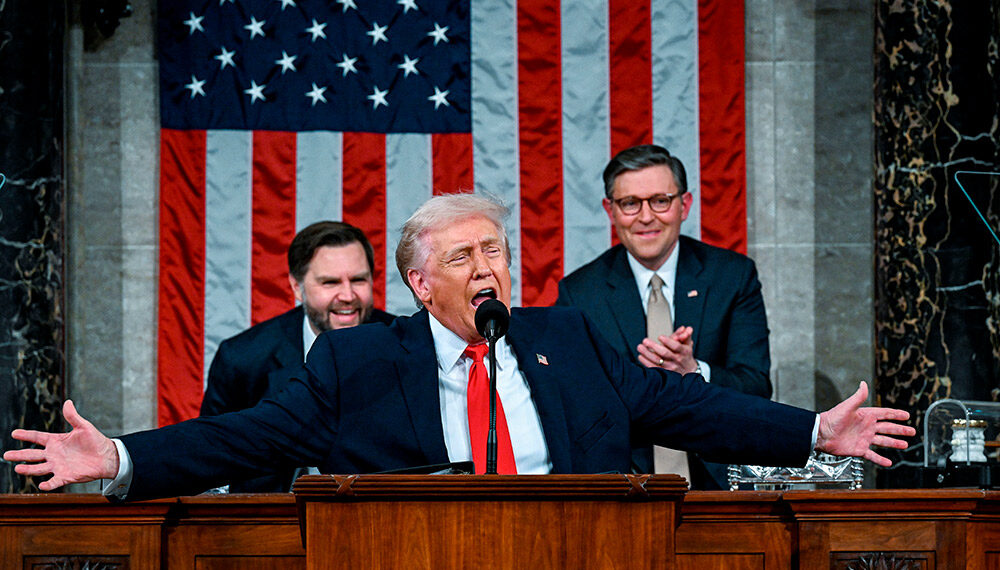
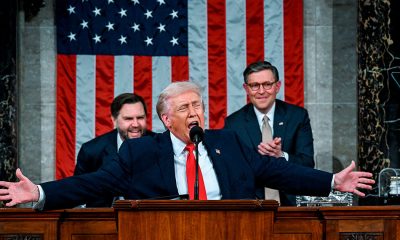
U.S. President Donald Trump announced on Sunday that the United States will take control of the Strait of Hormuz“effective immediately,” following the collapse of negotiations with Iran held in Islamabad.
In a post on Truth Social, Trump said he had ordered the U.S. Navy to block vessels attempting to enter or exit the strategic waterway, a key route for global energy trade.
“The meeting went well, agreement was reached on most points, but the only really important one — nuclear weapons — was not approved,” Trump said, referring to the talks with Iranian representatives.
The president also stated that he had instructed authorities to intercept ships in international waters that had paid tolls to Iran to transit the strait, calling such payments “illegal.” He further accused Tehran of hindering an agreement by deploying mines in the area, describing the move as “international extortion.”
Trump added that the United States will undertake efforts to clear mines from the strait and expressed confidence that a future agreement ensuring free navigation could eventually be reached.
The announcement came after Vice President JD Vance and special envoys Steve Witkoff and Jared Kushner briefed the president on the outcome of the negotiations, considered the highest-level contacts between the two countries since the 1979 Islamic Revolution.
While Trump acknowledged that enough progress had been made to maintain a temporary truce, he criticized Iran for remaining unwilling to abandon its nuclear ambitions, calling its position “very inflexible” on the central issue.
International
Child Found Malnourished in Van in France; Father Admits Confinement

French gendarmes discovered a child in a van in Hagenbach, in northeastern France, after a neighbor reported hearing what she described as “childlike noises” coming from the parked vehicle.
After unlocking the van, officers found the boy lying in a fetal position, unclothed and covered with a blanket, surrounded by garbage and near human waste, according to a statement from the Mulhouse prosecutor, Nicolas Heitz.
Authorities said the child appeared pale and severely malnourished. Due to prolonged confinement in a seated position, he was no longer able to walk. He was immediately taken to a hospital in Mulhouse for medical care.
The boy’s father, who lived with his partner and two daughters aged 10 and 12, admitted to keeping the child confined and depriving him of proper care.
According to the prosecutor, the man said he placed the child in the van in November 2024, claiming he wanted to “protect him” because his partner intended to have the boy admitted to a psychiatric facility.
The suspect also stated that he allowed the child out of the vehicle in May 2025 and permitted him to enter the family apartment around mid-year, when the rest of the family was on vacation.
The man’s partner—who is not the child’s mother—also faces charges, including failure to report abuse. However, she has denied all accusations.
International
Europe Faces Jet Fuel Shortage Risk Amid Hormuz Disruption
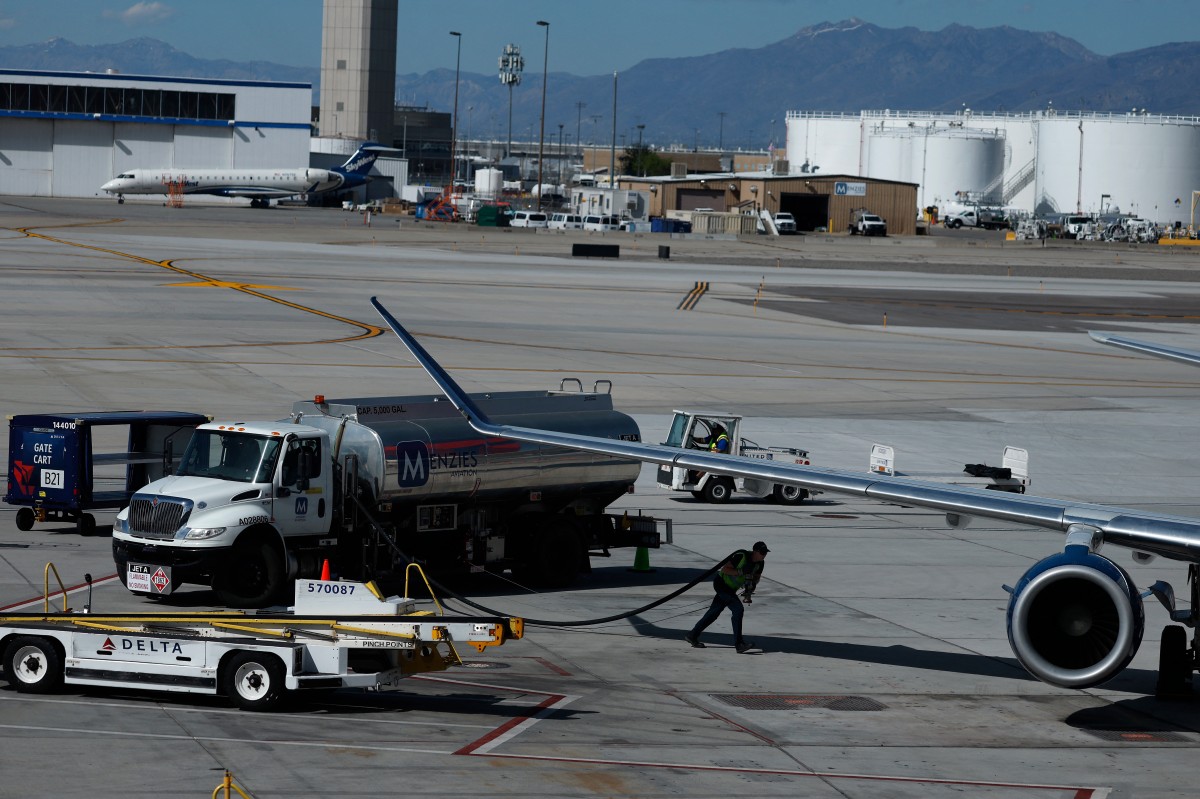
The Airports Council International Europe has warned of a potential “systemic shortage” of jet fuel if maritime traffic through the Strait of Hormuz is not restored within the next three weeks, according to a letter reviewed by AFP on Friday.
In the document, addressed to the European Commission and first reported by the Financial Times, the European airport lobby stated that a “systemic jet fuel shortage will become a reality” in the European Union unless stable and significant transit through the strait resumes soon.
The association, which represents around 600 airports across 50 countries, called on Brussels to implement “urgent monitoring of fuel availability and supply” over the next six months.
Jet fuel prices have surged amid the conflict in the Middle East and the ongoing disruption in the Strait of Hormuz, a critical chokepoint for global energy transport.
The conflict escalated on February 28 following joint U.S. and Israeli airstrikes against Iran.
In response, Tehran imposed several countermeasures, including blocking maritime traffic through the strait, a route through which roughly 20% of the world’s oil, jet fuel, and gas supply passes.

Trump orders U.S. control of Strait of Hormuz after failed Iran talks

Panama and Costa Rica strengthen border alliance to combat organized crime

Ancelotti leaves door open for Neymar’s return to Brazil’s 2026 World Cup squad
Tec de Monterrey honors one of its students for his contribution to nanotechnology in medicine

Defense Minister commends salvadoran soldier for Central American Cross Country victory

Extension of the state of emergency approved in southern Chile
-
 International2 days ago
Europe Faces Jet Fuel Shortage Risk Amid Hormuz Disruption
-
 International3 days ago
Flooding in Dominican Republic leaves child dead and thousands affected
-
 Central America4 days ago
Gunfire and protests mark controversial rector reelection at Guatemala’s USAC
-

 International3 days ago
Artemis II crew prepares for Earth return and splashdown recovery
-

 International2 days ago
Child Found Malnourished in Van in France; Father Admits Confinement
-
 Sports1 day ago
Ancelotti leaves door open for Neymar’s return to Brazil’s 2026 World Cup squad
-
 Central America1 day ago
Panama and Costa Rica strengthen border alliance to combat organized crime
-

 International4 days ago
Bill Gates to testify before Congress over Epstein connections
-
 International8 hours ago
Trump orders U.S. control of Strait of Hormuz after failed Iran talks
-

 Central America4 days ago
Seven arrested in Guatemala over disappearance of six near Mexico border