
International
Colombia to allow assisted medical suicide: court

AFP
Colombia on Thursday became the first Latin American country to authorize assisted medical suicide for patients under a doctor’s supervision, according to a constitutional court decision.
The country’s highest court ruled that a doctor can help a seriously ill patient take their own life by consuming a lethal drug, without risking going to jail.
Colombia already allows euthanasia — where a doctor is the one to administer a life-ending drug to a patient.
“The doctor who helps someone with intense suffering or serious illness and who freely decides to dispose of their own life, acts within the constitutional framework,” read Thursday’s court ruling that passed by six votes to three.









Colombia decriminalized euthanasia in 1997, and in July 2021 a high court expanded this “right to dignified death” to those not suffering from a terminal illness.
Fewer than 200 people have opted for euthanasia in Colombia since 1997, according to official data.
It is the first and only Latin American country to have taken this step and one of just a few in the world, and did so despite being mostly Roman Catholic.
The church categorically opposes both euthanasia and assisted suicide.
– ‘Intense’ suffering –
According to the Right to Die with Dignity foundation (DMD), the difference between euthanasia and assisted suicide “is basically who administers the drug.”
“In the case of euthanasia, it is health personnel who administer the medicine that causes death and in the case of assisted suicide it is the patient who self-administers the medicine that another person has provided,” it explained.
Despite its decriminalization of euthanasia, a doctor still risked jail time of 12 to 36 months for assisting a person end their own life.
Thursday’s court ruling said assisted suicide would be allowed only for people dealing with “intense physical or mental suffering arising from bodily injury or serious and incurable illness.”
A doctor acting outside of this framework could still go to jail for up to nine years.
According to the World Federation of Right to Die Societies, “aid in dying” is allowed in some form or another in the Netherlands, Belgium, Canada, Luxembourg, New Zealand, Switzerland, Spain, Germany, Austria, some states in Australia and some in the United States.
Elsewhere in Latin America, Chile’s lower house of Parliament approved a bill last year that would allow euthanasia for adults. It still requires approval by the Senate.
And a court in Peru last April ordered the government to respect the wishes of a polio-stricken woman to be allowed to die, a rare allowance for euthanasia in that country.






International
Bill Gates Says Jeffrey Epstein Made “Veiled” Threats Over Extramarital Affairs

Microsoft co-founder Bill Gates told members of the U.S. Congress that he received “veiled” threats from convicted sex offender Jeffrey Epstein related to his extramarital affairs, according to a transcript of his testimony released Tuesday.
Gates testified behind closed doors on June 10 before the House Oversight Committee regarding his relationship with the American financier, who died in prison in 2019 while awaiting trial on sex trafficking-related charges. Epstein had previously been convicted in 2008 for soliciting prostitution from a minor.
According to the transcript released by the committee, Gates said Epstein appeared to want to use his knowledge of Gates’ personal relationships as leverage to keep him within his circle at a time when Gates was already distancing himself.
“I was not blackmailed, but reading these emails, it seems like Mr. Epstein’s ideas were moving in that direction,” Gates said, referring to documents from the Epstein case released by the Justice Department in January.
Gates added that Epstein never sent him anything he would personally classify as blackmail. However, he said the content of certain draft emails suggested Epstein was “rehearsing” how he, or someone he instructed, might attempt to pressure him.
“He was, in a way, practicing how he himself, or someone he directed, could choose to blackmail me, but none of those messages were ever sent to me,” Gates told lawmakers.
The 70-year-old billionaire had previously stated that he was unaware of Epstein’s criminal behavior and said he had never been involved in harming anyone.
In February, Gates told The Wall Street Journal that his association with Epstein was a serious mistake. He also acknowledged having extramarital relationships, while denying any involvement in Epstein’s criminal activities.
Gates said his relationship with Epstein began in 2011, three years after Epstein’s conviction, and acknowledged that he was aware of Epstein’s legal troubles at the time.
However, Gates said he was told that Epstein had the ability to raise billions of dollars for global health initiatives, an area in which Gates had significant involvement.
“When I met him, I knew he had been convicted,” Gates told lawmakers. “I knew it was of a sexual nature, but I didn’t try to learn more, although I probably should have.”
Central America
El Salvador and Chile Mark 150 Years of Relations With Expanded Bilateral Cooperation
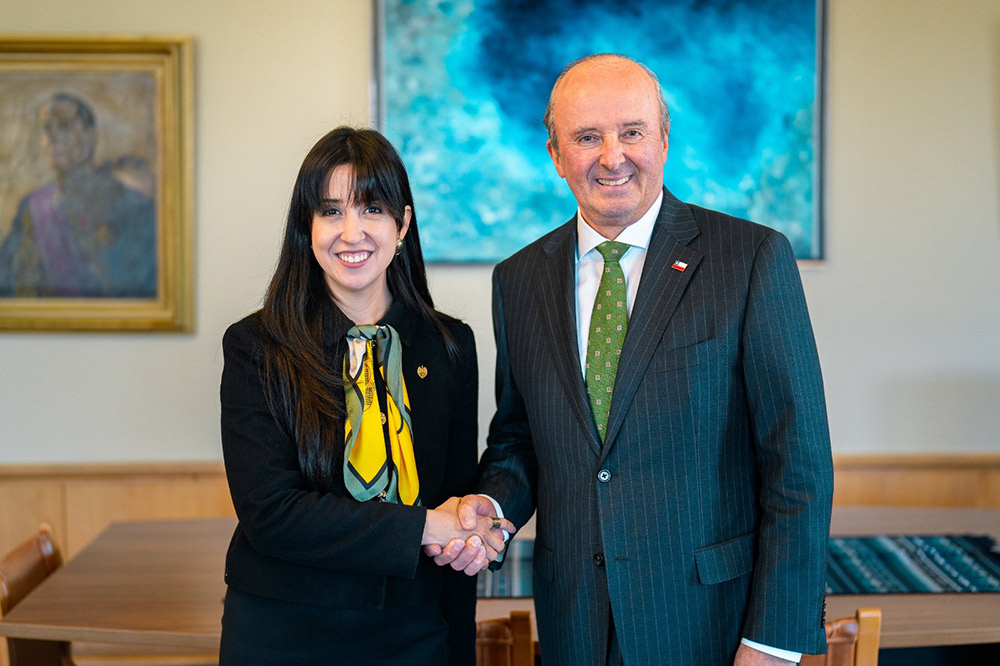
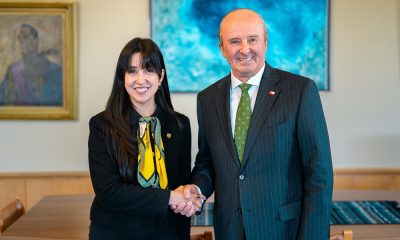
El Salvador and Chile are strengthening their diplomatic and cooperation ties through the official visit of Salvadoran Deputy Foreign Minister Adriana Mira to the South American country.
The purpose of the visit is to expand economic exchanges, promote new cooperation opportunities, and strengthen the bonds of friendship between both nations, according to El Salvador’s Foreign Ministry.
During her visit, Mira held a meeting with her Chilean counterpart, Patricio Torres, where they discussed issues of common interest and actions aimed at further advancing bilateral relations.
The agenda included initiatives to promote trade, encourage investment in strategic sectors, and strengthen joint efforts in different areas of cooperation.
As part of this process, both countries are preparing the 5th Meeting of the Joint Commission for Technical and Scientific Cooperation, where they are expected to establish a new framework for bilateral collaboration aimed at creating mutual benefits.
The meeting also carried a historic significance, as El Salvador and Chile are commemorating 150 years of diplomatic relations in 2026.
Representatives from both governments highlighted the importance of continuing to deepen their ties of friendship and cooperation to support shared development goals.
El Salvador’s Foreign Ministry emphasized that the relationship between both countries seeks to advance greater economic, commercial, and technical integration while taking advantage of new opportunities for collaboration.
International
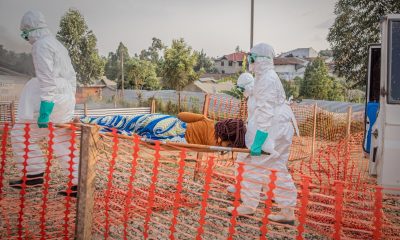
WHO Expects Deadly Hantavirus Outbreak on Cruise Ship to End by July 2
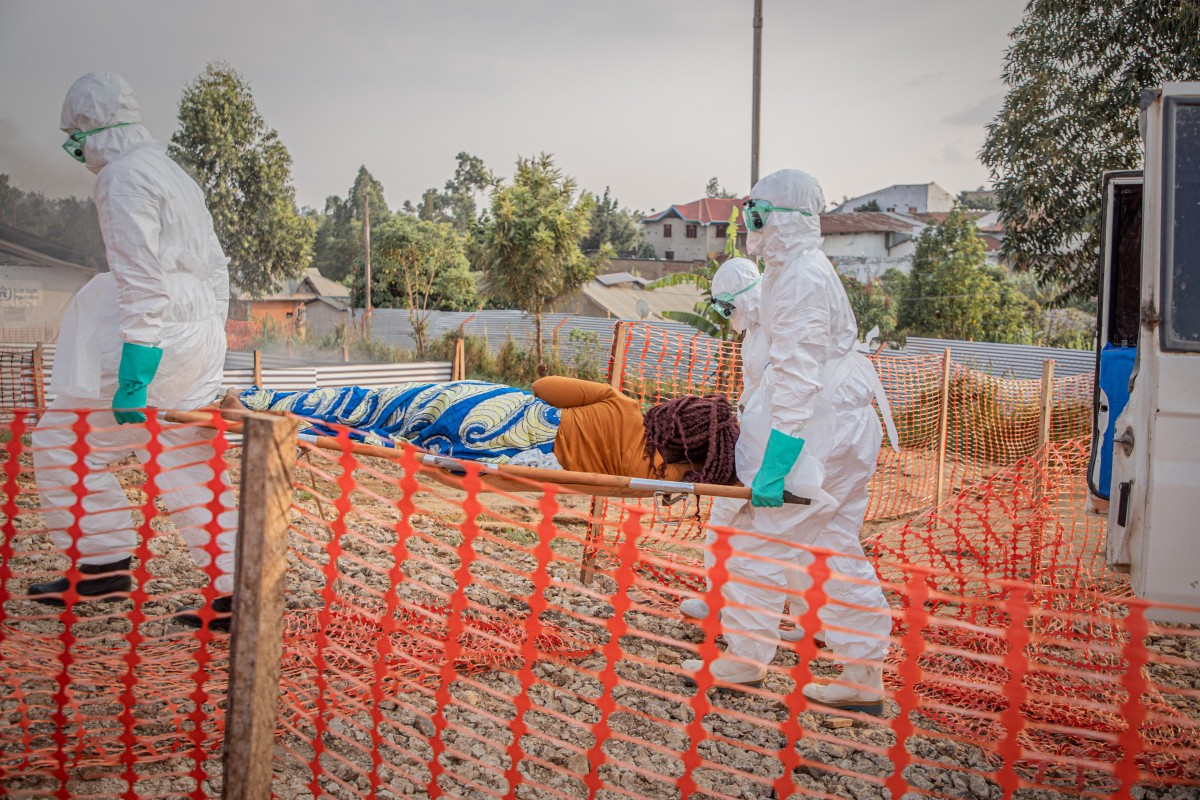
The deadly hantavirus outbreak linked to a cruise ship that triggered an international health alert is expected to be officially declared over on July 2, the World Health Organization (WHO) announced on Wednesday.
However, while the outbreak is nearing its end for people who remain under quarantine, scientists and health experts say their work is only beginning. Researchers will study virus samples to determine whether new diagnostic tests, treatments, and vaccines can be developed to help prevent future outbreaks.
The outbreak involved 12 confirmed cases and one probable case associated with the Dutch-flagged cruise ship MV Hondius, including three deaths.
The vessel departed on April 1 from Ushuaia, Argentina, traveling toward remote islands in the South Atlantic, including Tristan da Cunha, before heading north to Tenerife in Spain’s Canary Islands, where the remaining passengers were evacuated.
WHO Director-General Tedros Adhanom Ghebreyesus said that health authorities identified and monitored more than 650 contacts across 33 countries and territories following the outbreak.
“All but 54 contacts have completed their quarantine period, and the remaining contacts are expected to complete their quarantine by July 2,” Tedros said during a press briefing at WHO headquarters in Geneva.
“If no additional cases are reported by then, WHO will consider the outbreak to be over,” he added.
Although the immediate public health threat appears to be declining, experts emphasized that continued scientific analysis of the virus will be essential to strengthen preparedness and response measures for possible future outbreaks.

Bill Gates Says Jeffrey Epstein Made “Veiled” Threats Over Extramarital Affairs

El Salvador and Chile Mark 150 Years of Relations With Expanded Bilateral Cooperation

WHO Expects Deadly Hantavirus Outbreak on Cruise Ship to End by July 2
Tec de Monterrey honors one of its students for his contribution to nanotechnology in medicine

Defense Minister commends salvadoran soldier for Central American Cross Country victory

Extension of the state of emergency approved in southern Chile
-

 International1 day ago
Cristiano Ronaldo Makes History as First Player to Score in Six World Cups
-
 International2 days ago
UNHCR Urges U.S. Deportation Agreements to Uphold Asylum Rights and International Law
-

 International2 days ago
Mbappé Ties Klose on All-Time World Cup Scoring List After Brace Against Iraq
-
 International1 day ago
U.S. Proposes Higher Citizenship Fees and Limits on Immigration Fee Waivers
-

 Central America1 day ago
Costa Rica Launches Largest Police Operation in History, Dismantles Major Drug Cartel
-
 International5 hours ago
WHO Expects Deadly Hantavirus Outbreak on Cruise Ship to End by July 2
-
 Central America5 hours ago
El Salvador and Chile Mark 150 Years of Relations With Expanded Bilateral Cooperation
-
 Central America2 days ago
Ancient Maya Ceremonial Site Reveals New Clues About Preclassic Ritual Practices
-
 International5 hours ago
Bill Gates Says Jeffrey Epstein Made “Veiled” Threats Over Extramarital Affairs