
International
Colombia to allow assisted medical suicide: court

AFP
Colombia on Thursday became the first Latin American country to authorize assisted medical suicide for patients under a doctor’s supervision, according to a constitutional court decision.
The country’s highest court ruled that a doctor can help a seriously ill patient take their own life by consuming a lethal drug, without risking going to jail.
Colombia already allows euthanasia — where a doctor is the one to administer a life-ending drug to a patient.
“The doctor who helps someone with intense suffering or serious illness and who freely decides to dispose of their own life, acts within the constitutional framework,” read Thursday’s court ruling that passed by six votes to three.











Colombia decriminalized euthanasia in 1997, and in July 2021 a high court expanded this “right to dignified death” to those not suffering from a terminal illness.
Fewer than 200 people have opted for euthanasia in Colombia since 1997, according to official data.
It is the first and only Latin American country to have taken this step and one of just a few in the world, and did so despite being mostly Roman Catholic.
The church categorically opposes both euthanasia and assisted suicide.
– ‘Intense’ suffering –
According to the Right to Die with Dignity foundation (DMD), the difference between euthanasia and assisted suicide “is basically who administers the drug.”
“In the case of euthanasia, it is health personnel who administer the medicine that causes death and in the case of assisted suicide it is the patient who self-administers the medicine that another person has provided,” it explained.
Despite its decriminalization of euthanasia, a doctor still risked jail time of 12 to 36 months for assisting a person end their own life.
Thursday’s court ruling said assisted suicide would be allowed only for people dealing with “intense physical or mental suffering arising from bodily injury or serious and incurable illness.”
A doctor acting outside of this framework could still go to jail for up to nine years.
According to the World Federation of Right to Die Societies, “aid in dying” is allowed in some form or another in the Netherlands, Belgium, Canada, Luxembourg, New Zealand, Switzerland, Spain, Germany, Austria, some states in Australia and some in the United States.
Elsewhere in Latin America, Chile’s lower house of Parliament approved a bill last year that would allow euthanasia for adults. It still requires approval by the Senate.
And a court in Peru last April ordered the government to respect the wishes of a polio-stricken woman to be allowed to die, a rare allowance for euthanasia in that country.










International
Judge rules Trump’s IRS lawsuit was a “bad faith” attempt to manipulate the judicial process
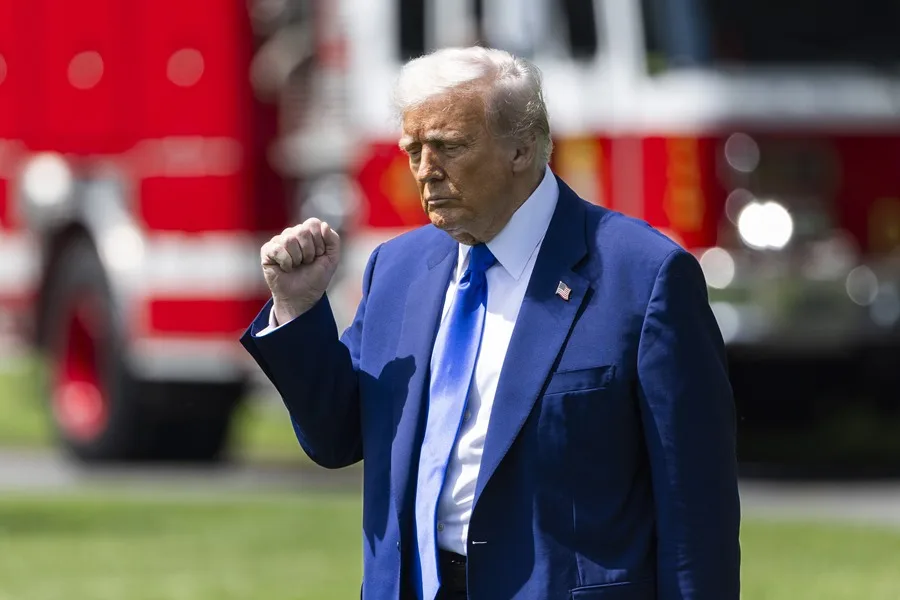
A federal judge ruled Monday that a lawsuit filed by President Donald Trump against the Internal Revenue Service (IRS) was an attempt to “manipulate the judicial process” and determined that the case was brought in bad faith.
U.S. District Judge Kathleen Williams ordered sanctions against the attorneys involved in the lawsuit, which led to an effort to create the now-defunct $1.8 billion “anti-weaponization” fund aimed at addressing alleged political targeting by government institutions in favor of Trump allies.
The lawsuit was also used to justify a government order that sought to provide Trump and his companies with immunity from any past tax-related matters.
In a 56-page opinion, Williams sharply criticized both the Department of Justice (DOJ) — saying the government’s response to the case disregarded agency policies and may have violated the law — and the private attorneys who filed the lawsuit on Trump’s behalf.
“The very nature of the lawsuit and the conduct of the parties and counsel since its filing make clear that this was an attempt to use the court to provide legitimacy to an agreement designed to grant immunity to individuals and entities connected to the president and to allocate billions of taxpayer dollars to remedy grievances that the law does not recognize,” Williams wrote.
The judge also ordered that her opinion be referred to attorney disciplinary authorities in New York and Washington, which are already reviewing previous ethics complaints involving Acting Attorney General Todd Blanche and Deputy Attorney General Stanley Woodward.
Williams criticized the Justice Department for abandoning its responsibility to defend the interests of the United States, arguing that the government entered into an agreement that departed from its position in similar legal cases, ignored DOJ policies and pursued objectives beyond what is permitted by law.
“By abandoning its responsibility to vigorously defend the interests of the United States, the government entered into an agreement that deviated from its litigation position in similar cases, ignored Department of Justice policies and achieved objectives that exceeded those authorized by law, as well as others expressly prohibited,” Williams wrote.
The judge also referred one of Trump’s private attorneys to the Florida Bar for possible disciplinary action and barred another lawyer representing the president from appearing before the U.S. District Court for the Southern District of Florida for one year.
The ruling adds another legal setback for attorneys involved in cases connected to Trump’s administration and raises new questions about the conduct of government lawyers and private counsel involved in the IRS lawsuit.
International
Venezuela Earthquake Death Toll Rises to 4,490 as Rescue Efforts Continue
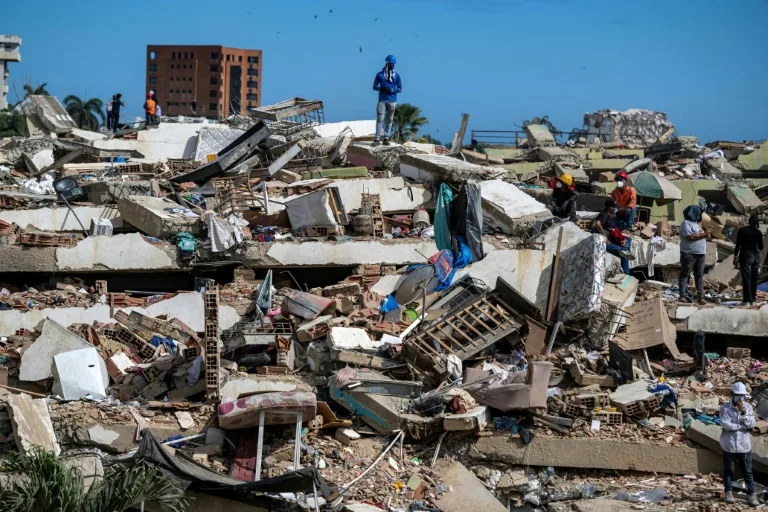
The death toll from the powerful earthquakes that struck Venezuela on June 24 has risen to 4,490, according to the latest official figures released by the government on social media.
Authorities reported that 16,740 people have been injured, while more than 19,500 residents remain in temporary shelters after the twin earthquakes devastated Caracas and the neighboring state of La Guaira.
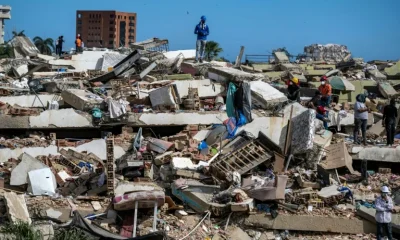
Rescue teams from Venezuela and several foreign countries continue searching through collapsed buildings in an effort to recover victims who remain trapped beneath the rubble.
Government officials said the earthquakes damaged more than 850 buildings, with 190 structures completely collapsing.
Thousands of families who lost their homes are currently staying with relatives or friends, while more than 19,500 displaced people are living in overcrowded emergency camps set up in parks, stadiums, and public squares across La Guaira and Caracas.
International
Tensions Escalate in Middle East as U.S. Bombs Iran After Maritime Attacks
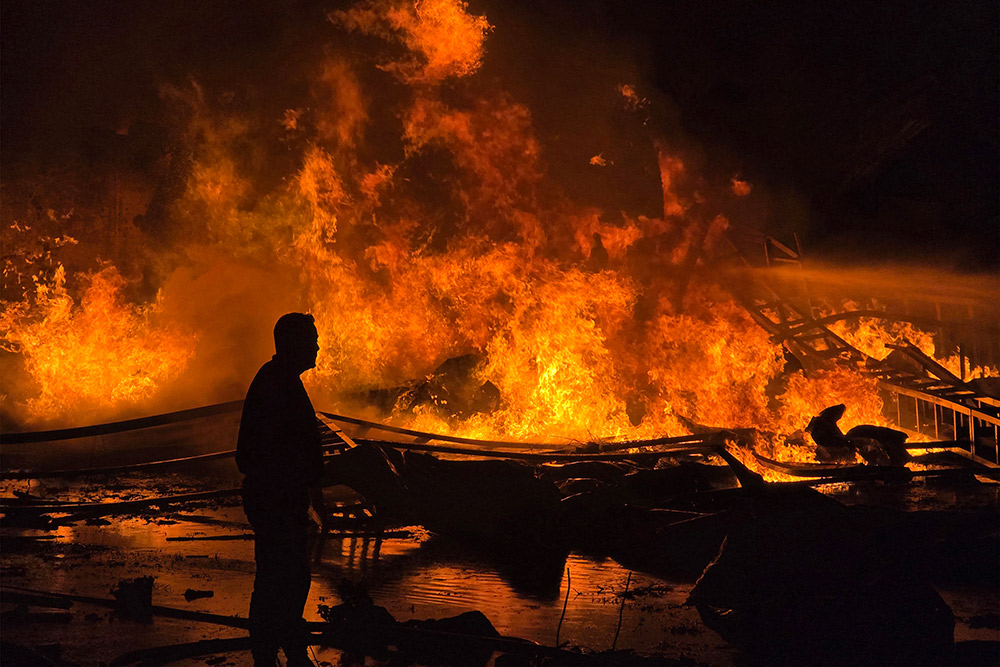
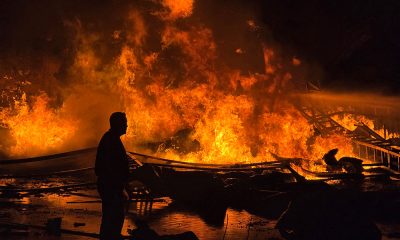
The United States launched new strikes against Iran on Wednesday, following President Donald Trump’s warning that Washington would “hit hard” against the Islamic Republic. While Trump ordered the retaliation after attacks on vessels in the Strait of Hormuz, he also said he hoped the latest wave of bombings would end soon and left the door open for renewed negotiations.
U.S. forces “have begun carrying out additional strikes against Iran to further reduce its ability to threaten freedom of navigation in the Strait of Hormuz,” the United States Central Command said in a post on X.
Washington blamed Iran for what it described as “recent unjustified aggression against commercial shipping.”
Iran’s state news agency IRNA reported that explosions were heard in the port cities of Bandar Abbas, Konarak, and Chabahar.
“This is in retaliation for yesterday’s bombing of ships by Iran. If it happens again, it will be much worse,” Trump wrote on social media alongside an image showing what appeared to be a bombing at an Iranian location.
Before ordering the strikes, the U.S. president said that the ceasefire with Iran had ended. Mediators Pakistan and Qatar called for de-escalation, while the United Nations also urged both sides to reduce tensions.
The Strait of Hormuz remains a critical flashpoint in the Middle East conflict, which began in late February after U.S. and Israeli strikes that killed Iran’s Supreme Leader Ali Khamenei.
Iran-linked attacks on at least three vessels in recent days triggered a U.S. offensive against Iranian targets on Tuesday. Tehran responded by launching attacks against Gulf countries that are allies of Washington.

Judge rules Trump’s IRS lawsuit was a “bad faith” attempt to manipulate the judicial process

Venezuela Earthquake Death Toll Rises to 4,490 as Rescue Efforts Continue

Panama launches anti-drone measures as prison security crisis deepens
Tec de Monterrey honors one of its students for his contribution to nanotechnology in medicine

Defense Minister commends salvadoran soldier for Central American Cross Country victory

Extension of the state of emergency approved in southern Chile
-
 Central America3 days ago
Panama launches anti-drone measures as prison security crisis deepens
-

 International4 days ago
Deadly Drug Trade Rivalry Suspected After Eight Bodies Discovered in Southern Mexico
-

 Central America4 days ago
Regional Naval Operations Strike Drug Cartels, Disrupting Cocaine and Weapons Trafficking Routes
-
 International4 days ago
Tensions Escalate in Middle East as U.S. Bombs Iran After Maritime Attacks
-
 International22 hours ago
Venezuela Earthquake Death Toll Rises to 4,490 as Rescue Efforts Continue
-
 International2 hours ago
Judge rules Trump’s IRS lawsuit was a “bad faith” attempt to manipulate the judicial process