
International
Tropical Storm Ana leaves trail of destruction in Madagascar
AFP
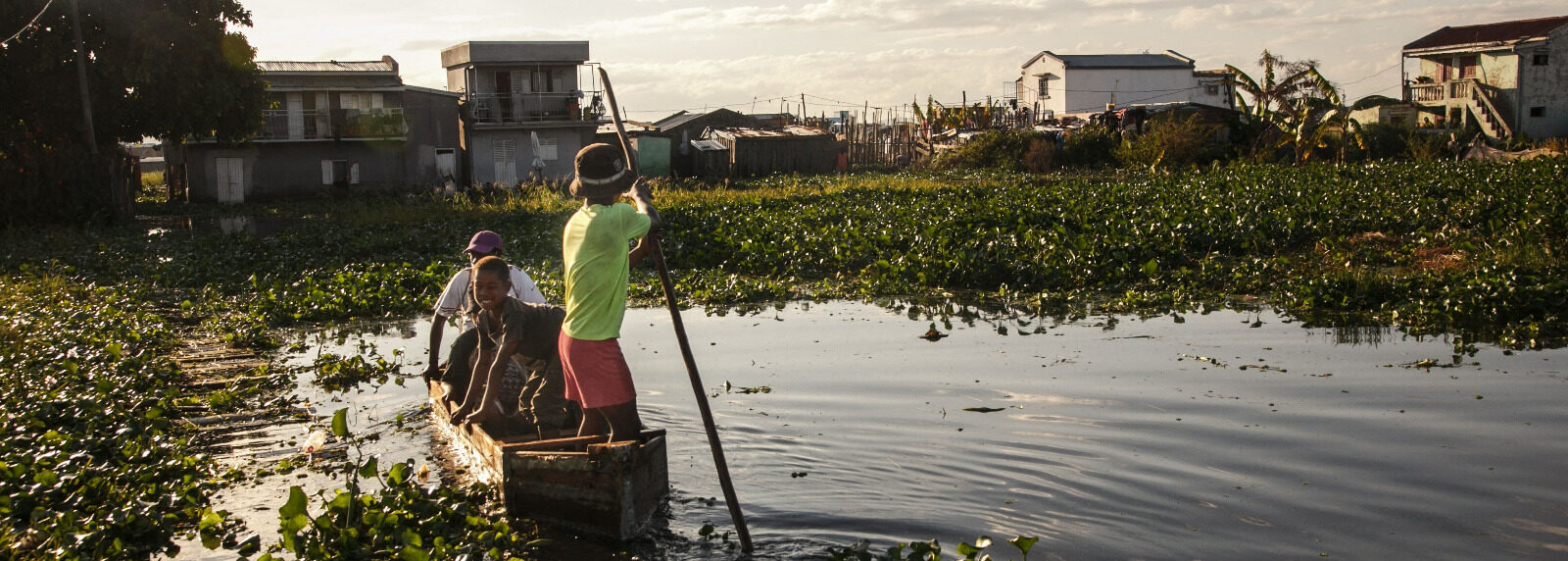
Residents in an inundated neighbourhood of Madagascar’s capital Antananarivo are returning with dread to see what remains of their homes and harvests, three days after Tropical Storm Ana relented.
Flooding has killed 51 people on the large Indian Ocean island off southeastern Africa since 10 days of intense rain began on January 17.
The storm formed to the east of Madagascar last week, causing floods and landslides and affecting around 130,000 people, with many made homeless overnight.
Ana then hit Mozambique and Malawi on the African mainland, killing 90 people across the three countries.









Rescue crews are still battling to access regions where roads and bridges have been swept away after the storm cut off tens of thousands and left them without power.
Travelling on makeshift boats, small groups row through water and a common floating plant called tsifakona normally given to pigs as food.
Some refused to spend the 300 Malagasy ariary ($0.08) for transport and are forced to carry their children where the water level remains high.
“I woke up at three o’clock in the morning to go to the toilet and found my house full of water,” said Ulrich Tsontsozafy, 66.
Recalling the ordeal from the top of a pile of chairs in his waterlogged room, the retired soldier is trying to find ways to avoid having his feet constantly in the water.
“It ruins your skin. It chafes and it infects,” he said of the floodwater, showing a fine white film that has developed on the skin between his toes.
– Humanitarian emergency –
Residents in Antananarivo’s swampy Betsimitatatra plain are used to living with water thanks to an ingenious system of wooden pontoons that usually connect houses.
But the storm has engulfed everything with a brownish water that reeks of silt, while rats seeking food swam at the surface for a few days.
Tsontsozafy’s rice paddy, coconut tree and avocado tree were destroyed.
His wife, Juliette Etaty, 65, managed to save some bags of rice, heaped up with pans and clothes in a pile that reaches their ceiling.
Their grand-daughter Luciana, 17, remembered waking up in the middle of the night with her feet dipped in water.
“The first thing I thought of was my school notebooks,” she said.
Gyms and schools in the capital have been requisitioned and turned into emergency shelters.
But the family preferred not to go for fear of catching Covid-19 in a crowded space and leaving their home vulnerable to burglars and the elements.
Toky Ny Nosy, an unemployed 42-year-old, took shelter in a school as she thought her home was about to collapse under the weight of the deluge.
She also suffers from asthma and said the water was preventing her from breathing properly.
Despite coming back to her neighbourhood every day for almost two weeks, the water still reaches her hips.
Hundreds of families huddled in a classroom converted into an emergency shelter watch the arrival of a truck laden with food for the evening.
But “there’s never enough,” said Toky.






International
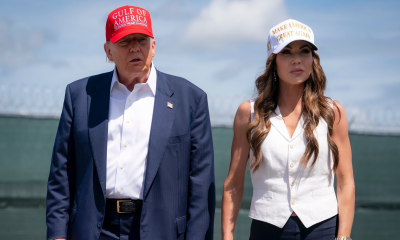
Trump replaces Homeland Security Secretary Kristi Noem with Senator Markwayne Mullin
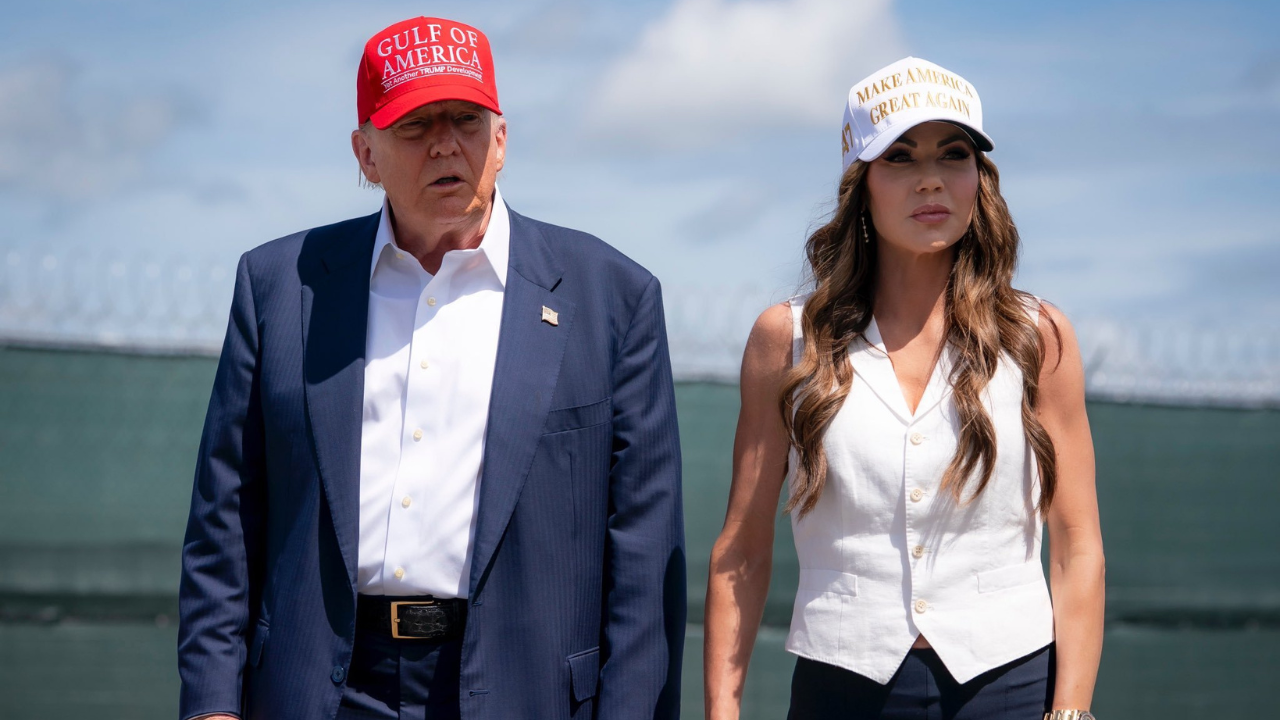
U.S. President Donald Trump announced Thursday the departure of Kristi Noem as Secretary of Homeland Security, one of the key architects of the administration’s policy of deporting undocumented immigrants.
Noem, who has been assigned a new role as a “special envoy” to Latin America, will be replaced starting March 31 by Republican Senator Markwayne Mullin, the president said in a message posted on his social media platform Truth Social.
According to media reports, Trump made the decision after Noem’s recent hearings in Congress, during which she faced tough questions regarding the awarding of a major public contract.
International
Young Woman Will Represent Mexico at 2026 World Cup Opener, Says President Sheinbaum
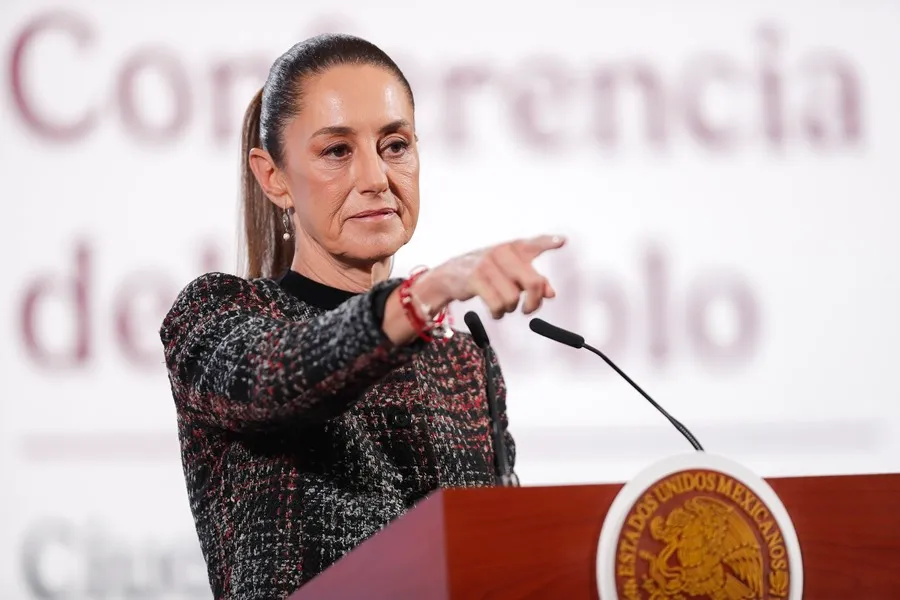
Mexico’s president, Claudia Sheinbaum, announced Thursday that the young Mexican woman who proves to have the best ball control skills will receive her personal ticket to the opening match of the 2026 FIFA World Cup in Mexico City.
The left-wing leader had previously said she would not attend the tournament’s opening game on June 11 in the Mexican capital and instead planned to give away the ticket number 00001, reserved for her by FIFA.
During her morning press conference, Sheinbaum explained that women between 16 and 25 years old can participate by submitting a video through an official platform.
“What do they have to do? Keep the ball in the air for one minute,” she said, referring to the soccer juggling challenge that will determine the winner.
Among the judges selecting the winner will be Mexican striker Charlyn Corral, the world’s top female scorer who set a ball-control record in 2005, and professional referee Katia Itzel García.
Sheinbaum also revealed that she plans to watch the opening match during a large public gathering with giant screens in the Zócalo, located in the historic center near the presidential palace.
“Very few people will be able to attend the opening. So I will watch it here with the people, and a young woman will represent me and the people of Mexico,” the president said.
Sheinbaum has previously commented on the high cost of World Cup tickets, as well as the difficulty of obtaining them in a metropolitan area with more than 20 million inhabitants.
In the 2026 tournament, jointly hosted by United States, Mexico, and Canada, Mexico will stage 13 matches in Mexico City, Guadalajara, and Monterrey.
The opening match will take place at the legendary Estadio Azteca, which previously hosted World Cup opening ceremonies in 1970 and 1986, occasions when the presidents in attendance were famously booed by the crowd.
International
Claudia Sheinbaum: Operation Against ‘El Mencho’ Was Based on Pending Arrest Warrants
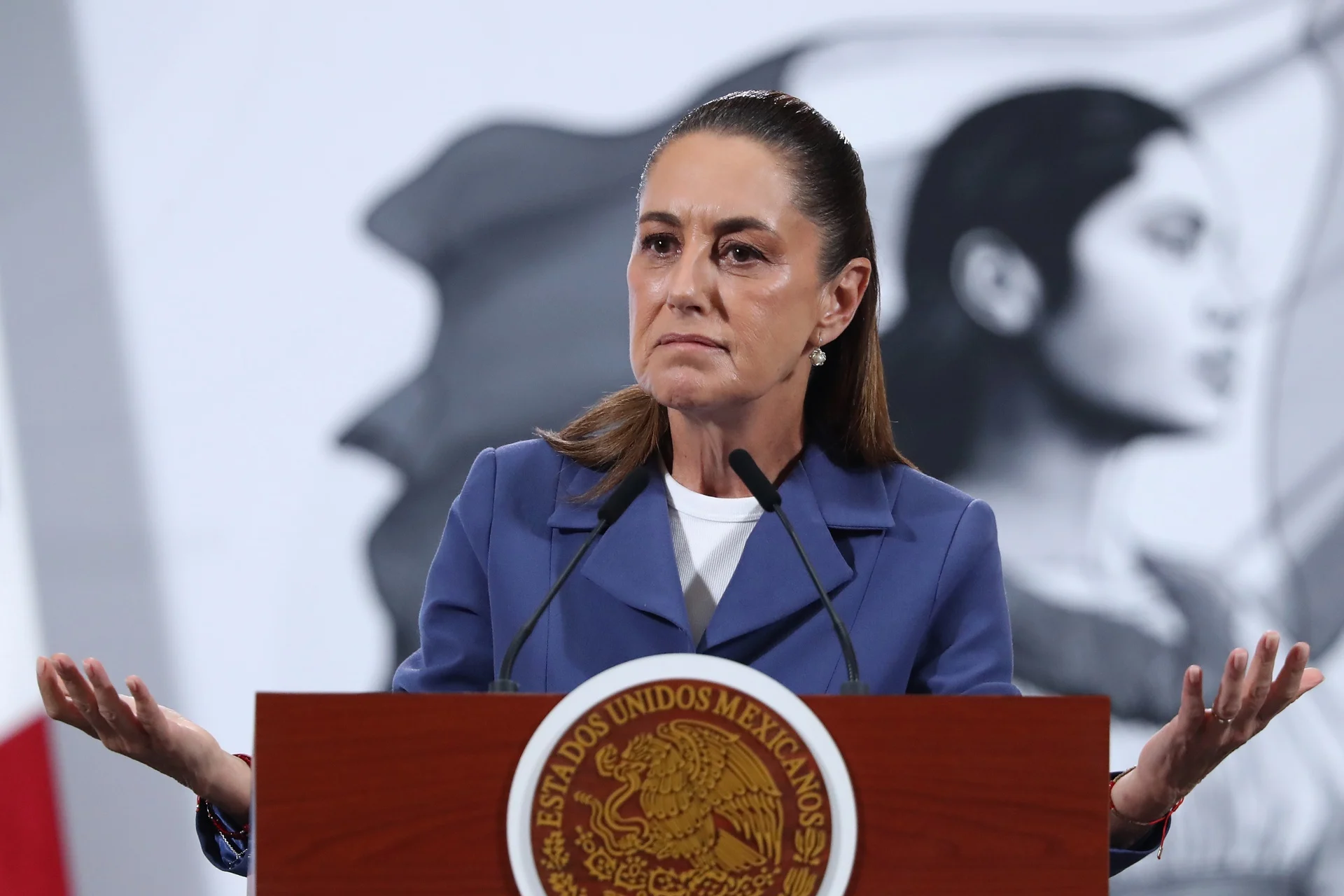
Mexico’s President Claudia Sheinbaum on Wednesday rejected claims that the military operation that resulted in the death of Nemesio Oseguera Cervantes, known as “El Mencho,” leader of the Jalisco New Generation Cartel (CJNG), was carried out under pressure from the United States government.
Sheinbaum explained that the deployment of federal forces was aimed at executing outstanding arrest warrants against Oseguera Cervantes, who was considered one of the most wanted criminals in both Mexico and the United States.
“That was not the objective (to ease pressure from the United States). It is very important, and I want to repeat it. This individual had an arrest warrant, or several,” Sheinbaum said, referring to the operation conducted on February 22.
According to the president, the initial goal was to capture Oseguera Cervantes, but military forces responded after coming under attack during the intervention.
“The operation was to detain him. The problem is that they were attacked — the Secretariat of National Defense — and they responded at that moment,” she said.
The president insisted that the action was not carried out in response to external demands, although she acknowledged intelligence cooperation with the United States.
“It was not done in any way because of pressure from the United States, not at all. Of course, there was intelligence information from the United States that was used specifically,” she concluded.

Trump replaces Homeland Security Secretary Kristi Noem with Senator Markwayne Mullin

Young Woman Will Represent Mexico at 2026 World Cup Opener, Says President Sheinbaum

Claudia Sheinbaum: Operation Against ‘El Mencho’ Was Based on Pending Arrest Warrants
Tec de Monterrey honors one of its students for his contribution to nanotechnology in medicine

Defense Minister commends salvadoran soldier for Central American Cross Country victory

Extension of the state of emergency approved in southern Chile
-
 International4 days ago
Brazil’s Supreme Court Rejects Bolsonaro’s Bid for House Arrest
-
 International3 days ago
Spain’s Prime Minister to Address Nation Amid Trump’s Trade Threats
-
 International4 days ago
Anti-ICE Billboard Campaign Targets Immigration Spending in 31 U.S. Cities
-
 International2 days ago
White House Says Spain Agrees to Cooperate with U.S. Military After Trump Threatens Trade Embargo
-
International2 days ago
Spain Denies Any Agreement to Cooperate with U.S. Military in Iran Operations
-
 International4 days ago
Trump Warns of ‘Major Wave’ of Attacks as Iran Conflict Escalates
-
 International3 days ago
New York Announces First 2,000 Seats in Universal 2-K Program
-

 International4 days ago
Mexico Calls for Immediate Probe After National Dies in ICE Custody
-
 Central America3 days ago
Guatemala’s Attorney General Fails in Bid for Top Court Seat Amid Corruption Allegations
-
 Central America2 days ago
Nicaragua Held Responsible for Harassment of Opposition Prosecutor and His Family
-

 International3 days ago
Warner Bros. Developing First ‘Game of Thrones’ Movie With ‘Andor’ Writer
-
 Central America4 days ago
Panama Canal Monitoring Trade as Middle East Conflict Disrupts Shipping
-
 International4 days ago
Bolivia Orders Three Investigations Into Deadly Military Plane Crash
-
 International2 days ago
Claudia Sheinbaum: Operation Against ‘El Mencho’ Was Based on Pending Arrest Warrants
-
 International13 hours ago
Young Woman Will Represent Mexico at 2026 World Cup Opener, Says President Sheinbaum
-
 International13 hours ago
Trump replaces Homeland Security Secretary Kristi Noem with Senator Markwayne Mullin