
Central America
Honduras leader offers rebel deputy post to end congress crisis
AFP
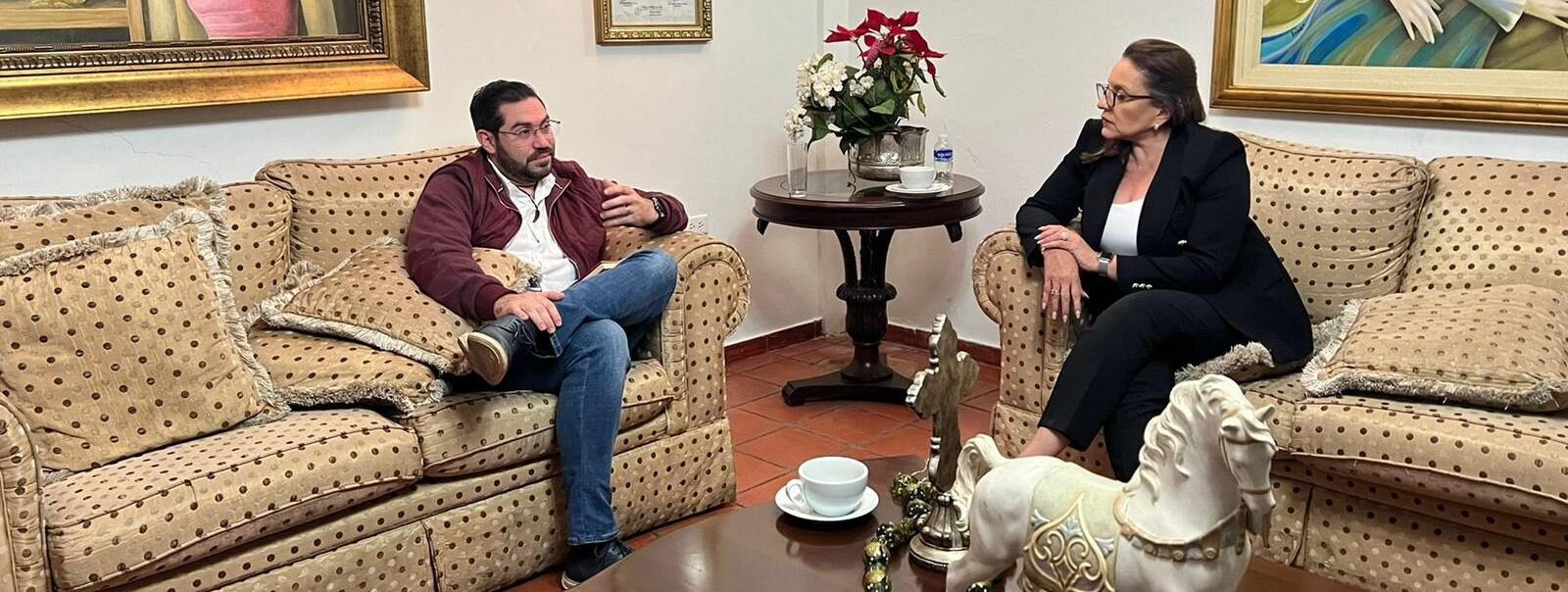
Honduras’ president-elect Xiomara Castro made a last ditch attempt late Wednesday to solve a congressional crisis with hours left before her inauguration.
Last week two rival factions within her left wing Libre party elected their own duelling presidents of Congress.
Castro backs the claims of Luis Redondo of her coalition partner Savior Party of Honduras (PSH).
But Jorge Calix, a deputy within her own Libre party, has led a band of close to 20 rebels, with support from the right wing National and Liberal parties, to launch a rival claim.









Late on Wednesday, Castro tried to break the impasse by offering Calix a role in her cabinet.
“I proposed to Jorge Calix that he joins my government in the position of Cabinet Coordinator for the sake of uniting in the Reformation of Honduras,” Castro wrote on Twitter.
She did not, however, explain what the role entailed, although it appears to be something akin to a chief of staff.
“Thank you President @XiomaraCastroZ, it was a great pleasure speaking with you,” said Calix in a reply to her post on Twitter.
“For me and for anyone, it would be a great honor to form part of the government of resistence and national reconciliation. You will soon receive my answer,” he wrote.
The offer came a day after the two rival factions held competing first sessions presided over by their respective presidents.
Redondo took office as president of the Congress in the building that houses the legislative body.
In parallel and via video link, Calix was also installed as head of Congress by his own loyalist faction.
Calix was joined by around 70 deputies while only around 40 were in the parliament building, although the Redondo faction achieved a quorum as substitute lawmakers stood in for those that were absent.
The crisis broke out last week when a group of Libre dissidents ignored an agreement with the PSH, whose support was key to Castro winning the November elections.
Rival lawmakers came to blows in the dispute.
PSH leader Salvador Nasralla had agreed to withdraw his presidential candidacy and support Castro, in return for the position of vice president and a member of his party being named president of Congress.
But the dissidents argued that Congress should be led by the party with the most members — Libre has 50 deputies compared to just 10 for the Savior party.
Control of parliament is key to Castro’s anti-corruption and political reform platform in a country battered by poverty, migration and drug trafficking.






Central America
Panama and Costa Rica strengthen border alliance to combat organized crime
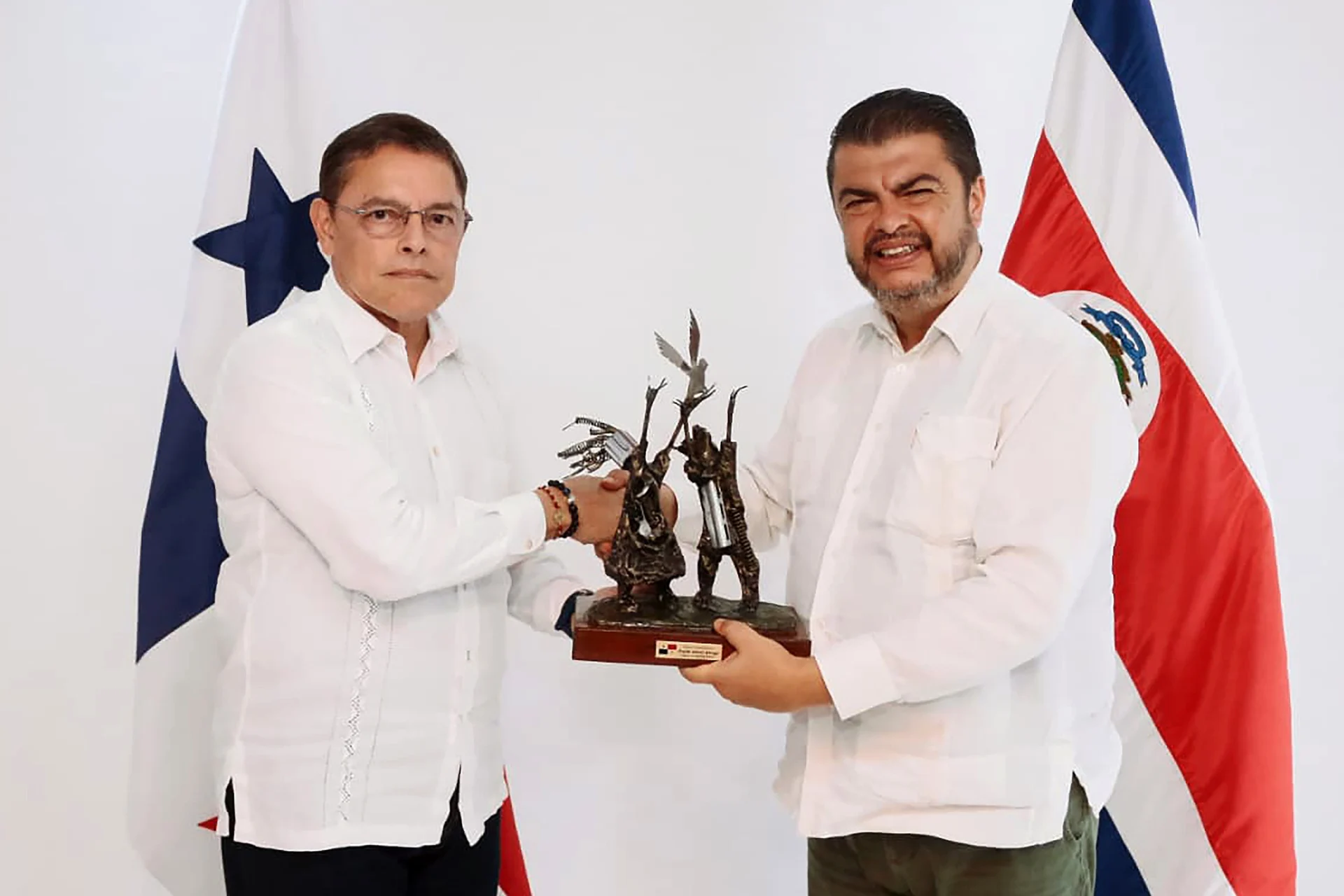
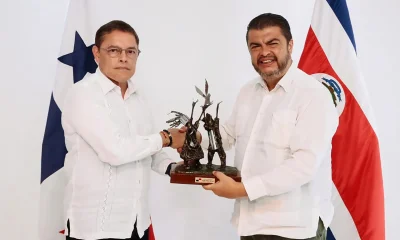
Panama and Costa Rica strengthened a strategic alliance on Saturday aimed at enhancing border security and jointly tackling transnational organized crime, following a high-level bilateral meeting held in Paso Canoas, in Panama’s Chiriquí province, according to Panama’s Ministry of Public Security.
“The effort strengthens digital border control and enables a more effective response to organized crime,” said Frank Abrego, Panama’s Minister of Public Security. He added that “operational integration between both countries increases anticipation and response capacity to threats.”
During the meeting, Abrego and his Costa Rican counterpart, Mario Zamora Cordero, reaffirmed their commitment to deepen bilateral cooperation, particularly in territorial protection and citizen security.
Paso Canoas is a key customs hub in the region, handling goods arriving in Panama through the Panama Canal and the Colón Free Zone, which are then distributed across Central America, as well as regional exports.
Zamora described the meeting as “effective and productive,” emphasizing the importance of sustained police cooperation to confront criminal structures operating in the region.
As part of the agenda, authorities inaugurated a new operations center for the National Border Service in the Progreso sector. The facility is designed to strengthen monitoring and control through surveillance technologies such as cameras and drones, as well as real-time information sharing between both countries.
Authorities also announced the delivery of eight vehicles to reinforce patrol operations, along with intensified joint operations at key border points.
Officials stated that these measures will increase operational presence, improve response capabilities, and enhance security for border communities.
Both ministers agreed that coordination between Panama and Costa Rica has helped maintain a “calm, stable, and developing” border, and announced further meetings, including one in San José, to advance new security agreements.
In this context, in February 2024, both countries inaugurated the Paso Canoas Integrated Control Center on the Costa Rican side, a 14,000-square-meter facility designed to streamline procedures and manage the daily flow of around 200 cargo trucks and 800 people crossing from Panama.
The meeting brought together senior officials from both nations’ security forces, who advanced joint strategies to combat threats such as drug trafficking, human trafficking, and smuggling, through coordinated action and intelligence sharing.
This bilateral effort underscores both countries’ commitment to ensuring citizen security and sends a clear message of joint action against organized crime.
Sports
Ancelotti leaves door open for Neymar’s return to Brazil’s 2026 World Cup squad
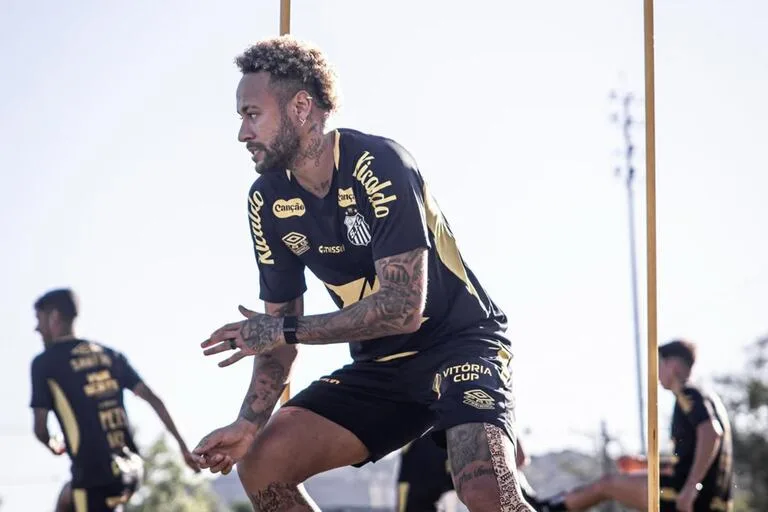
Italian coach Carlo Ancelotti, current manager of the Brazil national football team, has opened the door to the possibility of Neymar being included in the final squad for the 2026 World Cup, according to an interview published Saturday by L’Equipe.
“At the moment, he is being evaluated by the Brazilian Football Confederation and by me. He still has two months to prove he has the conditions to play in the next World Cup,” Ancelotti said.
Neymar, 34, Brazil’s all-time leading scorer with 79 goals in 128 appearances, was left out of the most recent national team call-up for friendlies against France and Croatia. He is also still working to regain full fitness with Santos FC.
Since returning to his club, Neymar has played only a handful of matches in the Brasileirão and the Copa Sudamericana, including an upcoming match against San Lorenzo on April 28. These games could be key for him to convince Ancelotti ahead of the final squad announcement on May 19.
“Neymar has made and continues to make history in Brazilian football. He is a great talent, and it is normal for people to believe he can help us win the next World Cup,” the Italian coach added.
When asked whether the former FC Barcelona and Paris Saint-Germain player must be at full fitness to earn a call-up, Ancelotti admitted he does not have a definitive answer but believes Neymar “is capable of returning to 100%.”
Central America
Seven arrested in Guatemala over disappearance of six near Mexico border
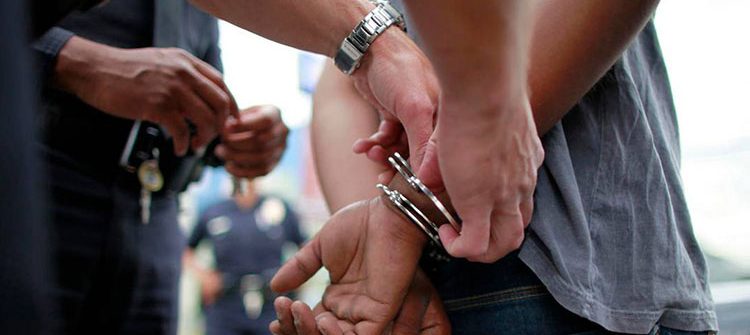
Authorities in Guatemala arrested seven individuals allegedly linked to the disappearance of six Guatemalans, including a 16-year-old minor, according to a police statement.
The arrests took place in the border city of Malacatán, near the nearly 1,000-kilometer frontier shared with Mexico, a region increasingly affected by criminal activity.
Police reported that ten firearms were seized from the suspects, who are believed to be connected to the disappearance of the six victims. According to witness accounts, the missing individuals worked on a farm in Malacatán and were taken away in a vehicle whose license plate matches that of the one used by those detained.
The border area has seen escalating violence involving organized crime groups. In August 2024, following the unprecedented displacement of Mexican farmers into Guatemala to escape clashes between rival drug cartels, both countries agreed to carry out joint security operations along the shared border.
Despite this cooperation, tensions have arisen. On June 8, security forces from the Mexican state of Chiapas crossed into Guatemalan territory during an anti-crime operation that left four suspected criminals dead. The incident prompted a formal protest from Guatemala, after which Mexico issued an apology.

Trump orders U.S. control of Strait of Hormuz after failed Iran talks

Panama and Costa Rica strengthen border alliance to combat organized crime

Ancelotti leaves door open for Neymar’s return to Brazil’s 2026 World Cup squad
Tec de Monterrey honors one of its students for his contribution to nanotechnology in medicine

Defense Minister commends salvadoran soldier for Central American Cross Country victory

Extension of the state of emergency approved in southern Chile
-
 International2 days ago
Europe Faces Jet Fuel Shortage Risk Amid Hormuz Disruption
-
 International3 days ago
Flooding in Dominican Republic leaves child dead and thousands affected
-
 Central America4 days ago
Gunfire and protests mark controversial rector reelection at Guatemala’s USAC
-

 International3 days ago
Artemis II crew prepares for Earth return and splashdown recovery
-

 International2 days ago
Child Found Malnourished in Van in France; Father Admits Confinement
-
 Central America1 day ago
Panama and Costa Rica strengthen border alliance to combat organized crime
-
 Sports1 day ago
Ancelotti leaves door open for Neymar’s return to Brazil’s 2026 World Cup squad
-

 International4 days ago
Bill Gates to testify before Congress over Epstein connections
-
 International12 hours ago
Trump orders U.S. control of Strait of Hormuz after failed Iran talks
-
 Central America4 days ago
Seven arrested in Guatemala over disappearance of six near Mexico border