
International
Partner of Chile’s president-elect draws feminist ire over first lady role

AFP
Irina Karamanos, an avowed feminist and partner of Chile’s leftist president-elect Gabriel Boric, has drawn fire from women’s groups for her decision to accept the “anachronistic” role of first lady.
Feminist groups derided Karamanos for accepting a post they say is not awarded on merit but obtained through a woman’s private relationship with the president.
Boric, who was elected Chile’s youngest-ever president aged 35 in December, is due to assume office on March 11.
Karamanos, a social scientist and activist of 32, said Tuesday she would accept the first lady job, but exercise it with a modern, feminist twist.









The pair have been in a relationship since 2019.
Like in many other countries, the role of first lady in Chile is not officially defined, but traditionally involves overseeing the work of social organizations.
It does not come with a salary, and is exercised from the presidency’s socio-cultural division, which has an office in the presidential palace.
Boric himself had spoken in favor of abolishing the position, saying on the campaign: “There can be no posts in the State that have to do or are related to a relationship with the president or with anyone.”
– ‘Different times’ –
But then Karamanos said Tuesday that reforming the role would involve “adapting it to the times.”
She added: “Also, as a feminist I think this position — and it seems contradictory to take it on as a feminist — in reality is mostly a challenge that we can exploit to talk about different issues, and display a new way of exercising power.”
Her announcement divided the feminist movement.
While some applauded her commitment to reform, others agreed with her own statement that accepting the role contradicted her commitment to advancing women’s rights.
Karamanos is head of the Feminist Front of the Social Convergence party which is part of the leftist Broad Front to which Boric also belongs.
“We have different ways of looking at feminism,” Daniela Osorio, spokeswoman for the activist group Coordinadora Feminista 8M, told AFP.
“Our analysis has nothing to do with Irina herself… For us, the right thing to do would have been to abolish the position.”
Added Priscila Gonzales of the Chilean Network Against Violence Against Women: “I do not doubt in her abilities, what I question is the continuation of a profoundly chauvinist position in which women are relegated to a secondary role.”
But Erika Montecinos, founder of the Rompiendo el Silencio (Breaking the Silence) lesbian rights group, said the focus should be on Karamanos’s promise to change the position.
“That is what’s important. To transform spaces — and give them a feminist vision.”
Questions have also been asked about the couple’s unmarried status.
“How do you ask for an audience with the president’s concubine?” former lawmaker and one-time presidential candidate Tomas Jocelyn-Holt asked on Twitter, inviting a flurry of criticism.
Boric has come out in support of his partner.
“Her intention to modernize and make the office transparent reflects the work we have collectively been doing: we have to make the changes responsibly and from within,” he said.






International
Security Council to Hold Emergency Meeting on Middle East Crisis
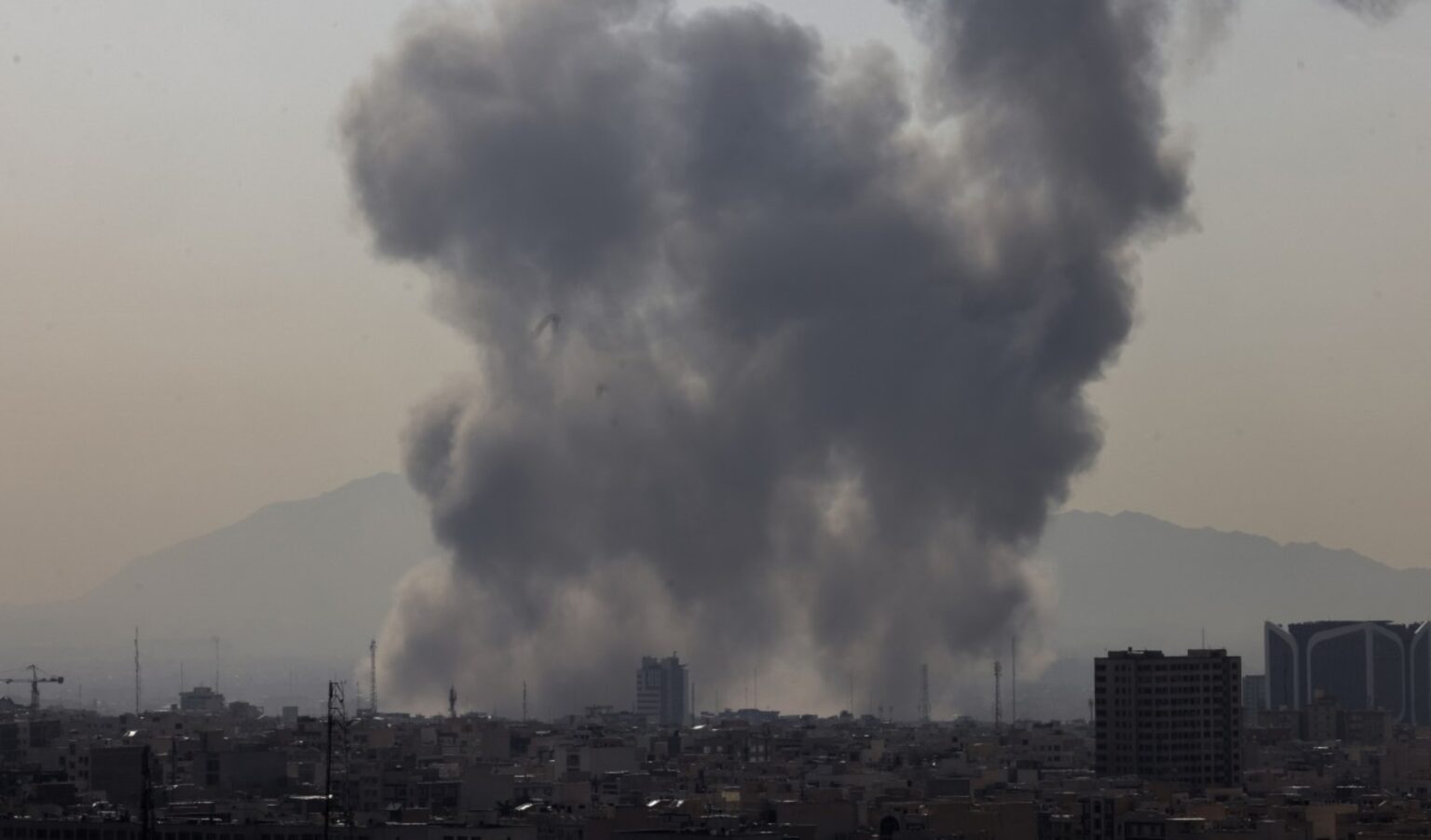
UN Secretary-General António Guterres on Saturday condemned the “military escalation in the Middle East” following attacks by the United States and Israel against Iran and Tehran’s retaliatory strikes, just hours before an urgent meeting of the UN Security Council.
“I call for the immediate cessation of hostilities and de-escalation,” Guterres said in a statement.
The Security Council is scheduled to meet on Saturday at 21:00 GMT (4:00 p.m. in New York) to address “the situation in the Middle East,” the United Nations announced.
The meeting, during which Guterres will deliver remarks, was convened at the request of France, Bahrain, Colombia, Russia and China, according to a diplomatic source.
International
Trump Floats “Friendly Takeover” of Cuba Amid Rising Tensions
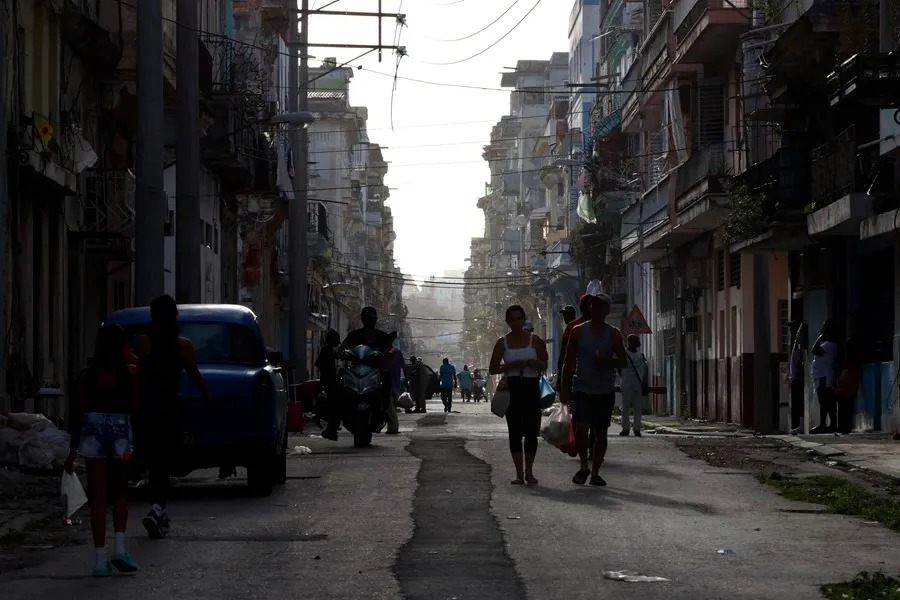
U.S. President Donald Trump said Friday that his administration is considering what he described as a “friendly takeover” of Cuba, as Washington continues to increase pressure on the island’s communist government.
“The Cuban government is talking to us and they have very serious problems, as you know. They have no money, they have nothing at this moment, but they are talking to us and maybe we will see a friendly takeover of Cuba,” Trump told reporters as he departed the White House for a trip to Texas.
Earlier in the week, U.S. Secretary of State Marco Rubio said Cuba needed a “radical change,” shortly after Washington eased restrictions on oil exports to the island for what officials described as “humanitarian reasons,” amid a deep economic crisis.
The United States has imposed an energy blockade on Cuba since January, citing what it calls an “extraordinary threat” posed by the communist-run island, located roughly 150 kilometers (90 miles) off the coast of Florida, to U.S. national security.
International
Argentina’s Senate Reviews Milei-Backed Labor Overhaul
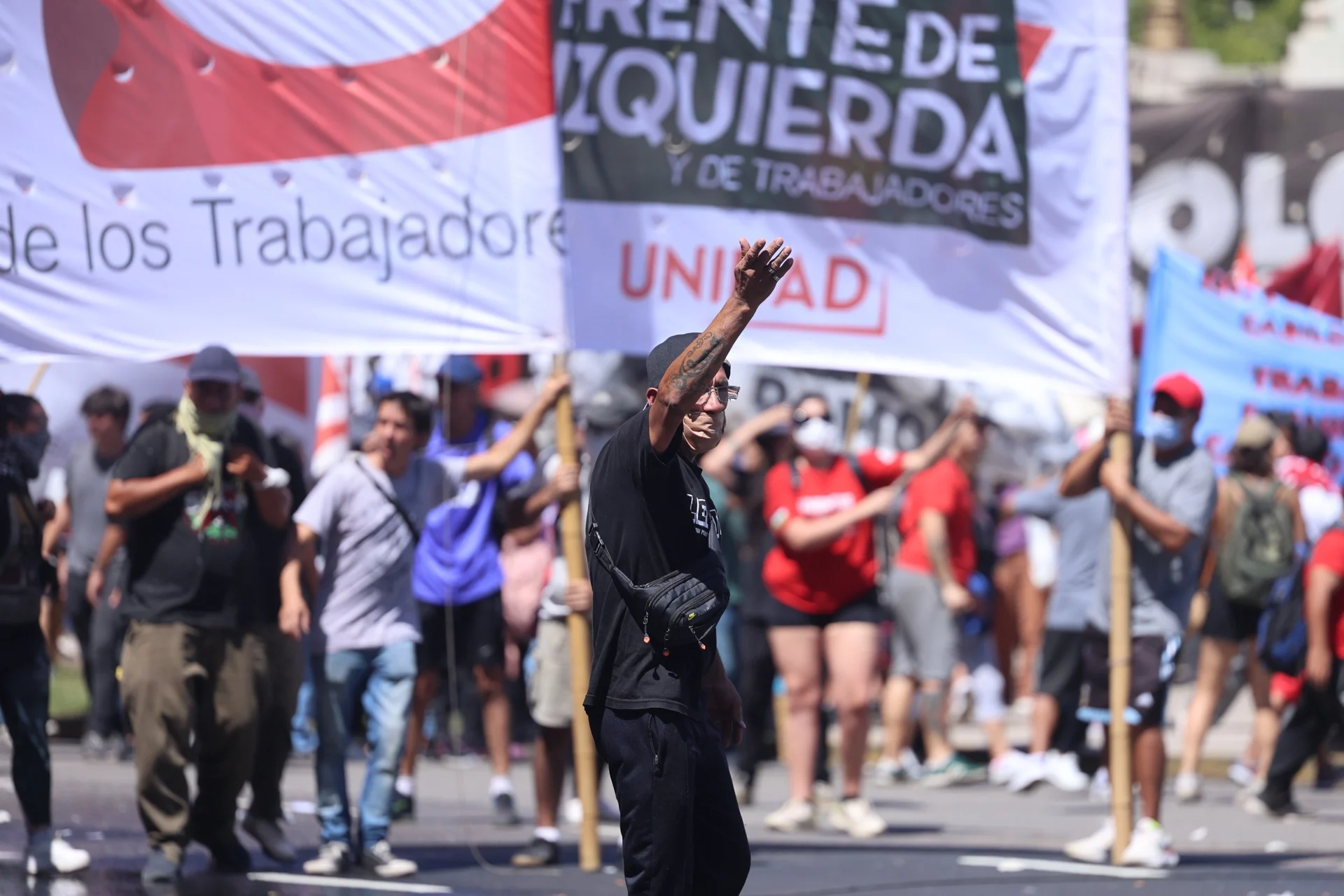
Argentina’s Senate on Friday began reviewing the Labor Modernization Law promoted by the administration of President Javier Milei, a proposal that would significantly reshape labor rules across the country.
The upper chamber opened its final discussion of the contentious initiative, which revises the method used to calculate severance payments — lowering the amounts owed in dismissal cases — and introduces an “hour bank” mechanism that allows overtime to be offset with paid leave rather than extra wages.
The legislation also broadens the classification of essential services, a change that would place new limits on the right to strike in designated sectors.
The bill was initially approved by the Senate on February 11 and then moved to the Chamber of Deputies, where lawmakers passed it with amendments. It has now returned to the Senate for definitive approval.
Outside the Congress building in Buenos Aires, workers, trade unions and left-wing organizations staged demonstrations beginning at midday. The gathering later thinned out amid reports of disturbances and a strong police presence. Security forces had secured the area surrounding the legislature since early morning hours.
Union leaders contend that the reform weakens labor protections, while many business representatives back the measure but stress that sustainable formal employment will require economic expansion, improved credit conditions, greater investment and a more dynamic domestic market.

Security Council to Hold Emergency Meeting on Middle East Crisis

Trump: ‘We Think It’s True’ Amid Claims Iran’s Supreme Leader Was Killed

Trump Floats “Friendly Takeover” of Cuba Amid Rising Tensions
Tec de Monterrey honors one of its students for his contribution to nanotechnology in medicine

Defense Minister commends salvadoran soldier for Central American Cross Country victory

Extension of the state of emergency approved in southern Chile
-

 International4 days ago
Family of “El Mencho” Seeks Return of Body After Deadly Military Operation
-

 International4 days ago
Larry Summers Steps Down from Harvard Role Amid Epstein Controversy
-

 International4 days ago
Iran’s President Optimistic Ahead of Geneva Nuclear Talks with U.S.
-

 International4 days ago
Bill Gates Admits “Serious Mistake” Over Epstein Ties
-

 International4 days ago
Stephen Hawking Photo Appears in Newly Released Epstein Documents
-

 International3 days ago
Cocaine Production Surges 34% in 2023 as Market Expands into Africa and Asia
-
 International3 days ago
Federal Judge Blocks Trump Policy Allowing Deportations to Third Countries
-
 International2 days ago
Trump Floats “Friendly Takeover” of Cuba Amid Rising Tensions
-
 International3 days ago
Clinton Accuses Republican Committee of Using Epstein Case to Shield Trump
-
 International2 days ago
Argentina’s Senate Reviews Milei-Backed Labor Overhaul
-
 International19 hours ago
Security Council to Hold Emergency Meeting on Middle East Crisis
-
 Sin categoría19 hours ago
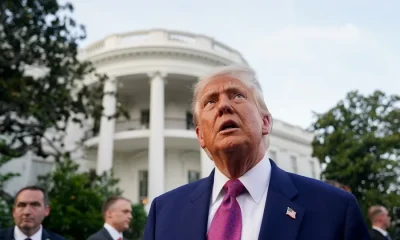
Trump: ‘We Think It’s True’ Amid Claims Iran’s Supreme Leader Was Killed