
International
Chile court freezes multi-million dollar lithium deal
AFP
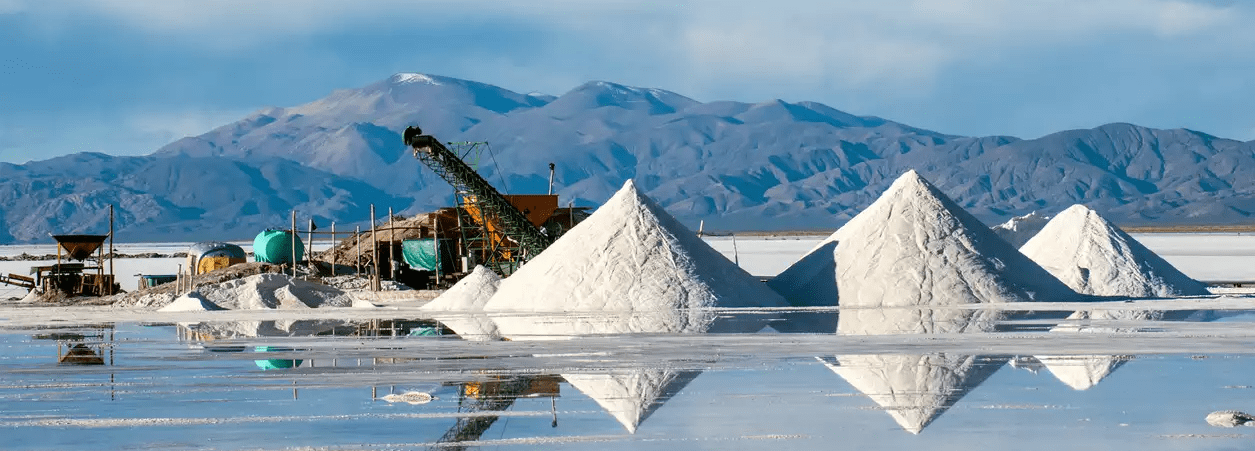
A Chilean appeals court on Friday suspended a million-dollar state lithium tender issued two days earlier that had generated controversy for coming just two months before the end of conservative President Sebastian Pinera’s term.
“Bearing in mind that the contested act is in full execution, it is agreed not to innovate, paralyzing the bidding and award process for the lithium, while this appeal is resolved,” said the court in Copiapo in the north of the country, according to documents seen by AFP.
China’s BYD Chile SpA and Chile’s Servicios y Operaciones Mineras del Norte S.A. were awarded the right to extract 80,000 tons of lithium each over 20 years, the minerals ministry said Wednesday.
Leftist president-elect Gabriel Boric’s team had asked the government to postpone the tenders and set up a “roundtable” to discuss various conditions to apply to the contracts.









Mining minister Juan Carlos Jobet had said Wednesday the government would work with the successful companies to ensure that “a portion of the payments they must make be used to support local communities and to invest in research and development.”
And on Friday, the mining ministry said the tender has not been the subject of a “definitive cancellation” and that the process had been “open, informed, transparent and has complied with all current legislation.”
The court accepted an appeal for protection filed by the governor of Copiapo, Miguel Vargas, together with a group of Aymara and Diaguita Indigenous communities that inhabit a salt flat in the Atacama desert.
Although the government tender does not stipulate the place of extraction of the lithium, the salt flats of northern Chile are where the main deposits of the mineral are to be found.
According to the mining ministry, the tender process seeks to restore Chile’s position in the world lithium market. Until 2016, the country was the world’s largest producer with 37 percent of the market, but today it ranks second behind Australia, with 32 percent.
If the country fails to increase its production, by 2030 its share would fall to 17 percent, according to official statistics.






International
Federal Judge Blocks Trump Policy Allowing Deportations to Third Countries

A federal judge ruled on Wednesday that the policy of U.S. President Donald Trump’s administration allowing immigration authorities to deport foreign nationals to third countries without prior notice or the opportunity to object is unlawful. The decision marks another legal setback for the administration on immigration matters.
Judge Brian Murphy of the U.S. District Court for the District of Massachusetts struck down the regulation issued last year, which stated that Immigration and Customs Enforcement (ICE) was not required to notify migrants if they were to be sent to countries other than the one listed in their removal order, provided that receiving nations offered assurances they would not face persecution or torture.
Murphy ordered the measure vacated but granted a 15-day delay before the ruling takes effect, giving the Trump administration time to file an appeal.
In his decision, the judge concluded that the policy violates federal immigration law and migrants’ due process rights. He also questioned the lack of transparency surrounding the alleged assurances provided by receiving countries, stating that “no one really knows anything about these supposed ‘assurances.’” He added, “It is not right, and it is not lawful.”
The ruling follows several legal disputes involving deportations to third countries. Last year, the executive branch deported more than 200 Salvadorans to a maximum-security prison in El Salvador, invoking an old wartime law. The White House also held talks with Costa Rica, Panama, and Rwanda about receiving migrants who are not citizens of those countries.
In May, the same judge determined that the government violated a court order when it attempted to remove a group of immigrants with criminal records to South Sudan without prior notice or an opportunity to raise claims of fear of persecution.
Although President Donald Trump took the case to the U.S. Supreme Court, which temporarily allowed the deportations to resume while a final decision was pending, the White House is expected to again appeal to higher courts to overturn this latest judicial ruling.
International
Cocaine Production Surges 34% in 2023 as Market Expands into Africa and Asia
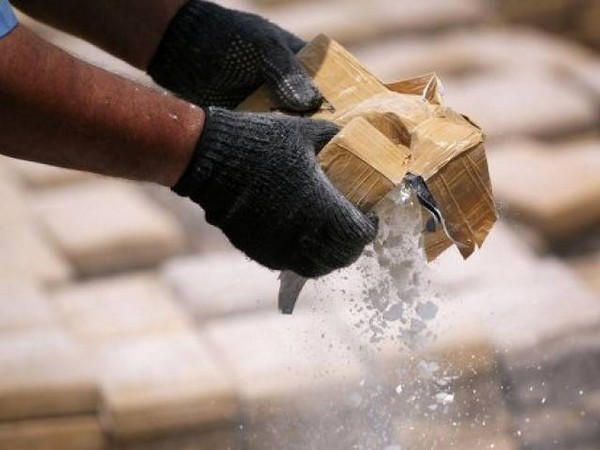
The global cocaine market is the fastest-growing among all illicit drugs worldwide, the International Narcotics Control Board (INCB) warned on Thursday in its annual report presented in Vienna.
The body attributes this expansion to the sustained rise in production in South America — particularly in Colombia — as well as increasing demand in emerging regions such as Africa and Asia.
According to the report, global cocaine production surpassed 3,700 metric tons in 2023, marking a 34% increase compared to 2022. This growth is largely driven by the expansion of illicit coca cultivation in Colombia and the greater production capacity of clandestine laboratories.
The INCB noted that the market has not only grown in volume but has also diversified and become more globalized. While Europe and North America remain the primary destinations, trafficking routes now reach “all regions of the world,” including Africa — traditionally considered a transit zone — and Asia, where the presence of cocaine was previously marginal.
In Western and Central Europe, for the fifth consecutive year, seizures in 2023 exceeded those in North America, consolidating the region as the leading destination market. Between January 2019 and June 2024, more than 1,826 metric tons of drugs bound for European ports were seized, of which 82% was cocaine, equivalent to 1,487 metric tons.
The report also highlights that seizures in Africa rose by 48% in 2023 compared to 2022, reflecting the expansion of the market on the continent. Globally, the number of cocaine users increased from 17 million in 2013 to 25 million in 2023.
International
Clinton Accuses Republican Committee of Using Epstein Case to Shield Trump

Former U.S. Secretary of State and former First Lady Hillary Clinton denied on Thursday before a congressional committee that she had ever met convicted sex offender Jeffrey Epstein in person or had any knowledge of the crimes he committed.
Clinton testified behind closed doors from New York before the House Oversight Committee. The wife of former President Bill Clinton — who is scheduled to testify on Friday — accused the Republican-controlled committee of summoning her in order to “distract attention” and “cover up” the activities of President Donald Trump, who had past ties to Epstein.
“I do not recall ever meeting Mr. Epstein. I never flew on his plane nor visited his island, his homes, or his offices. I have nothing further to add,” she stated.
The former Secretary of State emphasized that she “had no idea about the criminal activities” of the financier, who died in prison in 2019. “Like any decent person, I was horrified when I learned of his crimes,” she said.
Clinton described the Epstein case as “a tragedy” and “a scandal” that deserves “a thorough investigation,” but criticized the committee for failing to summon what she called the truly relevant individuals.
“Instead, you have asked me to testify, knowing that I have no knowledge that would serve your investigation, with the purpose of distracting from President Trump’s activities and shielding him despite the legitimate demand for answers,” she said.
The questioning, conducted behind closed doors in Chappaqua, New York — where the Clintons reside — took place one day before former President Bill Clinton was scheduled to appear at the same location.
Although the Clintons initially declined to testify before Congress, the threat of being held in contempt ultimately led the former presidential couple to agree to appear and explain their relationship with Epstein.

Federal Judge Blocks Trump Policy Allowing Deportations to Third Countries

Cocaine Production Surges 34% in 2023 as Market Expands into Africa and Asia

Clinton Accuses Republican Committee of Using Epstein Case to Shield Trump
Tec de Monterrey honors one of its students for his contribution to nanotechnology in medicine

Defense Minister commends salvadoran soldier for Central American Cross Country victory

Extension of the state of emergency approved in southern Chile
-

 International2 days ago
Family of “El Mencho” Seeks Return of Body After Deadly Military Operation
-

 International2 days ago
Larry Summers Steps Down from Harvard Role Amid Epstein Controversy
-

 International2 days ago
Iran’s President Optimistic Ahead of Geneva Nuclear Talks with U.S.
-

 International2 days ago
Bill Gates Admits “Serious Mistake” Over Epstein Ties
-

 International2 days ago
Stephen Hawking Photo Appears in Newly Released Epstein Documents
-

 International4 days ago
Over 40 Million Affected by Major Snowstorm in Northeastern U.S.
-

 International4 days ago
Nine People Killed in Two Armed Attacks in Manabí, Ecuador
-
 International23 hours ago
Cocaine Production Surges 34% in 2023 as Market Expands into Africa and Asia
-
 International23 hours ago
Clinton Accuses Republican Committee of Using Epstein Case to Shield Trump
-
 International23 hours ago
Federal Judge Blocks Trump Policy Allowing Deportations to Third Countries