
International
Bolsonaro against Brazil resuming carnival
AFP
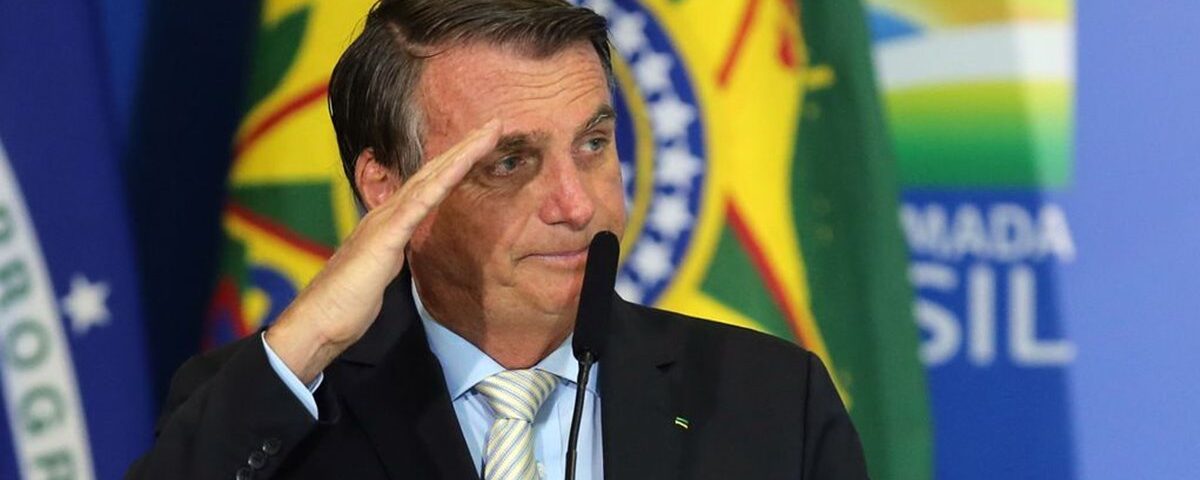
President Jair Bolsonaro said Thursday he was against Brazil resuming carnival celebrations in February, a rare nod to Covid-19 social distancing measures from the far-right leader.
“As far as I’m concerned, we shouldn’t have carnival,” Bolsonaro, 66, said in an interview, as Brazil debates whether to go ahead with the festivities held from February 25 to March 1.
Carnival was canceled in Brazil this year because of the pandemic.
But authorities are considering allowing it to go ahead in 2022, given a sharp drop in the number of Covid-19 cases and deaths in Brazil.









Bolsonaro said he believed it was too soon, but that the decision was up to state and local authorities.
“I don’t want to get involved, because it could just cause another controversy,” he told radio network Sociedade.
“Last February, the pandemic was just arriving, we didn’t know much about it. I declared an emergency and the governors and mayors all ignored it. They went ahead with carnival. Then the consequences came, and people try to say I’m the one responsible.”
Bolsonaro appeared to be referring to a February 2020 bill passed by Congress declaring Covid-19 a public health emergency, which he signed into law.
He did not mention his more controversial handling of the virus, which he downplayed as a “little flu,” attacking stay-at-home measures, face masks and vaccines.
A Senate investigative commission last month said it had found evidence Bolsonaro committed 10 crimes in his pandemic response, including “crimes against humanity.”
Despite his anti-vaccine statements, hard-hit Brazil has massively scaled up its immunization campaign in recent months.
With more than 60 percent of Brazil’s 213 million people now fully vaccinated, the average daily Covid-19 death toll has fallen from more than 3,000 in April to around 200.






International
Iran Reports 201 Dead, 747 Injured After U.S. and Israeli Strikes
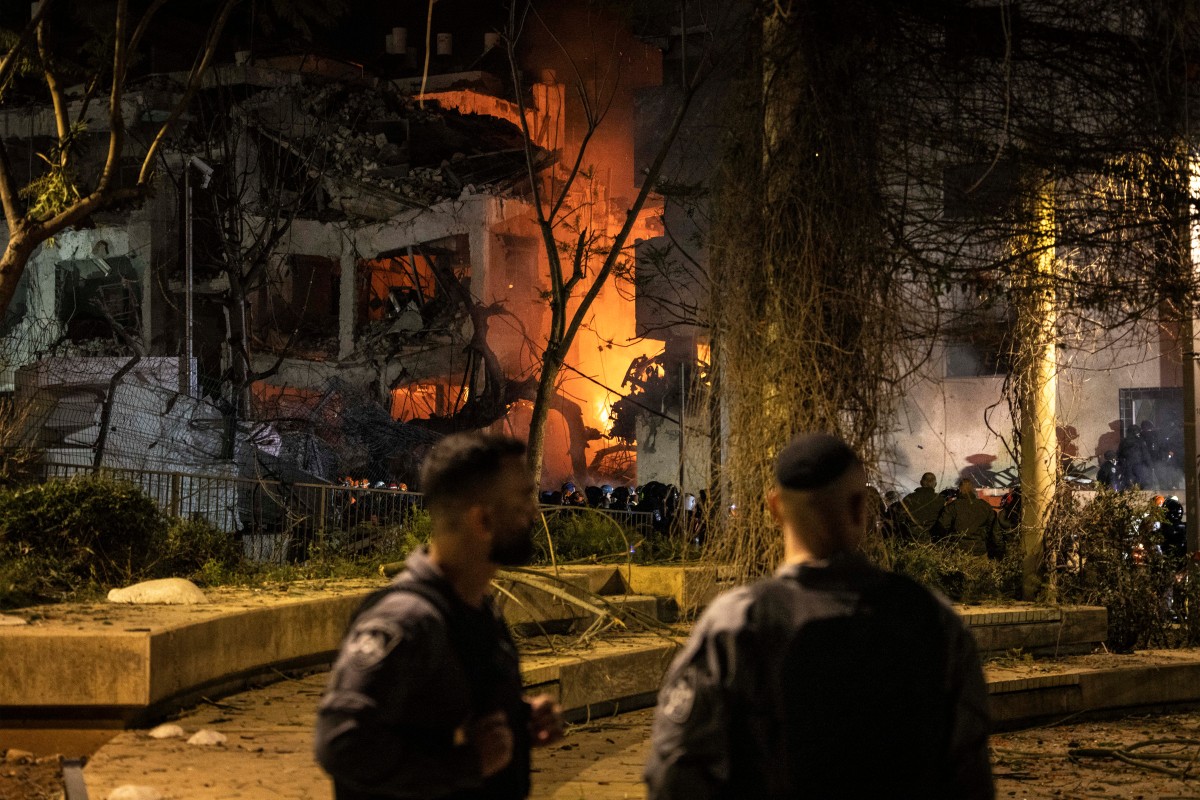
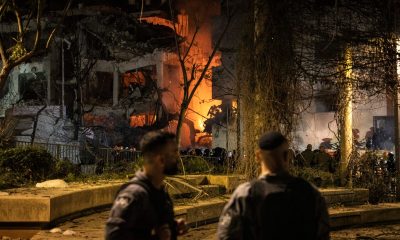
The Iranian Red Crescent Society reported Sunday night (local time) that at least 201 people were killed and 747 injured following attacks carried out by Israel and the United States against the Islamic Republic.
A spokesperson for the humanitarian organization said more than 220 rescue teams have been deployed across affected areas and that relief operations are continuing without interruption. The official highlighted the difficulty of treating the large number of wounded and the urgent need for additional resources in impacted provinces.
Out of Iran’s 31 provinces, 24 have reported damage, according to a statement carried by the Isna news agency. This marks the first overall casualty toll released by Iranian state-affiliated media since the launch of the offensive.
Among the dead are 85 schoolgirls from a school in the southern city of Minab, according to the country’s judiciary. “The number of martyrs at the Minab girls’ school has risen to 85,” the local prosecutor’s office said, as quoted by the judiciary’s website, Mizan Online.
Iranian President Masud Pezeshkian described the attack as a “savagery” that “constitutes a new black page in the record of countless crimes committed by the aggressors.”
Meanwhile, the international community continues to monitor the situation closely amid concerns about possible further reprisals and the broader impact on Middle East stability, energy markets, and global security.
AFP noted that it was unable to independently verify the casualty figures or the circumstances surrounding the events.
International
Pope Leo XIV Urges End to ‘Spiral of Violence’ in Middle East
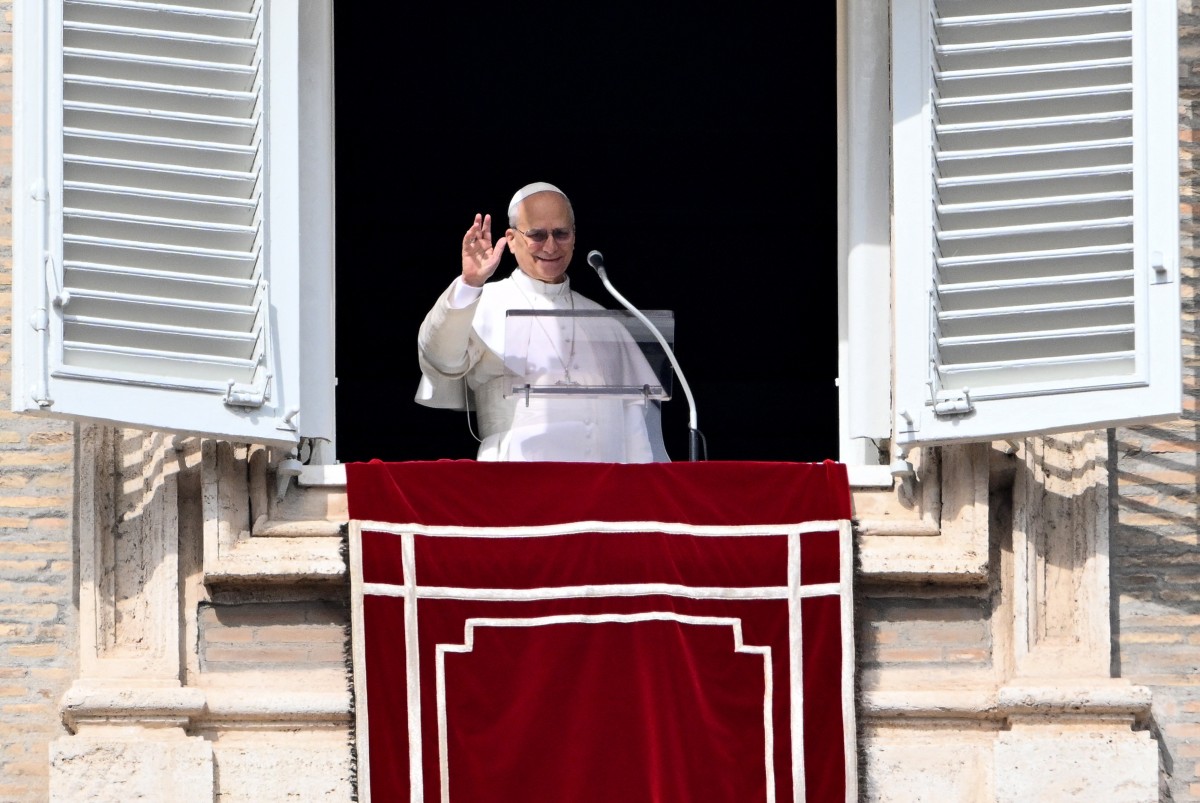
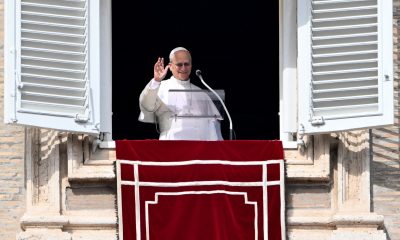
Pope Leo XIV on Sunday called for an end to the “spiral of violence” in the Middle East, following military strikes by the United States and Israel against Iran and subsequent retaliatory bombardments in the region.
“Faced with the possibility of a tragedy of enormous proportions, I urge the parties involved to assume their moral responsibility and stop the spiral of violence before it becomes an irreparable abyss,” the pontiff told the crowd gathered in St. Peter’s Square at the Vatican.
Speaking during the Angelus prayer, the U.S.-born pope said stability and peace cannot be achieved through threats or weapons. “Stability and peace are not built with reciprocal threats or with arms that sow destruction, suffering and death, but only through reasonable, sincere and responsible dialogue,” he declared.
The leader of the world’s 1.4 billion Catholics also called for diplomacy to “regain its role” amid escalating tensions.
In addition, the pope urged Afghanistan and Pakistan to urgently resume dialogue after several days of clashes between the two countries.
International
Security Council to Hold Emergency Meeting on Middle East Crisis
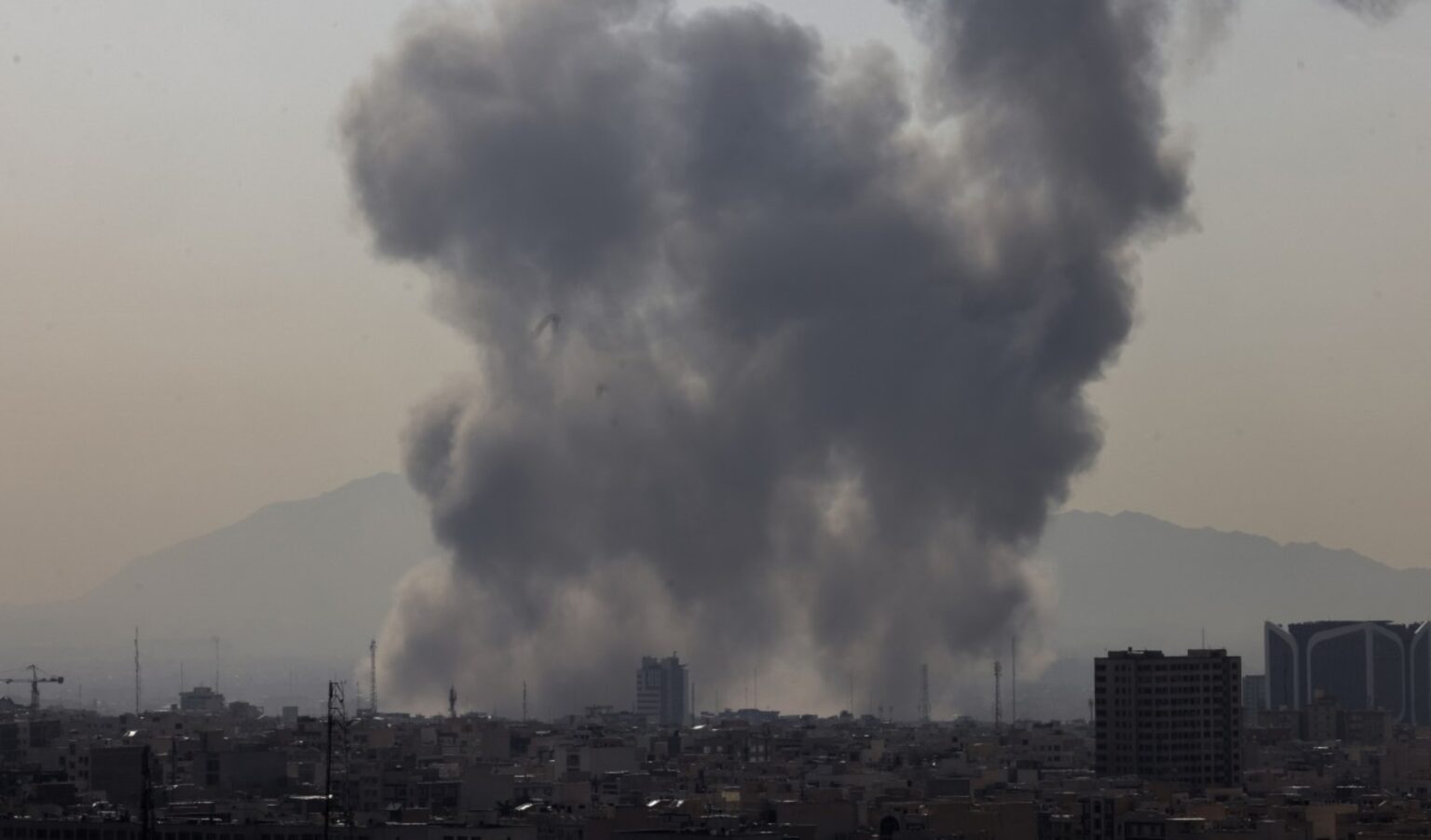
UN Secretary-General António Guterres on Saturday condemned the “military escalation in the Middle East” following attacks by the United States and Israel against Iran and Tehran’s retaliatory strikes, just hours before an urgent meeting of the UN Security Council.
“I call for the immediate cessation of hostilities and de-escalation,” Guterres said in a statement.
The Security Council is scheduled to meet on Saturday at 21:00 GMT (4:00 p.m. in New York) to address “the situation in the Middle East,” the United Nations announced.
The meeting, during which Guterres will deliver remarks, was convened at the request of France, Bahrain, Colombia, Russia and China, according to a diplomatic source.

Iran Reports 201 Dead, 747 Injured After U.S. and Israeli Strikes

Pope Leo XIV Urges End to ‘Spiral of Violence’ in Middle East

Security Council to Hold Emergency Meeting on Middle East Crisis
Tec de Monterrey honors one of its students for his contribution to nanotechnology in medicine

Defense Minister commends salvadoran soldier for Central American Cross Country victory

Extension of the state of emergency approved in southern Chile
-
 International4 days ago
Family of “El Mencho” Seeks Return of Body After Deadly Military Operation
-

 International4 days ago
Larry Summers Steps Down from Harvard Role Amid Epstein Controversy
-
 International4 days ago
Iran’s President Optimistic Ahead of Geneva Nuclear Talks with U.S.
-

 International4 days ago
Bill Gates Admits “Serious Mistake” Over Epstein Ties
-

 International4 days ago
Stephen Hawking Photo Appears in Newly Released Epstein Documents
-

 International3 days ago
Cocaine Production Surges 34% in 2023 as Market Expands into Africa and Asia
-
 International3 days ago
Federal Judge Blocks Trump Policy Allowing Deportations to Third Countries
-
 International2 days ago
Argentina’s Senate Reviews Milei-Backed Labor Overhaul
-
 International2 days ago
Trump Floats “Friendly Takeover” of Cuba Amid Rising Tensions
-
 International3 days ago
Clinton Accuses Republican Committee of Using Epstein Case to Shield Trump
-
 International1 day ago
Security Council to Hold Emergency Meeting on Middle East Crisis
-
 Sin categoría1 day ago
Trump: ‘We Think It’s True’ Amid Claims Iran’s Supreme Leader Was Killed
-
 International4 hours ago
Iran Reports 201 Dead, 747 Injured After U.S. and Israeli Strikes
-
 International4 hours ago
Pope Leo XIV Urges End to ‘Spiral of Violence’ in Middle East