
International
Remains of ‘very rare’ dinosaur species discovered in Brazil
AFP
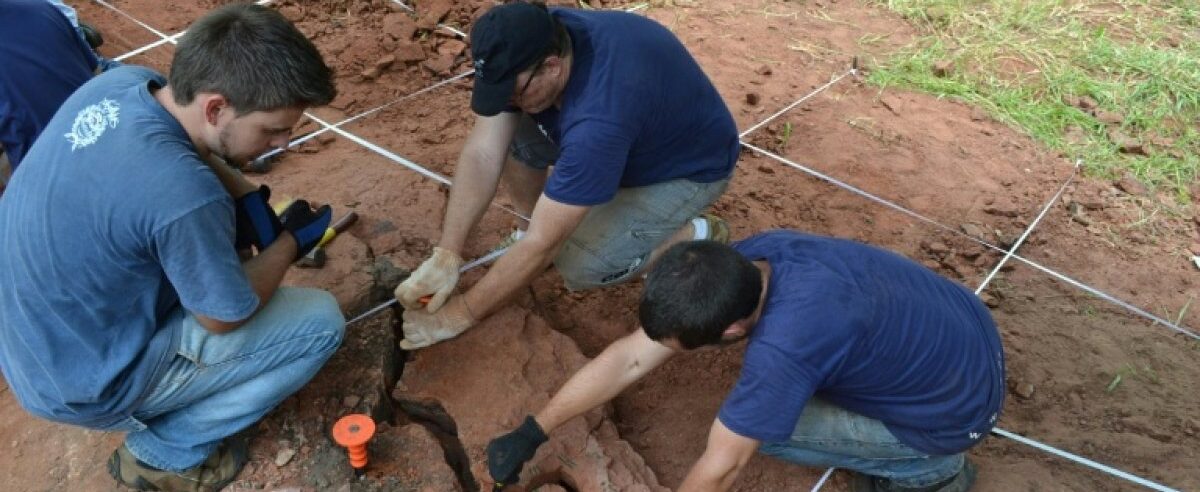
Remains of a toothless, two-legged dinosaur species that lived some 70 million years ago has been discovered in Brazil, researchers said Thursday, calling it a “very rare” find.
The small dinosaur, which measured about a meter (three feet) long and 80 centimeters (two and a half feet) tall, is a theropod, a group whose members were almost all believed to be carnivores.
But puzzlingly, the new species — dubbed Berthasaura leopoldinae — has a beak-like mouth with no teeth.
“That was a real surprise,” the paleontologists who made the find said in a statement released by Brazil’s National Museum.









They published their findings in the journal Nature, calling the discovery “one of the most complete dinosaurs found from the Cretaceous period in Brazil.”
“The toothless part raises doubts about what kind of diet this animal had,” said researcher Geovane Alves Souza, one of the study’s authors.
“It doesn’t necessarily mean it didn’t eat meat, though. Lots of birds, such as falcons and buzzards, eat meat with beaks. Most likely, it was an omnivore living in an inhospitable environment where it had to eat whatever it could.”
The fossilized skeleton was found along a rural road in the southern state of Parana between 2011 and 2014.
Analysis revealed it was an entirely new species that lived between 70 million and 80 million years ago.
The species was named for Bertha Lutz, a revered Brazilian scientist and feminist who died in 1976, and for Maria Leopoldina, Brazil’s 19th-century empress, who was a patron of the sciences.






International
Brazil offers to mediate Colombia-Ecuador tensions, calls for restraint
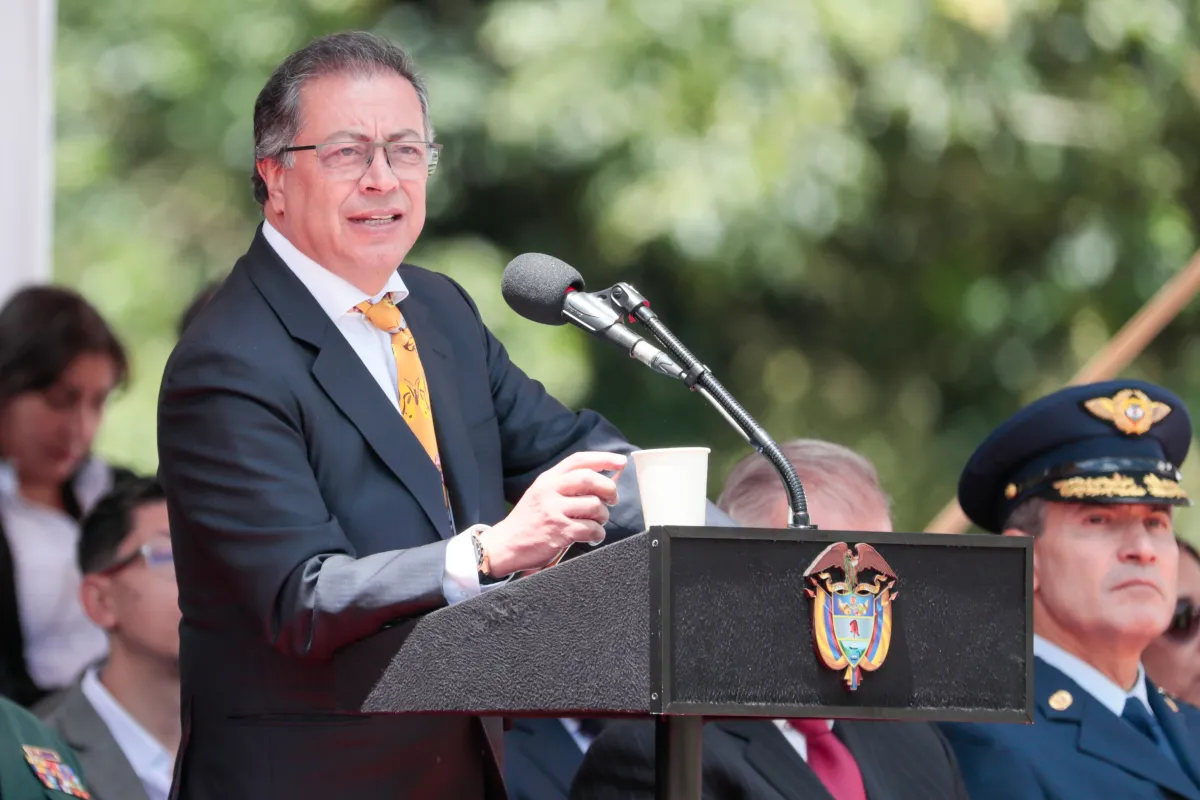
The government of Brazil has offered to mediate in the ongoing tensions between Colombia and Ecuador, while calling on both nations to exercise restraint.
In a statement released Wednesday, Brazil’s Ministry of Foreign Affairs urged the parties involved to act with moderation and seek a peaceful resolution to the dispute.
“Brazil encourages all sides to act with moderation in order to find a peaceful solution to the controversy. It stands ready to support dialogue efforts aimed at preserving peace and security in the region,” the statement said.
Brazil also expressed “serious concern” over reports of deaths in the border area between Colombia and Ecuador, noting that the circumstances surrounding the incidents have not yet been clarified.
The diplomatic move comes amid rising tensions between the neighboring countries, increasing regional concern over stability and security along their shared border.
International
U.S. lowers travel advisory for much of Venezuela but keeps high-risk zones under warning
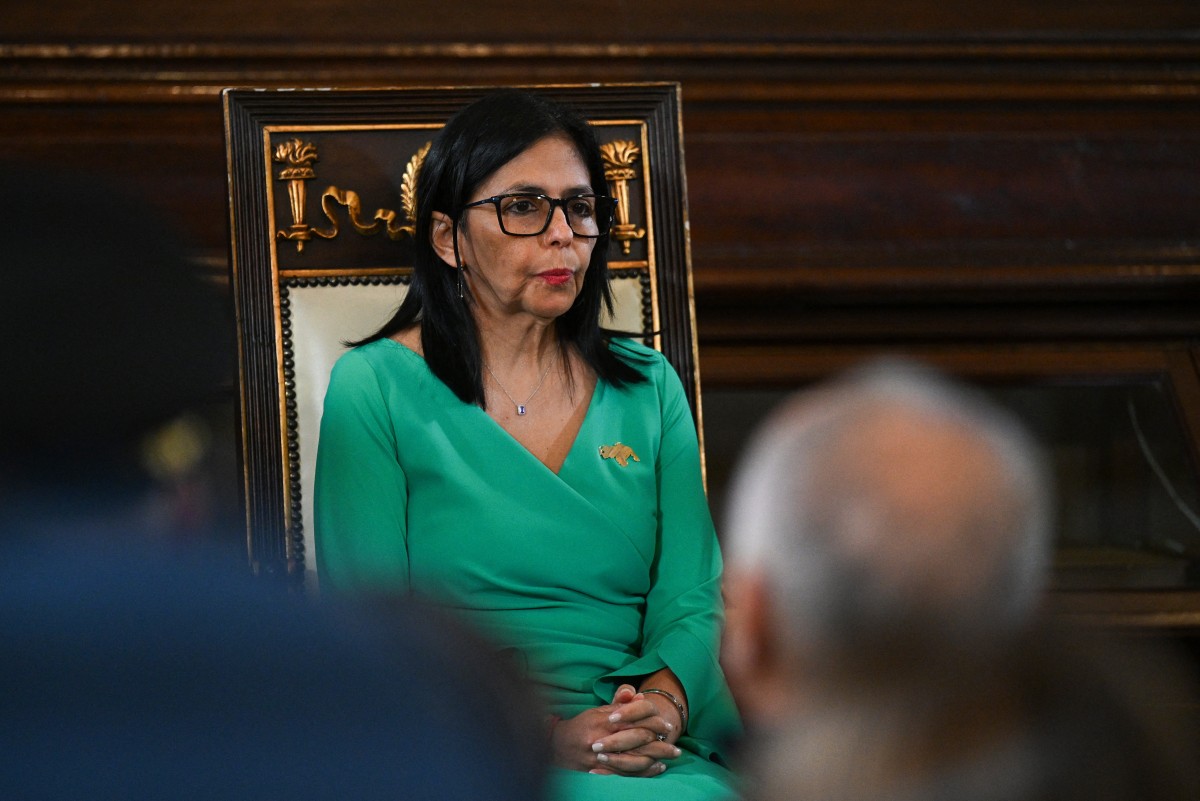
The U.S. Department of State announced on Thursday that it has lowered its travel advisory for much of Venezuela to Level 3 (“Reconsider Travel”), reflecting what it described as improved security conditions in parts of the country.
However, the agency will maintain the highest Level 4 warning (“Do Not Travel”) for several regions, including the states of Táchira, Amazonas, Apure, Aragua and Guárico, as well as rural areas of Bolívar, citing ongoing risks such as crime, kidnapping and terrorism.
The updated advisory marks a shift from December, when the United States raised the alert for Venezuela to Level 4 nationwide, warning of severe security threats.
Despite the partial downgrade, U.S. authorities continue to urge caution, emphasizing that conditions remain volatile in certain areas and that travelers should carefully assess risks before planning any trips to the country.
International
EU lawmakers move to ban AI tools that generate non-consensual nude images

Members of the European Parliament are pushing to ban across the bloc artificial intelligence services that allow users to digitally “undress” people without their consent.
The proposal, adopted on Wednesday at committee level, aims to prohibit applications that generate non-consensual explicit images. Irish lawmaker Michael McNamara, one of the sponsors, said the measure seeks to stop tools that “have caused significant harm for the benefit of a few.”
Dutch MEP Kim van Sparrentak welcomed the move, calling it “a major victory, especially for women and children in Europe.”
The amendment, part of broader EU legislation on artificial intelligence, was approved by the Parliament’s civil liberties and internal market committees. It specifically targets systems that use AI to create or manipulate sexually explicit or intimate images resembling identifiable individuals without their consent.
The proposal will be put to a full vote in the European Parliament on March 26. If adopted, lawmakers and European Union member states will need to agree on a final version before it can take effect.
Separately, representatives of the 27 EU countries recently backed a Franco-Spanish amendment seeking to ban AI services used to generate non-consensual sexual images or child sexual abuse material.
The initiative follows controversy surrounding a feature introduced in Grok, developed by xAI, which allowed users to create simulated nude images from real photos. The tool sparked widespread criticism and prompted an EU investigation.
In response, xAI restricted image generation features in mid-January to paying subscribers and stated it blocks the creation of sexualized images in jurisdictions where such content is illegal.

Brazil offers to mediate Colombia-Ecuador tensions, calls for restraint

U.S. lowers travel advisory for much of Venezuela but keeps high-risk zones under warning

EU lawmakers move to ban AI tools that generate non-consensual nude images
Tec de Monterrey honors one of its students for his contribution to nanotechnology in medicine

Defense Minister commends salvadoran soldier for Central American Cross Country victory

Extension of the state of emergency approved in southern Chile
-

 International3 days ago
Two killed in shooting at restaurant near Frankfurt Airport
-

 International3 days ago
German president warns Iran war could spread and disrupt Strait of Hormuz
-

 Central America3 days ago
El Salvador destroys $166 million worth of cocaine seized from Tanzanian vessel
-

 International3 days ago
U.S. counterterrorism chief resigns over opposition to war in Iran
-

 International4 days ago
Noboa intensifies anti-cartel crackdown as violence persists in Ecuador
-

 International3 days ago
Venezuela’s foreign minister accuses UN rights chief of “immoral bias”
-
 International3 days ago
Mexico security chief meets DEA director in Washington to boost anti-drug cooperation
-
 Central America1 day ago
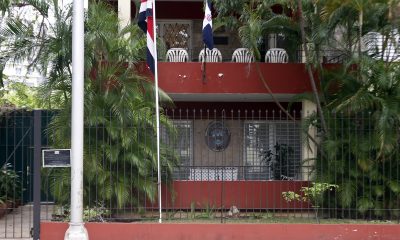
Costa Rica closes embassy in Cuba, citing human rights concerns
-

 International4 days ago
Peruvian presidential candidate Napoleón Becerra dies in campaign road accident
-

 Central America3 days ago
Analyst questions IACHR role over report on El Salvador emergency measures
-

 International15 hours ago
Meningitis outbreak in England rises to 27 cases with two deaths reported
-
 International15 hours ago
U.S. lowers travel advisory for much of Venezuela but keeps high-risk zones under warning
-
 International15 hours ago
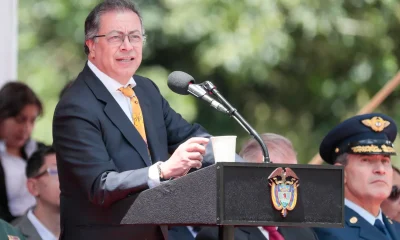
Brazil offers to mediate Colombia-Ecuador tensions, calls for restraint
-

 International1 day ago
Hiroshima survivor who embraced Obama dies at 88
-
 International15 hours ago
EU lawmakers move to ban AI tools that generate non-consensual nude images
-
 International1 day ago
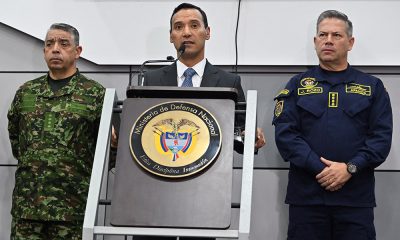
Colombia seeks ‘total suffocation’ of armed groups with regional support
-

 Central America1 day ago
Costa Rica closes Cuba embassy as president escalates rhetoric