
International
Kenya lifts Covid curfew, unveils stimulus plan
AFP
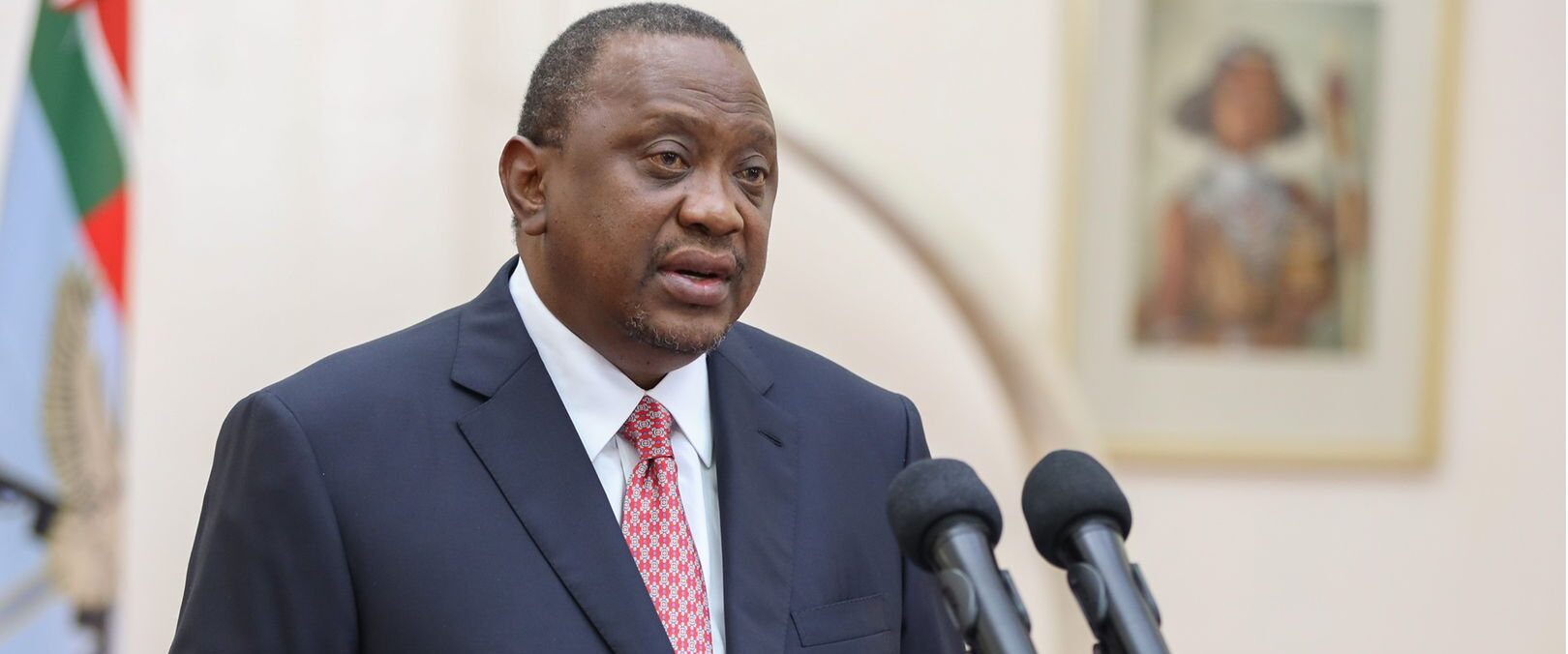
Kenya’s President Uhuru Kenyatta on Wednesday ordered the immediate lifting of a coronavirus curfew in force since March 2020 and unveiled a stimulus package to try to revitalise the battered economy.
The Covid-19 pandemic has hit the East African powerhouse hard, particularly in the vital tourism sector, and led to the loss of hundreds of thousands of jobs.
Kenyatta announced his decision to end the dusk-to-dawn curfew to cheers and applause at an event to mark Mashujaa Day, a public holiday to honour those who contributed to the country’s independence struggle.
“With significant progress registered in the containment of Covid-19, it is now time to shift our focus from survival to co-existing with the disease,” he said.









Kenya has reported 252,308 cases of the new coronavirus, including 5,238 deaths, since the start of the pandemic.
But inoculation rates remain low, with only 4.6 percent of the adult population fully vaccinated, according to the latest government data.
However Kenyatta said the country was on target to meet his goal of vaccinating 10 million people by Christmas, out of a population of almost 54 million.
Currently over 4.6 million people are either fully or partially vaccinated, latest figures show.
Kenya’s economy contracted by 0.3 percent in 2020 — the first contraction in three decades — but the government has forecast a swing back to growth of about six percent this year.
Kenyatta announced a 25-billion shilling ($225 million, 193 million euro) financial stimulus programme from November 1 “designed to accelerate the pace of our economic growth and to sustain the gains already made”.
He said a variety of sectors would be targeted, including agriculture — long the backbone of the economy — as well as health, education, drought response, infrastructure, energy and environmental conservation.






International
Iran Reports 201 Dead, 747 Injured After U.S. and Israeli Strikes
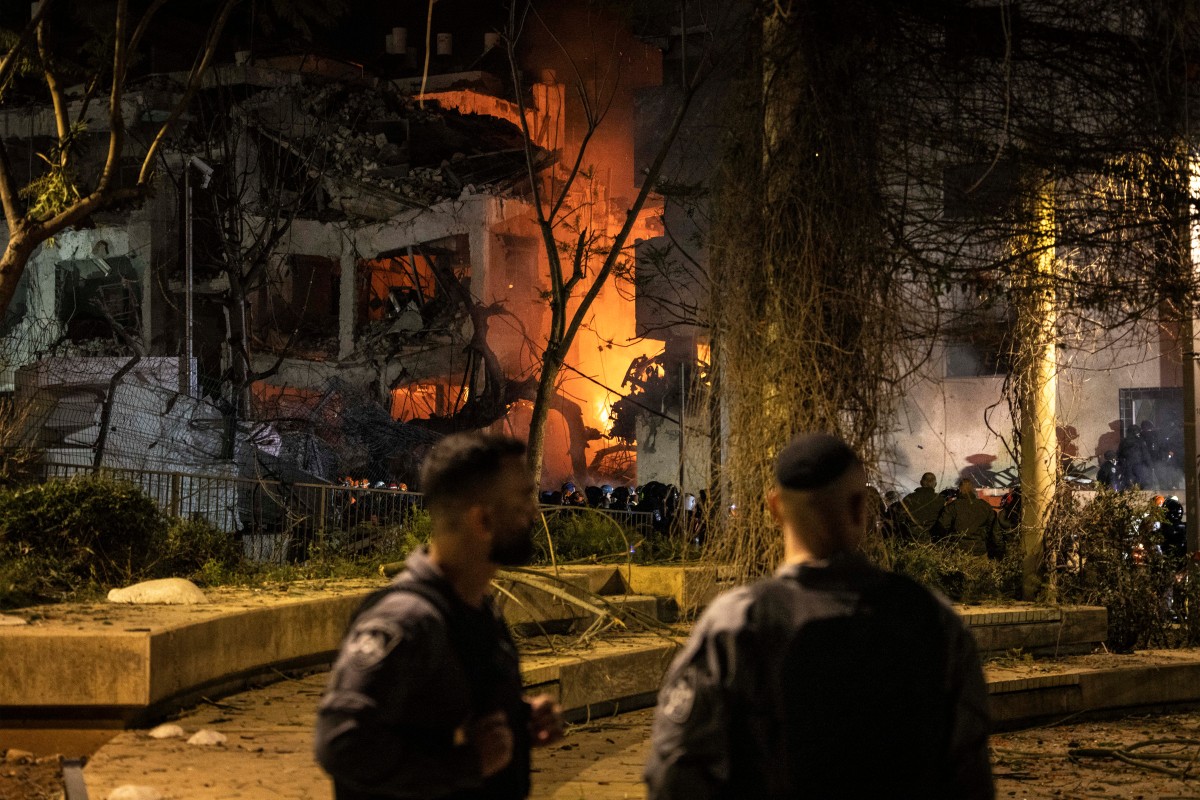
The Iranian Red Crescent Society reported Sunday night (local time) that at least 201 people were killed and 747 injured following attacks carried out by Israel and the United States against the Islamic Republic.
A spokesperson for the humanitarian organization said more than 220 rescue teams have been deployed across affected areas and that relief operations are continuing without interruption. The official highlighted the difficulty of treating the large number of wounded and the urgent need for additional resources in impacted provinces.
Out of Iran’s 31 provinces, 24 have reported damage, according to a statement carried by the Isna news agency. This marks the first overall casualty toll released by Iranian state-affiliated media since the launch of the offensive.
Among the dead are 85 schoolgirls from a school in the southern city of Minab, according to the country’s judiciary. “The number of martyrs at the Minab girls’ school has risen to 85,” the local prosecutor’s office said, as quoted by the judiciary’s website, Mizan Online.
Iranian President Masud Pezeshkian described the attack as a “savagery” that “constitutes a new black page in the record of countless crimes committed by the aggressors.”
Meanwhile, the international community continues to monitor the situation closely amid concerns about possible further reprisals and the broader impact on Middle East stability, energy markets, and global security.
AFP noted that it was unable to independently verify the casualty figures or the circumstances surrounding the events.
International
Pope Leo XIV Urges End to ‘Spiral of Violence’ in Middle East
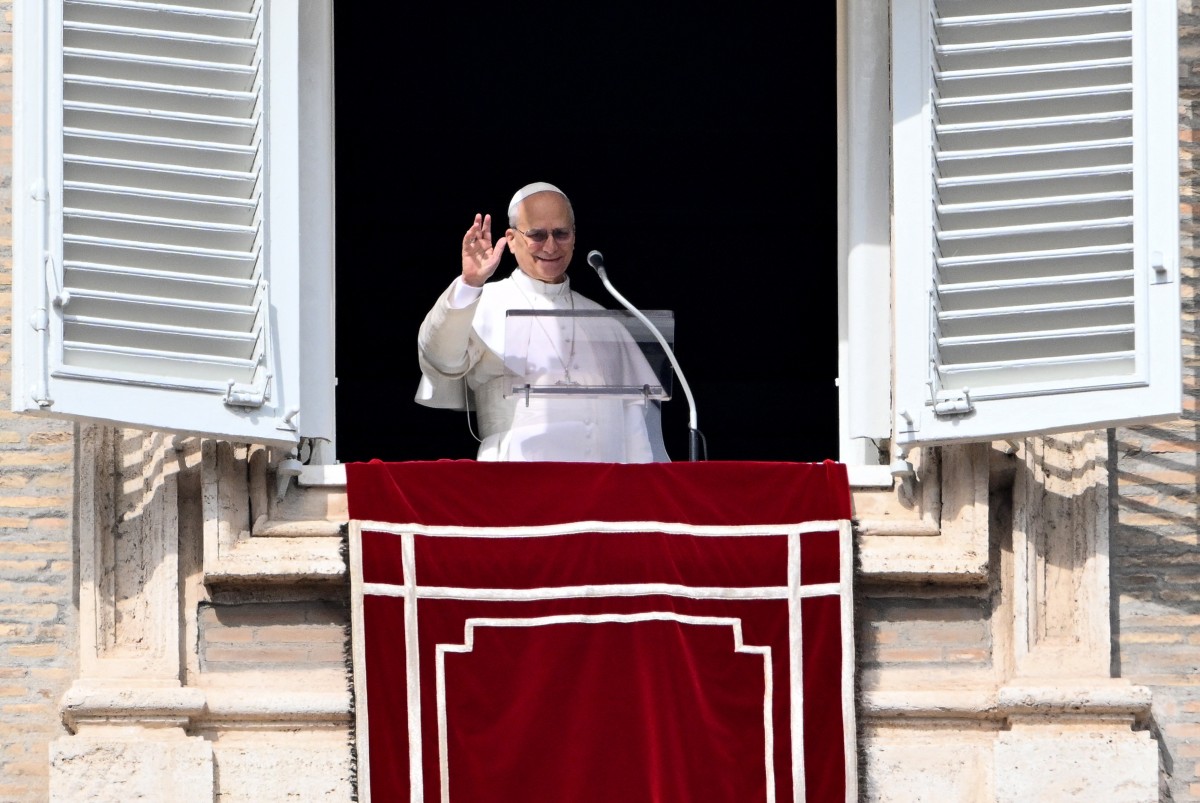
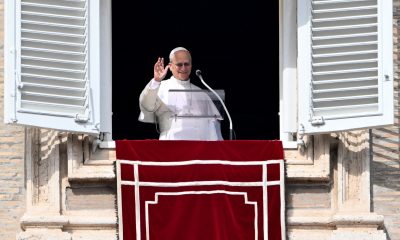
Pope Leo XIV on Sunday called for an end to the “spiral of violence” in the Middle East, following military strikes by the United States and Israel against Iran and subsequent retaliatory bombardments in the region.
“Faced with the possibility of a tragedy of enormous proportions, I urge the parties involved to assume their moral responsibility and stop the spiral of violence before it becomes an irreparable abyss,” the pontiff told the crowd gathered in St. Peter’s Square at the Vatican.
Speaking during the Angelus prayer, the U.S.-born pope said stability and peace cannot be achieved through threats or weapons. “Stability and peace are not built with reciprocal threats or with arms that sow destruction, suffering and death, but only through reasonable, sincere and responsible dialogue,” he declared.
The leader of the world’s 1.4 billion Catholics also called for diplomacy to “regain its role” amid escalating tensions.
In addition, the pope urged Afghanistan and Pakistan to urgently resume dialogue after several days of clashes between the two countries.
International
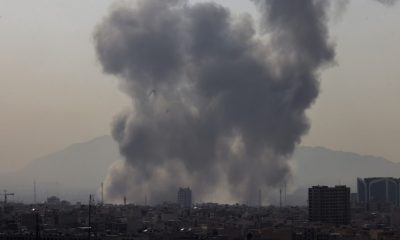
Security Council to Hold Emergency Meeting on Middle East Crisis
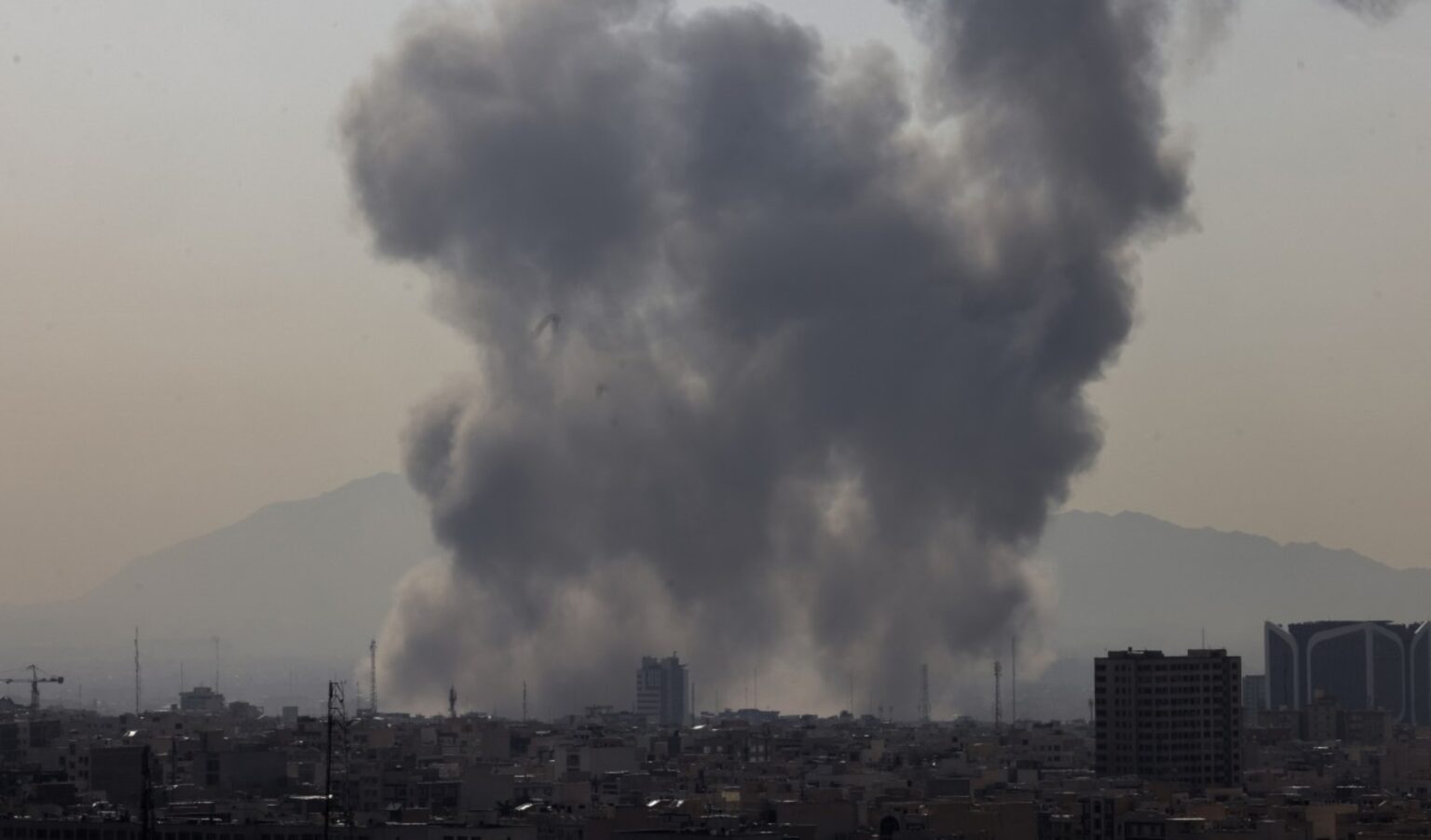
UN Secretary-General António Guterres on Saturday condemned the “military escalation in the Middle East” following attacks by the United States and Israel against Iran and Tehran’s retaliatory strikes, just hours before an urgent meeting of the UN Security Council.
“I call for the immediate cessation of hostilities and de-escalation,” Guterres said in a statement.
The Security Council is scheduled to meet on Saturday at 21:00 GMT (4:00 p.m. in New York) to address “the situation in the Middle East,” the United Nations announced.
The meeting, during which Guterres will deliver remarks, was convened at the request of France, Bahrain, Colombia, Russia and China, according to a diplomatic source.

Iran Reports 201 Dead, 747 Injured After U.S. and Israeli Strikes

Pope Leo XIV Urges End to ‘Spiral of Violence’ in Middle East

Security Council to Hold Emergency Meeting on Middle East Crisis
Tec de Monterrey honors one of its students for his contribution to nanotechnology in medicine

Defense Minister commends salvadoran soldier for Central American Cross Country victory

Extension of the state of emergency approved in southern Chile
-
 International5 days ago
Family of “El Mencho” Seeks Return of Body After Deadly Military Operation
-
 International5 days ago
Larry Summers Steps Down from Harvard Role Amid Epstein Controversy
-
 International5 days ago
Iran’s President Optimistic Ahead of Geneva Nuclear Talks with U.S.
-
 International5 days ago
Bill Gates Admits “Serious Mistake” Over Epstein Ties
-
 International5 days ago
Stephen Hawking Photo Appears in Newly Released Epstein Documents
-
 International4 days ago
Cocaine Production Surges 34% in 2023 as Market Expands into Africa and Asia
-
 International3 days ago
Trump Floats “Friendly Takeover” of Cuba Amid Rising Tensions
-
 International20 hours ago
Iran Reports 201 Dead, 747 Injured After U.S. and Israeli Strikes
-
 International4 days ago
Federal Judge Blocks Trump Policy Allowing Deportations to Third Countries
-
 International3 days ago
Argentina’s Senate Reviews Milei-Backed Labor Overhaul
-
 International2 days ago
Security Council to Hold Emergency Meeting on Middle East Crisis
-
 International20 hours ago
Pope Leo XIV Urges End to ‘Spiral of Violence’ in Middle East
-
 Sin categoría2 days ago
Trump: ‘We Think It’s True’ Amid Claims Iran’s Supreme Leader Was Killed
-
 International4 days ago
Clinton Accuses Republican Committee of Using Epstein Case to Shield Trump